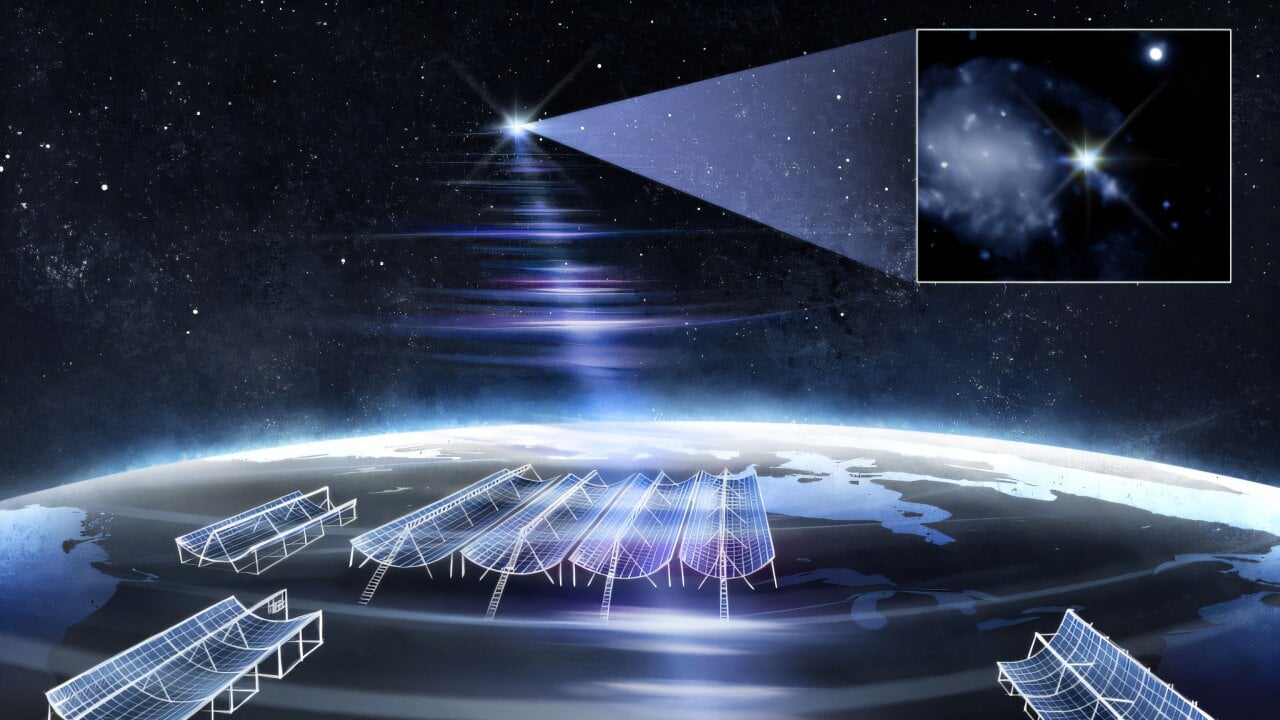
Astronomers detected the brightest fast radio burst (FRB) ever, named RBFLOAT, from a galaxy 130 million light-years away, using advanced telescopes including CHIME and the James Webb Space Telescope. The observations suggest magnetars as a potential source and provide precise localization, helping to unravel the mystery of FRBs' origins and whether they repeat or vary in nature.
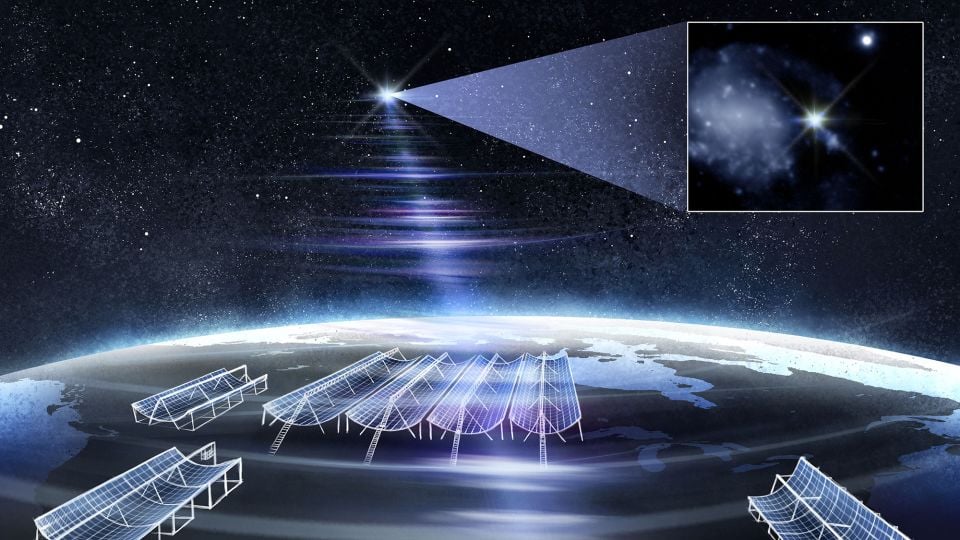
Astronomers detected the brightest fast radio burst (FRB) ever, called RBFLOAT, from a galaxy 130 million light-years away, using advanced telescopes including CHIME and Webb. This discovery helps pinpoint the burst's origin and supports the theory that magnetars could be the source, offering new insights into the nature and potential repetition of FRBs, which remain one of the universe's enduring mysteries.
A record-breaking fast radio burst named RBFLOAT was detected by the CHIME telescope, originating from a galaxy 130 million light-years away, and precisely localized using an array of outriggers, providing new insights into the origins of such cosmic phenomena, likely linked to magnetars.
Scientists have identified the origin of a powerful fast radio burst (FRB) from outer space, using the new CHIME Outrigger telescope, shedding light on these high-energy space signals that last only milliseconds but carry vital information about energetic cosmic phenomena.
An international team used the CHIME telescope and NASA's JWST to detect and precisely locate one of the brightest fast radio bursts (FRBs) ever observed, named RBFLOAT, in the galaxy NGC 4141, providing new insights into the origins of these mysterious cosmic phenomena.
A mysterious radio signal, FRB 20190203, detected by a Russian telescope from a galaxy 2.3 billion light-years away, has reignited speculation about extraterrestrial life. This Fast Radio Burst (FRB) is notable for its intense energy and low detection frequency, and unlike many FRBs, it has not repeated, adding to its mystery. While theories suggest natural origins like magnetars, the possibility of it being a technosignature from an advanced civilization remains. Further research is needed to understand this enigmatic signal.
The yield curve between the US2Y and US30Y has un-inverted, but concerns remain about the high-risk market, negative money supply, and the creation of a new "Bank Term Lending Facility" category by the FRB. This category has seen exponential growth, raising questions about transparency and potential market impact. Additionally, the prolonged market uptrend since 2009 and the presence of financial bubbles in areas such as cryptocurrency and private credit add to the overall market risk.