The Venezuelan currency has sharply declined due to the country's economic struggles exacerbated by US sanctions, leading to a severe financial crisis.
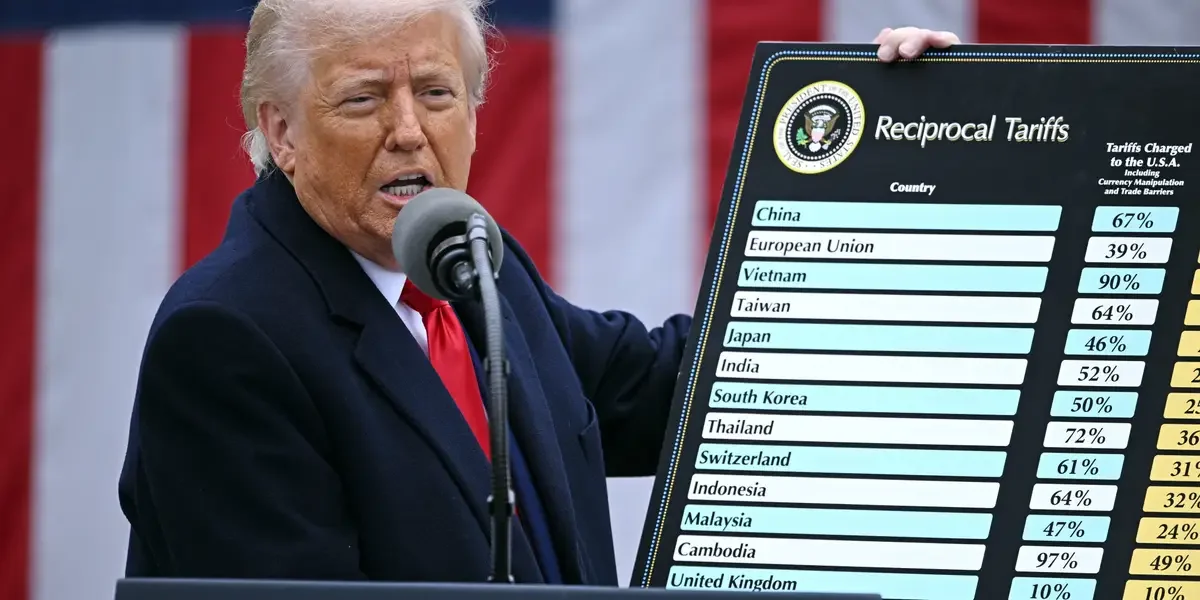
Recent studies show that Trump's trade tariffs have had a limited impact on inflation and have hurt economic growth and government revenue, leading to a decline in tariff income and raising concerns about the US government's ability to manage its debt, while stock markets remain optimistic.
Janet Yellen warns that the US approaching a dangerous level of national debt could lead to fiscal dominance, where debt constraints limit the Federal Reserve's ability to control inflation, risking hyperinflation and economic instability, especially as debt surpasses 120% of GDP.
Iran is implementing risky economic reforms, including ending subsidies and adjusting foreign exchange policies, to address soaring inflation and widespread protests demanding political change, amid a crackdown on demonstrators and international concern over human rights violations.
The article examines historical data on large tariff increases, particularly around 2025, showing that such shocks historically raised unemployment and lowered inflation, possibly due to increased uncertainty, and discusses implications for current monetary policy decisions.
The article discusses five key economic themes for 2026, including the impact of AI on the labor market and growth, the effects of recent tax cuts, potential changes in trade policy depending on court rulings, the future leadership of the Federal Reserve amid inflation concerns, and the political focus on affordability and inflation ahead of the midterm elections.
The U.S. economy in 2025 was characterized by contradictions such as healthy growth amid slowing hiring, elevated inflation, and rising unemployment, with uncertainties about future trends due to data disruptions and technological impacts like AI potentially leading to a 'jobless expansion.' Economists are cautiously optimistic about 2026, expecting improved hiring and growth, but underlying inequalities and data collection issues remain concerns.
Federal Reserve Bank of Philadelphia President Anna Paulson indicated that further interest rate cuts might be delayed as the economy stabilizes, with a cautious outlook on inflation and the labor market, suggesting only modest adjustments later in the year.
The speech discusses cautious optimism for 2026, highlighting progress in inflation reduction, especially in housing and core services, and the need for clarity on economic growth and labor market trends amid divergent signals. It emphasizes the importance of monetary policy in maintaining price stability and maximum employment, while considering structural changes like AI's influence on productivity and employment. The speaker advocates for patience and credibility in policy decisions, aiming for a balanced approach to economic stability.
Federal Reserve Bank of Philadelphia President Anna Paulson indicated that modest interest rate cuts could be appropriate later in 2026 if the economy remains benign, with inflation expected to moderate and the labor market stabilizing, though risks remain elevated. She noted current policy is slightly restrictive, helping to bring inflation to the 2% target, and highlighted uncertainties due to tariffs and recent economic data. Policymakers are divided on rate adjustments, with some favoring holding rates steady until more data is available.
Costco has quietly increased the price of a popular snack item, reflecting broader inflationary pressures and economic challenges faced by consumers, despite the company's efforts to shield members from rising costs.
Investors may be underestimating the potential for stronger global economic growth in 2026, driven by pent-up demand and increased policy support, which could lead to higher inflation and pose risks to bond markets. Strategists suggest a shift towards cyclical stocks and caution against bonds unless yields are attractive, as higher growth may reignite inflation concerns and impact monetary policy.
President Trump is set to appoint a new Fed chair, which will mark his direct influence over the US economy, amid ongoing debates about inflation, interest rates, and housing affordability. Despite his claims of economic success, many Americans feel the economy is struggling, with issues like high inflation, stagnant wages, and housing shortages persisting. Trump's economic policies and blame game are unlikely to significantly alter these fundamental problems, which are shaping voter sentiment ahead of the midterms.
Modest global economic growth is expected in 2026, driven by policy support, AI capital expenditure, and resilient markets, with the US leading the recovery. Inflation remains sticky, and the dollar is projected to decline, while risks include policy uncertainties and geopolitical tensions.
As 2026 approaches, experts express concerns about a fragile US economy with a weak labor market, rising unemployment, and potential inflation shocks driven by structural changes, migrant worker deportations, and policy issues, despite optimistic forecasts from the Federal Reserve and Wall Street.