Venezuelan bonds are expected to rise following the US's capture of Nicolás Maduro, with potential regime change and debt restructuring on the horizon, which could lead to significant gains for investors despite ongoing liquidity and political challenges.
U.S. Treasury yields slightly declined as investors considered strong Q3 GDP growth of 4.3%, which may influence the Federal Reserve's interest rate policy, with most expecting rates to stay steady until April. The bond market is preparing for holiday closures.
The 10-year Treasury yield decreased to 4.127% following lighter-than-expected November inflation data, indicating cooling price pressures and potentially influencing Federal Reserve policy. The CPI rose 2.7% annually, below expectations, and core CPI increased 2.6%. Meanwhile, initial jobless claims fell to 224,000, suggesting a resilient labor market.
The 10-year Treasury yield decreased following a surge in October layoffs and concerns over the legality of tariffs, with investors also watching the government shutdown for potential resolution, reflecting economic uncertainty.
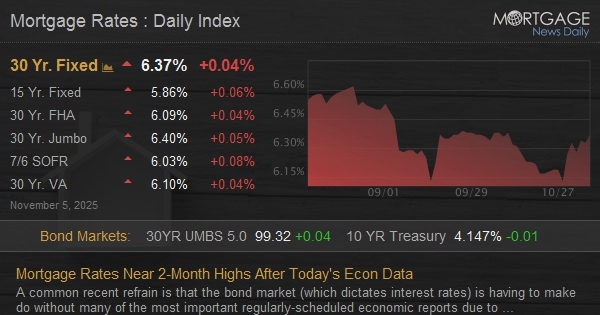
Mortgage rates have risen to near two-month highs following stronger-than-expected economic reports on employment and the services sector, which weakened bonds and prompted lenders to increase rates, marking a shift since the Fed meeting in late October.
Wall Street ended October positively amid AI optimism and strong earnings, but Federal Reserve Chair Jerome Powell's comments about potential rate hikes and dissent within the Fed introduced uncertainty, causing bond yields to spike and the dollar to strengthen. Bill Gross is betting on rising yields due to high deficits and Treasury issuance, while market dynamics suggest a more complex outlook for interest rates and currency movements.
Despite the Federal Reserve cutting its benchmark interest rate, mortgage rates increased by 20 basis points due to market reactions and bond market expectations, leading to a temporary rise in mortgage costs even as refinancing activity surged.
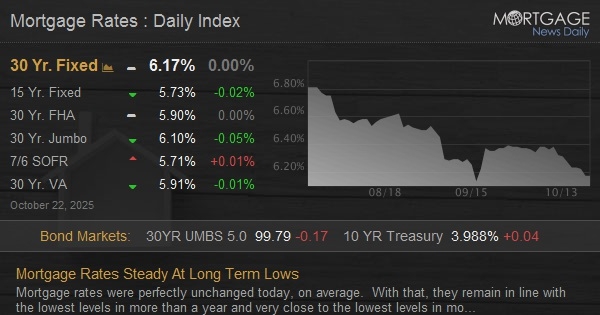
Mortgage rates remain steady at their lowest levels in over a year, influenced by market factors like tariffs and regional bank issues, with bond yields showing signs of fatigue and potential for future movement depending on economic data and events.
The 'widow-maker' trade, a strategy of shorting Japanese government bonds, has become highly profitable as Japanese bonds have plummeted over 4% this year due to rising yields, inflation concerns, and fears of fiscal policy changes, making it one of the most lucrative bets in the global bond market.
Mortgage rates are rapidly approaching long-term lows, with recent bond market surges prompting lenders to lower rates, moving the 30-year fixed rate from around 6.3% to the low 6.1% range, though future movement remains uncertain.
The U.S. bond market shows signs of concern over the economic damage from the ongoing government shutdown, with the 10-year Treasury yield dropping below its recent range amid uncertainty and economic data voids, while federal workers face missed paychecks and layoffs.
Mortgage rates are near their recent highs, influenced by overseas bond market weakness and awaiting economic reports post-government shutdown to determine further movement.
Mortgage rates slightly decreased to their lowest level since Fed Day on September 17th, influenced by bond market fluctuations and timing of bond strength and weakness over the past two weeks.