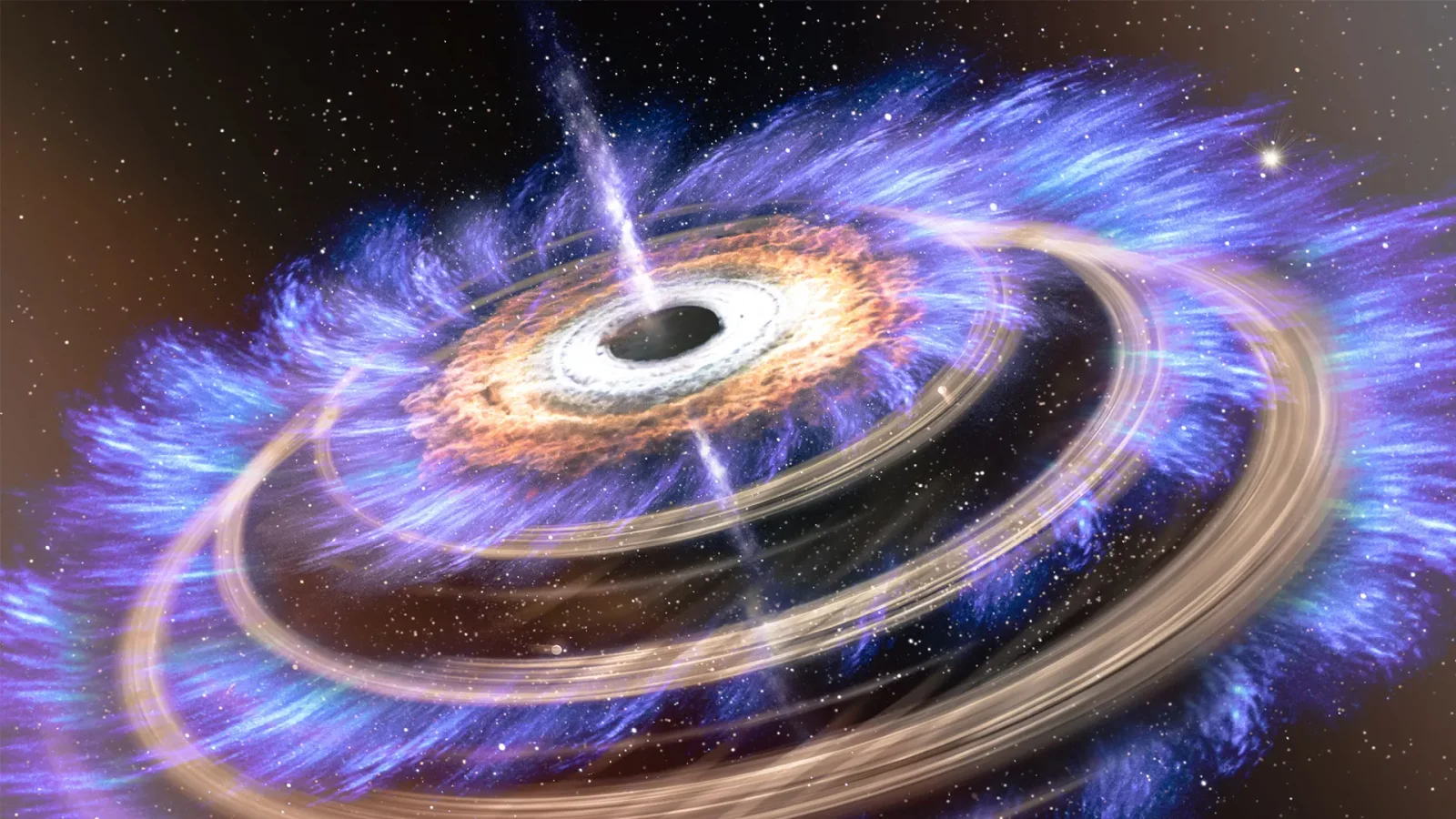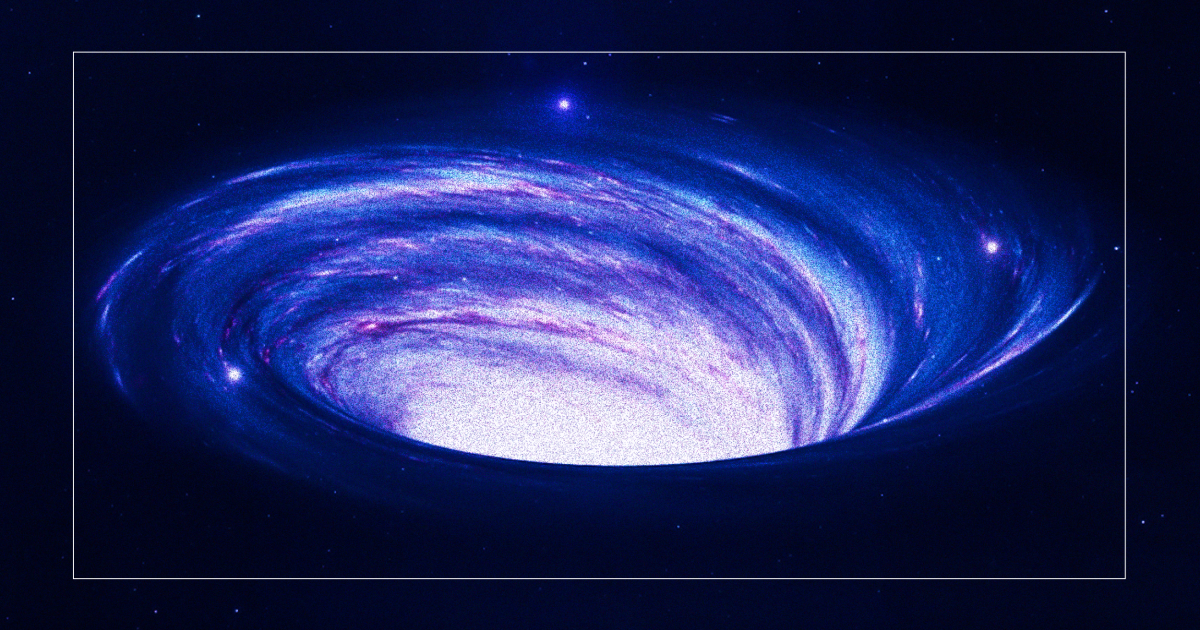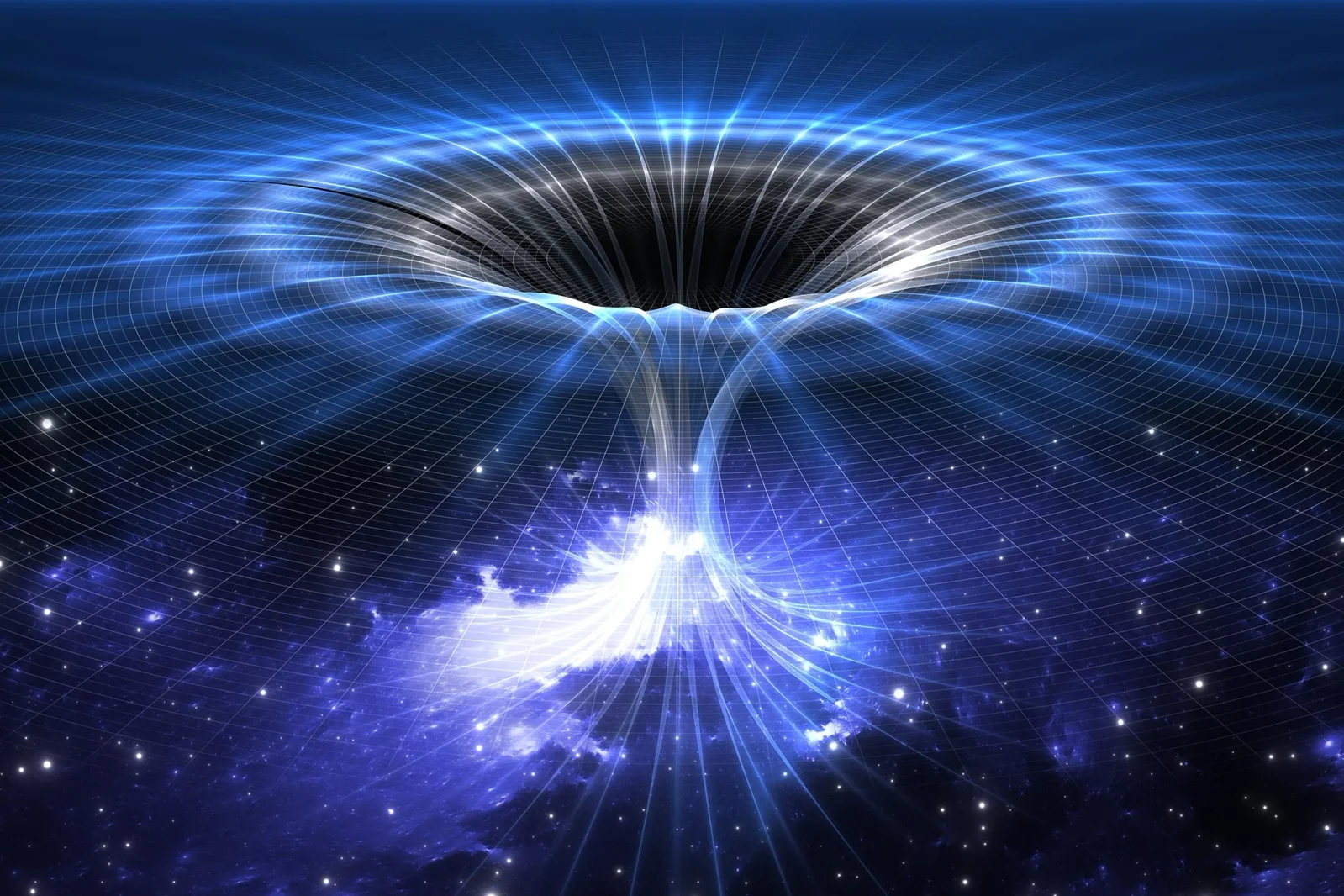
A new theoretical study suggests that the interior of entangled black holes may contain a long, bumpy wormhole called the 'Einstein-Rosen caterpillar,' supporting the idea that quantum entanglement and wormholes are interconnected and challenging the firewall paradox.
Scientists detected a brief gravitational wave signal, GW190521, which may have originated from a collapsing wormhole, challenging current understanding of space-time and potentially confirming the existence of wormholes, with profound implications for cosmology and physics.
The detection of GW190521, a massive black hole merger with an unusual 'bang' signal, challenges existing black hole models and raises the possibility that it could be an echo from another universe via a collapsing wormhole, potentially providing indirect evidence of a multiverse and prompting a reevaluation of spacetime physics.
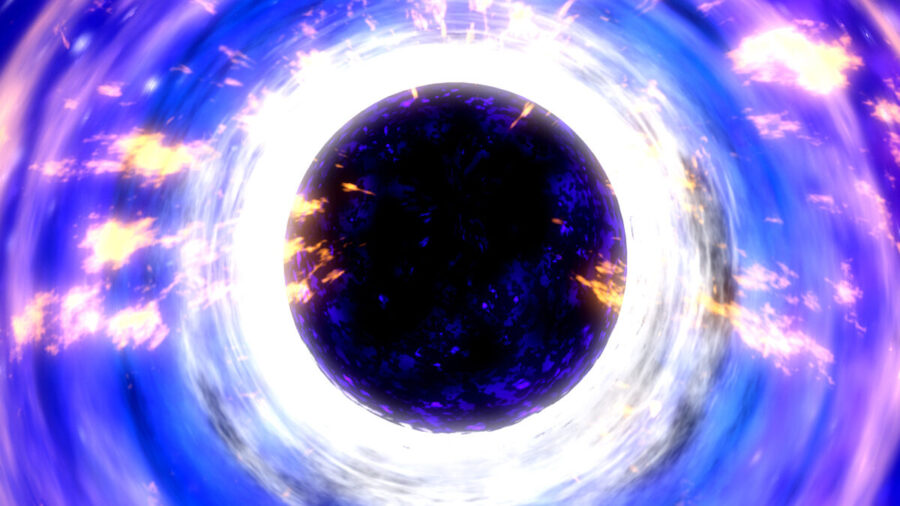
The article discusses the scientific accuracy of black holes depicted in the 2014 film 'Interstellar,' highlighting its realistic portrayal of black holes, wormholes, and space-time distortions, praised by scientists for its fidelity to real astrophysics.
Einstein's theory of general relativity suggests that traveling back in time is theoretically possible through the concept of wormholes, which are connections between two disparate points in spacetime. While faster-than-light travel and negative energy states are required for such phenomena, these remain unproven in physical reality. However, if such conditions could be met, it would allow for instantaneous travel across vast distances and potentially even backward in time, challenging our conventional understanding of time and space.
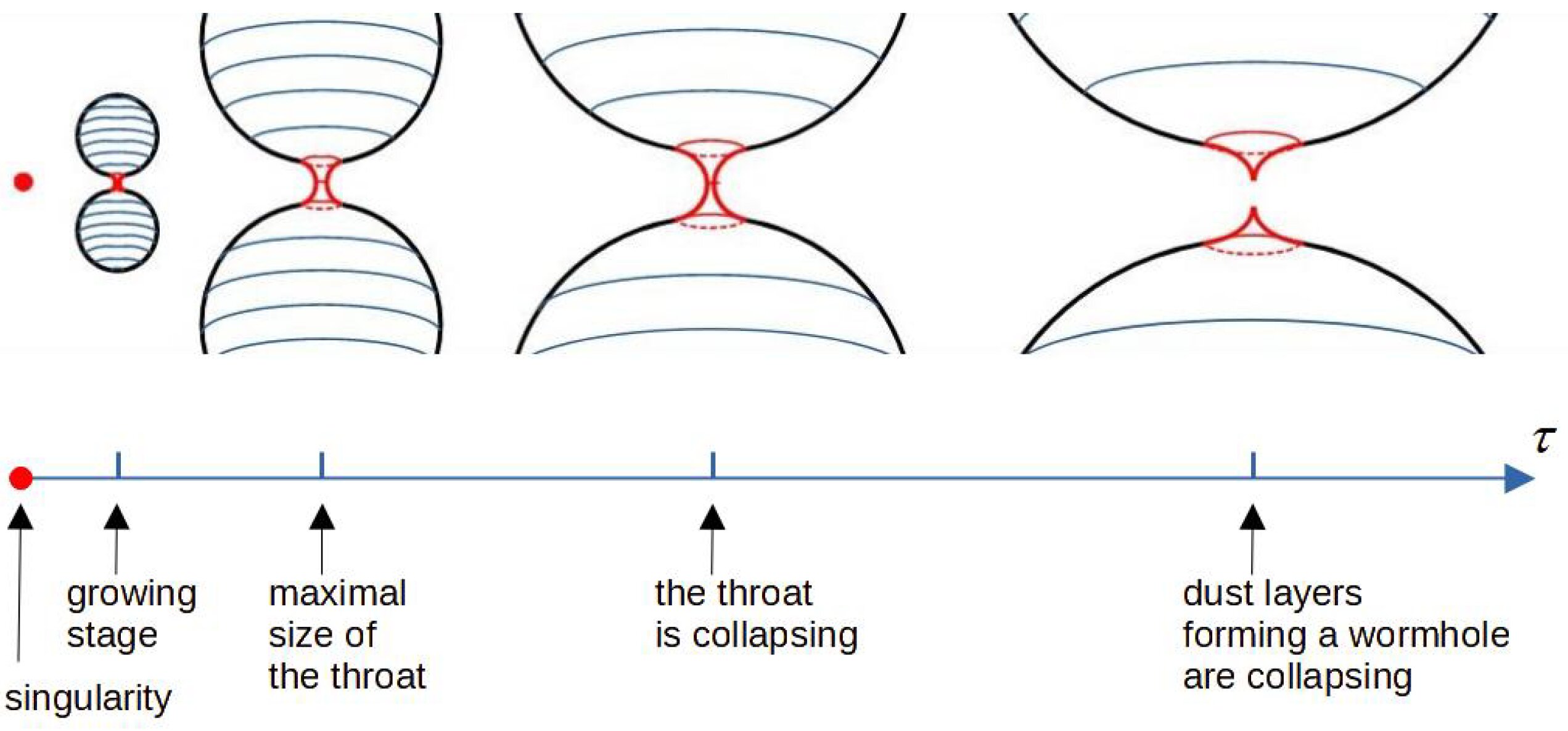
Astrophysicists from RUDN University have theoretically proven the existence of traversable wormholes in the Friedmann universe, connecting different universes or parts of the same universe. Their research, published in the journal Universe, explores the possibility of traversable wormholes in the general theory of relativity supported by dustlike matter. The study provides mathematical conditions for the existence of these wormholes and suggests potential observational signs for further research, including comparisons with cosmic voids and inhomogeneities in the universe.
Time travel, a concept popularized in science fiction, remains unresolved in science. The second law of thermodynamics suggests time can only move forward, while Einstein's theory of relativity shows time's relativity to speed. Theoretical possibilities like wormholes offer potential methods, but practical challenges and paradoxes complicate the feasibility of actual time travel. Astrophysicists, however, can observe the past through powerful telescopes, which act as time machines. While time travel remains a fascinating idea, it is currently limited to the realm of books, movies, and dreams.
The concept of time travel has fascinated people for centuries, but whether it is possible remains a mystery. While the laws of thermodynamics suggest that time is irreversible, physicist Albert Einstein's theory of special relativity proposes that time can pass at different rates for different people. Some scientists explore the idea of wormholes, hypothetical tunnels in space that could create shortcuts for time travel, but they have yet to be observed. Paradoxes, such as the famous "grandfather paradox," add to the complexity of time travel. Astrophysicists, however, have a unique form of time travel through powerful telescopes that allow them to observe the past universe. While time travel like in movies may not be possible, scientists continue to research and explore new ideas.
A recent study suggests that there may be two or three candidate black holes just 150 light-years away from Earth, much closer than previously thought. Researchers focused on the Hyades star cluster and found that the motion and evolution of stars in the cluster could be explained by the presence of stellar mass black holes. These black holes may have formed from the collision, merger, and collapse of stars in densely packed groups. Further observations and models are needed to confirm the existence of these black holes and explore the possibility of nearby wormholes.
Theoretical cosmologist Janna Levin explores the physical feasibility of wormholes, theoretical structures that connect separate points in spacetime, using black holes as a starting point. She discusses the conservation of information and the holographic principle, which suggests that information is encoded on a black hole's surface. Levin's quantum perspective challenges long-held assumptions about gravity and spacetime, potentially altering our understanding of the fundamental nature of the universe. The discussion of quantum wormholes and the resolution of the information loss paradox could have profound implications for our pursuit of a theory of everything.
Recent studies by theoretical physicists at the University of Alberta suggest that time travel may be possible through the use of interstellar wormholes and the powerful time dilation they create. While the real-world applications would differ from those depicted in science fiction, the discovery has shaken the scientific community. The research proposes that points of highly dense gravity, such as those found in black holes, could potentially allow particles to traverse the galaxy fast enough to travel backward in time. Wormholes, a theoretical concept, offer a potential solution to the mind-bending theory of time travel. Scientists believe that by manipulating the relativity of fixed points containing a shared mass equal to that of a black hole's singularity, they could create a gravitational warp that allows for time travel. However, the process may not allow matter to freely move through the structure, limiting it to observing the past.
Physicists from the University of Alberta and Charles University have proposed a new way to enable time travel using ring-shaped wormholes. By exploring the behavior of spacetime and applying duality rotations, they found that a closed timelike curve could be created, allowing an object or ray of light to travel back in time. While there are many obstacles to overcome, this research opens up possibilities for further exploration of the connection between quantum physics and the general theory of relativity.
Hatim Salih, an honorary fellow at the University of Bristol’s Quantum Technology Enterprise Center, has proposed a new kind of exchange-free quantum computer which relies on the presence of local wormholes. The proposed machine relies on a series of nested interferometers to bounce particles around and transmit information. Salih’s machine appears to be capable of sending information across the channel without any actual photons making the journey. The first counterported objects will likely be something on the scale of atoms, but Salih says that might only be the beginning.
Scientists from the University of Bristol’s Quantum Engineering Technology Labs in the UK have proposed an experiment to create the first-ever traversable wormhole, allowing people to effectively teleport from one side of space to another. The team's approach is reliant on a lot of existing tech, starting with a special kind of quantum computer. The researchers would first send light through a quantum system, and the information is transmitted without any electricity or particles being sent from origin to destination. The next step in advancing this means of data transfer will all come down to the next-generation quantum computers.
A physicist from the University of Bristol has developed a new computing scheme called "counterportation" that can create a wormhole in the lab that bridges space, providing a practical blueprint for exploring the universe's inner workings. The method overcomes the significant challenge of scaling up quantum prototypes, and it provides a "smoking gun" for the existence of a physical reality underpinning our most accurate description of the world. Plans are now in progress to physically build this wormhole in the lab, which can then be used as a testbed for rival physical theories, including the existence of higher dimensions.