Tag

White Dwarfs

All articles tagged with #white dwarfs

science17 hours ago

Magnetized white dwarf paints puzzling rainbow bow shock

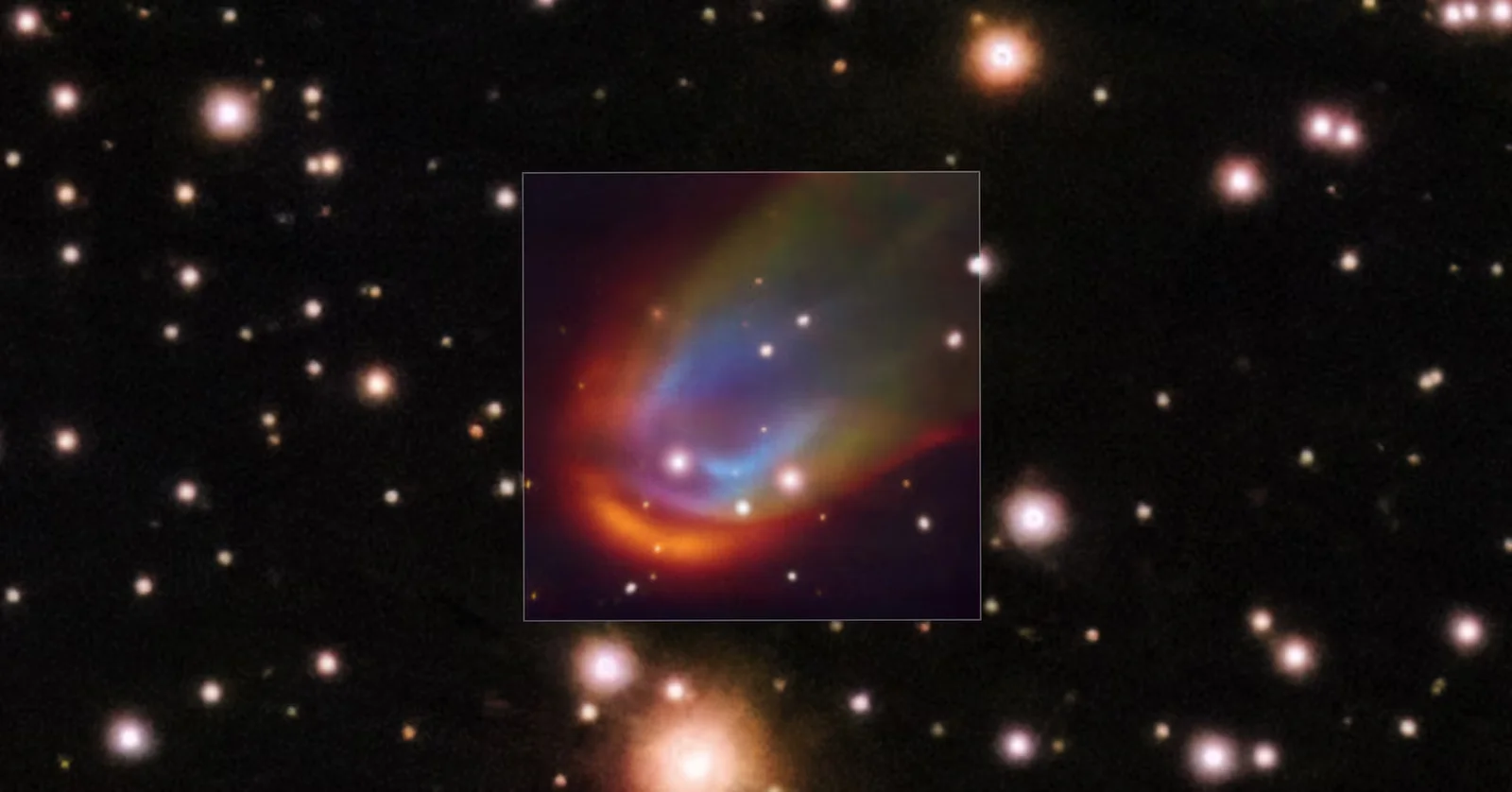
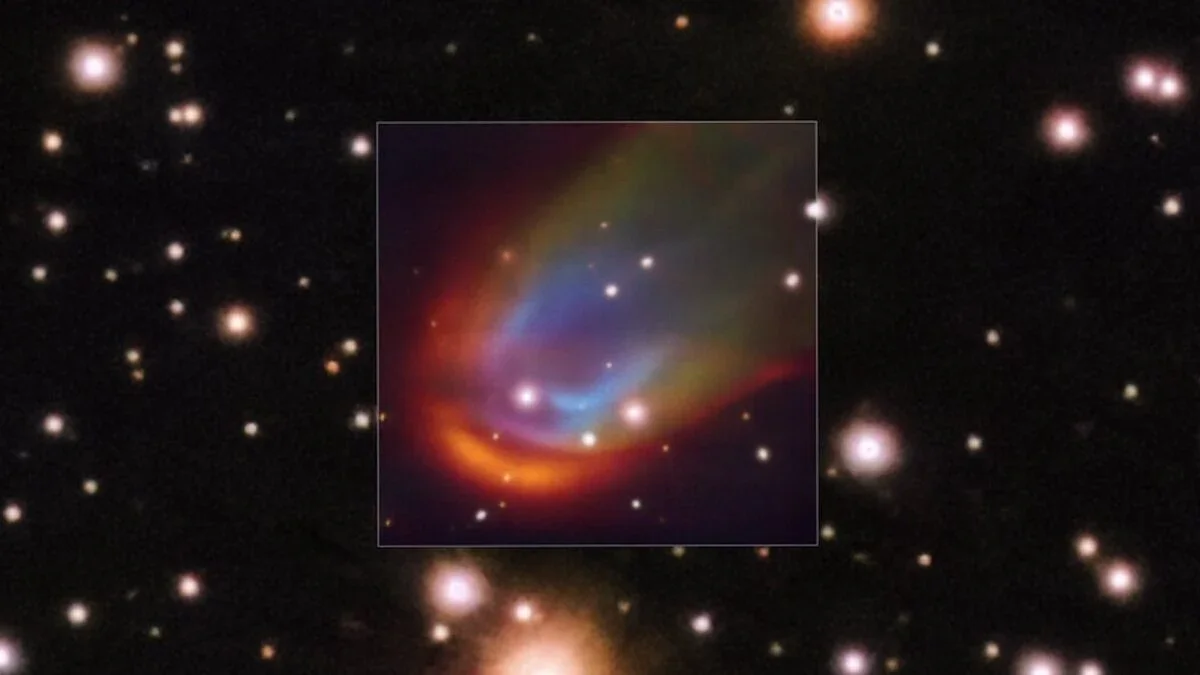
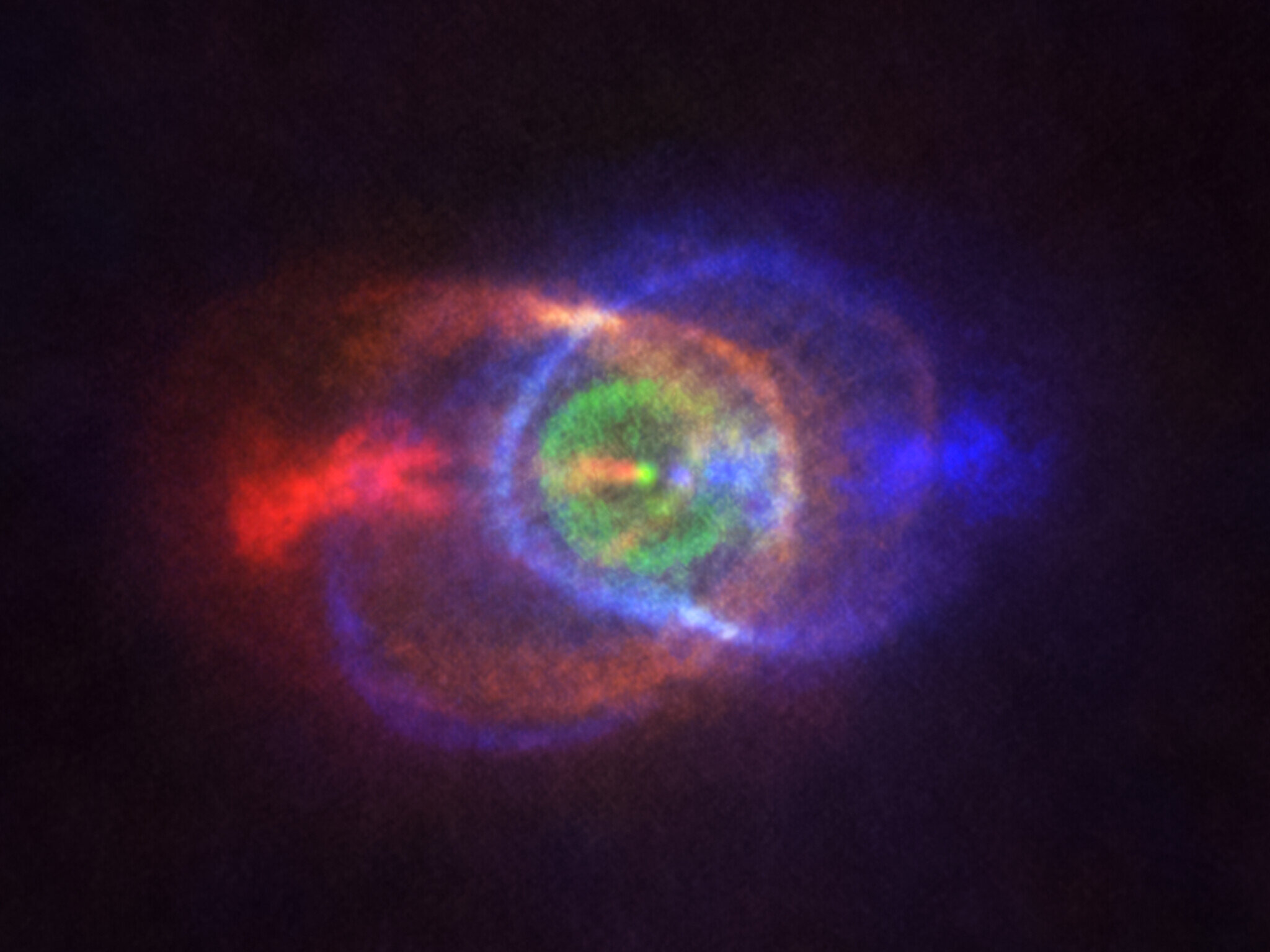
Astronomers observed a highly magnetized white dwarf in a tight binary with a Sun-like companion, siphoning gas and generating a rainbow-colored bow shock around RXJ0528+2838. The shock glows red, green and blue due to hydrogen, nitrogen and oxygen as interstellar gas is heated by the outflow, but no known mechanism explains the outflow, suggesting a hidden energy source—perhaps magnetic fields. The structure appears long-lived, persisting for at least about 1,000 years.

space2 days ago

Quiet White Dwarf Sparks Mysterious Bow Shock

Astronomers using ESO’s Very Large Telescope observed a glowing bow shock around the white dwarf RXJ0528+2838 in a binary system, even though the star shows no accretion disc or obvious outflow. The shock, visible in red, green, and blue, appears to have been powered for about 1,000 years, challenging standard models of how matter moves in such systems. A strong magnetic field could be funneling material from the companion directly onto the dead star without forming a disc, but this mechanism, if real, would only partly explain the phenomenon, leaving the exact origin of the outflow a mystery as reported in Nature Astronomy.

science18 days ago

Zombie Stars Could Illuminate Dark Matter Mysteries

Researchers from the University of British Columbia explored the potential link between axions, a dark matter candidate, and white dwarf stars, using data from the Hubble Space Telescope. Although their analysis did not find evidence of axion-induced cooling, it established new limits on axion-electron interactions, guiding future dark matter research. The study highlights the importance of exploring various astrophysical phenomena to understand elusive particles like axions.

science4 months ago

Potential for Life Around Earth-Size White Dwarfs

The article explores the potential for life on planets orbiting white dwarfs, which are common stellar remnants. Despite challenges like tidal heating and past planetary destruction during the star's red giant phase, some planets could retain liquid water and support life, making white dwarfs promising targets in the search for extraterrestrial life. Advances in telescope technology, such as the James Webb Space Telescope, may soon help identify such habitable worlds.

science5 months ago

Astronomers Discover White Dwarf Resulting From Stellar Collision

Researchers using Hubble's UV data discovered that the high-mass white dwarf WD 0525+526 is likely the remnant of a stellar merger, evidenced by faint carbon signatures on its surface. This finding provides rare direct evidence of white dwarf mergers, which are important for understanding stellar evolution and supernovae, and highlights the importance of ultraviolet observations in detecting such phenomena.

science1 year ago

White Dwarf-Main Sequence Pairs: Unlocking Cosmic Secrets

The discovery of white dwarf-main sequence binary star systems offers new insights into stellar evolution, star formation, and galactic processes. These systems help bridge the gap between early and late stages of binary evolution, shedding light on phenomena like supernovae and gravitational waves. Researchers used machine learning to analyze data from the Gaia mission, 2MASS, and Pan-STARRS1 surveys, identifying these binaries in star clusters. This breakthrough has significant implications for understanding cosmic events and the universe's fundamental processes.

science1 year ago

Astronomers Explore Supersoft X-ray Source Evolution

German astronomers have used ESA's XMM-Newton and NASA's Chandra to study the supersoft X-ray source RX J0513.9−6951, revealing insights into its evolution. The study found that the photospheric radius and bolometric luminosity of the white dwarf increase as optical flux decreases, challenging existing models. The researchers propose an alternative model where far ultraviolet/soft X-ray flux is reprocessed into the optical band due to scattering in a cloud system above the accretion disk, affecting the observed optical and X-ray states.

science1 year ago

New Binary Star Discoveries Illuminate Stellar Evolution

Astronomers at the University of Toronto have discovered the first pairs of white dwarf and main sequence stars in young star clusters, providing new insights into stellar evolution. This breakthrough helps bridge the gap between the early and final stages of binary star systems, potentially explaining phenomena like supernovae and gravitational waves. Using machine learning, researchers identified 52 such binaries across 38 clusters, offering a unique opportunity to study the common envelope phase, a critical yet mysterious stage in stellar evolution.

science1 year ago

Enigmatic Space Signal Defies Astrophysical Understanding

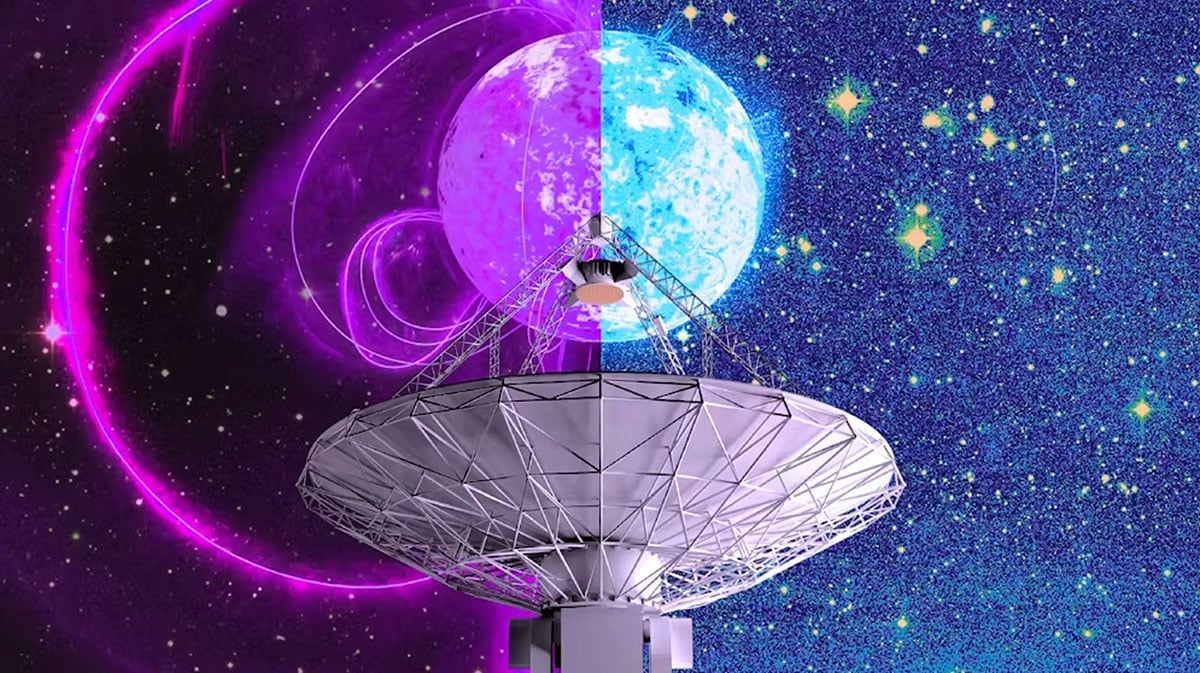
Scientists are puzzled by a mysterious radio signal, ASKAP J1935+2148, detected by the ASKAP radio telescope in Australia, which repeats every 53.8 minutes and exhibits three distinct emission states. The signal's origin is speculated to be either a neutron star or a white dwarf, but neither fully explains the phenomenon. This discovery challenges existing astrophysical theories and may lead to a reevaluation of our understanding of stellar remnants. Future research with advanced telescopes aims to uncover the source of this cosmic enigma.

astronomy1 year ago

"Scientists Uncover 'Fountain of Youth' Phenomenon Extending Stars' Lifespans by Billions of Years"

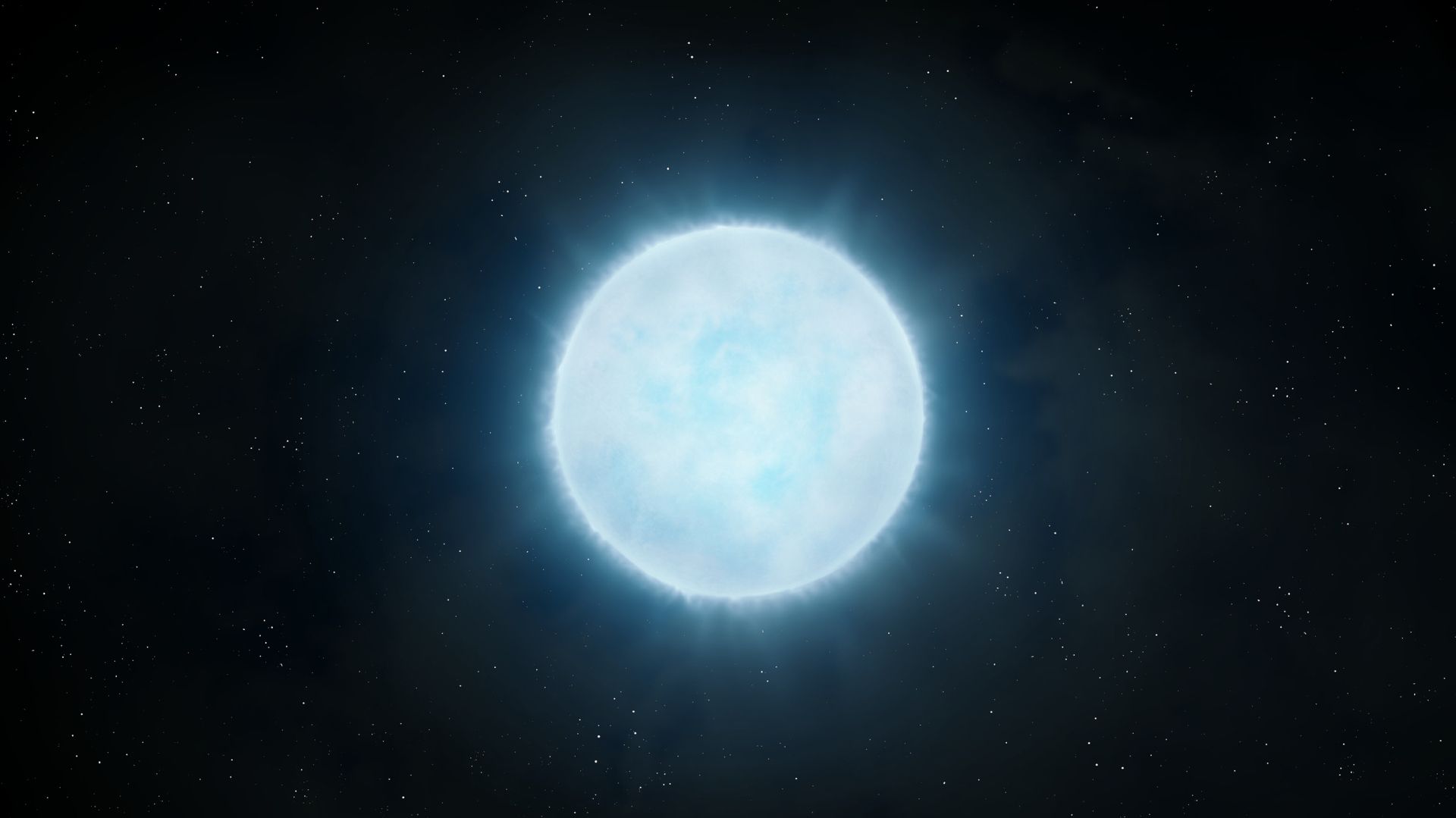
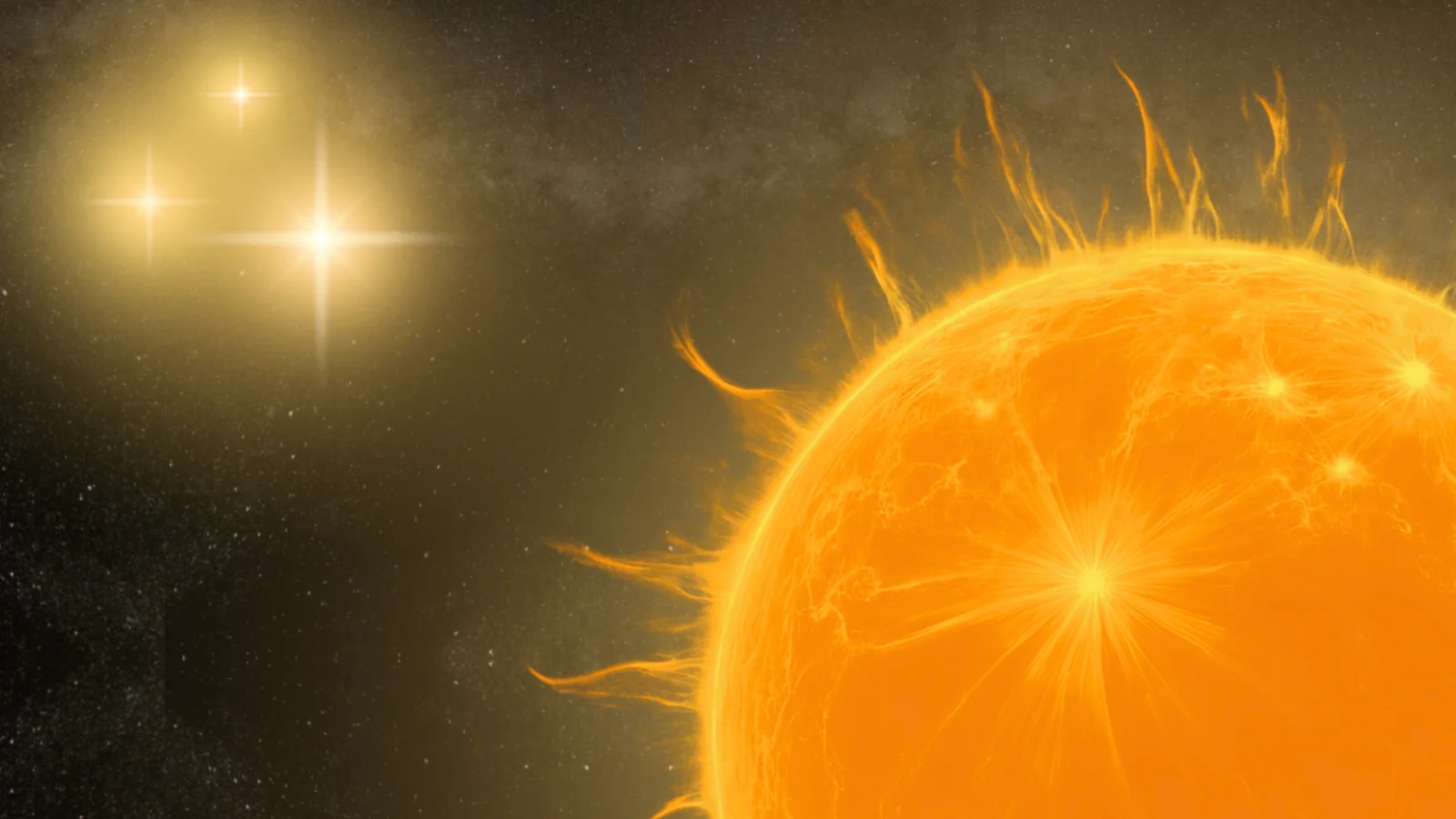
Scientists have discovered a population of white dwarfs that appear to have stopped cooling for billions of years, defying the classical understanding of these stellar remnants. A team of researchers has proposed a mechanism behind this phenomenon, suggesting that some white dwarfs generate energy through the formation of solid crystals that displace liquid material, releasing gravitational energy and halting the cooling process. This discovery challenges the way astronomers date stars and may redefine our understanding of stellar evolution.

astronomy1 year ago

"Revealing the Eternal Youth of White Dwarf Stars"

Some white dwarfs may take longer to cool off than previously expected, indicating a way of generating energy after their "deaths" and defying the classical picture of them being inert dead stars. Researchers have discovered a population of white dwarfs that seem to have stopped cooling for billions of years and propose a mechanism involving the creation of solid crystals that float upon denser liquid, releasing gravitational energy and halting the cooling process. This discovery may redefine the way astronomers date stars and complicate age-dating and the use of white dwarfs to reconstruct the formation of our galaxy.

astronomy1 year ago

"The Mystery of the Universe's Missing Sulfur"

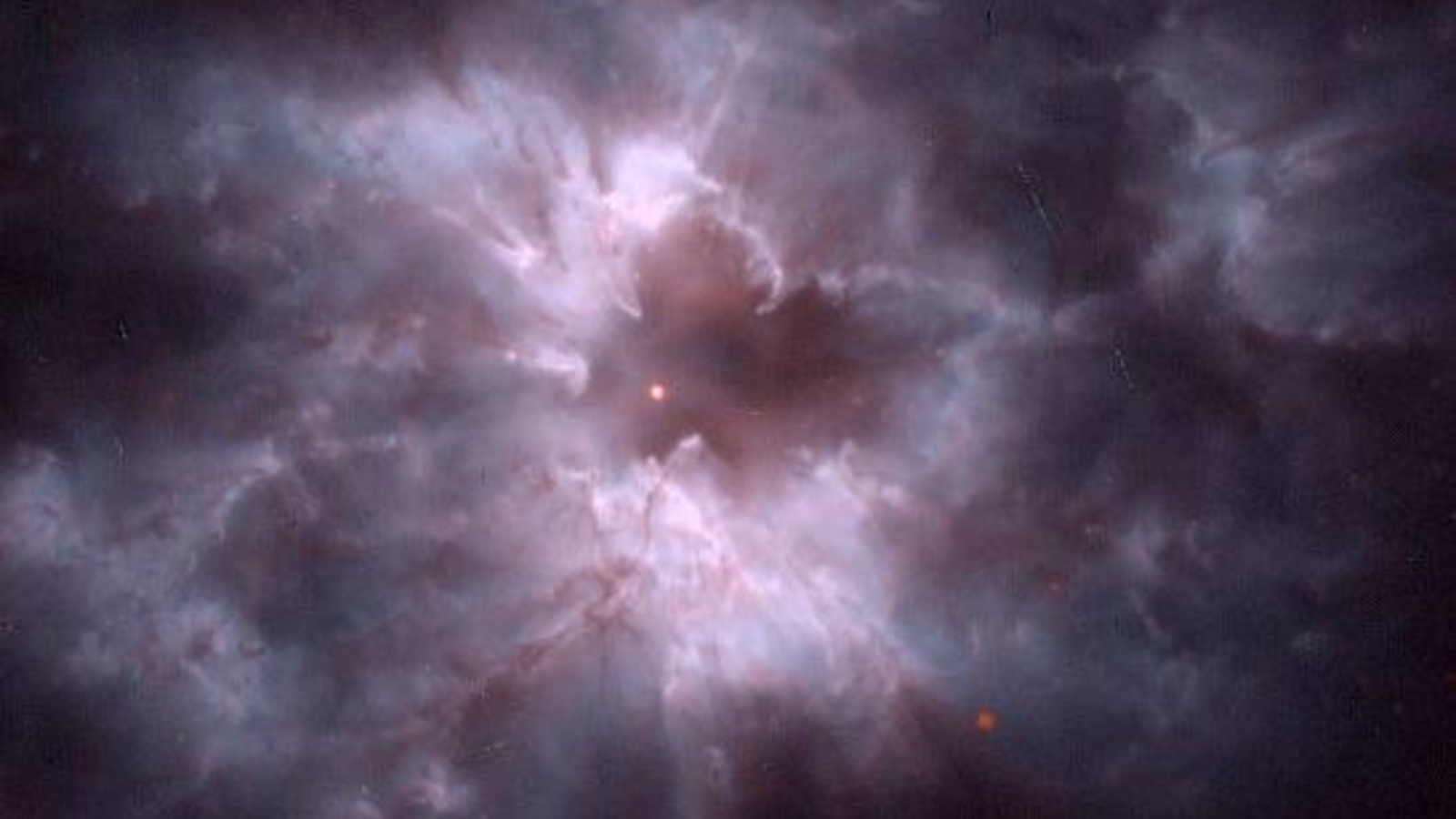
Astronomers have discovered that the missing sulfur in planetary nebulas, the remnants of dead stars, is not actually absent but rather hidden in plain sight. The sulfur seems to have been overlooked due to poor-quality data for the light emitted through the nebula. By analyzing a large dataset of planetary nebulas, researchers found a strong correlation between sulfur and other elements, effectively resolving the anomaly. This discovery highlights the importance of high-quality data in scientific research and provides new insights into the chemical compositions of these stellar remnants.