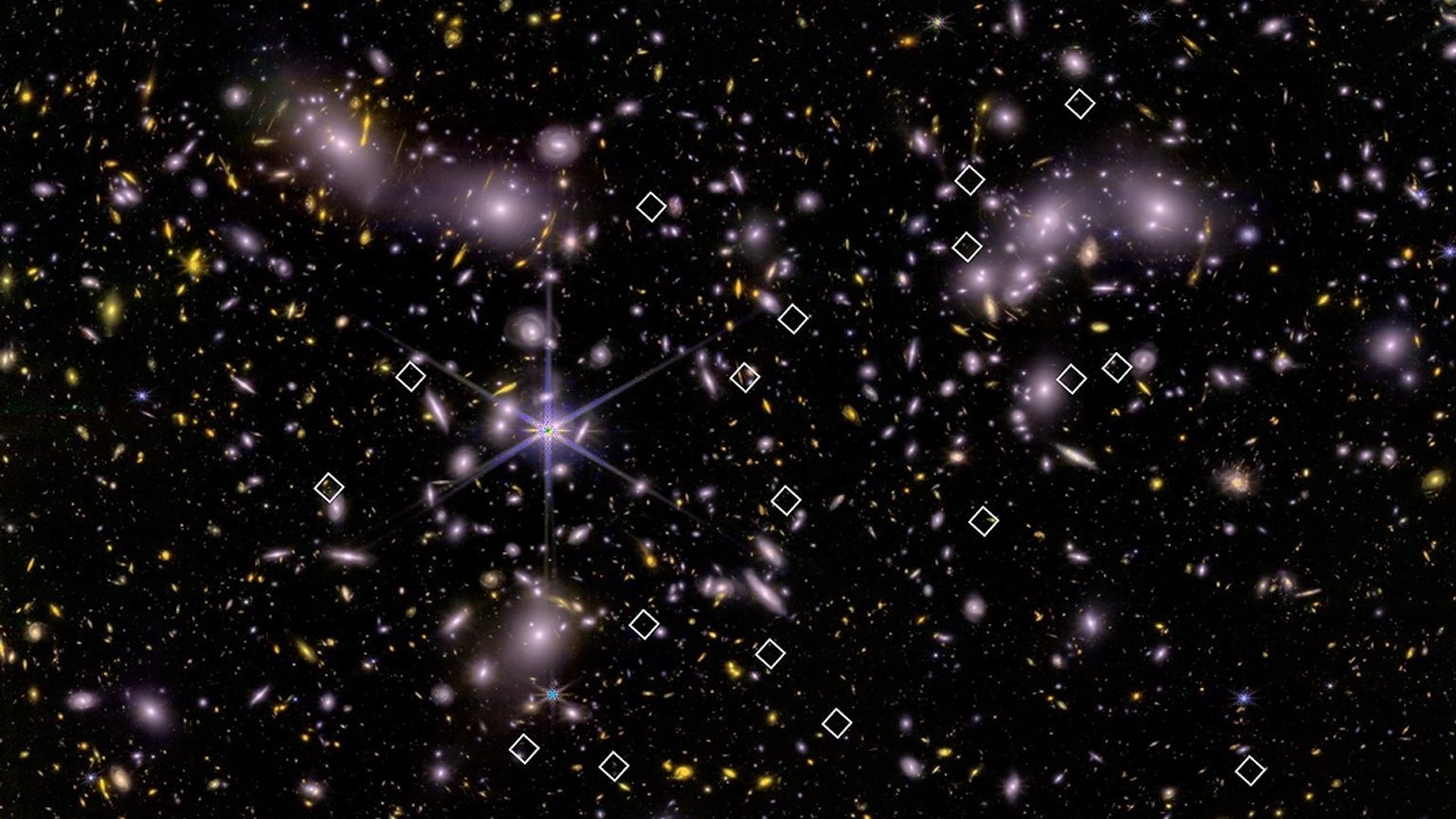
Astronomers using the James Webb Space Telescope have discovered small, starburst galaxies from the early universe that likely emitted enough ultraviolet light to drive the Era of Reionization, transforming the universe by clearing hydrogen fog in its first billion years.
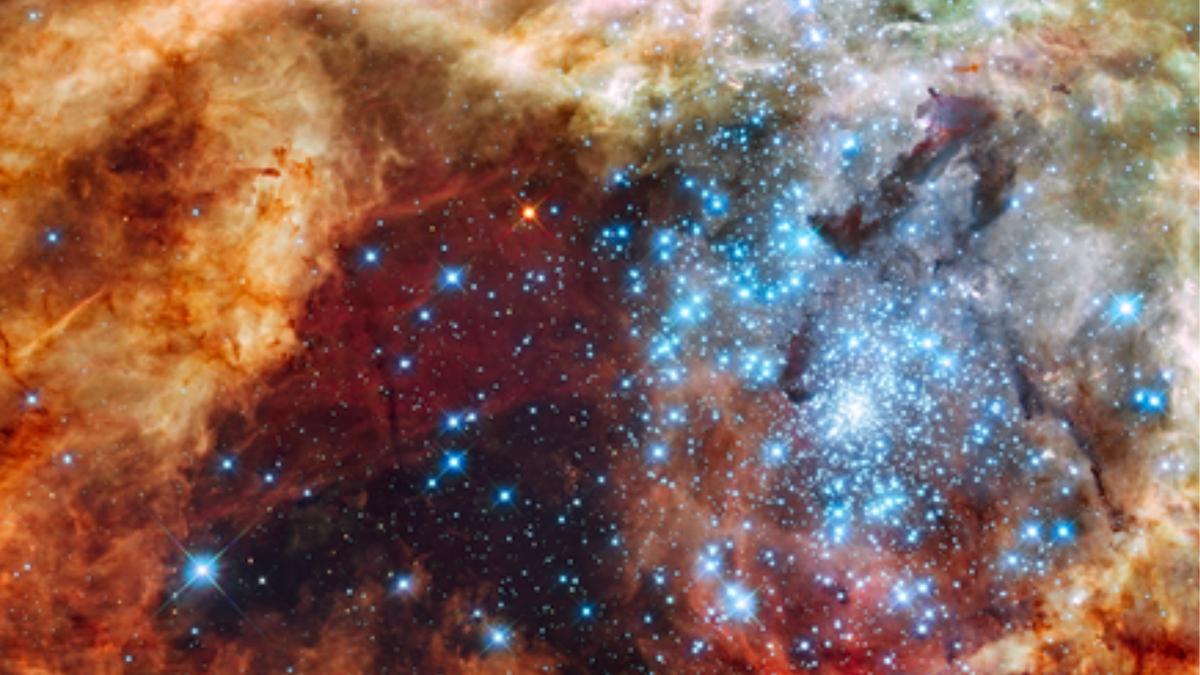
The Hubble Space Telescope completed its largest program, ULLYSES, observing 500 stars over three years, providing valuable data on star formation, evolution, and their impact on the universe. The survey focused on massive blue stars and young red stars, aiming to understand their winds, elemental dispersion, and influence on planet formation. The data will offer insights into the earliest stages of the evolving universe and impact various fields of astrophysics, showcasing Hubble's continued ability to deliver groundbreaking science.
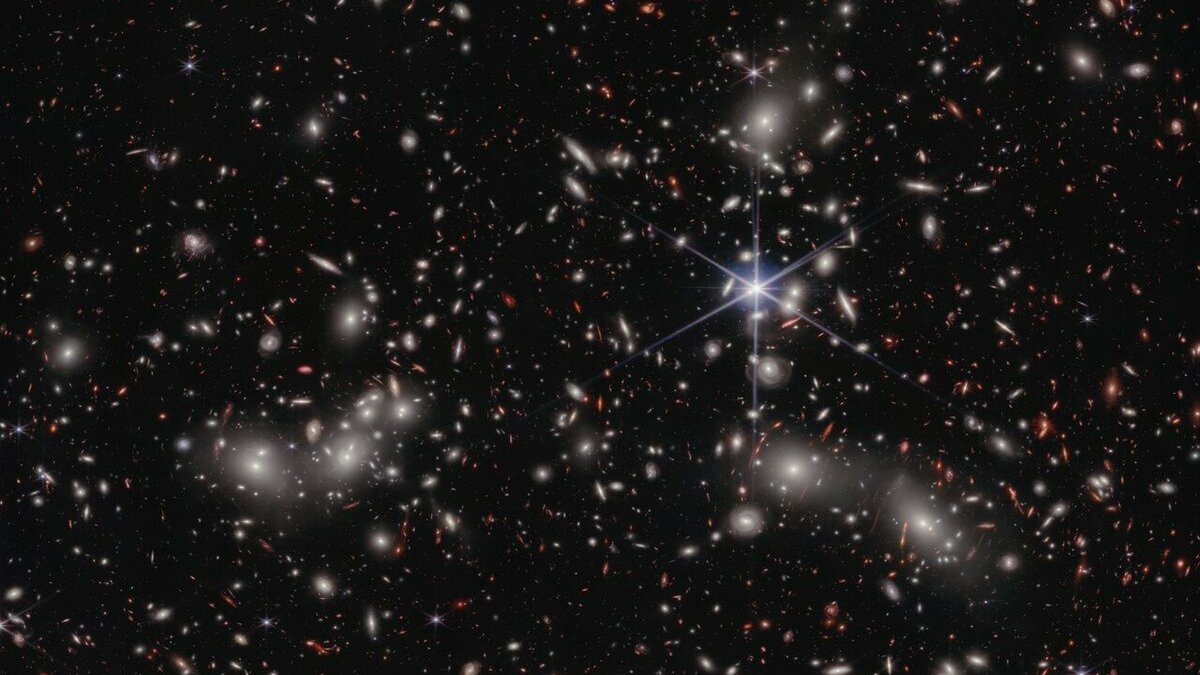
The James Webb Space Telescope has captured a stunning image of Pandora's Cluster, revealing how the universe transitioned from its Dark Ages to a clear, observable state. By observing faint, ancient galaxies through a natural gravitational lens, astronomers discovered that these galaxies were emitting significant amounts of ultraviolet light, enough to break down the dense gases suffocating space and reveal brilliant starlight. This breakthrough sheds light on the era of "reionization" and showcases the Webb telescope's unparalleled ability to peer into the early cosmos and study distant exoplanets.
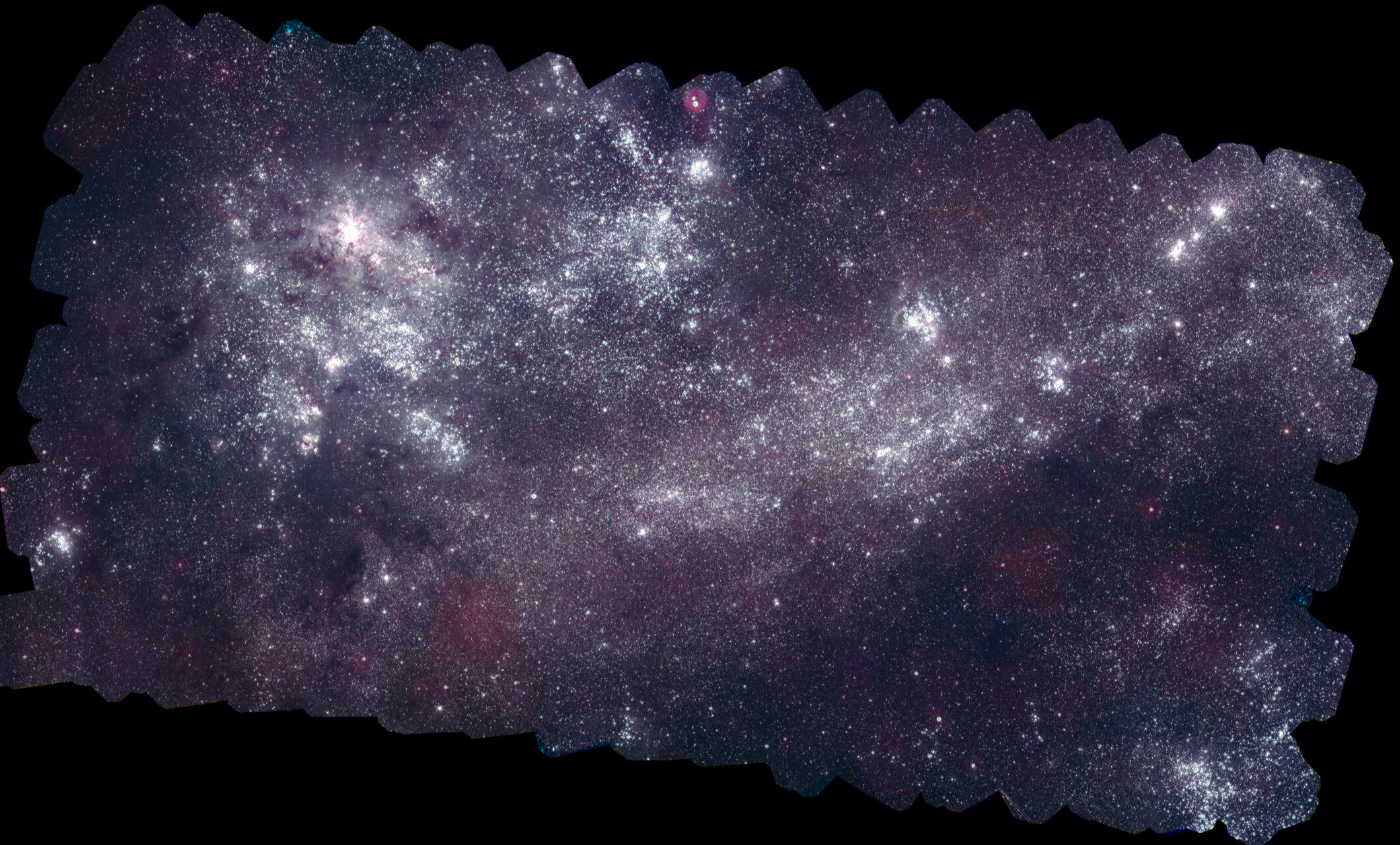
NASA is set to launch a new space telescope called UVEX in 2030, which will conduct an all-sky survey of ultraviolet light to gain insight into the evolution of galaxies and stars. The mission aims to capture stellar explosions and study massive stars, complementing data from other missions such as the Euclid mission and NASA’s Nancy Grace Roman Space Telescope. The UVEX mission, costing approximately $300 million, was selected for a two-year mission and will be managed by NASA’s Goddard Space Flight Center.
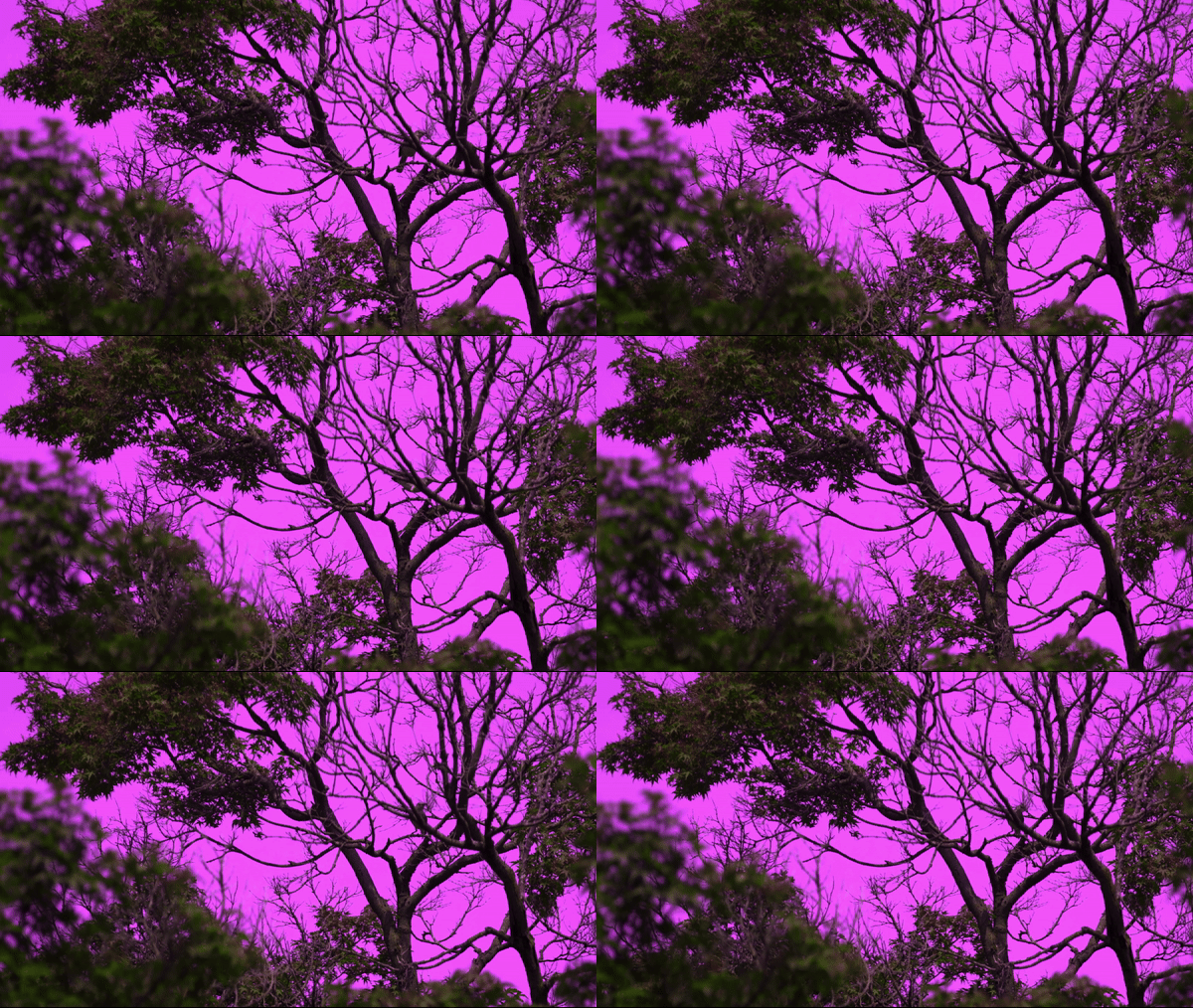
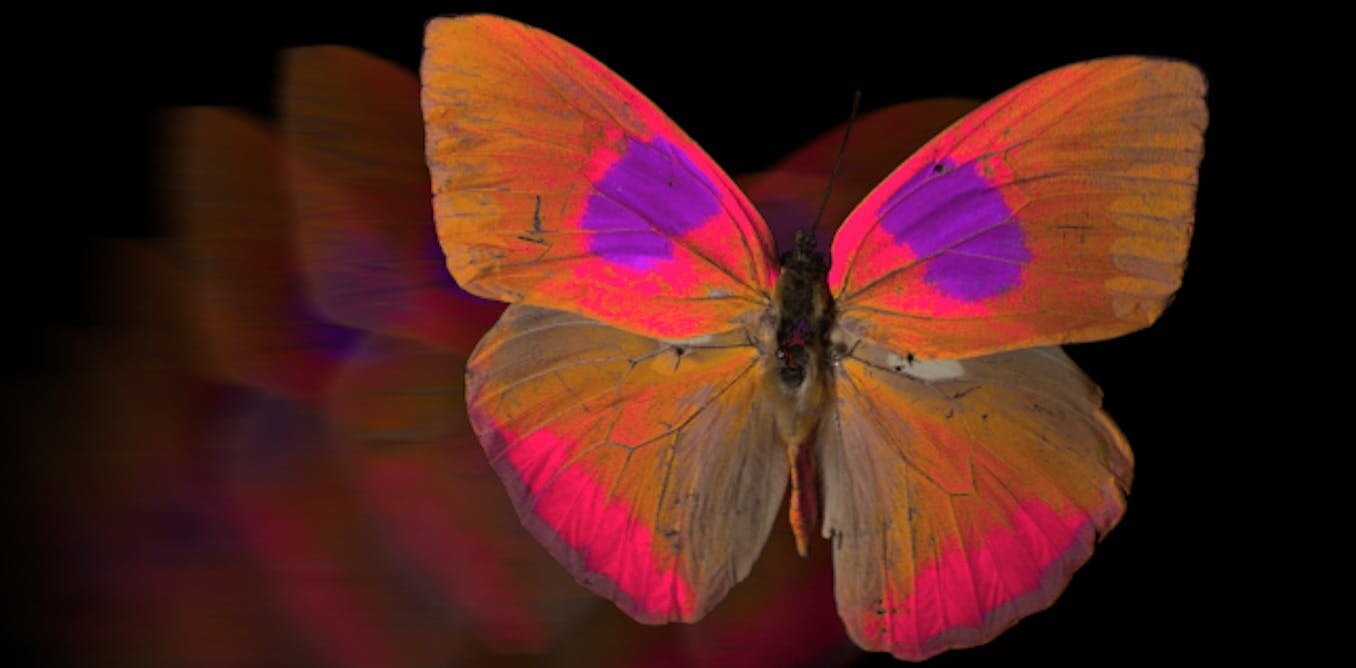
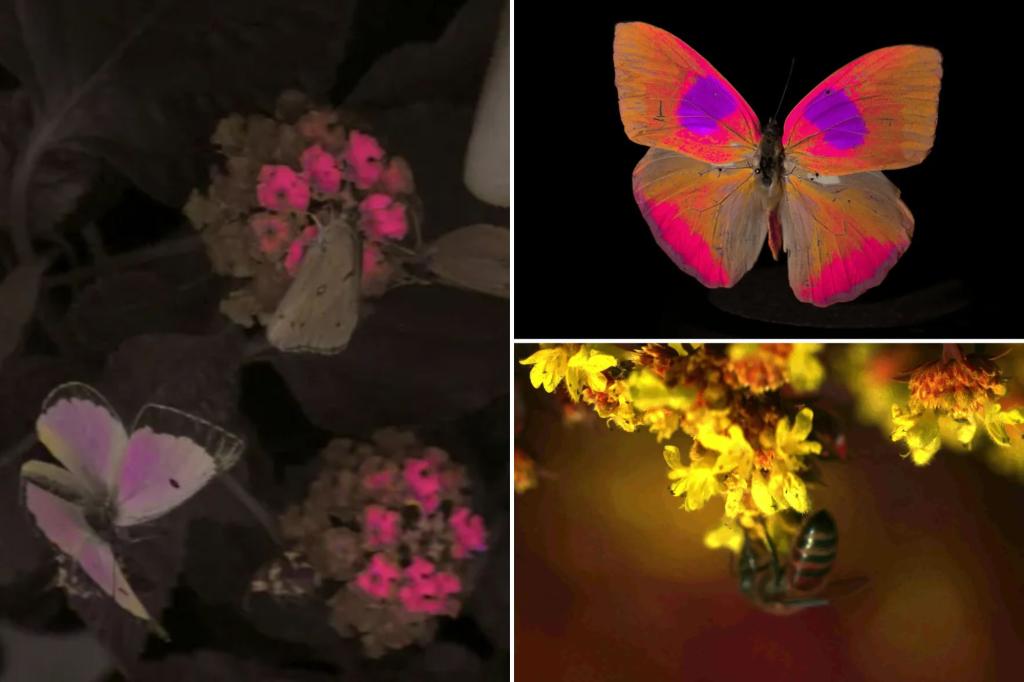
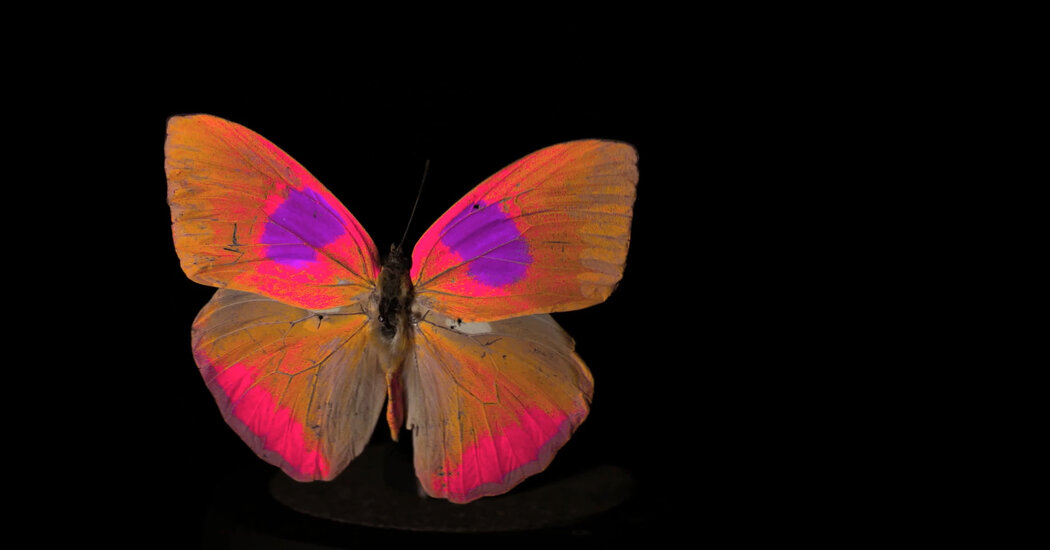
Scientists have developed a camera system and software that can capture video footage in "animal-view" colours, allowing us to visualize how the world might appear to different species based on their unique range of light sensitivity and colour perception. By using a beamsplitter and overlaying recordings from two cameras, the researchers were able to calculate the amount of light each camera's sensor received and then transpose the colors into animal-view that humans can perceive. This breakthrough technology provides a remarkable degree of insight into how animals experience the world and is available for anyone interested in exploring animal vision.
Scientists have developed a camera system and software package that allows recording videos in animal-view colors, revealing how various species perceive the world in different colors due to their unique vision capabilities, including sensitivity to ultraviolet light. The new camera system, which records in ultraviolet and visible light simultaneously, enables the visualization of movement in animal-view colors, offering insights into how animals see the world and potential applications in various research areas, such as understanding animal behaviors and improving visibility for birds to prevent collisions with glass facades. The researchers have made the codes and camera system plans freely available online for other researchers to use and explore the possibilities of studying animal vision.
A new video camera developed by American and British scientists allows people to see the world through the eyes of animals by recording video in four color channels, including ultraviolet. This innovative technology provides insights into how different species perceive colors and visual stimuli, offering a unique perspective on the natural world. The researchers have shared their methods and software codes to encourage others to replicate the camera, with the aim of advancing the development of this groundbreaking tool for ecologists and filmmakers.
Scientists have developed a new video system that simulates how animals see color, revealing that many animals perceive the world in their own distinct color palettes due to different combinations of photoreceptors. For example, birds can see ultraviolet light, expanding their rainbow and sky colors, while mice have just two types of cones, making their rainbow composed of two broad bands. The new tool captures natural behavior, providing insights into how animals perceive and interact with their environment.
Astronomers at the University of Toronto have discovered a population of massive stars in binary systems that have been stripped of their hydrogen envelopes by their companions. This finding sheds light on the origins of hydrogen-poor core-collapse supernovae and neutron star mergers. The researchers used ultraviolet data from the Swift-UVOT telescope to identify these stripped stars, which are believed to be rare and have important implications for our understanding of supernovae, gravitational waves, and the properties of distant galaxies. The discovery also provides opportunities for more detailed physics studies and measurements of stellar winds.
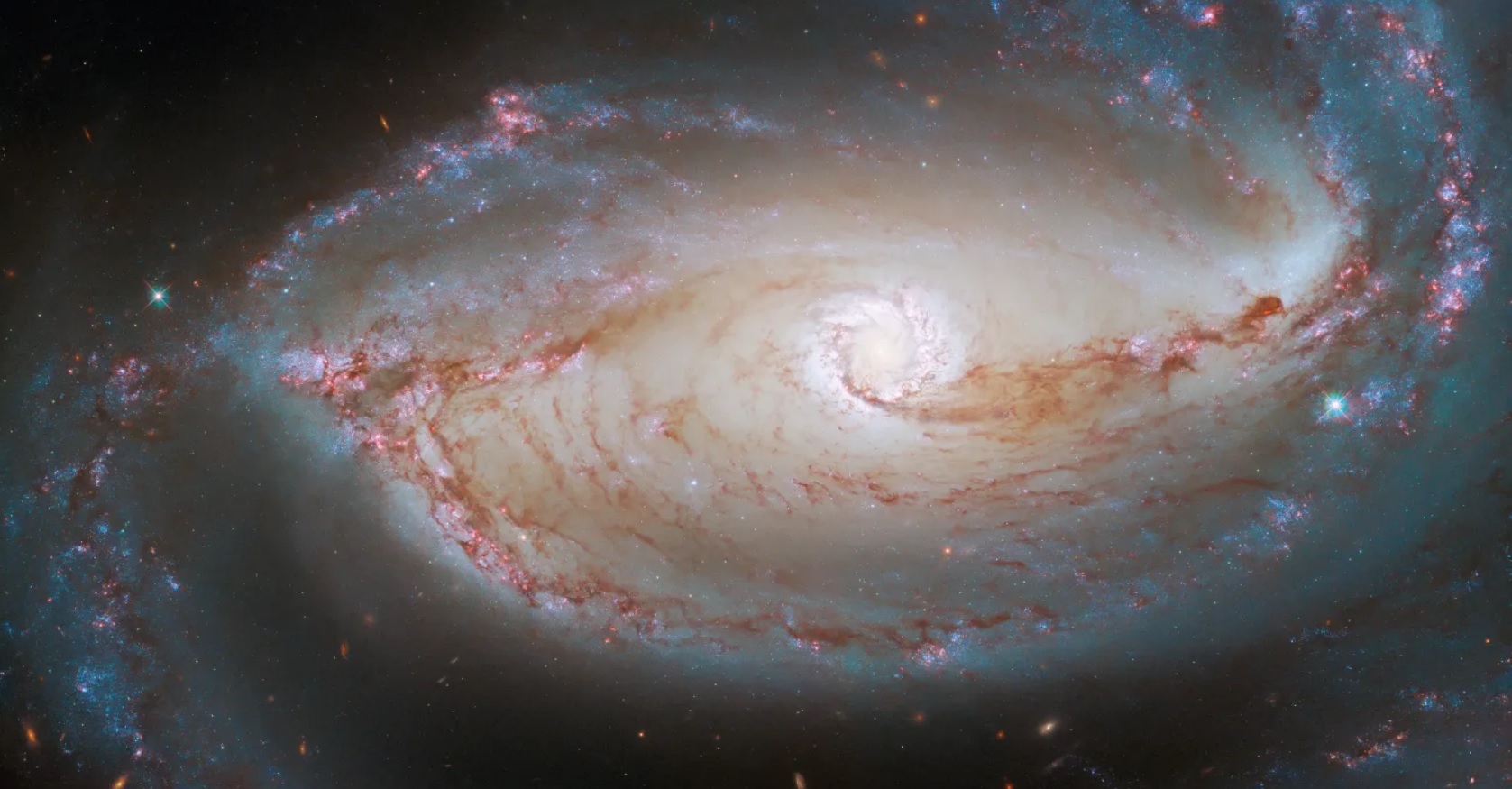
The Hubble Space Telescope has captured a new photo of the galaxy NGC 5068, revealing bright pinkish-red patches of young star clusters camouflaging the spiral arms of the galaxy. These patches represent thousands of hot, young star clusters that emit ultraviolet light and are typically found where new stars form. The galaxy also features a prominent central bar-shaped structure densely packed with mature stars. NGC 5068 is believed to house at least 110 Wolf-Rayet stars, which are old, massive stars that lose mass at a high rate. The James Webb Space Telescope has also recently photographed NGC 5068 as part of a science campaign to study star formation in nearby galaxies.
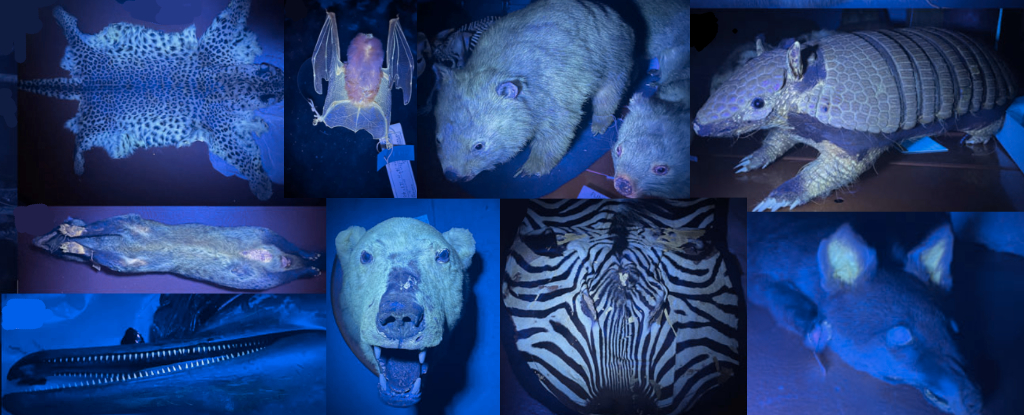
Scientists have discovered that fluorescence, the ability to emit light after absorbing ultraviolet light, is present in 125 species of mammals across various families and orders. This includes platypuses, wombats, foxes, polar bears, zebras, and more. The study suggests that fluorescence may be widespread in mammals, although its specific biological role remains unclear. The phenomenon could be a by-product of surface chemistry or have an evolutionary advantage, such as aiding visibility in low-light conditions for nocturnal species. The presence of fluorescence in pigmented fur suggests the involvement of chemicals other than keratin, which is known to cause fluorescence in unpigmented or pale-colored hair.
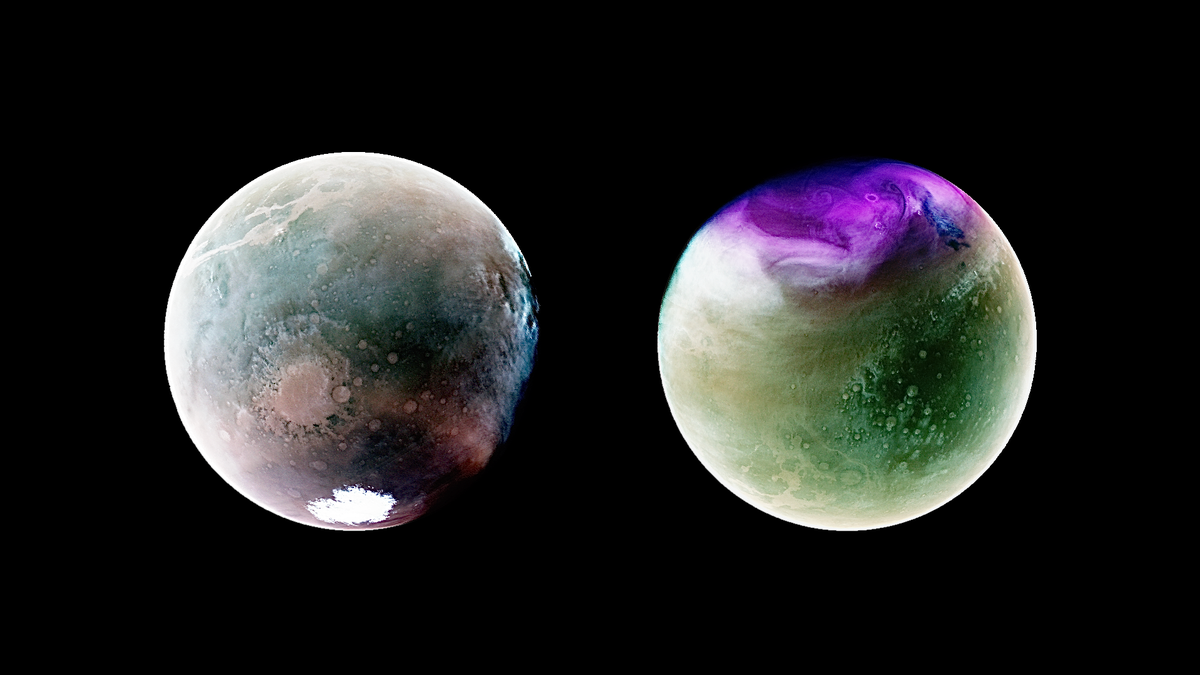
NASA's MAVEN spacecraft captured stunning ultraviolet images of Mars, revealing the changing seasons on the planet as it orbits around the Sun. The images show Mars' southern and northern hemispheres in beautiful new shades, with atmospheric ozone appearing purple, clouds and hazes appearing white or blue, and the surface appearing tan or green. MAVEN's mission is to study the planet's upper atmosphere, ionosphere, and its interactions with the Sun in an effort to understand how Mars lost its atmosphere millions of years ago.
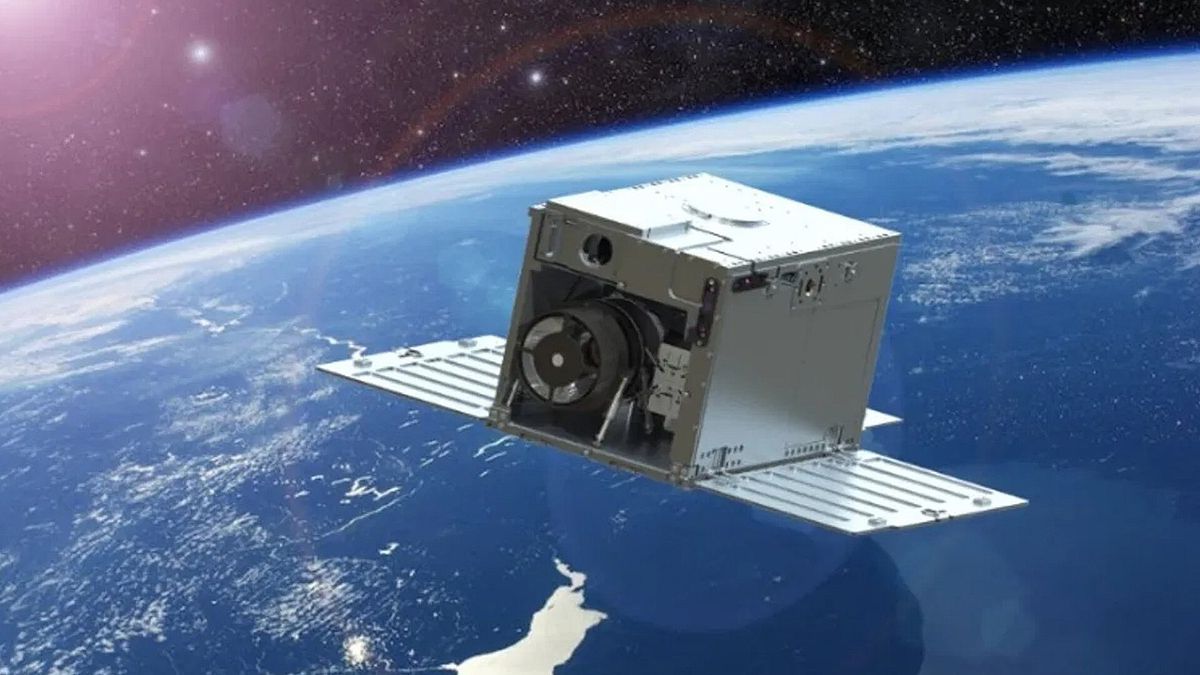
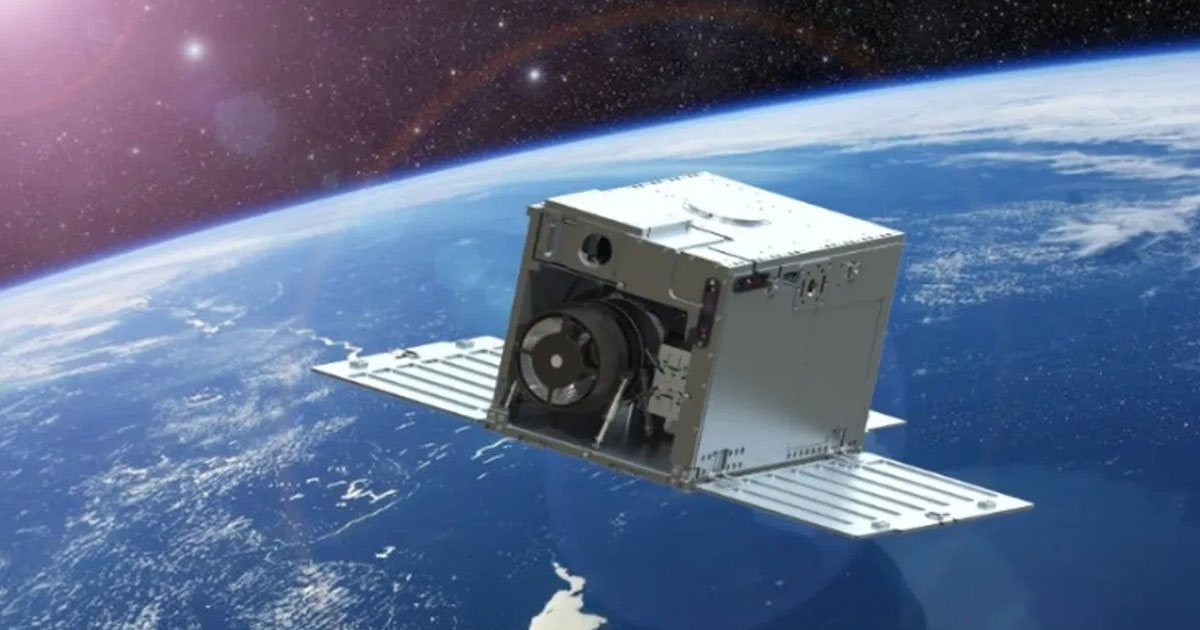
NASA's James Webb Space Telescope will be aided by a smaller satellite called MANTIS, which will look at star activity such as flares and examine the sky in ultraviolet light, including the most energetic set of wavelengths known as extreme ultraviolet. MANTIS aims to provide more data to refine the theory that rocky exoplanets with water on their surface may face extra challenges if they orbit a very active star, given the amount of radiation such planets would be exposed to.
NASA has selected a toaster-sized cubesat called MANTIS to accompany the James Webb Space Telescope on its mission to study exoplanets. MANTIS will observe stars in the full range of ultraviolet light, including extreme UV light, which will help the cubesat study stars that burn dozens of light-years away from Earth. MANTIS will fill in the blanks for the much larger telescope, providing context on the stellar environments in which these planets live. The observations could provide a glimpse of worlds that could harbor life.
NASA has selected a cubesat called MANTIS to accompany the James Webb Space Telescope on its mission to study exoplanets. MANTIS will observe stars in the full range of ultraviolet light, including extreme UV light, which will help the cubesat study stars that burn dozens of light-years away from Earth. MANTIS will fill in the blanks for the much larger telescope, providing important context on the stellar environments in which these planets live. The mission is scheduled to launch in 2026.