
Unveiling the World of Glowing Mammals: New Study Discovers Over 125 Fluorescent Species
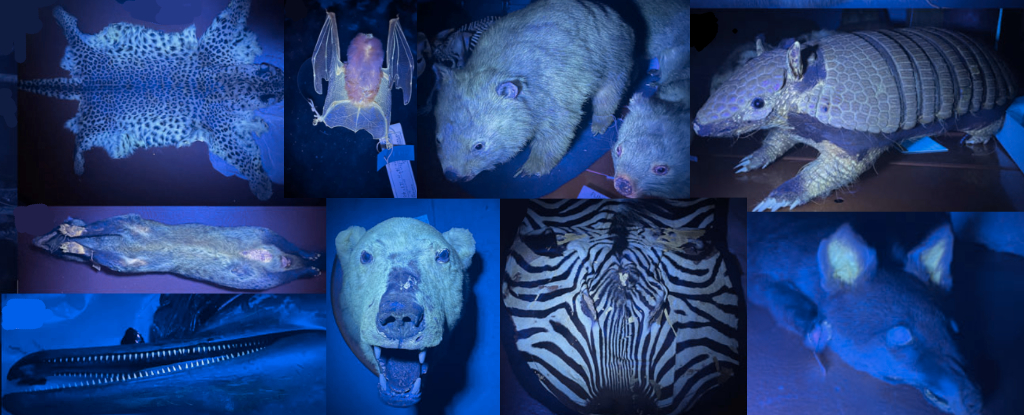
Scientists have discovered that fluorescence, the ability to emit light after absorbing ultraviolet light, is present in 125 species of mammals across various families and orders. This includes platypuses, wombats, foxes, polar bears, zebras, and more. The study suggests that fluorescence may be widespread in mammals, although its specific biological role remains unclear. The phenomenon could be a by-product of surface chemistry or have an evolutionary advantage, such as aiding visibility in low-light conditions for nocturnal species. The presence of fluorescence in pigmented fur suggests the involvement of chemicals other than keratin, which is known to cause fluorescence in unpigmented or pale-colored hair.
- Glowing Wombats: Scientists Discover 125 New Species of Fluorescent Mammals ScienceAlert
- Cats among mammals that can fluoresce, new study finds ABC News
- At Least 125 Species of Mammals Glow under Ultraviolet Light, New Study Reveals Sci.News
- Fluorescence in mammals highly common but purpose still unknown: Study WION
- Positively glowing: fluorescent mammals are far more common than earlier thought, study suggests The Guardian
Reading Insights
0
7
3 min
vs 4 min read
83%
622 → 103 words
Want the full story? Read the original article
Read on ScienceAlert