Zadie Smith, in her new collection of essays 'Dead and Alive,' reflects on aging, the swift passage of time, generational differences, and her personal experiences with melancholy and vulnerability at age 50, emphasizing the importance of care and understanding across ages.
A geologist from the University of Alaska Fairbanks proposes a fringe theory that time is three-dimensional and space is an emergent property of it, suggesting a new way to understand the universe, though it remains unverified and outside mainstream physics.
A new theory by Gunther Kletetschka suggests that time has three dimensions, with space emerging as a secondary effect, potentially advancing the quest for a unified understanding of the universe and the origin of particle masses.
TIME has released its list of 100 must-read books for 2024, featuring a mix of gripping novels, short stories, histories, and memoirs from both bestselling and debut authors. Highlights include Deborah Jackson Taffa's memoir 'Whiskey Tender,' Yasmin Zaher's novel 'The Coin,' and Percival Everett's reimagining of 'The Adventures of Huckleberry Finn' titled 'James.' The list aims to entertain and enlighten readers with diverse and compelling narratives.
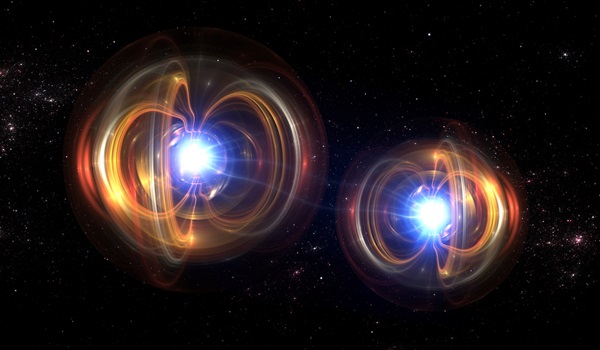
A new theory proposes that time may be an illusion created by quantum entanglement, challenging the traditional view of time as a fundamental aspect of physical reality. Researchers suggest that changes over time are due to objects being entangled with a clock, making the universe appear static to an external observer. While promising, this theory requires further exploration and testing to fully understand its implications.
Modern physics suggests time may be an illusion, and philosopher J.M.E. McTaggart argued that time can be proven unreal using logic alone. He proposed two ways to arrange events in time, the B-series and the A-series, but concluded that neither can capture time. Philosophers continue to debate this issue, with A-theorists trying to redefine the A-series, B-theorists accepting the B-series as reality, and C-theorists suggesting that time has no direction. Despite the lack of scientific findings, McTaggart's logical argument has sparked ongoing philosophical discussion about the nature of time.
The article discusses the concept of time in physics, emphasizing that the time of physics is not real time but a mathematical abstraction. It explains that while modern clocks are incredibly precise, they do not reveal the true nature of time and are tools invented to measure aspects of the experiential flow of time. The article warns against mistaking abstract, mathematical time for lived time and emphasizes the importance of understanding the purpose of a specific notion of time without attributing ontological primacy to it.
In a podcast episode, physicist Frank Wilczek discusses the nature of time, its role in scientific progress, and its conceptual evolution from Newton to Einstein. He explains that time is what clocks measure, and delves into the implications of Einstein's theories of special and general relativity, which introduced a more flexible concept of time and led to groundbreaking insights into the nature of space-time. Wilczek also highlights the interconnectedness of time with various physical phenomena and the practical applications of precise timekeeping in systems like GPS.
Sleep deprivation can warp perception, leading to hallucinations, distorted time perception, and altered memory storage. Even mild sleep deprivation can cause negative thought patterns and emotional memory consolidation. Sleep is crucial for processing sensory input and calibrating our senses, impacting our understanding of reality and truth.
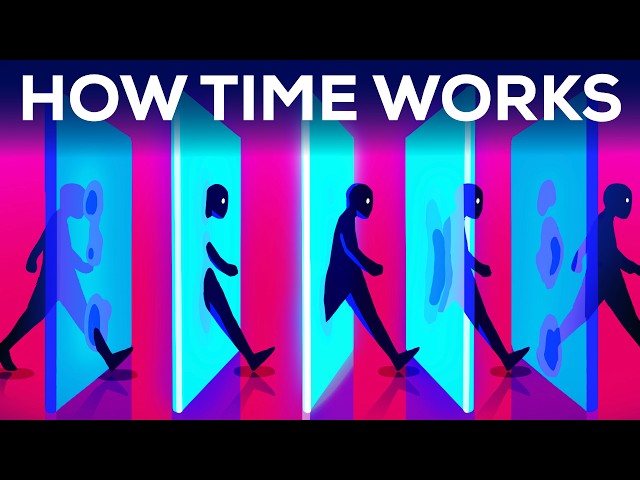
Kurzgesagt's latest video delves into the paradox of time, exploring theories such as the block universe and the growing block, which suggest that the past and future may already exist alongside the present. Quantum mechanics complicates these theories, leading to alternative perspectives on time, including the idea that "now" is only relevant locally, or that time itself may be an illusion or an emergent property of a deeper reality.
Physicists have discovered that time can flow in both directions within materials, contrary to our perception of time as irreversible due to the second law of thermodynamics. While we typically see disorder increase over time, researchers have found that the motion of molecules in glass or plastic can be reversed when observed from a specific angle, challenging our understanding of time's unidirectional flow in certain materials.
Time has long been an elusive concept, but recent theories about the quantum nature of gravity may hold the key to understanding its emergence. Our sense of time is based on our internal experience, memories, and predictions, all of which are influenced by the increasing entropy of the universe. The nature of time is intertwined with space-time, and physicists are exploring theories such as eternalism, presentism, and the crystallizing block universe to understand its essence. Quantum gravity and quantum entanglement are also being studied to explain the emergence of time, suggesting that time is an emergent phenomenon from within our space-time and not present outside of it.
In the novel "Forgottenness," Ukrainian writer Tanja Maljartschuk explores the meaning of Ukrainian identity and the elasticity of time through the intertwined stories of a fictional narrator and historical figure Viacheslav Lypynskyi. The narrator grapples with depression, agoraphobia, and a sense of loss over Ukraine's mythic identity, while Lypynskyi, a Polish-Ukrainian activist, seeks to reconcile his Polish heritage with his Ukrainian "calling." The novel delves into the relentless passage of time and its impact on individual and national identities, offering a poignant reflection on Ukraine's struggle and the broader human experience.
Scientists are finding that the concept of time is more complex than previously thought, with variations in time observed at different elevations and during the universe's expansion. Some scientists even question the fundamental nature of time. NPR's Geoff Brumfiel discusses these findings and their implications, exploring the nature of time through atomic clocks, exploding stars, and subatomic collisions.
OpenAI is in discussions with CNN, Fox Corp, and Time to license their content for training its ChatGPT tool, amid allegations of copyright infringement. The startup aims to enhance the accuracy and relevance of its AI chatbot by incorporating news, video, and digital media content. OpenAI is currently facing legal challenges related to copyright infringement.