
philosophy12.46 min read
Berggruen Prize 2025 crowns consciousness-themed AI essays with $50K prizes
1 month ago•Source: Berggruen Institute

The latest philosophy stories, summarized by AI

The article discusses philosopher C. Thi Nguyen's book 'The Score,' which argues that scoring systems in games are liberating and foster creativity, whereas institutional metrics like grades and rankings tend to stifle individuality and impose homogenized values, urging us to reconsider how we engage with these systems in our lives.

Aeon•2 months ago
Big Think•2 months ago

In the first half of 2025, a top philosophy journal, The Journal of Philosophy, accepted only one article out of 403 submissions, highlighting a notably low acceptance rate, though the reasons behind this are not definitively explained.

The article explores how digital overload diminishes our capacity for reflection and depth, drawing on Heidegger's philosophy to argue that embracing boredom and silence can foster authentic thinking and self-awareness, serving as a resistance to the constant stimulation of modern technology.

Oliver Burkeman explores how accepting human mortality and limits can lead to a more joyful life, advocating for a balanced approach between control and passivity, exemplified by the metaphor of a dancing monk who embraces life's boundaries with joy.
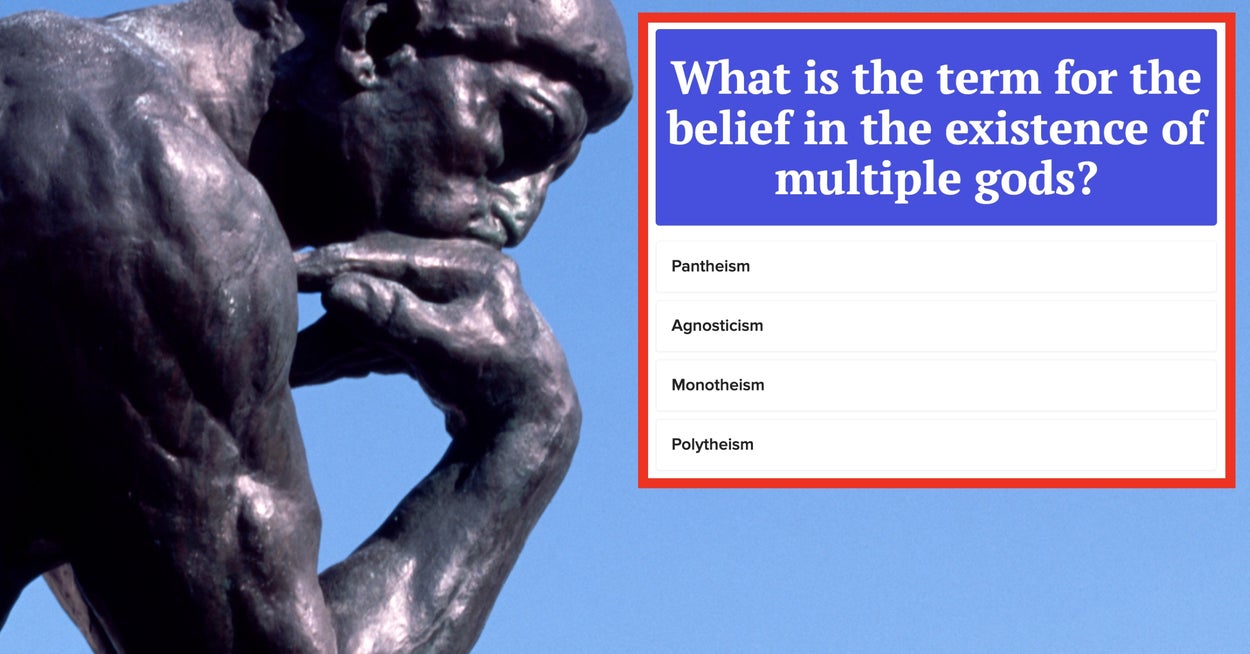
This article is a philosophy trivia quiz covering topics like Western philosophy, famous philosophers, key philosophical concepts, and influential texts, designed to test knowledge on figures such as Socrates, Descartes, Kant, Sartre, and Rousseau.

The essay explores different philosophical models explaining the laws of nature, focusing on the 'layer-cake' model, which views laws as deterministic and producing future states from present ones, and the 'newspaper' model, which sees laws as descriptive rather than prescriptive. It also introduces the 'straitjacket' model, which suggests laws constrain possibilities without a flow of time. The discussion highlights the metaphysical challenges each model faces in explaining stable regularities in the universe, such as the consistent rising of the Sun or the boiling point of water.

Modern physics suggests time may be an illusion, and philosopher J.M.E. McTaggart argued that time can be proven unreal using logic alone. He proposed two ways to arrange events in time, the B-series and the A-series, but concluded that neither can capture time. Philosophers continue to debate this issue, with A-theorists trying to redefine the A-series, B-theorists accepting the B-series as reality, and C-theorists suggesting that time has no direction. Despite the lack of scientific findings, McTaggart's logical argument has sparked ongoing philosophical discussion about the nature of time.
Philosopher Schopenhauer argues that the universe depends on consciousness and that objects exist only because of the forms of the knowing mind. He contends that the mind-dependence of objects conflicts with widely held realist beliefs and aims to align intuitive knowledge with reflective reason. Schopenhauer's argumentative strategy for idealism relies on proofs from like-minded precursors and observations from natural sciences. He explains the genesis and persistence of realist belief as stemming from innate tendencies and cultural narratives. Acknowledging the truth of idealism leads to detachment and the realization that the world and life are nothing but an insubstantial show.
In this philosophical discussion, Paul Franks argues that Kant's perspectivism aligns better with our everyday experience and Einstein's physics than Berkeley's immaterialist view. While Berkeley's approach suggests that what we perceive is always mind-dependent, Kant's transcendental idealism maintains that human cognition is perspectival but does not negate the mind-independence of the underlying material causes of sensation. Franks suggests that Kant's combination of transcendental idealism and empirical realism offers a more coherent understanding of our experience of the world and natural science than Berkeley's phenomenalism and instrumentalism.

The philosophy community in 2023 was engaged with a variety of issues including the firing of a journal editor raising concerns about academic freedom, the closure of a philosophy institute, the launch of new journals, funding uncertainties, and a violent attack on a philosophy professor. The role of AI in philosophy was a hot topic, with discussions on its use in writing and teaching, and the challenges it presents. The philosophy job market, teaching resources, and public outreach were also significant themes. Daily Nous thanked its contributors and readers, and looked forward to its tenth anniversary in 2024.

British philosopher Philip Goff, a proponent of panpsychism, discusses his new book "Why? The Purpose of the Universe" and addresses questions about consciousness, fine-tuning, and the existence of purpose in the cosmos. Goff argues that panpsychism, the belief that everything material has an element of consciousness, offers a middle ground between the belief in the soul and reductionist views. He also challenges the multiverse theory as an explanation for fine-tuning and proposes pan-agentialism to account for the evolution of consciousness. Goff suggests that the Universe may have a conscious mind that "breathes fire into the equations" of physics, providing an explanation for both the goal-directedness and the suffering observed in the world.