Tag

Tai Chi

All articles tagged with #tai chi

health5 months ago

Gentle Exercises Like Yoga and Tai Chi Improve Sleep, Study Finds

A meta-study found that yoga, Tai Chi, walking, and jogging are effective for managing insomnia, with yoga providing the strongest benefits and Tai Chi offering long-lasting effects. These exercises can improve sleep duration, efficiency, and reduce insomnia severity, serving as accessible alternatives or complements to cognitive behavioral therapy for insomnia (CBT-i).

health6 months ago

Exercise Enhances Brain Health and Protects Against Alzheimer’s

A comprehensive review shows that various types of exercise, including moderate-intensity workouts, yoga, Tai Chi, and active video games, can significantly enhance brain health across all ages, especially benefiting memory, cognition, and executive functions. Incorporating these activities into daily routines can provide long-term cognitive benefits, with specific practices like yoga and Tai Chi also reducing stress and inflammation.

health-and-wellness1 year ago

Tai Chi Outperforms Aerobic Exercise in Lowering Blood Pressure, Study Shows

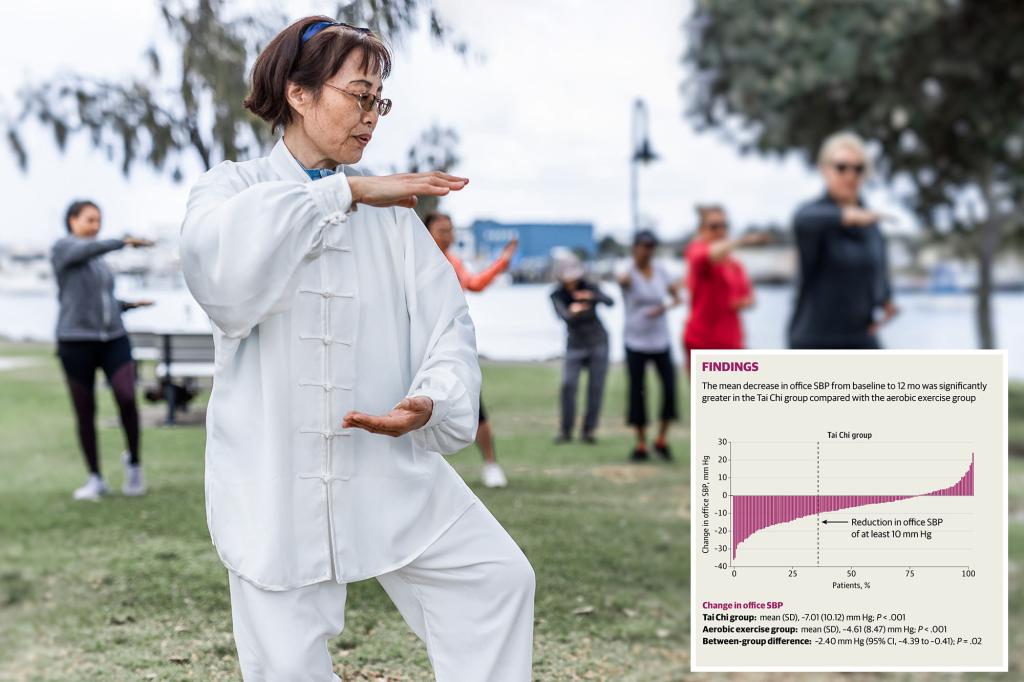
A new study published in the JAMA Network Open journal found that practicing tai chi led to more significant drops in blood pressure for adults with prehypertension compared to supervised aerobic exercise after one year. Nearly 22 percent of the tai chi group returned their blood pressure to a normal range, while only 16 percent did so in the aerobic group. The key takeaway is to keep moving, regardless of the intensity, to maintain a healthy lifestyle and lower blood pressure.

health1 year ago

"Tai Chi's Surprising Impact on Blood Pressure and Mental Health: The Latest Findings"

New studies suggest that practicing tai chi may lower blood pressure better than aerobic exercise, while using salt substitutes can also help reduce the risk of high blood pressure. Staying physically active can lower the risk of contracting and being hospitalized due to COVID-19, and exercise has been found to be an effective treatment for depression. However, living alone can increase rates of depression, emphasizing the importance of building social support networks to combat loneliness.

health-and-wellness1 year ago

Tai Chi Outperforms Aerobic Exercise in Lowering High Blood Pressure

A study published in JAMA Network Open suggests that tai chi may be more effective at lowering blood pressure and improving heart health than intense cardio, due to its calming effects as a moving meditation. Participants who practiced tai chi had lower blood pressure and were less likely to progress to hypertension compared to those who did cardio exercises. Additionally, isometric exercises, such as wall sits, were found to be effective at reducing blood pressure, with just eight minutes of isometric exercise three times a week leading to a healthy reduction. However, aerobic exercises in general have also been shown to improve blood pressure and heart health.

health-and-wellness1 year ago

Tai Chi Outperforms Aerobic Exercise in Lowering High Blood Pressure

A study published in JAMA Network Open suggests that engaging in tai chi for one year leads to greater reductions in systolic blood pressure compared to aerobic exercises for individuals with prehypertension. The research, conducted on 349 adult volunteers, found that those practicing tai chi experienced more significant reductions in blood pressure and were less likely to progress to hypertension compared to those engaging in aerobic exercise.

health-and-wellness1 year ago

"Tai Chi Outperforms Aerobic Exercise in Lowering High Blood Pressure: Study"

A study found that practicing Tai Chi is more effective than aerobic exercise in reducing high blood pressure, particularly for individuals with prehypertension. Over the course of a year, participants practicing Tai Chi experienced greater reductions in blood pressure compared to those engaging in aerobic exercise. The gentle martial art's slow and fluid movements can benefit balance, breathing, and heart function, making it a suitable and safe exercise for people of all ages and physical conditions, with potential benefits for heart disease prevention and improved flexibility and balance, especially for seniors.

health2 years ago

The Powerful Link Between Exercise and Brain Health

A new study published in the Annals of Internal Medicine has found that practicing tai chi, particularly a simplified form known as tai ji quan, is one of the best exercises for reversing the effects of cognitive aging. The study showed that individuals who practiced tai chi for six months increased their cognitive test scores by 1.5 points, equivalent to reducing their brain's age by three years. Adding memory exercises to the physical movement further enhanced the cognitive benefits. Tai chi also offers other health benefits such as improved muscle strength, flexibility, balance, heart health, and mental well-being.

health2 years ago

The Memory-Boosting Power of Tai Chi: A Study Reveals the Most Beneficial Type

A study has found that practicing tai chi, a slow-moving martial art, can help slow down cognitive decline and protect against dementia. Participants who practiced a simplified form of tai chi twice a week for six months improved their memory test scores by 1.5 points, equivalent to staving off decline for three extra years. Those who practiced a more rigorous form of tai chi, called Cognitively Enhanced Tai Ji Quan, improved their scores by about 3 points, equivalent to six extra years of cognitive function. The combination of physical activity and memorization of movements in tai chi is believed to contribute to its effectiveness.

health-and-wellness2 years ago

Tai Chi: A Powerful Tool for Senior Mental Health and Parkinson's Disease

A new study conducted in the United States has found that combining tai chi with thinking exercises can improve mental processes and multitasking in older adults who struggle with memory. The effects of the enhanced tai chi program lasted for six months after training, suggesting it could potentially ameliorate cognitive decline in at-risk individuals. The study recruited adults aged 65 and above with self-reported memory decline or mild cognitive impairment and found that the enhanced tai chi program was clinically superior to standard tai chi and stretching exercises in improving cognition and reducing dual-task interference during walking. The researchers are now preparing to expand the program and offer it virtually to reach more populations.