Tag

String Theory

All articles tagged with #string theory

science1 year ago

Unveiling Scalar Fields: The Hidden Force in Physics

Scalar fields, fundamental in theoretical physics, represent the simplest type of field, providing a single value at each point in space and time, such as height above sea level. In contrast, vector fields include direction, essential for describing forces and motion. More complex phenomena, like spacetime curvature in Einstein's theory of relativity, require tensor fields. Scalar fields are crucial in both classical and quantum physics, but string theory's challenge lies in reconciling its extra scalar components with the observed tensor nature of spacetime.

science1 year ago

Physicists Edge Closer to Cracking Time Travel Code

Physicists are exploring the theoretical concept of cosmic strings, which are incredibly dense and slender structures that could potentially unlock the secrets of time travel. These strings, possibly originating from string theory or as relics from the early Universe, might create loops in space-time, acting as wormholes. Detecting cosmic strings is challenging due to their elusive nature, but they could be identified through gravitational lensing effects or microlensing in stars, offering a potential pathway to paradox-free time travel.

science1 year ago

Unveiling the Dark Mirror Universe: A New Theory on Dark Matter

Scientists have proposed the dark dimension scenario, which suggests that dark matter could be explained by an as-yet-unseen dimension within the framework of string theory. This scenario offers a specific recipe for dark matter and proposes an intimate connection between dark matter and dark energy. While there is no evidence yet for the dark dimension, the scenario makes testable predictions for both cosmological observations and tabletop physics, providing opportunities for empirical scrutiny. If supported by upcoming tests, the dark dimension hypothesis has the potential to bring us closer to understanding dark matter, dark energy, and the weakness of gravity compared to other forces.

physics1 year ago

"Physicists' Quest: Uncovering Missing Matter in the Dark Dimension"

Physicists are exploring the concept of a "dark dimension" within the framework of string theory to explain the minuscule value of the cosmological constant and the potential emergence of lightweight, weakly interacting particles. This theory posits the existence of dark gravitons, which could serve as candidates for dark matter and have implications for the distribution of galaxies. While the idea is intriguing, some physicists remain skeptical, but upcoming experiments, including cosmological surveys and laboratory tests, may provide evidence to support or refute the dark dimension hypothesis and shed light on the nature of dark matter and the forces of gravity.

science2 years ago

"The Mathematical Genius Behind String Theory"

Eugenio Calabi, a renowned mathematician, made groundbreaking contributions to geometry, particularly in his 1953 conjecture about a special class of manifolds known as Kähler manifolds. His work on these manifolds, now called Calabi-Yau manifolds, became crucial in both mathematics and physics, particularly in the development of string theory. Calabi's conjecture, initially doubted by others, was eventually proven by mathematician Shing-Tung Yau, leading to the mathematical existence of Calabi-Yau manifolds. These manifolds, with their hidden dimensions, became a key component in string theory, offering a potential explanation for the fundamental particles and forces of nature. Calabi's passion for mathematics persisted throughout his life, and he continued to conduct research well into his 90s.

astronomy2 years ago

"Unveiling the Intriguing Argument for a Compact Cosmos"

A new study challenges the prevailing belief that the universe is much larger than what we can observe. While most cosmologists think the observable universe is just a small part of an unimaginably vast creation, this study argues that the observable universe is mostly all there is. The authors propose a higher-dimensional structure within string theory that matches observations and avoids the theoretical "swampland." If confirmed, this would mean the universe is only a hundred or a thousand times larger than what we can observe, significantly smaller than the early inflation models.

astronomy2 years ago

"Unveiling the Power of a Compact Cosmos"

A new study challenges the prevailing belief that the Universe is much larger than what we can observe. Most cosmologists think the observable universe is just a small part of an unimaginably vast or infinite creation. However, this study proposes that the observable universe is mostly all there is. By considering higher-dimensional structures within string theory, the authors suggest that the Universe may only be a hundred or a thousand times larger than what we can observe. While speculative, this alternative model avoids the theoretical "swampland" and questions the need for early cosmic inflation. Further research and observations are needed to confirm or refute these ideas.

science2 years ago

Dark Matter Linked to Universe's Clumpiness in New Discovery

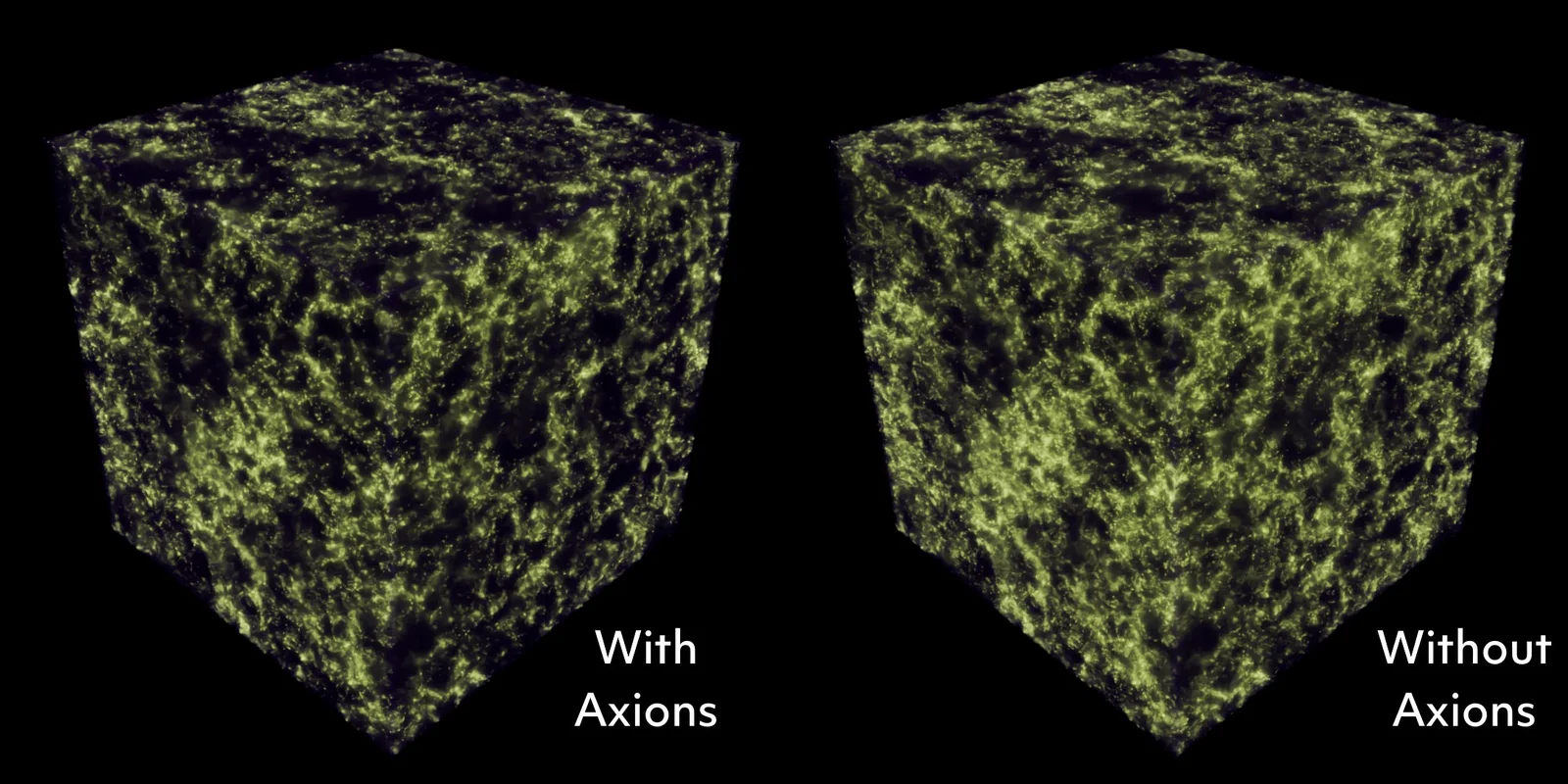
Researchers at the University of Toronto propose that the universe's lack of clumpiness suggests dark matter is composed of hypothetical, ultra-light particles called axions. This could have broad implications for our understanding of the universe and could even provide support for string theory. The "clumpiness problem" may be a sign that dark matter is composed of axions. The implications of proving the existence of hard-to-detect axions extend beyond understanding dark matter and could address fundamental questions about the nature of the universe itself.

science-and-philosophy2 years ago

The Intersection of Physics, Neuroscience, and God.

The article discusses the limitations of human sciences in answering questions beyond tangible discoveries and the philosophical implications of emerging sciences like neuroscience and string theory. The author argues that the scientific community is unable to answer fundamental questions about the universe and often disregards the possibility of God as the simplest explanation. The article also explores the views of neuroscientists Daniel Dennett and Sam Harris, who promote a worldview that is purposeless and devoid of morals or free will.

science-and-astronomy2 years ago

Black Holes Could Be Spacetime Tangles, New Research Shows

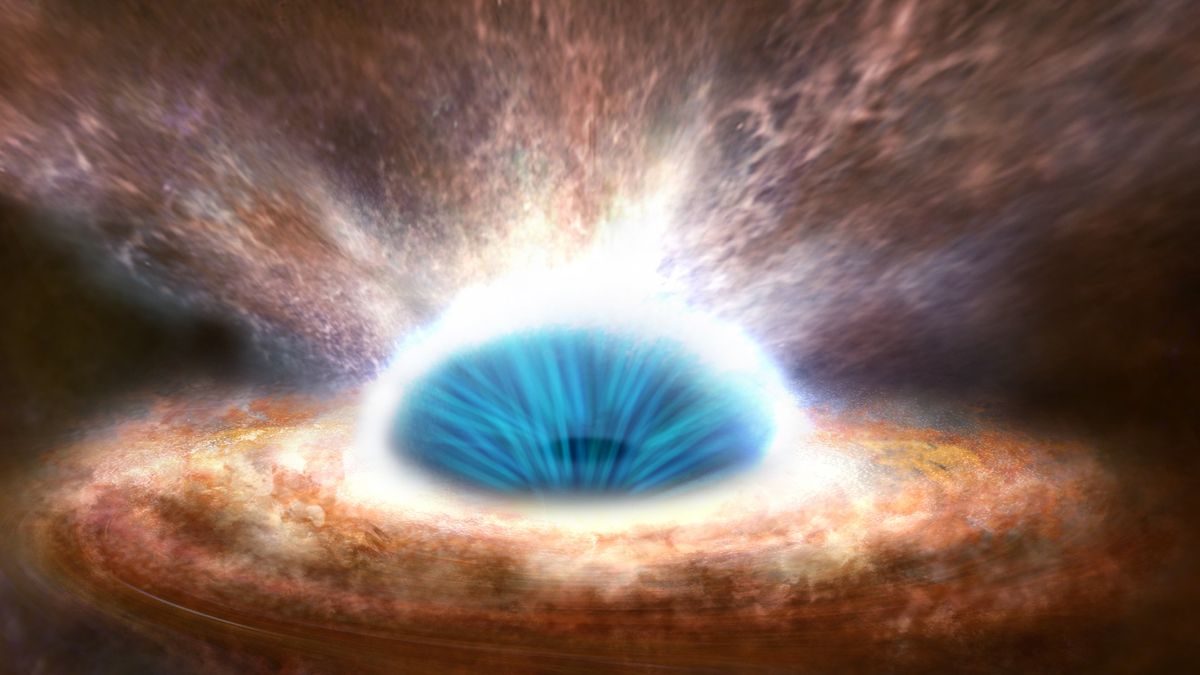
Physicists have proposed that stable imperfections in the structure of space-time, known as "topological solitons," could mimic black holes. These solitons could be found all around the universe and could help us understand quantum physics. The researchers found that rays of light passing near these solitons would behave almost the same way as they would around a black hole. However, unlike black holes, topological solitons do not have event horizons, so you could get as close as you wanted and leave if you wanted to. The discovery of topological solitons would be a major insight into the nature of gravity, quantum gravity, and string theory.

physics2 years ago

Black Holes: Defects or Tangles in Spacetime?

Physicists have proposed that topological solitons, theoretical kinks in the fabric of space-time, could mimic black holes. These solitons could be stable, permanent imperfections in the structure of space-time, and could be found all around the universe. While they would largely look and act like black holes, they would not have event horizons, meaning you could get as close as you wanted to a soliton and leave if you wanted to. The discovery of topological solitons could provide insight into the nature of gravity, quantum gravity, and string theory.

science2 years ago

Black holes could be space-time tangles, study finds.

Physicists have proposed that stable imperfections in the structure of space-time, known as topological solitons, could mimic black holes. These solitons could be found all around the universe and could help us understand quantum physics. The researchers found that rays of light passing near a soliton would behave almost the same way as they would around a black hole, but solitons do not have event horizons, so you could get as close as you wanted and leave if you wanted to. The discovery of topological solitons would be a major insight into the nature of gravity, quantum physics, and string theory.

science2 years ago

"Spacetime Defects: The Possible Origin of Black Holes"

Theoretical physicists have discovered a new class of object called topological solitons, which are stable defects in spacetime itself. These solitons are objects of extreme spacetime that bend space and time around them, affecting the path of light. They appear exactly like black holes to a distant observer, but they do not feature event horizons. These exotic objects serve as important test studies for string theory, which has not yet been proven to be a viable update to our understanding of physics.

science2 years ago

The Possibility of Earth Being Swallowed by a Spacetime Defect

Theoretical physicists have discovered a new class of object, called topological solitons, which appear to be black holes from a distance but are actually stable defects in the fabric of spacetime itself. These solitons are based on our understanding of string theory and do not feature event horizons, making them distinct from traditional black holes. The discovery of an important observational difference between topological solitons and black holes could pave the way to testing string theory.

science2 years ago

Navigating the Challenges of the Multiverse Theory

The multiverse theory suggests the existence of parallel universes, which is a consequence of our present understanding of the fundamental laws of physics. There are different versions of the multiverse, including the quantum multiverse and the cosmological multiverse. The challenge with the multiverse theory is its observability, but neighboring universes could collide with each other, leaving imprints in our observable universe. Theoretical challenges include the mathematical inconsistency of most universes in the string landscape and the premise of cosmic inflation being challenged. Research groups are rigorously testing the beginning of the cosmic inflation process.