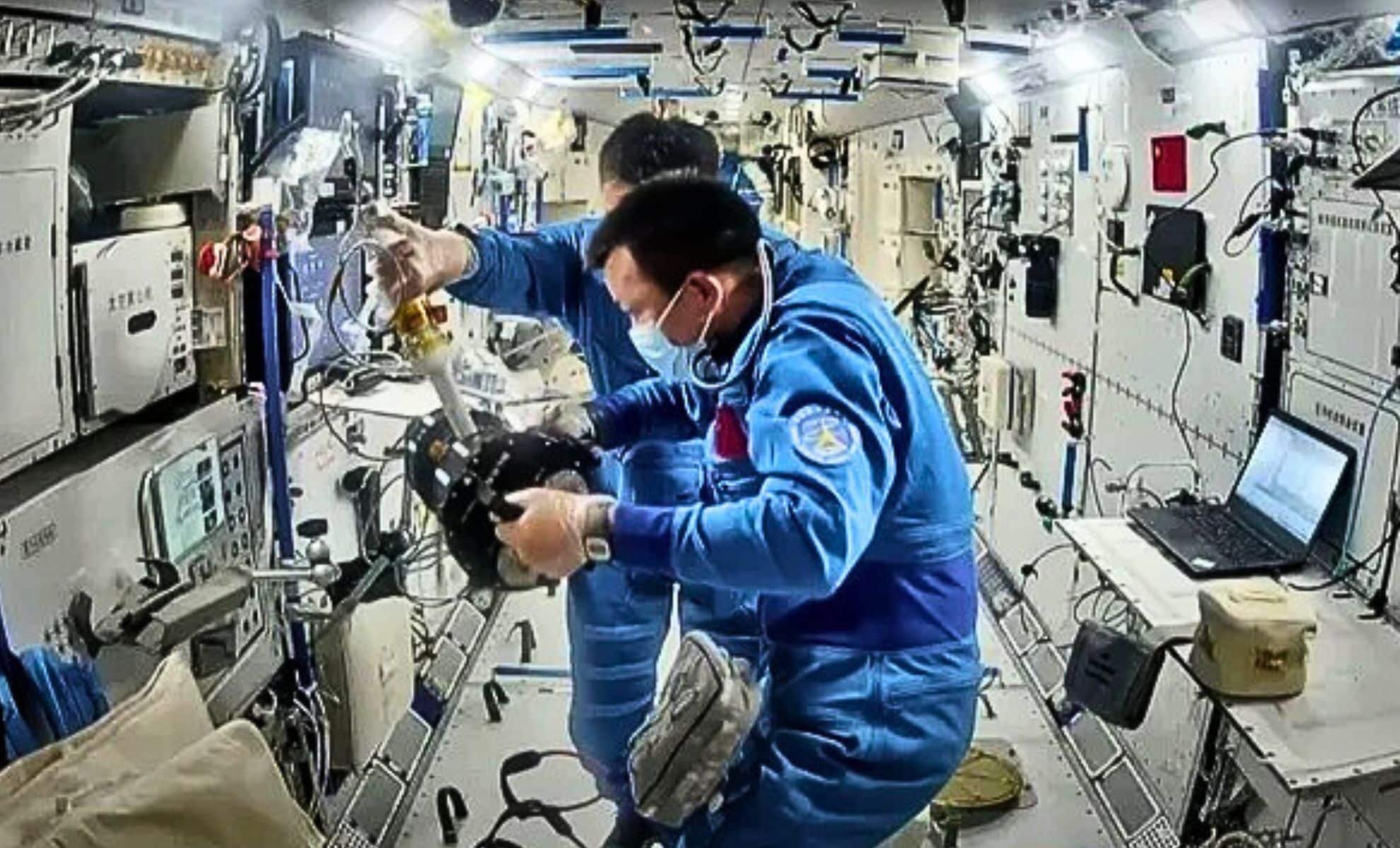
A mouse that went to space aboard China's Shenzhou-21 spacecraft gave birth to nine healthy pups after returning to Earth, demonstrating that short-term spaceflight does not impair mammalian reproductive ability, which is a promising step for future human space exploration.
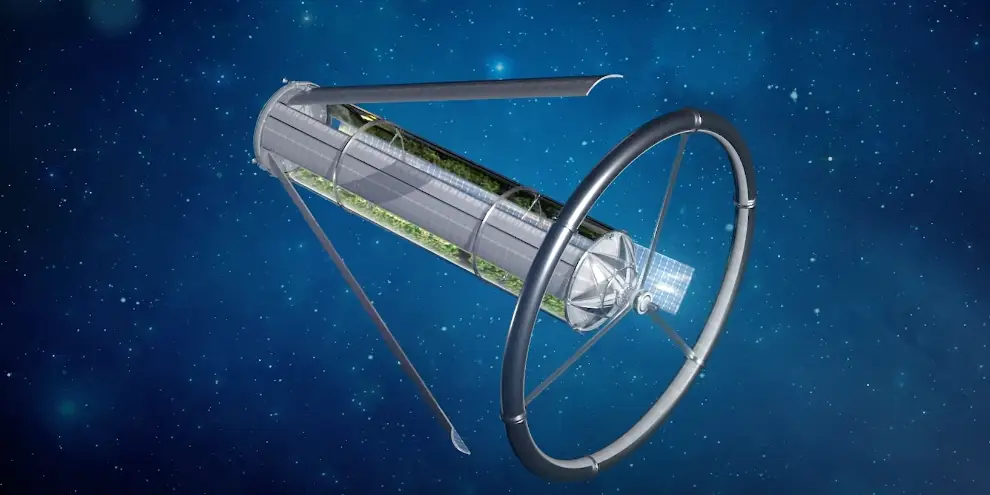
Living beyond Earth is currently deemed impossible due to significant challenges such as human health risks from microgravity and radiation, lack of breathable atmosphere on other celestial bodies, and the immense technical and financial hurdles of building sustainable habitats in space or on planets like Mars and the Moon. While concepts like space habitats and in-situ resource utilization are being explored, the human body's adaptation and protection from space hazards remain major obstacles.
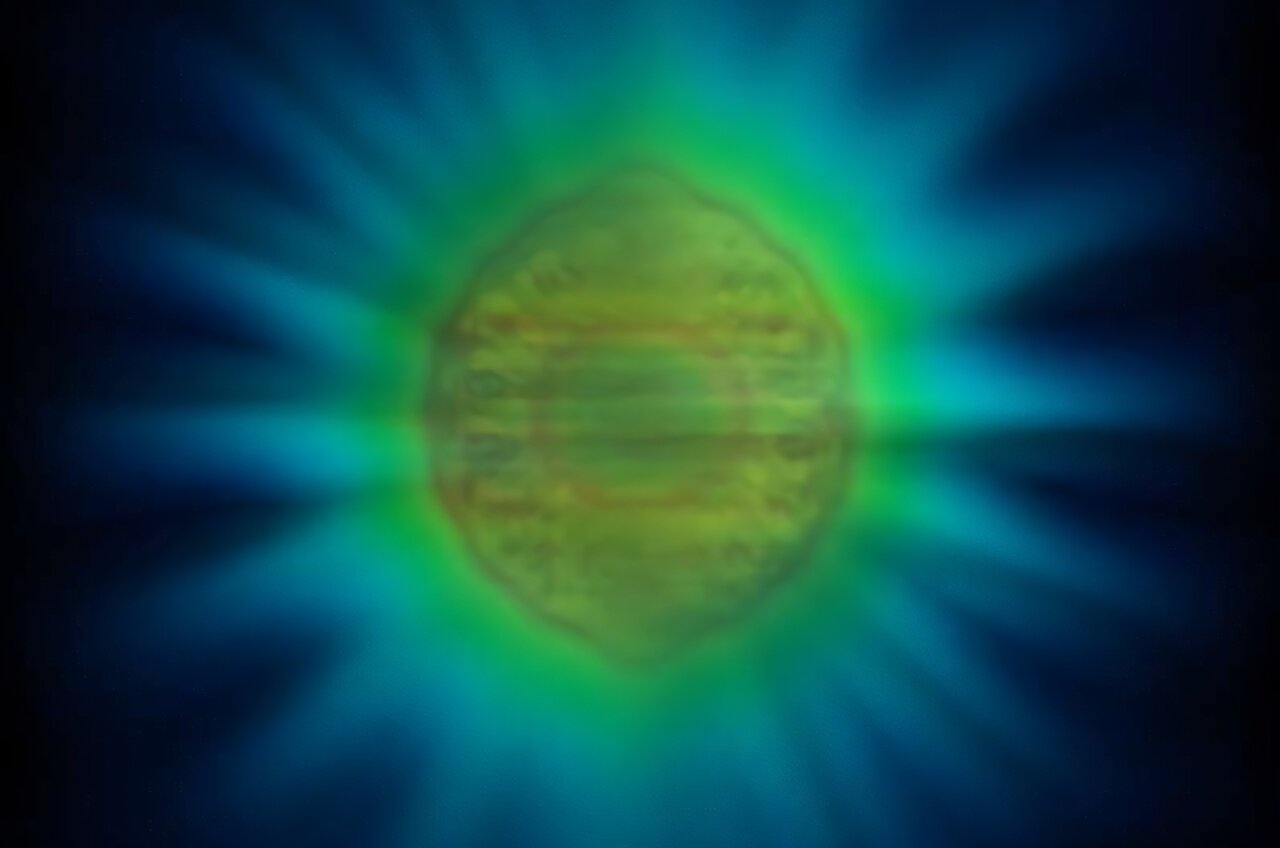
Researchers at CSIRO discovered that the fungus Fusarium oxysporum can metabolize gold, opening new possibilities for sustainable gold mining on Earth and in space, including biological indicators for mineral deposits and potential use in asteroid mining through metabolic mineralurgy. The gold-coated fungi also grow faster and support greater biodiversity, challenging traditional views on organism-metal interactions.
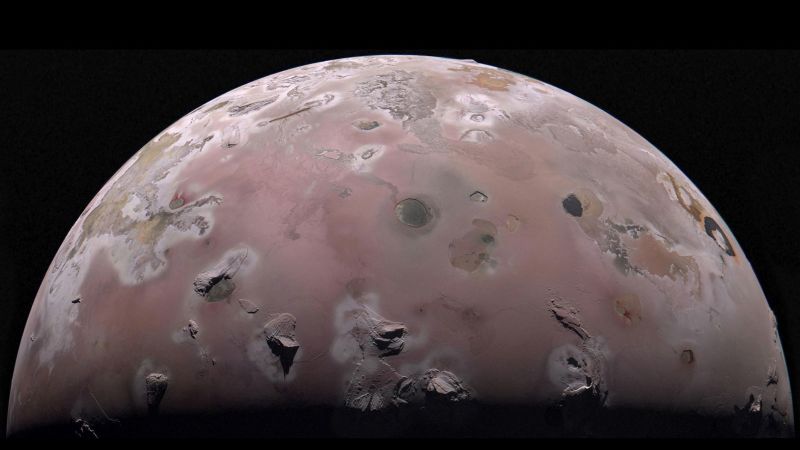
NASA's Juno spacecraft has provided new insights into the volcanic activity of Jupiter's moon Io, revealing that its numerous volcanoes are powered by individual magma chambers rather than a global magma ocean. This discovery, presented at the American Geophysical Union's annual meeting and published in Nature, challenges previous theories and has implications for understanding other celestial bodies with subsurface oceans. Juno's close flybys have also captured unprecedented images of Io's surface, contributing to a deeper understanding of its geological features.
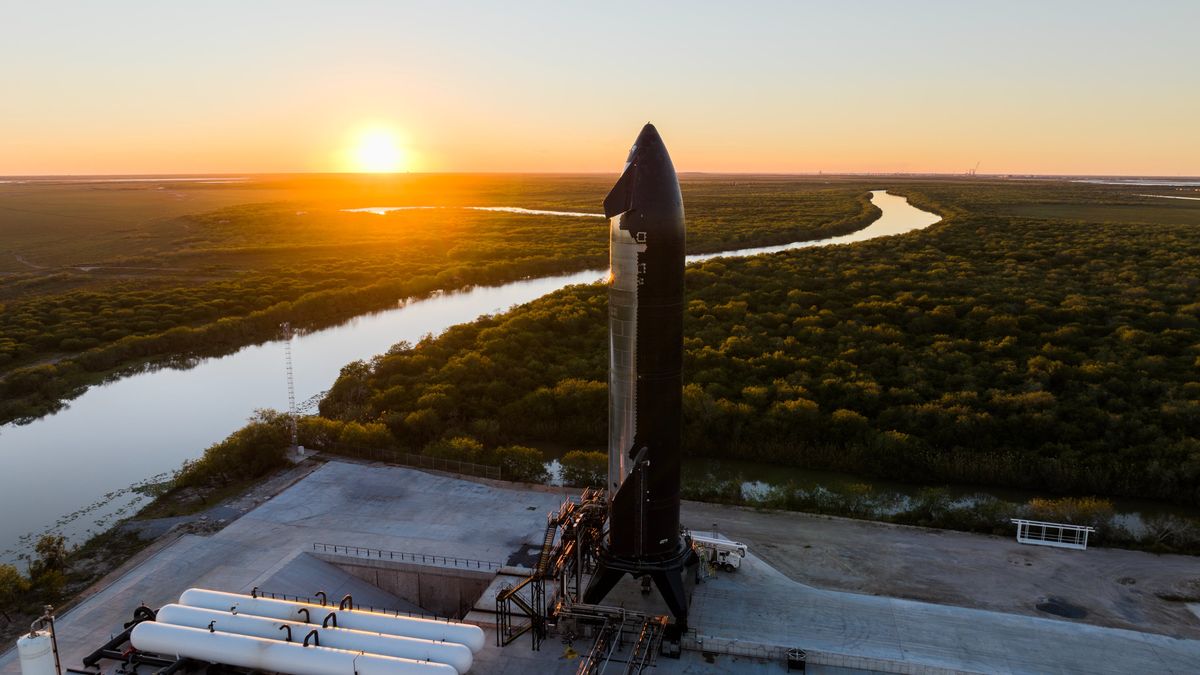
SpaceX is preparing for the seventh launch of its Starship megarocket, with the upper stage now ready for testing at the Starbase facility in South Texas. The integrated test flight is expected around January 11, 2025, as indicated by NASA's communication with the FAA. This launch will be the first Starship flight of 2025, following four successful launches in 2024. The fully reusable Starship, which includes the Super Heavy booster and the Ship upper stage, is crucial for NASA's Artemis 3 mission to the moon.
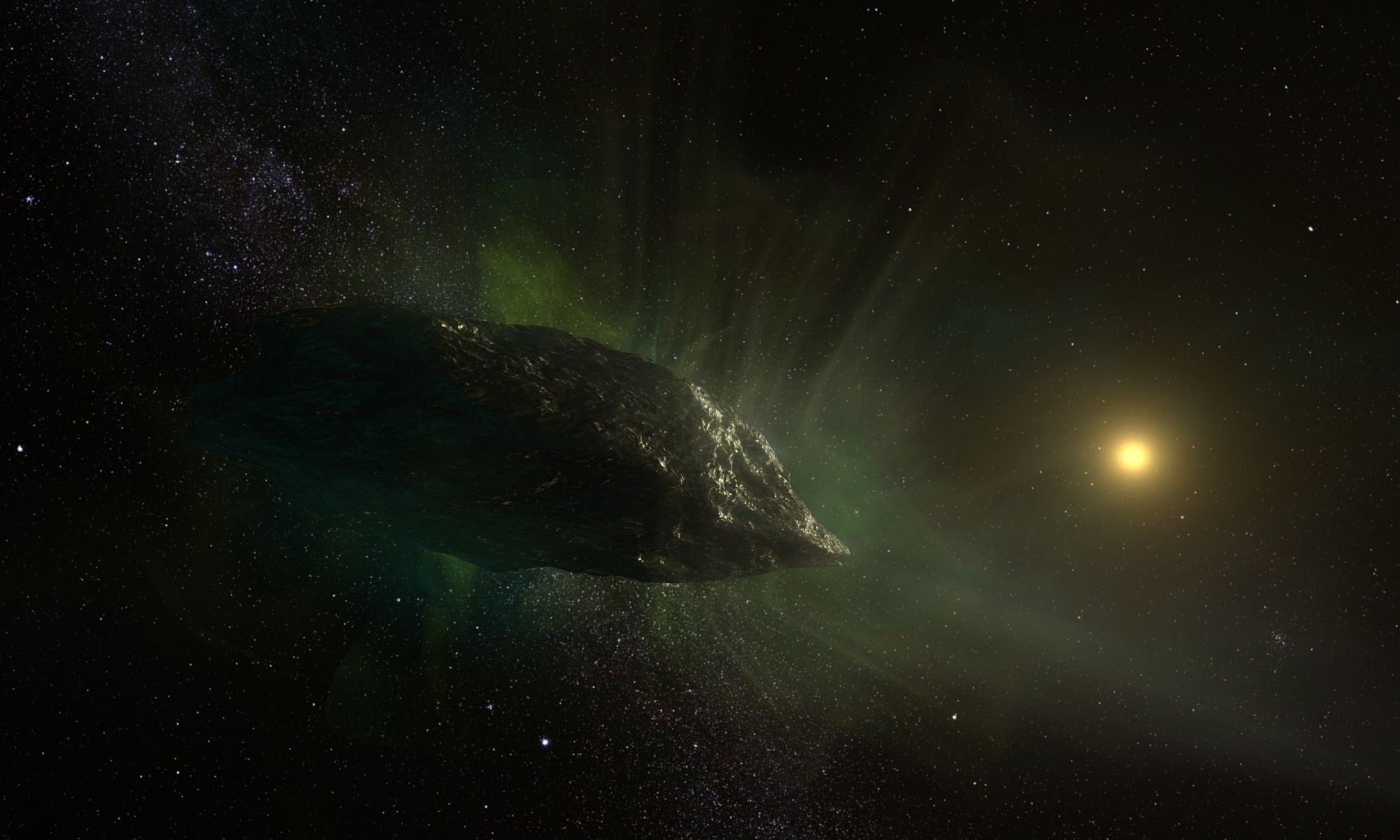
A recent study suggests that an interstellar object, possibly 2 to 50 times the mass of Jupiter, may have passed through our solar system, potentially altering the orbits and inclinations of the giant planets like Jupiter and Saturn. This discovery challenges the notion of our solar system's stability, indicating that external forces from interstellar visitors could have significant impacts on planetary dynamics. The object's unique trajectory and speed highlight the potential for such encounters to influence the solar system's structure over time.
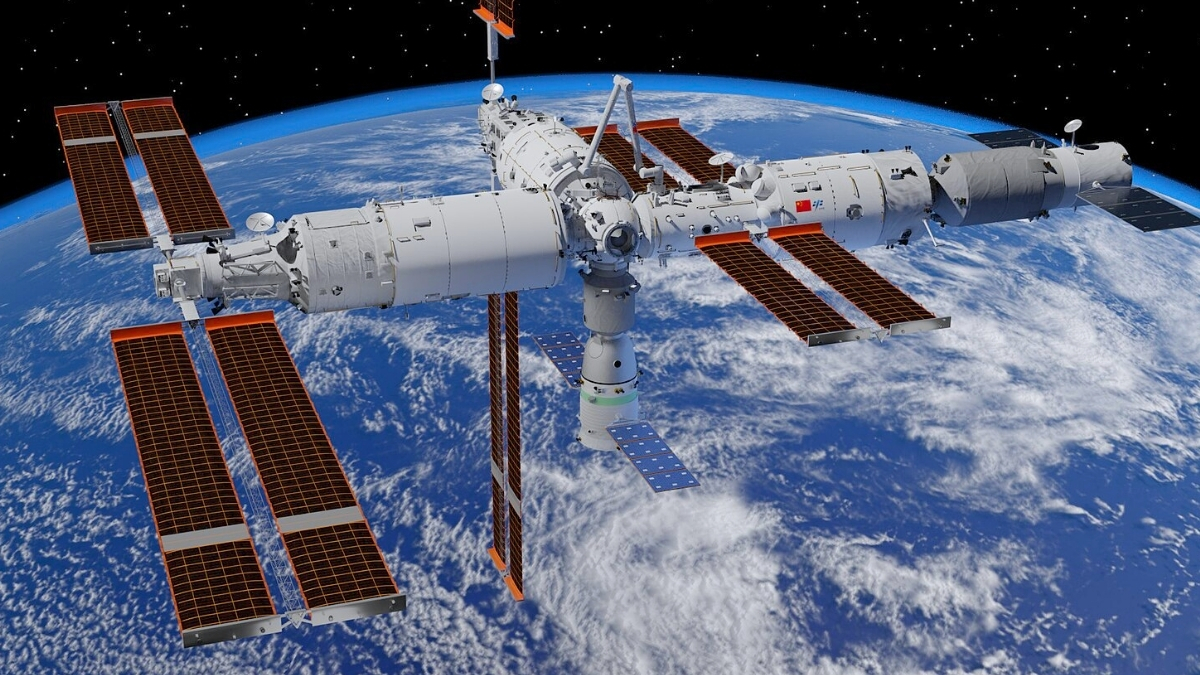
China's Tiangong space station is hosting an experiment with fruit flies to study the effects of microgravity and low-magnetic environments on biological systems. These insects, genetically similar to humans, offer insights into how space conditions impact life, potentially aiding human survival on long-duration missions like those to Mars. The research could reveal crucial information about the effects of cosmic radiation and the absence of Earth's magnetic field on living organisms, making fruit flies key players in advancing space exploration.
The discovery of terrestrial microbial life in a sample from the asteroid Ryugu, collected by JAXA's Hayabusa 2 probe, highlights challenges in preventing biological contamination during space missions. This incident raises concerns about current planetary protection measures, especially as future missions plan to return Martian soil samples. The contamination underscores the need for improved protocols to maintain sample integrity, crucial for studying potential extraterrestrial life and exploring theories like panspermia.
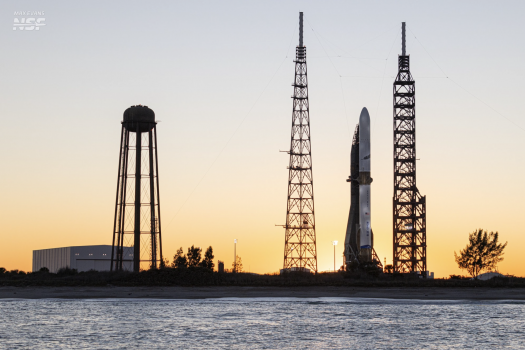
Blue Origin's New Glenn rocket is nearing its maiden launch, with recent milestones including the integration of its stages and a successful hot fire test of the second stage's BE-3U engines. The rocket, now fully assembled, is undergoing final tests and awaiting regulatory approval for its launch. Blue Origin is also expanding its manufacturing capabilities, including facilities for its Blue Moon lunar landers, as it prepares for future missions.
Olympus Mons, located on Mars, is the tallest mountain in the solar system, standing at approximately 13.6 miles (22 kilometers) high, which is nearly three times the height of Mount Everest. This massive shield volcano is a prominent feature of the Martian landscape and a subject of interest for astronomers and space exploration missions.
Donald Trump has nominated billionaire and SpaceX astronaut Jared Isaacman to lead NASA. Isaacman, known for commanding all-civilian SpaceX missions, aims to advance U.S. space exploration, including missions to the Moon and Mars. His nomination is seen as a move towards integrating private industry into national space programs. Isaacman, who has no prior government experience, is expected to bring a fresh perspective to NASA, focusing on innovation and a vision for a spacefaring civilization.
Scientists theorize that primordial black holes, potentially formed after the Big Bang, could be tunneling through Earth unnoticed. These tiny black holes might help explain cosmic mysteries like dark matter. Although the likelihood of detecting them is low, researchers suggest searching ancient structures for evidence. Discovering these black holes could advance our understanding of the universe and future energy harvesting technologies.
The top Phys.org articles of 2024 highlight significant scientific breakthroughs, including a new quantum theory defining the shape of a photon, a predicted star explosion in Corona Borealis, and a chemistry discovery challenging Bredt's rule. Other notable achievements include capturing images of Neptune and Uranus, insights into Earth's inner core dynamics, and a massive astrophysical simulation using the world's fastest supercomputer. Additionally, researchers found evidence of Greenland's ice sheet melting in the past, and a new theory on photon entanglement in brain signaling was proposed.
The Vera C. Rubin Observatory, set to begin operations in 2025, will enhance the detection of interstellar objects in our solar system by capturing vast amounts of sky data. A new study suggests using machine learning to identify these objects, as traditional methods are insufficient for the large data volume. The study found that Random Forest and Gradient Boosting methods are effective in distinguishing interstellar paths from regular orbits, potentially identifying hundreds of such objects annually, thus providing valuable insights into these cosmic visitors.
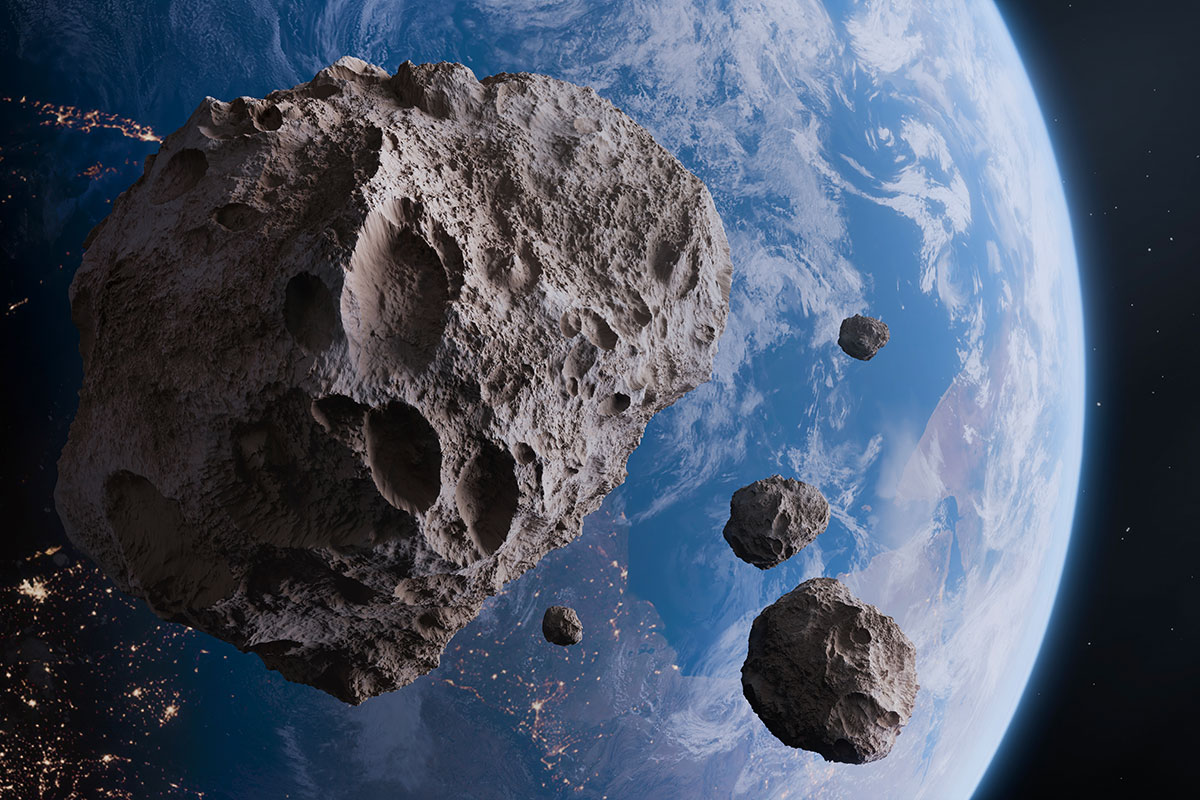
Asteroid mining, often touted as a trillion-dollar industry, may not be as lucrative as media suggests. A study funded by Astroforge highlights that only platinum-group metals (PGMs) are worth returning to Earth due to their high value and utility. Other metals, like iron and aluminum, are more suited for in-space construction. The study also challenges the notion of 'pure metal' asteroids, suggesting that while PGMs are present in higher concentrations than on Earth, their extraction is complex. Astroforge plans a mission to assess near-Earth asteroids' metallic content, potentially advancing our understanding of asteroid mining's viability.