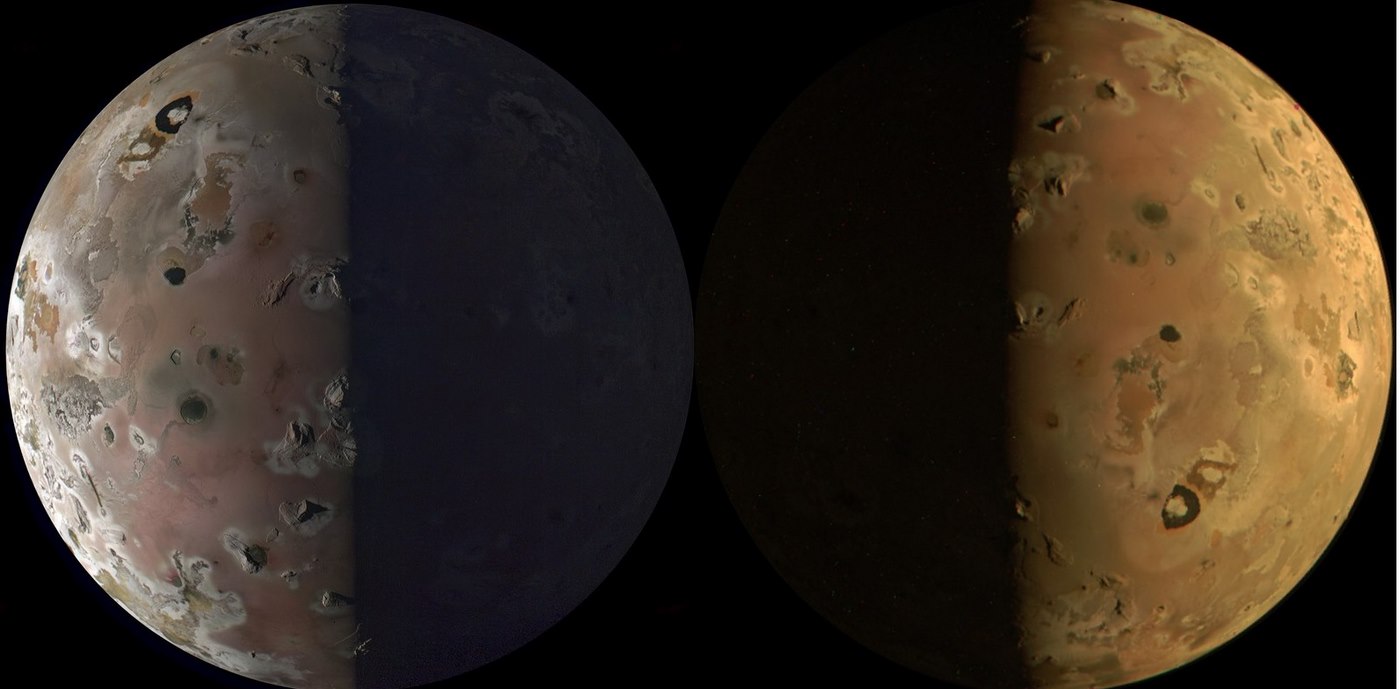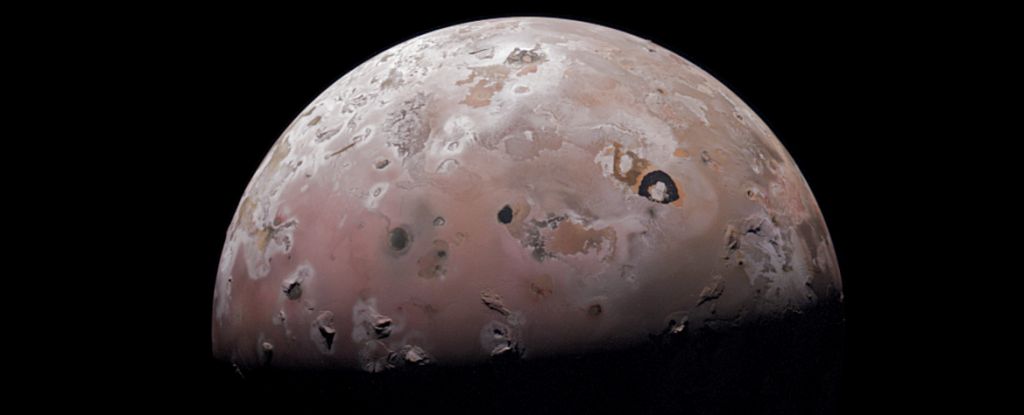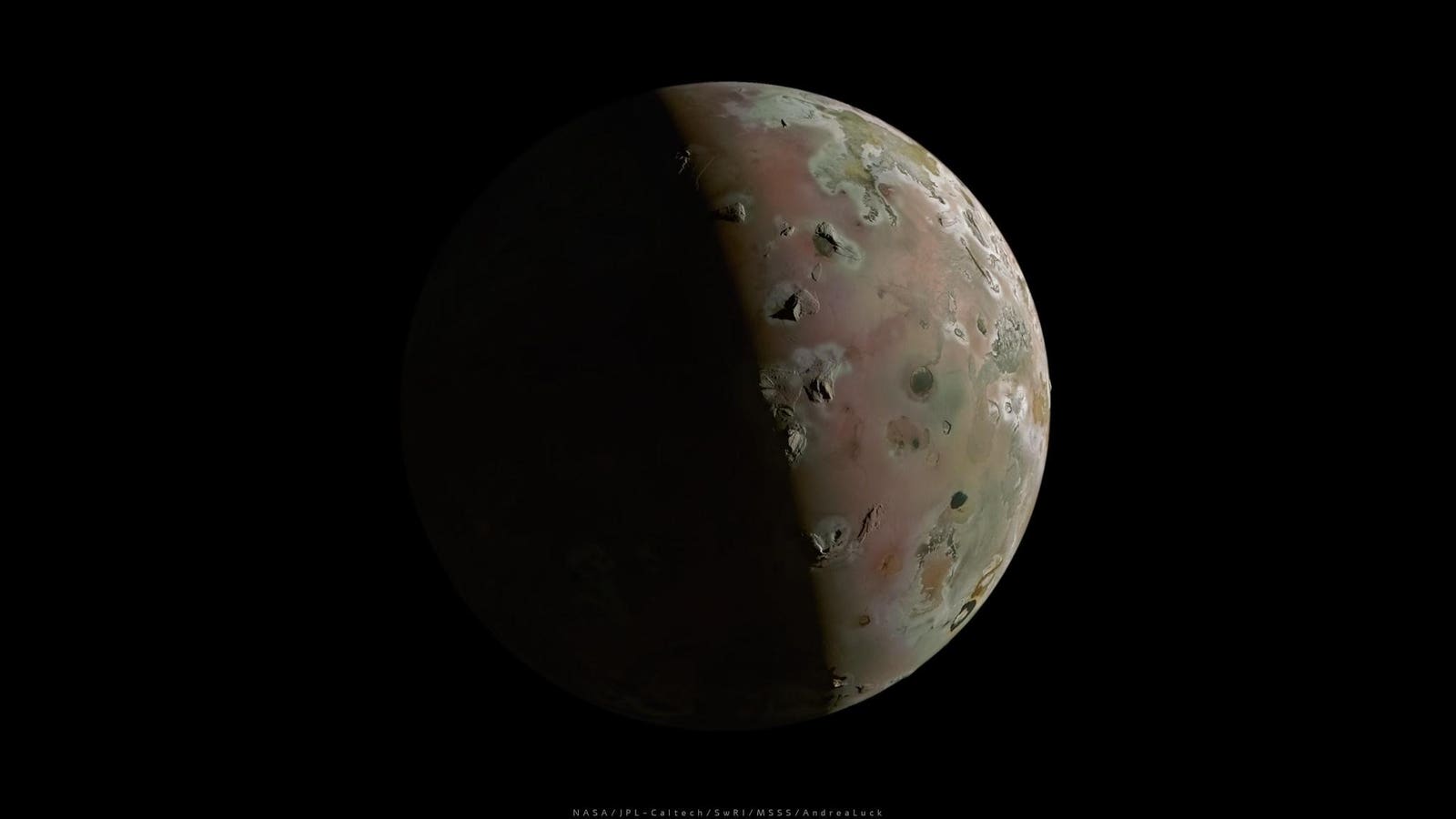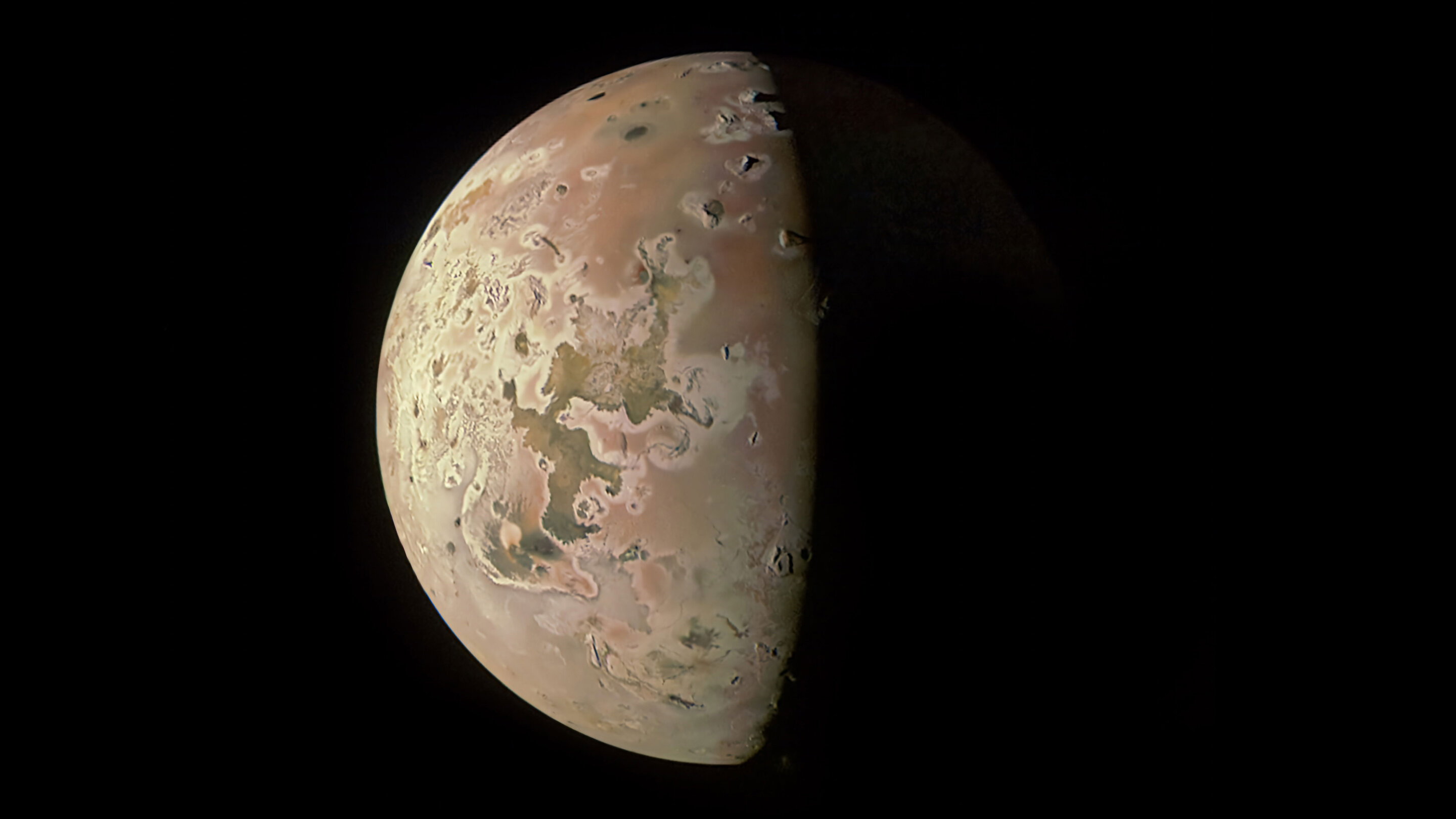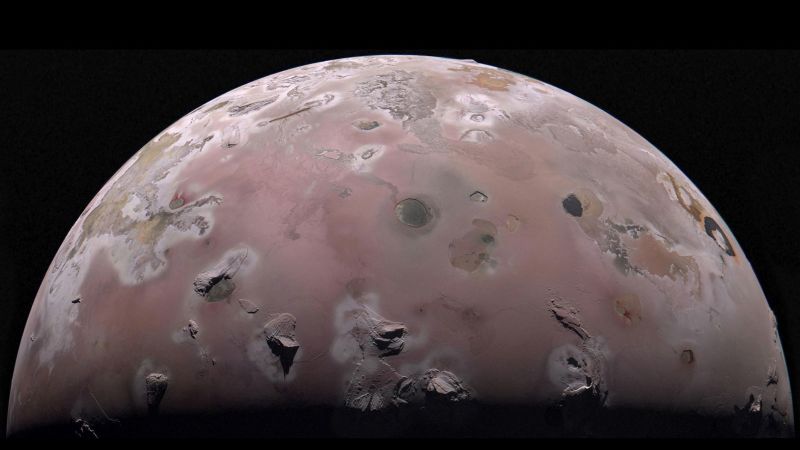
NASA's Juno spacecraft has provided new insights into the volcanic activity of Jupiter's moon Io, revealing that its numerous volcanoes are powered by individual magma chambers rather than a global magma ocean. This discovery, presented at the American Geophysical Union's annual meeting and published in Nature, challenges previous theories and has implications for understanding other celestial bodies with subsurface oceans. Juno's close flybys have also captured unprecedented images of Io's surface, contributing to a deeper understanding of its geological features.
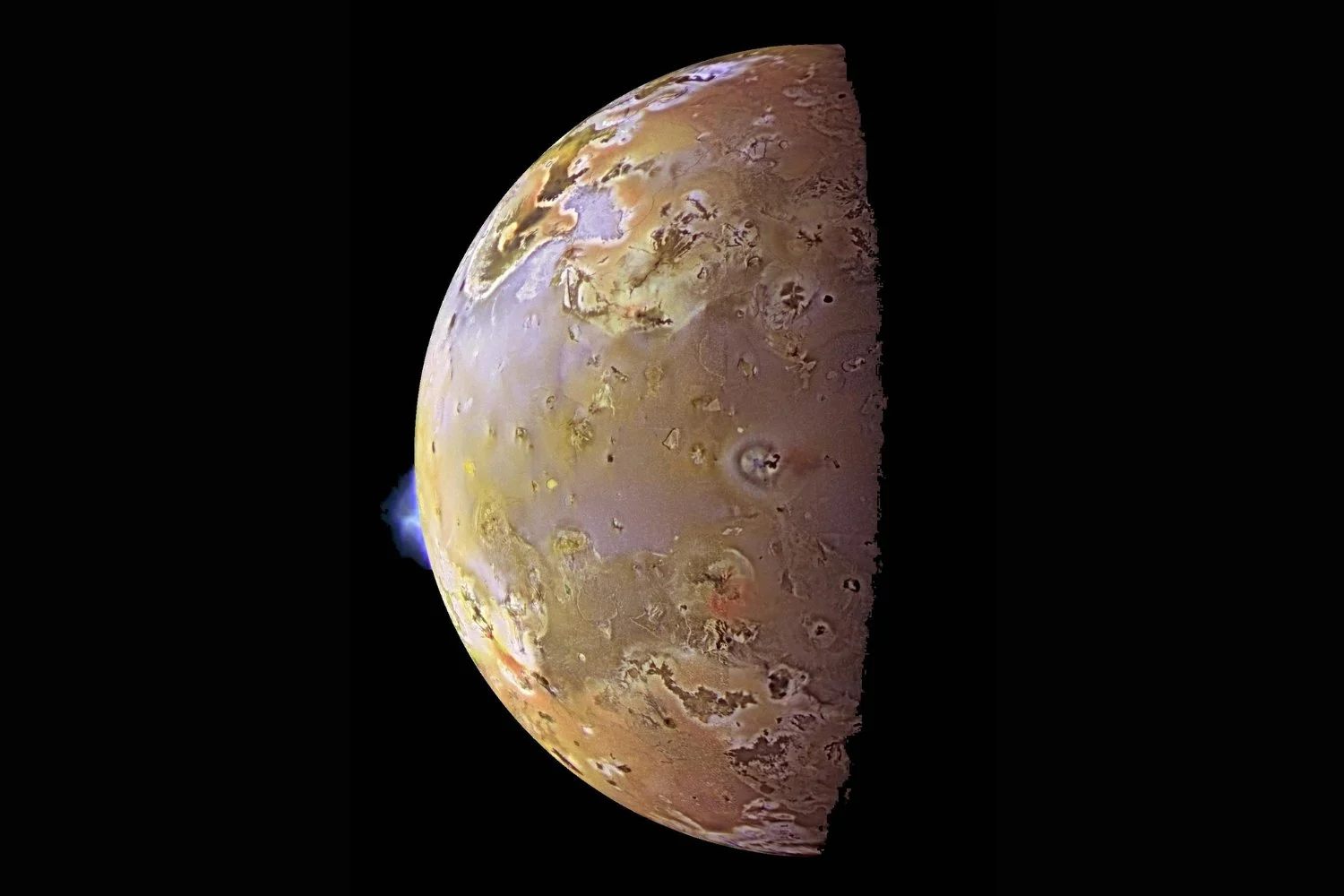
NASA scientists have discovered that Io, Jupiter's most volcanically active moon, is fueled by individual magma chambers rather than a single massive magma ocean. This finding, based on data from the Juno spacecraft's close flybys, challenges previous assumptions about Io's volcanic activity and has implications for understanding other celestial bodies. The study highlights the role of tidal flexing, caused by Jupiter's gravitational pull, in generating heat and volcanic activity on Io.
NASA's Juno space probe has captured incredible images of Jupiter's volcanic moon Io in the closest flyby in two decades, coming within 930 miles of its surface. The flyby is part of a series that will provide a wealth of data on Io's volcanic activity, including the frequency and intensity of eruptions, and the potential existence of a magma ocean beneath its crust. Juno's instruments, particularly the Jovian Infrared Auroral Mapper, are documenting Io's 400 active volcanoes and studying the impact of Jupiter's tidal forces on the moon's geological activity.
NASA's Juno spacecraft has captured detailed images of Jupiter's volcanic moon Io during its closest flyby on December 30, 2023. The images reveal Io's intense volcanic activity and sulfuric landscape, with the aim of understanding the moon's eruptions, heat, and its role in Jupiter's magnetosphere. Juno's mission, which has been extended through September 2025, will continue to study Io and Jupiter's other moons, with another close approach scheduled for February 3, 2024. Despite signs of instrument degradation, Juno continues to provide valuable data on the Jovian system.
NASA's Juno spacecraft captured the most detailed images of Jupiter's volcanic moon Io in 22 years, flying just 930 miles above its surface on December 30, 2023. These images reveal the intense volcanic activity on Io, which is driven by the gravitational pull of Jupiter and its other moons. Juno's mission has included flybys of Jupiter's Galilean moons, and while future missions like JUICE and Europa Clipper will explore other moons, there are currently no missions planned for Io following the Io Volcano Observer's (IVO) proposal loss in 2021. Juno will continue to orbit Jupiter and is scheduled for another close flyby of Io in February 2024.
NASA's Juno spacecraft is set to make a historic close flyby of Jupiter's volcanic moon Io on December 30, the closest approach in over two decades, at a distance of about 930 miles from the surface. The flyby aims to collect extensive data on Io's volcanic activity, including eruption patterns and thermal emissions, to understand the moon's geologic and volcanic dynamics. Juno's instruments, including the JIRAM and JunoCam, will be active during the flyby despite challenges from radiation damage. A second close approach is planned for February 3, 2024, and the mission will also include additional distant flybys of Io, altering Juno's orbit and extending its mission through late 2025 with further scientific experiments.