Tag

Blackholes

All articles tagged with #blackholes

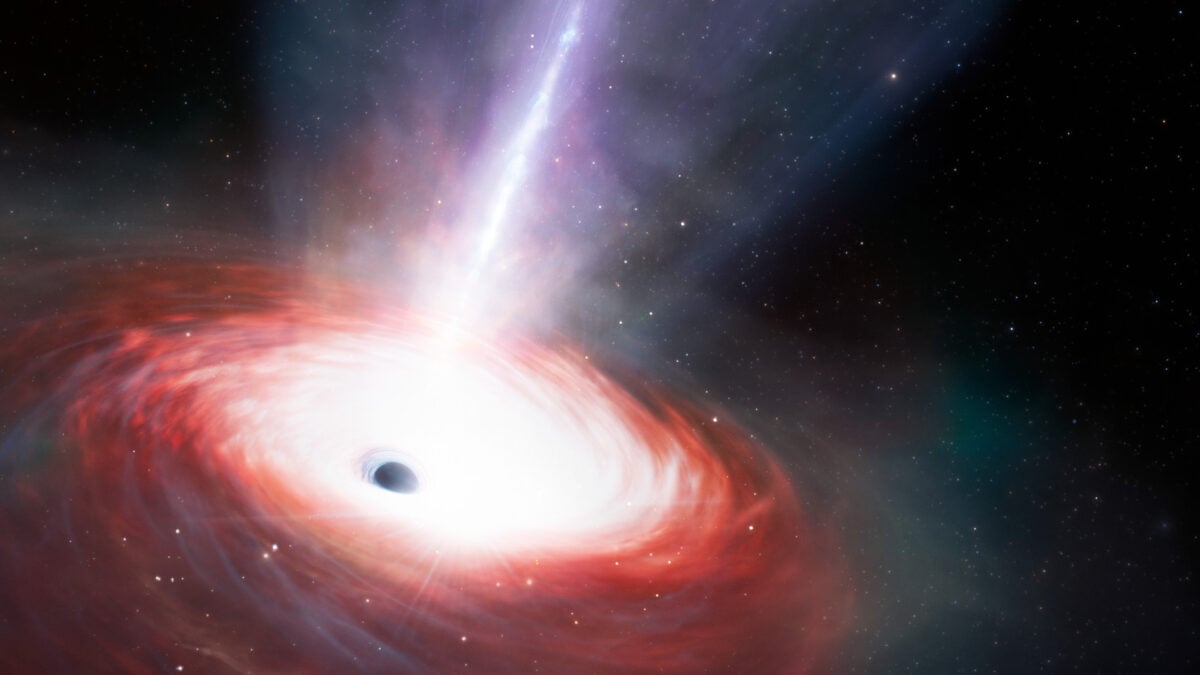
Supermassive Black Holes Eject Light-Speed Winds

Originally Published 7 months ago — by Earth.com

Featured image for Supermassive Black Holes Eject Light-Speed Winds
Source: Earth.com

Scientists have discovered that supermassive black holes emit high-velocity, bullet-like winds that are highly inhomogeneous and chaotic, challenging previous models of steady outflows. These clumpy winds can significantly influence galaxy evolution by regulating star formation, with implications for understanding black hole feedback and galaxy growth. Observations from XRISM are helping to unravel the complex structure and impact of these winds.

Unveiling the Elusive Binary Black Holes at Galactic Centers

Originally Published 1 year ago — by The Conversation

Featured image for Unveiling the Elusive Binary Black Holes at Galactic Centers
Source: The Conversation

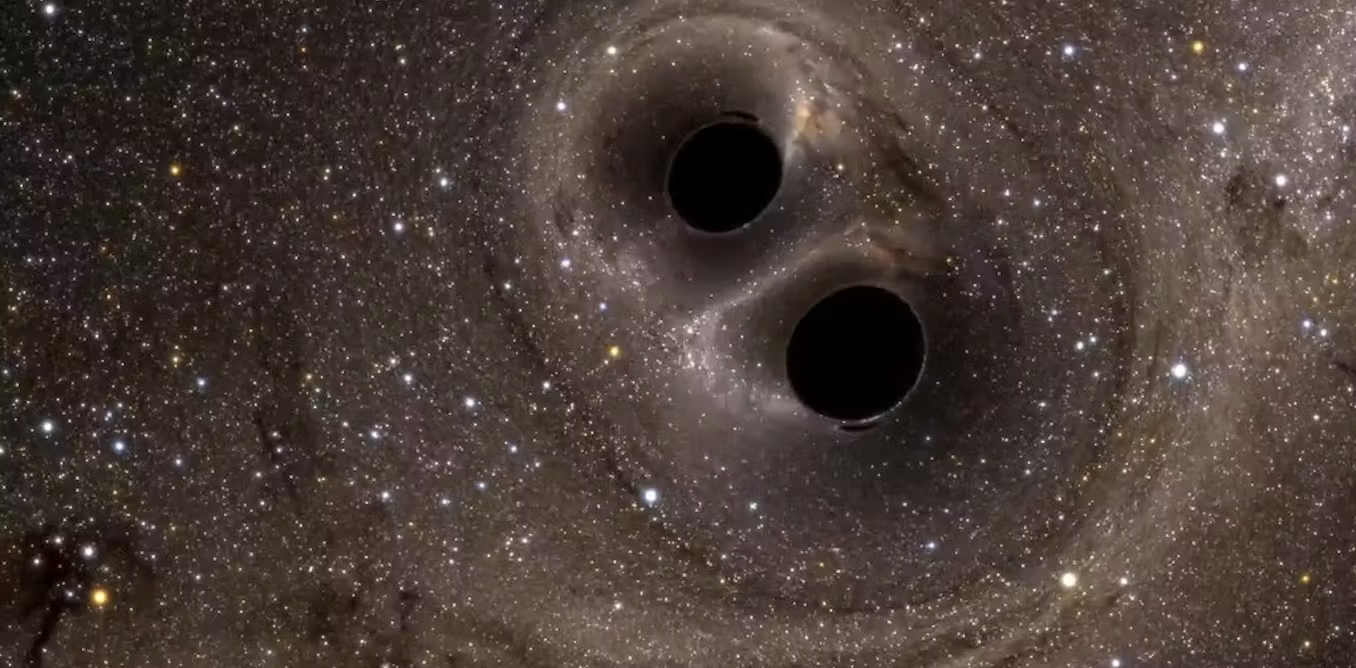
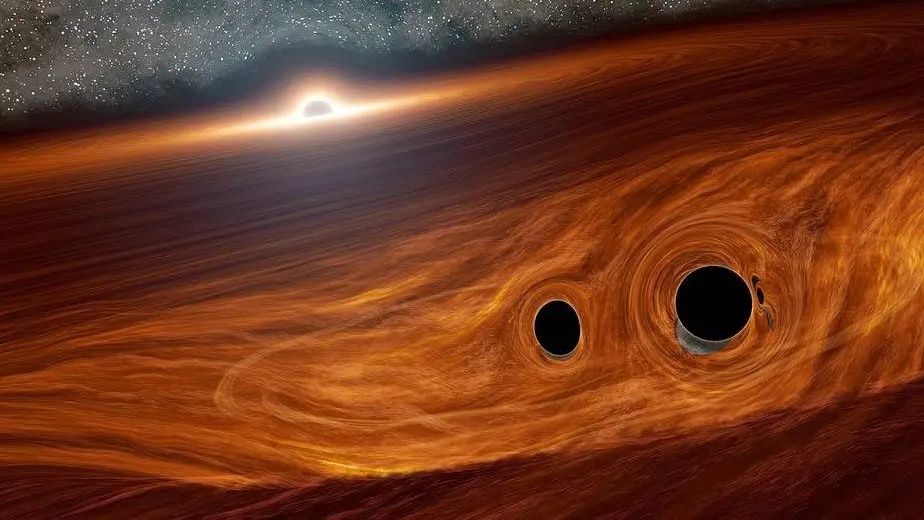
Some black holes at the centers of galaxies exist in binary systems, meaning they have a companion black hole. Detecting these binary pairs is challenging due to their complex nature and the vast distances involved. Understanding these systems can provide insights into the dynamics of galaxies and the evolution of black holes.

Could Black Holes Be Lurking in Everyday Objects?

Originally Published 1 year ago — by Dazed

Featured image for Could Black Holes Be Lurking in Everyday Objects?
Source: Dazed

Scientists theorize that primordial black holes, potentially formed after the Big Bang, could be tunneling through Earth unnoticed. These tiny black holes might help explain cosmic mysteries like dark matter. Although the likelihood of detecting them is low, researchers suggest searching ancient structures for evidence. Discovering these black holes could advance our understanding of the universe and future energy harvesting technologies.

Gravitational Waves Unveil Hidden Cosmic Structures and Black Holes

Originally Published 1 year ago — by Phys.org

Featured image for Gravitational Waves Unveil Hidden Cosmic Structures and Black Holes
Source: Phys.org

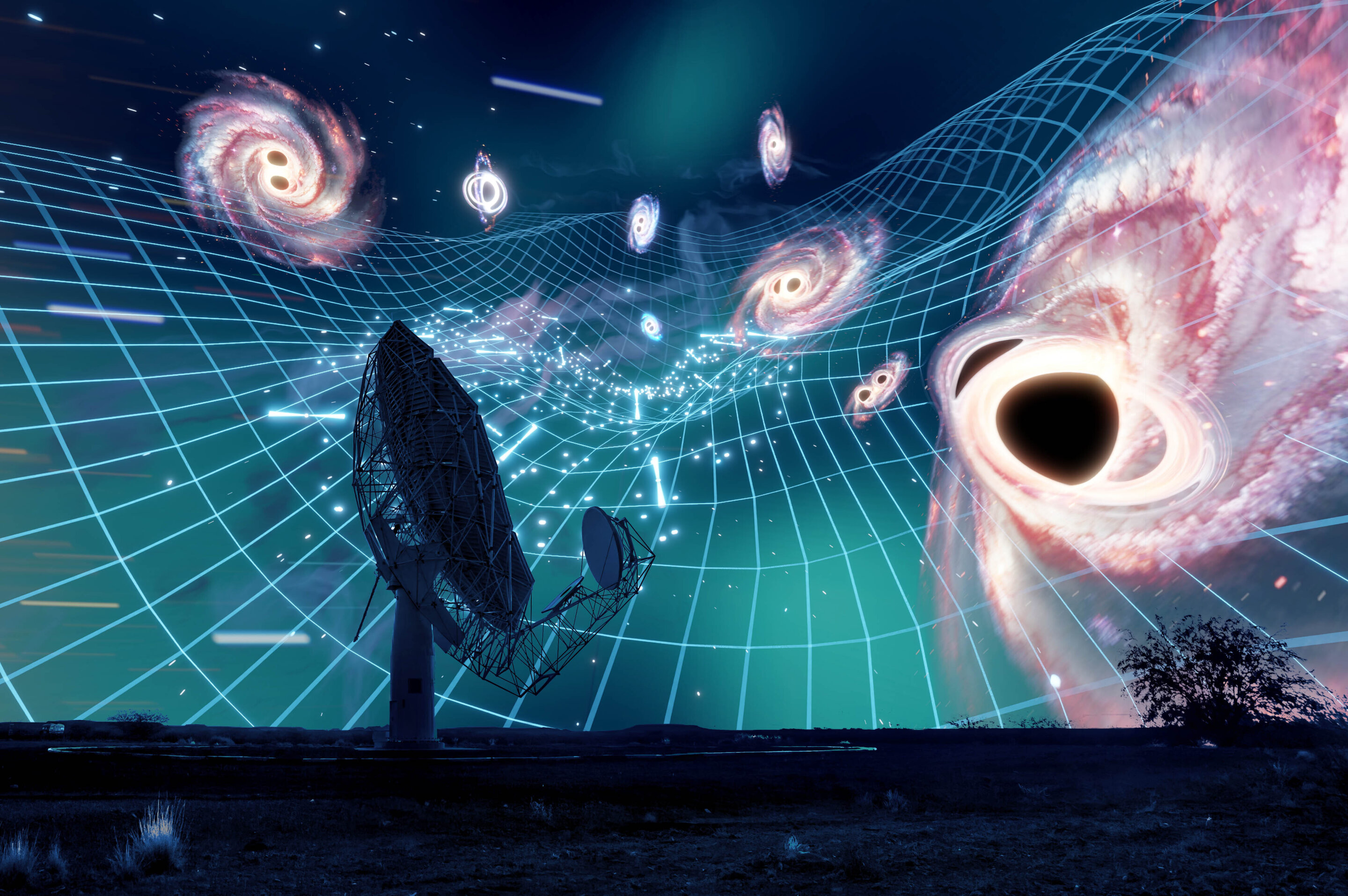
Astronomers from Swinburne University have created the most detailed maps of gravitational waves, revealing hidden black holes and cosmic structures. Using the MeerKAT Pulsar Timing Array, they detected a strong gravitational wave signal from merging supermassive black holes, uncovering unexpected hotspots that suggest directional biases. This research offers new insights into the universe's evolution and the formation of massive black holes, challenging previous assumptions about the gravitational wave background's distribution.

Scientists Unveil the Shape of Black Hole Coronas for the First Time

Originally Published 1 year ago — by The Daily Galaxy --Great Discoveries Channel

Featured image for Scientists Unveil the Shape of Black Hole Coronas for the First Time
Source: The Daily Galaxy --Great Discoveries Channel

Astronomers have successfully determined the structure of black hole coronae, revealing them to be disk-like rather than spherical, using NASA's Imaging X-ray Polarimetry Explorer. This breakthrough provides new insights into black hole dynamics, particularly how they emit energy and interact with their surroundings, challenging existing models and enhancing our understanding of active galactic nuclei (AGNs). The study focused on obscured black holes, allowing researchers to isolate and analyze the corona's high-energy X-ray emissions, which are crucial for understanding black hole behavior and their influence on galaxy formation.

"Debunking the Black Hole-Sun Conundrum: Scientists Explain"

Originally Published 2 years ago — by Space.com

Featured image for "Debunking the Black Hole-Sun Conundrum: Scientists Explain"
Source: Space.com

Astrophysicist Matt Caplan and colleagues have proposed a theory that dark matter could be composed of atom-sized primordial black holes formed in the early universe. While it's highly unlikely that one of these black holes is inside the Sun, the researchers suggest that some stars, particularly in less massive environments like dwarf galaxies, might contain these black holes at their cores. These "Hawking stars," named after Stephen Hawking who theorized about primordial black holes, could potentially be identified by their unique red giant phase, which is accretion-powered rather than fusion-powered, making them puffier and dimmer. The team plans to use asteroseismology to observe candidate stars that may harbor these ancient black holes, offering a new avenue in the search for dark matter.

"Exploring Black Hole Mysteries: Size Differences and Misconceptions"

Originally Published 2 years ago — by IAI

Carlo Rovelli challenges common misconceptions about black holes, explaining that the singularity is not located at the center but rather in the future, as the funnel-shaped interior of a black hole stretches and narrows over time. Contrary to popular belief, the center of a black hole contains the collapsing star, not the singularity. The true singularity, where Einstein's equations fail and quantum effects dominate, lies in the future where the funnel's narrowing leads to infinite distortion of space-time. This insight is crucial for understanding the true nature of black holes and their singularities.

"2023's Most Stunning James Webb Space Telescope Images: From Cosmic Cliffs to Pillars of Creation in 4K"

Originally Published 2 years ago — by Business Insider

Featured image for "2023's Most Stunning James Webb Space Telescope Images: From Cosmic Cliffs to Pillars of Creation in 4K"
Source: Business Insider

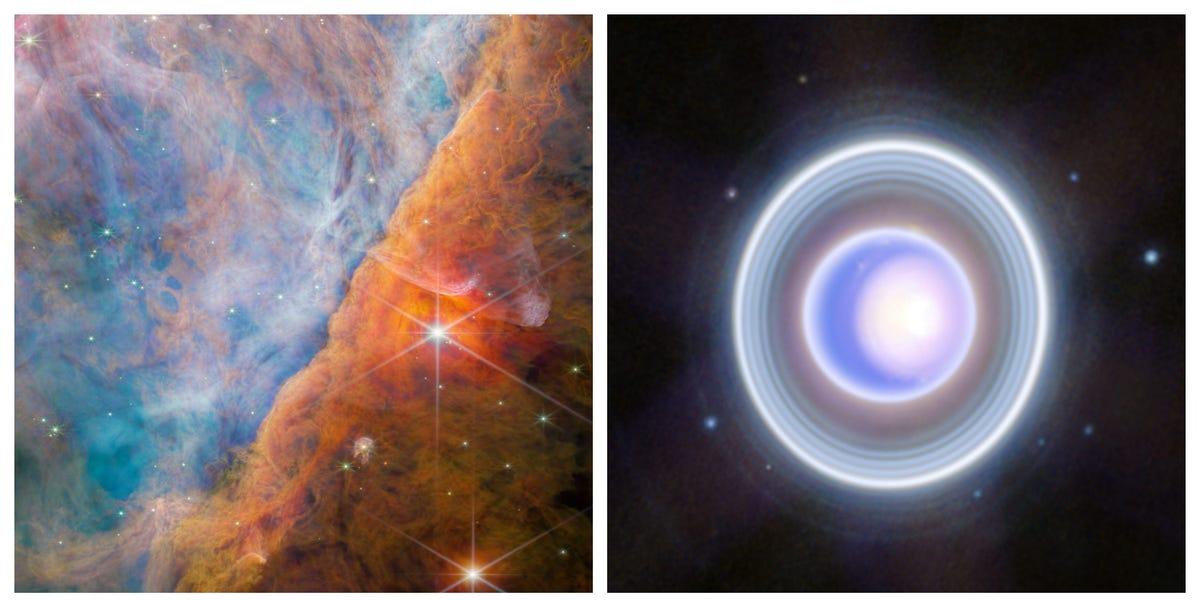
NASA's James Webb Space Telescope has captured 13 groundbreaking images in 2023, offering new insights into the universe. Highlights include the most distant black hole ever detected, located 13.2 billion light-years away, and the Ring Nebula in unprecedented detail, revealing a secret star missed by Hubble. These images have advanced our understanding of star formation, galaxy evolution, and the early universe, while also raising new questions for astronomers.

"Stephen Hawking's Dream of Creating Black Holes on Earth May Become Reality"

Originally Published 2 years ago — by Livescience.com

Featured image for "Stephen Hawking's Dream of Creating Black Holes on Earth May Become Reality"
Source: Livescience.com

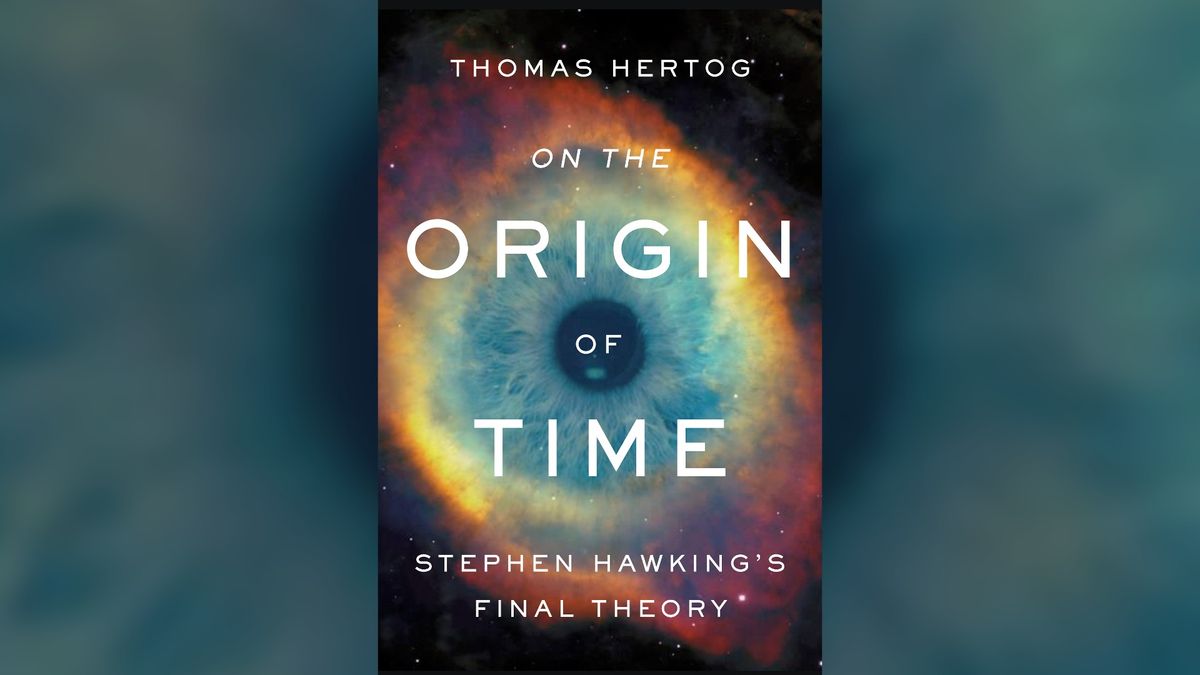
Stephen Hawking had hoped that the Large Hadron Collider (LHC) at CERN would produce black holes, but the lawsuit filed against the LHC was dismissed, and the LHC has not yet made black holes. However, it is possible to create black holes by colliding particles with enough energy in a particle accelerator. Gravity and black holes challenge the idea that higher energies probe shorter distances, and the search for a unified framework that encompasses all basic laws of nature is ongoing. Thomas Hertog, a close collaborator of Hawking, discusses these topics in his new book.