Tag

Space Weather Prediction Center

All articles tagged with #space weather prediction center

space-weather1 year ago

"Severe Solar Storm Triggers Northern Lights Show and Lunar Eclipse"

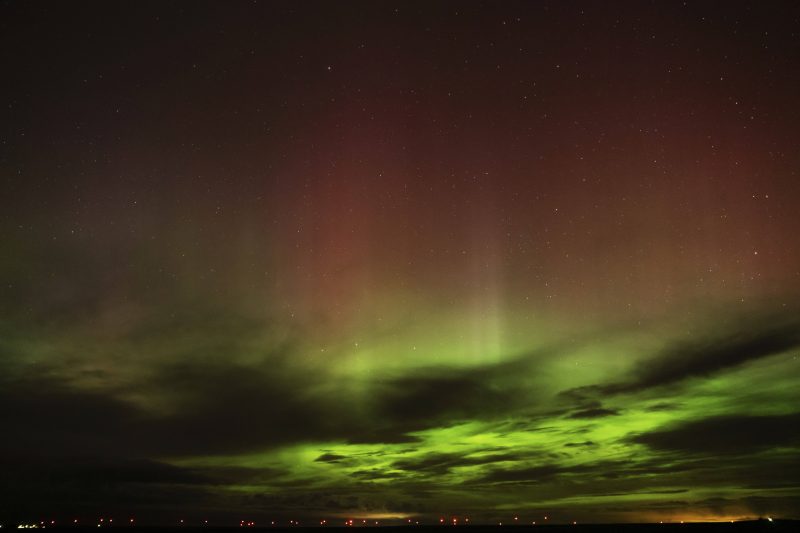
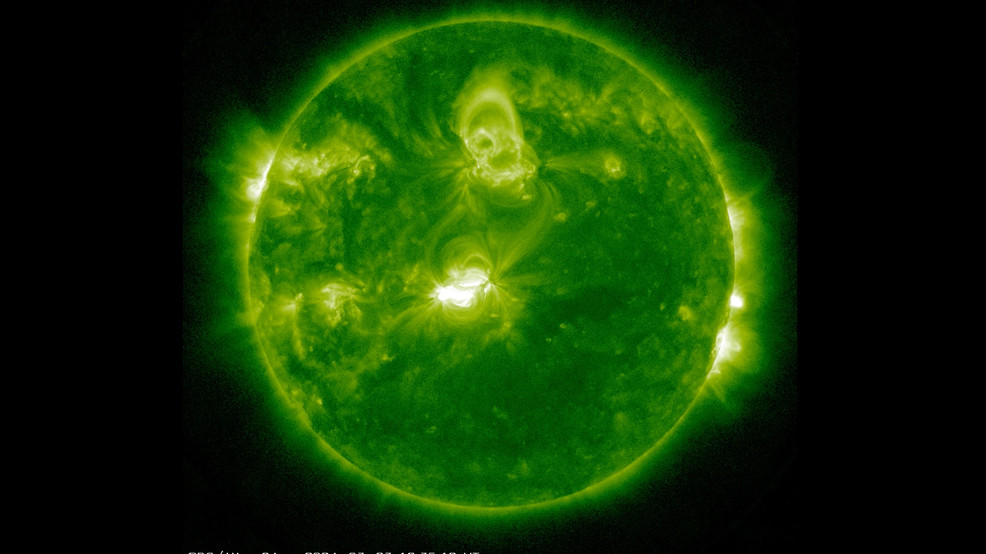
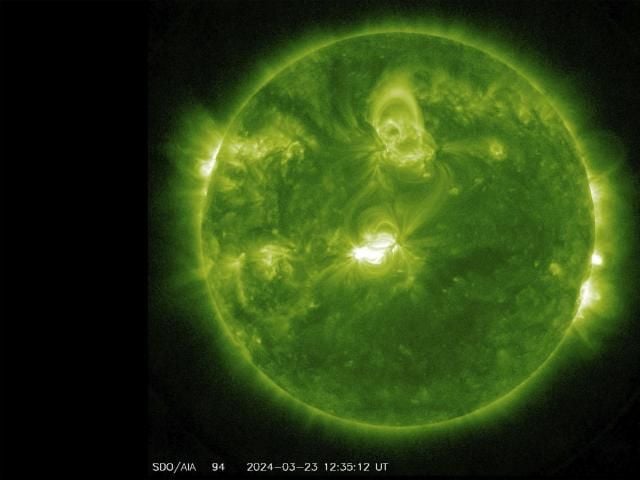
A severe geomagnetic solar storm is currently in progress, with the potential to cause auroras visible as far south as Alabama and Northern California. The storm has been classified as G4 on the NOAA Space Weather Scale, indicating intense geomagnetic activity with potential impacts on power grids, satellite operations, and natural phenomena such as the Northern Lights. The storm's intensity is gauged by the Geomagnetic K-index and is expected to reach Kp-6 levels, offering a rare opportunity to witness the aurora in regions where it's rarely seen. The Space Weather Prediction Center advises staying informed and prepared for potential impacts while appreciating the natural wonders of our universe.
space-weather1 year ago

"Record-breaking Solar Storms Disrupt Communications and Illuminate Skies with Stunning Auroras"

Space weather forecasters have issued a geomagnetic storm watch, warning of potential interference with radio transmissions and the possibility of stunning aurora viewing. The outburst of plasma from a solar flare could affect high-frequency radio transmissions and satellite tracking, but is not expected to cause major disruptions. This event is part of the sun's active solar maximum cycle, occurring approximately every 11 years, and provides an opportunity for those at higher latitudes to witness beautiful night skies.

space-weather1 year ago

"Potential for Northern Lights and Radio Disruptions from Geomagnetic Storm"

Space weather forecasters have issued a geomagnetic storm watch due to an outburst of plasma from a solar flare, which could disrupt radio transmissions on Earth and create stunning auroras. The alert, issued by NOAA's Space Weather Prediction Center, assures the public that there is no cause for concern. While the storm may affect high-frequency radio transmissions and satellite operations, it is not expected to cause significant disruptions to power grids. This event presents an opportunity for those at higher latitudes to witness captivating night skies, as the sun nears its most active phase in its 11-year cycle.

science-and-astronomy1 year ago

"Potential Geomagnetic Storm Threatens Spectacular Northern Lights Display"

NOAA's Space Weather Prediction Center has issued a geomagnetic storm warning, potentially leading to stunning aurora displays over the Northern Hemisphere on Sunday and Monday. The storm, caused by solar flares and coronal mass ejections, may reach a G3 rating, allowing for sightings as far south as Washington, Wisconsin, and New York. However, hindrances such as a large storm system and the full Worm Moon may impede visibility. Geomagnetic storms have become more frequent as the Sun approaches the peak of its solar cycle, with Solar Cycle 25 expected to last until 2030.

science-and-nature1 year ago

"Northern Lights Forecast: Millions in Northern States Could Witness Dazzling Aurora Borealis Display"

Millions of people in the northern US and the Midwest could potentially witness the dazzling Northern Lights from Monday to Wednesday if the clouds clear away, as a geomagnetic storm watch was issued due to a solar material eruption. The lights may be visible in cities such as Minneapolis, Milwaukee, Boise, Lincoln, and Indianapolis. The auroras, also known as aurora borealis, are caused by solar winds hitting the Earth's atmosphere and are most frequently seen in Alaska, Canada, and parts of Scandinavia. The lights pose no risk to the public and are forecasted to be a moderate storm, with updates available on the Space Weather Prediction Center's webpage.

environment1 year ago

"Rare Northern Lights Display Expected in Michigan This Week"

The Space Weather Prediction Center forecasts the possibility of Northern Lights visibility in most of Michigan on Tuesday night, with a smaller chance on Wednesday night. The further north you are, the better chance to see the lights. Tips for viewing include looking north, finding an area with less light pollution, and sharing photos on Local 4's MIPics. The article also explains the conditions necessary for geomagnetic storms and provides information about the Northern Lights phenomenon.

science-and-environment1 year ago

"Potential for Spectacular Northern Lights Display Across the United States Amid Solar Flare Activity"

NOAA's Space Weather Prediction Center issued a Geomagnetic Storm Watch for Monday through Wednesday after a Coronal Mass Ejection (CME) was observed sending plasma toward Earth, potentially creating a vivid Northern Lights display across the northern U.S. Intense space weather events can cause Aurora lights to appear farther away from Earth's poles, with a Kp 6 forecast for Monday night offering the best chance to see the Northern Lights. However, cloud cover may obscure views in some areas, and a potential nor'easter moving into the Northeast could impact visibility.

space-weather1 year ago

"Sun Unleashes Powerful Solar Flare, Causing Radio Disruptions and Radiation Storm"

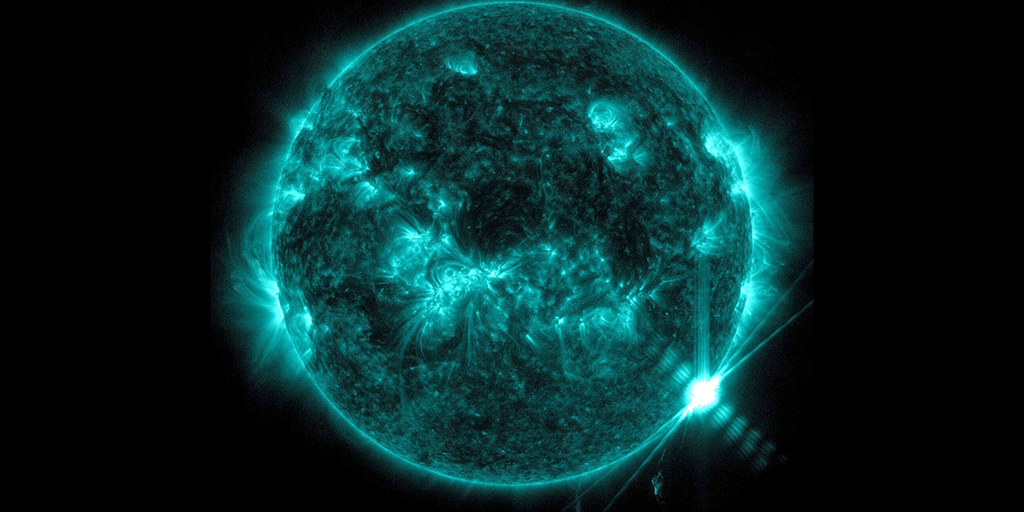
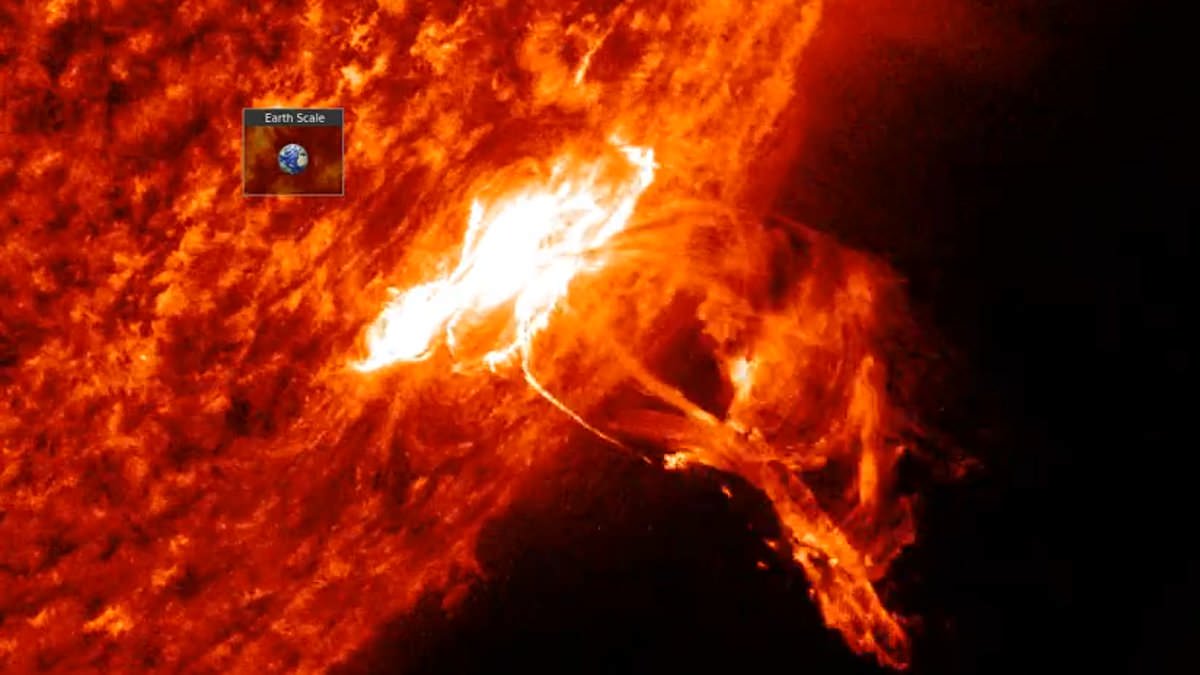
A strong X-class solar flare emitted from the Sun on Friday caused a solar radiation storm on Earth, with charged particles accelerated near the Sun arriving at over 10 times the normal background amount. The storm, classified as moderate (level S2 out of S5), was expected to peak on Saturday morning. While powerful solar flares can cause radio blackouts in polar regions and pose risks to space launches and spacecraft, most people do not need to be concerned as the energetic particles do not reach low enough into Earth's atmosphere to affect the public. NASA's Solar Dynamics Observatory captured the X3.3 flare, and more sunspots are expected as the Sun approaches the solar maximum of Solar Cycle 25.

spacescience1 year ago

"Solar Flare Sparks Radio Blackouts in Australia and Southeast Asia"

A massive solar flare erupted from the sun, triggering blackouts near Australia and South Asia and causing disruptions for ham radio operators and mariners. NOAA's Space Weather Prediction Center shows a 45% chance of more communication disruptions in the coming days. The explosion released a plume of energized particles traveling at 900,000mph, and physicists noted that it was an M-class flare, capable of causing radio blackouts and geomagnetic storms. The incident less than a month ago caused blackouts in the waters off the coast of the western US and South America, impacting satellite signals and radio communications.

science-and-environment2 years ago

"Northern Lights Alert: Geomagnetic Storm Watch for Michigan and Surrounding States"

A geomagnetic storm watch has been issued for Monday and Tuesday after a solar eruption, potentially bringing the northern lights to several states. The eruption, known as a coronal mass ejection, could lead to auroras visible across states along the Canadian border. The impending storm is forecasted as a G2 moderate storm, with Alaska and Canada having the greatest odds of seeing the northern lights. This event is part of Solar Cycle 25, an 11-year period that can bring geomagnetic storms and auroras to Earth.

science-and-environment2 years ago

Northern Lights Expected to Illuminate Skies Across Multiple US States

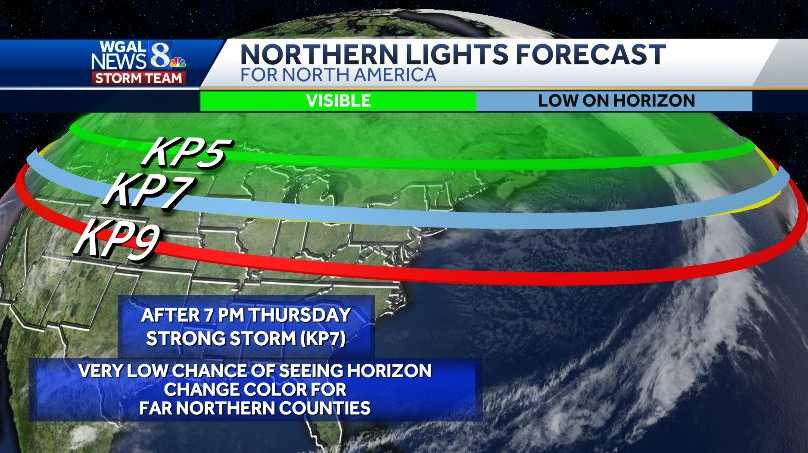
The Northern Lights, or aurora borealis, may be visible across Pennsylvania on Thursday night and Friday due to a strong geomagnetic storm predicted by the Space Weather Prediction Center. The storm is a result of several coronal mass ejections from the sun, which interact with Earth's atmosphere and magnetic field to create the aurora. The forecast calls for a peak Kp value of 7, which is necessary for the Northern Lights to be visible. The best viewing areas are rural locations with minimal light pollution and a clear view of the northern sky.

science-and-environment2 years ago

"Northern Lights Forecast: Spectacular Weekend Sky Show Across US"

The Space Weather Prediction Center has issued a Moderate Geomagnetic Storm Watch for November 11 and 12, as a burst of energy called a Coronal Mass Ejection (CME) is expected to reach Earth's atmosphere during that time. There is a 35% chance of a moderate geomagnetic storm and a 25% chance of a strong geomagnetic storm, with the potential for northern lights to be visible as far south as central Lower Michigan. Clearing is expected after sunset on Saturday, increasing the chances of seeing the northern lights.

science-and-technology2 years ago

Unveiling the Secrets of Forecasting and Capturing the Spectacular Northern Lights

The forecast for Northern Lights, issued by the Space Weather Prediction Center (SWPC), relies on estimating the strength, speed, and direction of Coronal Mass Ejections (CME) from the sun. The initial forecast is a rough estimate, and the accuracy improves as the CME approaches Earth. However, the timing forecast for when the lights will occur is less reliable, often being off by several hours. To see the lights, one should find a dark open spot and stay up late, hoping for a sighting.

science-and-environment2 years ago

Chances of Seeing Northern Lights in the US this Week Slim

Despite reports of a potential solar storm and northern lights show, experts at NOAA's Space Weather Prediction Center now believe that the chances of seeing the Northern Lights are low. The Kp Index, which determines the probability of auroras, is forecasted to be relatively low, with a maximum value of 3.67. While the situation could change quickly, for now, the likelihood of a moderate to strong geomagnetic storm between July 12 and July 14 is only one to five percent.

science-and-environment2 years ago

Limited Northern Lights Visibility Expected in Upstate NY and Washington, D.C. This Week

The Northern Lights are unlikely to be visible in Upstate New York this week, contrary to earlier reports. NASA and meteorologists state that the chances of seeing the lights as far south as Maryland are slim. Cloud cover and a poor track record of Northern Lights forecasts further diminish the likelihood. The latest forecast from the Space Weather Prediction Center indicates that the primary ejecta will miss Earth. Even if it reaches Earth, it would create only a faint glow visible no farther south than the Hudson Bay. However, there is hope for the future as an 11-year solar cycle expected to peak in 2024 may make the lights visible in more southern locations.