
science-and-nature27.44 min read
Memorable Facts That Stay With You
1 month ago•Source: Bored Panda

The latest science and nature stories, summarized by AI

The article showcases fascinating and bizarre facts about the ocean and marine life, including discoveries of ancient sharks, rare species like the pink manta ray, and natural phenomena such as Fata Morgana mirages, highlighting the ocean's mysterious and largely unexplored depths.

The Guardian•9 months ago
Forbes•1 year ago
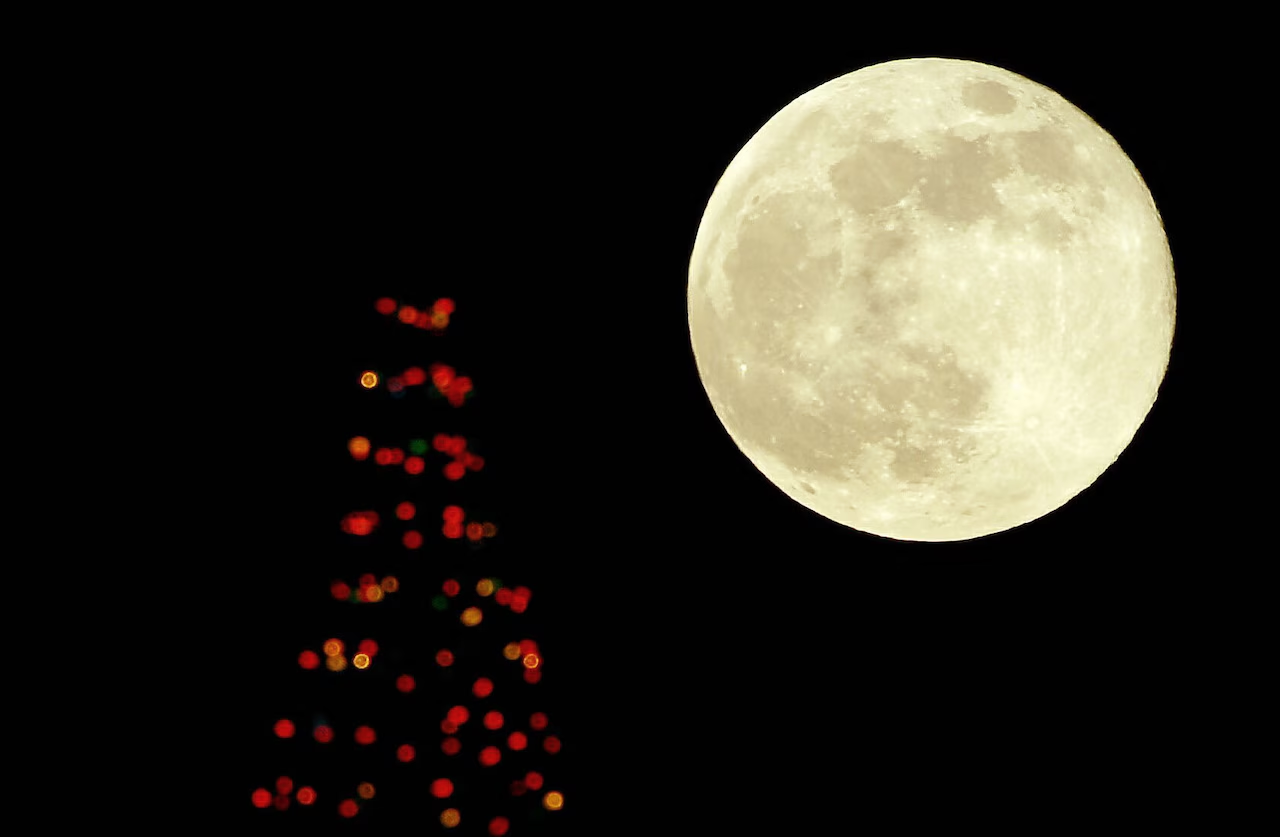
The December 2024 full moon, known as the "cold moon," will illuminate the sky this weekend, reaching its peak brightness early Sunday morning, December 15. Although it won't be a supermoon, it will still be a significant celestial event, coinciding with the Geminid meteor shower, which may be partially obscured by the moonlight. The "cold moon" nickname originates from Native American tribes, reflecting the onset of winter's chilly weather. The moon will be most visible in the northeastern U.S., with specific rise and set times provided for the New York City region.
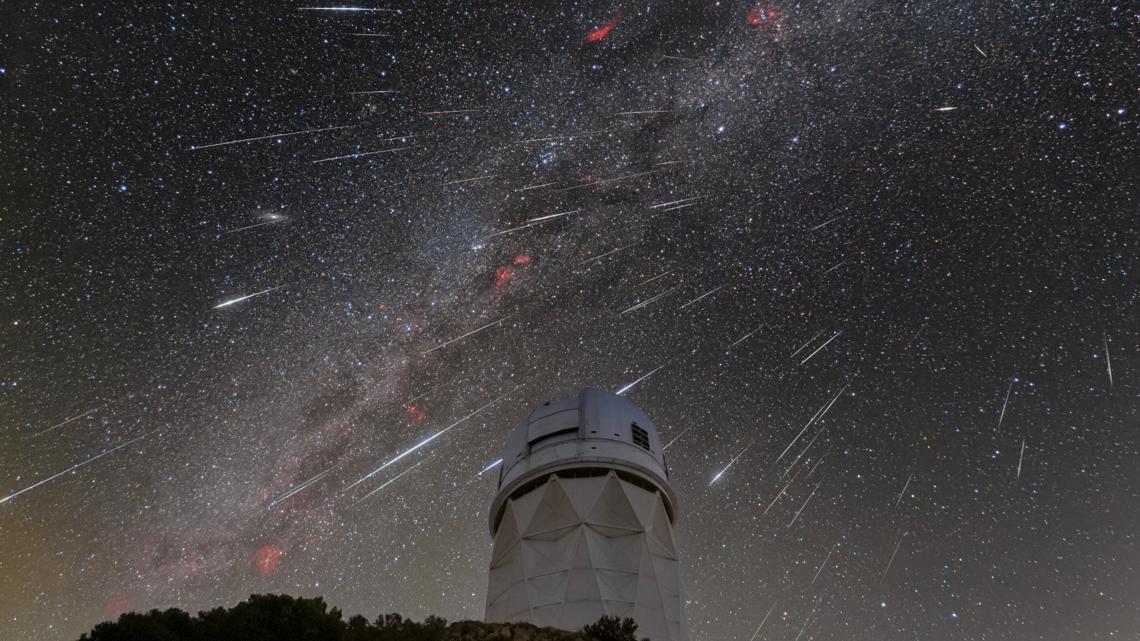
The Geminids meteor shower, one of the year's most impressive, will peak on December 13, 2024, but cloudy weather in central Indiana may hinder viewing. The best opportunities to see the meteors will be on the nights of December 11 and 12, when skies are expected to clear. For optimal viewing, find locations with minimal light pollution, such as areas south of I-70 or the Middle Fork River Preserve Forest in Illinois. The meteors will appear to originate from the constellation Gemini, visible in the northeastern sky.

Turuchan pikas, small mammals native to the mountainous regions of central Siberia, are known for their playful behavior, engaging in activities like swinging from branches and playing chase. These rock-dwelling creatures, covered in dense fur, are adapted to cold environments and have been observed participating in various types of play, including locomotor, object, and social play. This behavior, documented by Russian researchers, marks the first time such play has been observed in the Lagomorpha order, which includes rabbits and hares, suggesting that the pikas play purely for enjoyment.
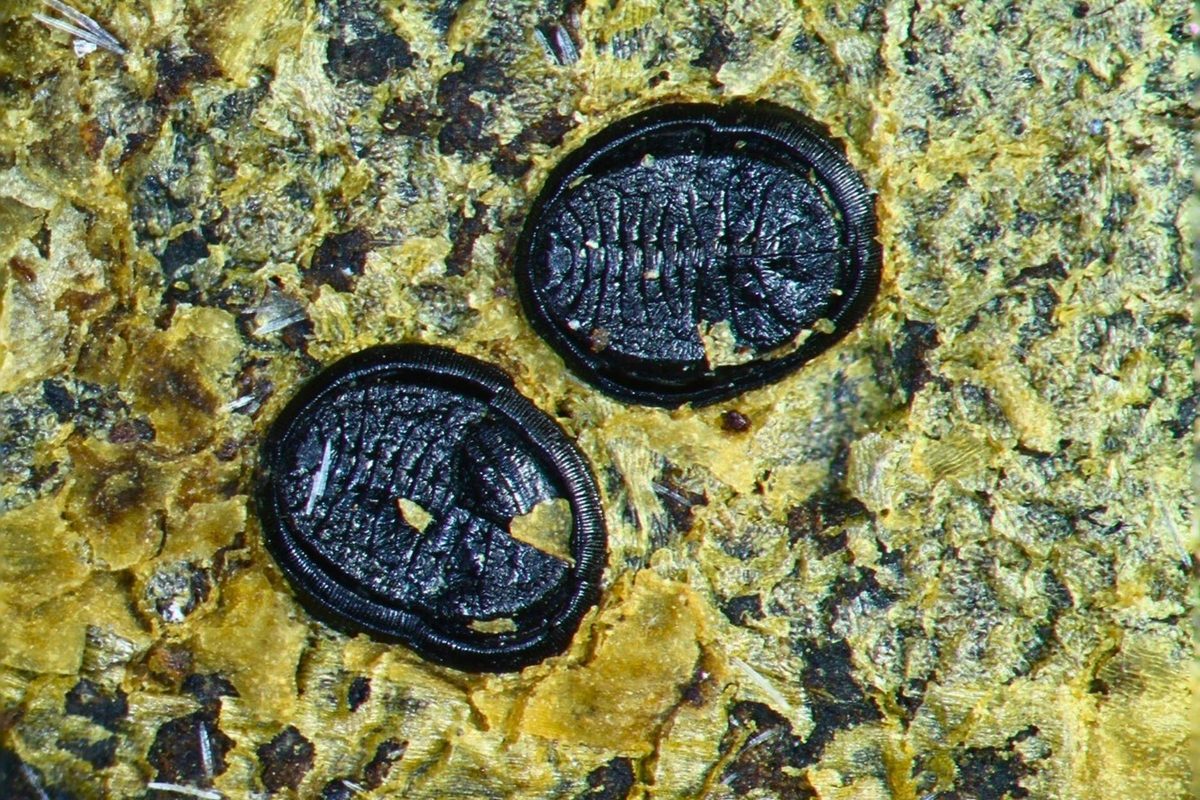
Researchers in New Zealand have discovered exceptionally well-preserved fossilized whiteflies from the Miocene period in a lake near Dunedin. These tiny insects, found attached to a fossilized leaf, offer a rare glimpse into the ancient biodiversity of the South Pacific. The discovery is significant as it represents the first of its kind in New Zealand and only the third globally, highlighting the importance of insects in understanding ancient ecosystems.

Researchers have discovered that slingshot spiders, found along Ohio's riverbanks, use a unique hunting technique similar to Roman gladiators by launching their webs at prey using sound detection. These spiders can detect the sound of approaching insects, like mosquitoes, and release their webs with remarkable speed and precision, intercepting prey in just 38 milliseconds. The study highlights the spiders' ability to compare vibrations through their webs and the air to accurately target their prey.

The Geminid meteor shower, the most prolific of the year, will peak on December 13 and 14, 2024, though visibility may be reduced due to a near-full moon. Caused by debris from asteroid 3200 Phaethon, the Geminids can produce up to 120 meteors per hour, best viewed away from artificial lights. The shower is active from December 2 to 21, with meteors often appearing bright and colorful. Following the Geminids, the Ursid meteor shower will peak on December 21 and 22, offering a more modest display.
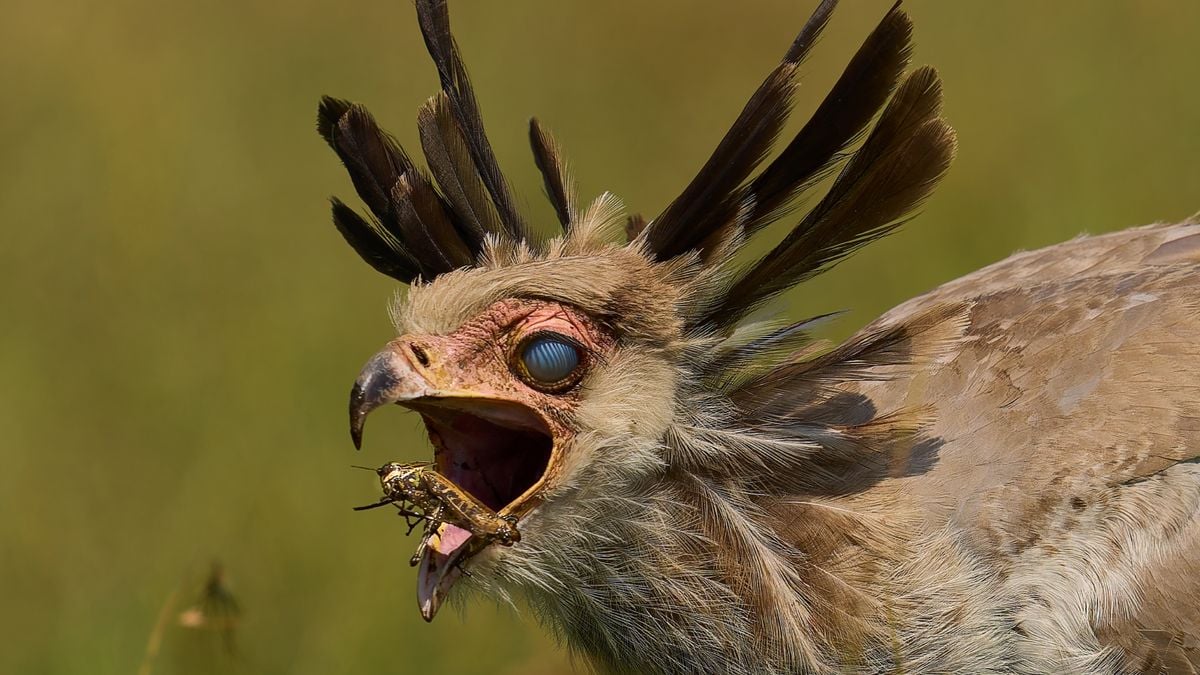
Peter Hudson's photograph of a secretary bird closing its third eyelid while catching a locust won the ecology and environmental science category in the 2024 Royal Society Publishing Photography Competition. The image highlights the bird's nictitating membrane, which protects its eyes during feeding. The competition, in collaboration with the Royal Photographic Society, celebrates images revealing hidden scientific phenomena. The overall winner was Angela Albi's aerial photo of sharks hunting in the Maldives.
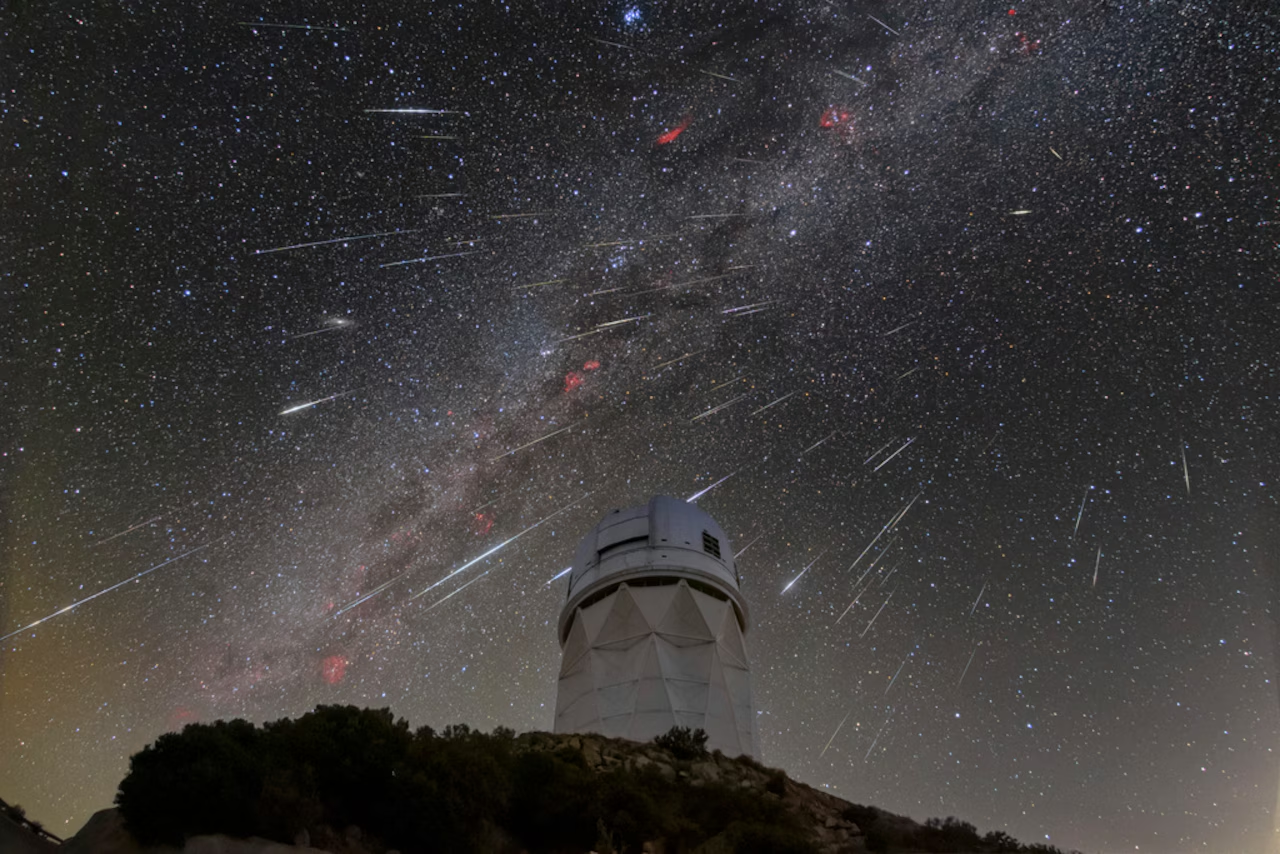
The Geminid meteor shower, originating from the asteroid Phaethon, is set to peak on December 13-14, offering up to 150 meteors per hour. However, viewing in Massachusetts may be hindered by a bright waxing gibbous moon and cloudy skies. The best time to observe is at 2 a.m. on December 14, ideally from a dark location away from light pollution.

December's night sky offers a celestial spectacle with Venus shining as the "Evening Star," Jupiter at its brightest during opposition, and Mars increasing in brightness. The Winter Triangle, formed by Sirius, Procyon, and Betelgeuse, dominates the sky, while the Geminid meteor shower peaks under challenging moonlit conditions. Key events include Venus pairing with the crescent Moon, Jupiter flanked by the Moon and Aldebaran, and Mars nearing opposition. The winter solstice on December 21 marks the start of the new season.

A coconut octopus has been filmed using its siphon to throw stones at fish, marking the first recorded instance of this behavior. The footage, captured during a documentary on plastic pollution in Southeast Asia, shows the octopus using its siphon to launch projectiles at predators, a behavior previously undocumented. Researchers are studying this unique defense mechanism to understand its purpose and effectiveness. The discovery is featured in the Netflix series "Our Oceans," highlighting the intelligence and adaptability of marine life.