Tag

Solar System Formation

All articles tagged with #solar system formation

science3 months ago

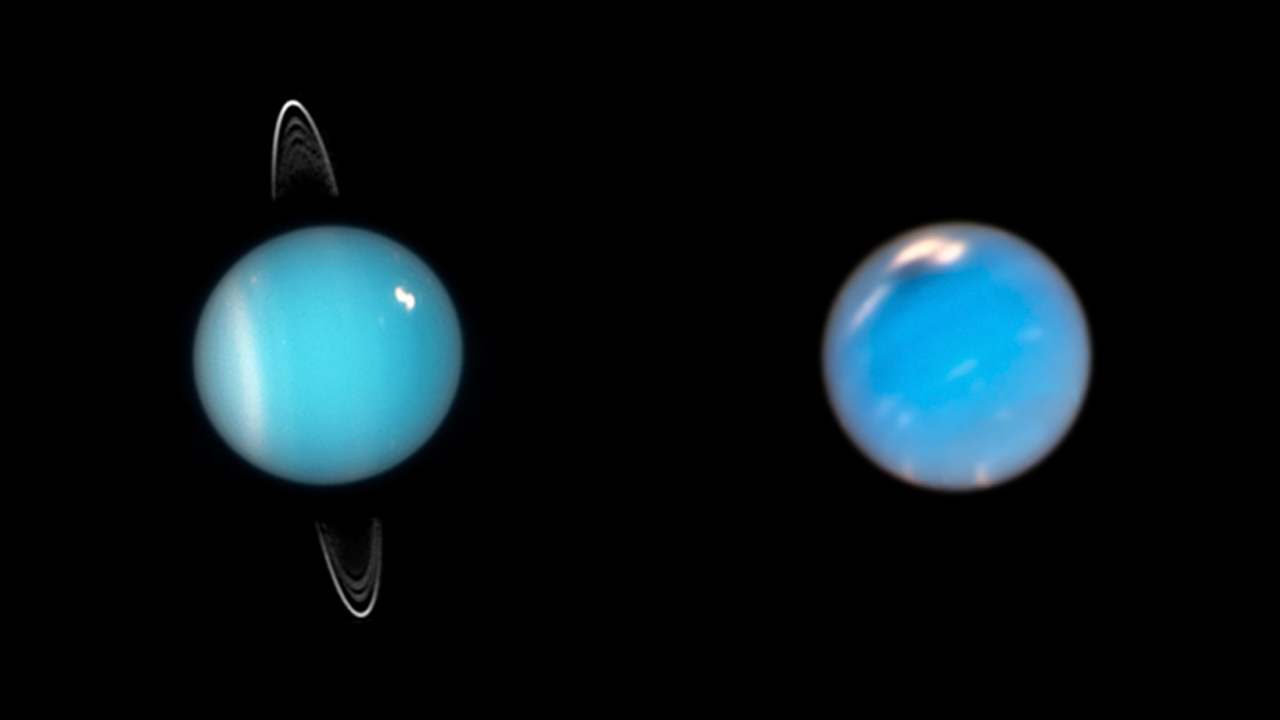
Reevaluating the Nature of Uranus and Neptune: Are They Really 'Ice Giants'?

New research suggests that Uranus and Neptune may not be 'ice giants' as previously thought, but could instead be 'rocky giants' with interiors dominated by rock rather than ice, due to limited data and a wide range of possible interior compositions. This challenges existing models of solar system formation and highlights the need for dedicated missions to better understand these planets.

science4 months ago

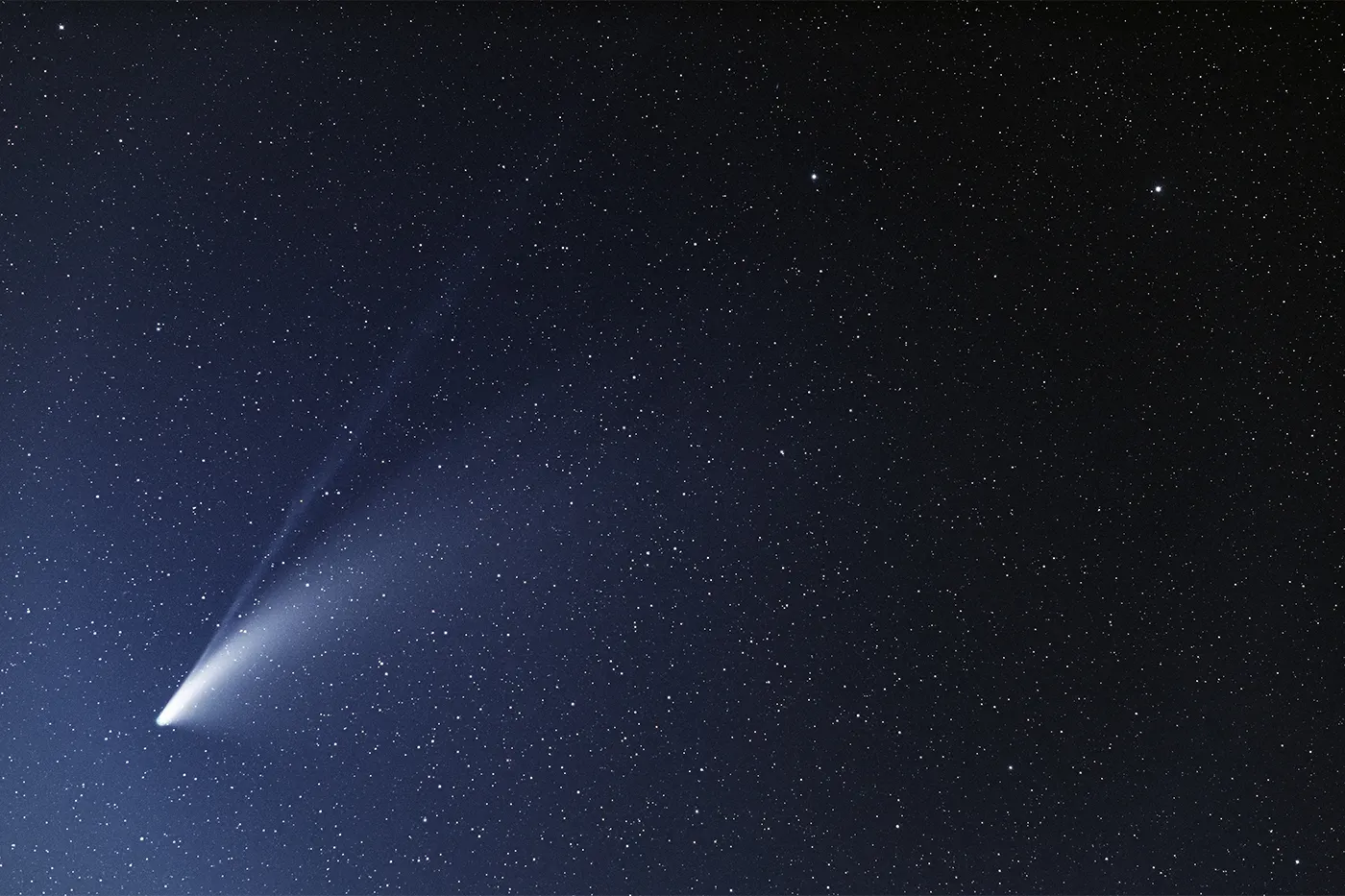
Scientists Explore the Mysteries of Interstellar Object 3I/Atlas and Its Possible Alien Origins

An astrophysicist explains that the interstellar object 3I/Atlas, initially thought to be alien, is a comet with unique properties such as emitting its own light and having a high carbon dioxide ice ratio, providing insights into other solar systems and their formation, with future observations expected to reveal more about its origins and composition.

science6 months ago

How the Moon's Impact May Have Enabled Earth's Life

Research suggests that the impact that created the Moon also delivered significant carbonaceous material to Earth, contributing to its habitability. Simulations indicate that Theia, the impactor, likely contained a high proportion of volatile-rich carbonaceous chondrites, which may have played a crucial role in Earth's development as a life-supporting planet. The study highlights the importance of giant planet migrations, especially Jupiter's, in shaping the distribution of materials in the early Solar System and influencing Earth's composition.

science1 year ago

Uncovering Clues to Solar System Formation in Hiroshima's Nuclear Fallout

Scientists have analyzed fallout debris from the 1945 atomic bomb blast in Hiroshima and discovered glassy spheres formed by condensation within the nuclear fireball. The chemical and isotopic composition of these "Hiroshima glasses" bears similarities to primitive meteorites, suggesting they may provide insights into the early Solar System's formation. The study's simulations revealed how different types of glass condensed from the blast's extreme heat, offering a potential window into the chemical reactions during condensation in the early Solar System.

astronomy1 year ago

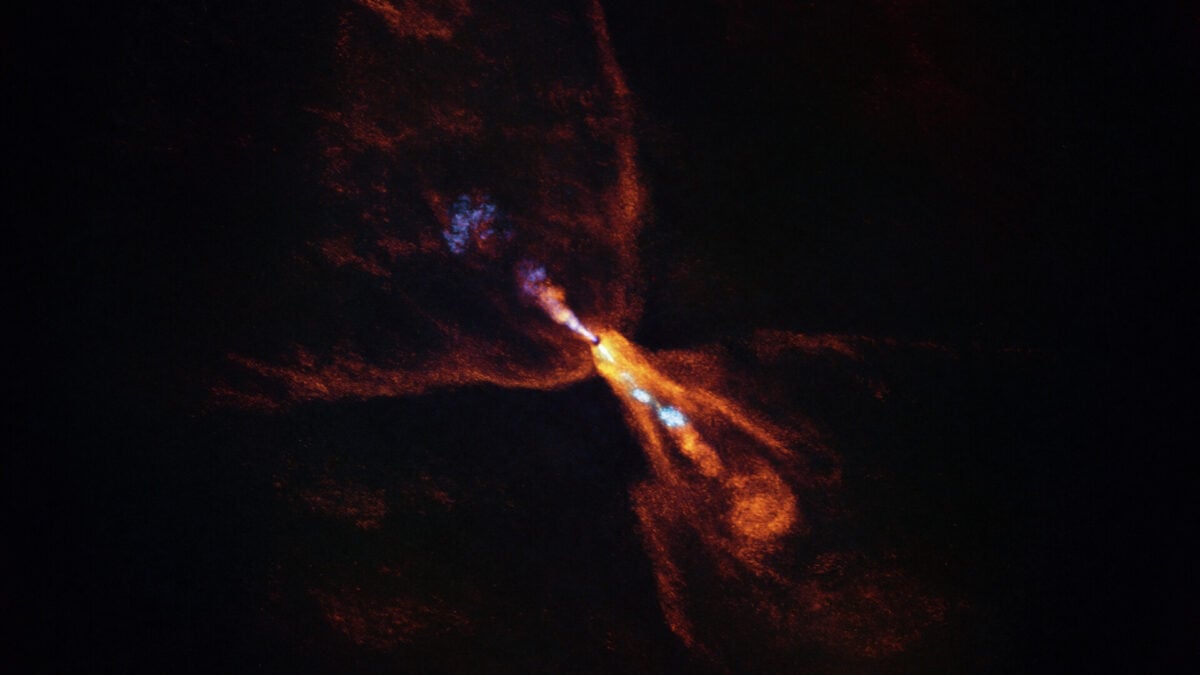
"Orion Nebula's Monthly Destruction and Replenishment of Oceans of Water Tracked by JWST"

Scientists studying data from the JWST have discovered that a planetary disk in the Orion Nebula, d203-506, is destroying and replenishing an amount of water equivalent to all of Earth’s oceans in about a month. This process sheds light on the water cycle in the infant Solar System and suggests that Earth's water likely went through a similar process before making its way to the planetesimals and icy bodies that helped form the worlds of the Solar System. The findings provide valuable insights into planet-formation processes and the interplay between young stars and their protoplanetary disks.

space-science2 years ago

Unveiling Clues from 4.5 Billion-Year-Old Asteroid Bennu

A sample of asteroid dust, collected by NASA's OSIRIS-REx mission from asteroid Bennu, has arrived at the Natural History Museum in London. Scientists hope to study the untouched material to gain insights into the formation of the solar system and the origins of Earth. The sample, just 100 milligrams, will be analyzed using various techniques to understand the asteroid's composition, formation, and history. Bennu is considered a time capsule from the early solar system and has the potential to provide clues about the building blocks of life on Earth.

space-science2 years ago

Neon Discovery in Young Star System Sheds Light on Planet Formation

The James Webb Space Telescope has confirmed the presence of neon in the protoplanetary disk of the young star system SZ Chamaeleontis (SZ Cha), providing insight into planet formation. The observations, coupled with data from NASA's Spitzer telescope in 2008, reveal a change in high-energy radiation within the disk, which is predicted to cause the disk to evaporate and limit the time for planet formation. The detection of neon III, a rare neon reading, suggests that ultraviolet light, rather than X-rays, is responsible for the high-energy radiation. The disappearance of neon III from the disk is attributed to the dominance of X-ray radiation. Further observations are planned to understand the variability and true nature of young planetary systems.

space2 years ago

NASA Probe Discovers Surprising Binary Asteroid System During Flyby

NASA's Lucy probe, during its flyby of asteroid Dinkinesh, made a surprising discovery - the asteroid has its own tiny moonlet in a close orbit. This finding suggests that there may be more binary asteroids in the Solar System than previously known, providing insights into how rocks in the Solar System grow and interact. Lucy's mission is to study these asteroids to better understand the formation of the Solar System and the processes involved in planet formation. The spacecraft is now heading towards its next target, the asteroid Donaldjohanson, for a rendezvous in 2025.

astronomy2 years ago

Unraveling the Mysteries of Distant Astronomical Objects: How Astronomers Study the Unreachable Universe

Astronomers studying distant solar systems rely on remote observations since they cannot send robotic spacecraft to gather samples. By observing apparent properties such as brightness, color, position, and shape, astronomers can calculate the properties they are interested in studying. Protoplanetary disks, located many light years outside our solar system, provide valuable insights into the early planet formation process. The recent arrival of the Bennu sample will help scientists understand not only asteroids and interplanetary dust but also interstellar dust in solar systems farther away, shedding light on the formation of planets.

astronomy2 years ago

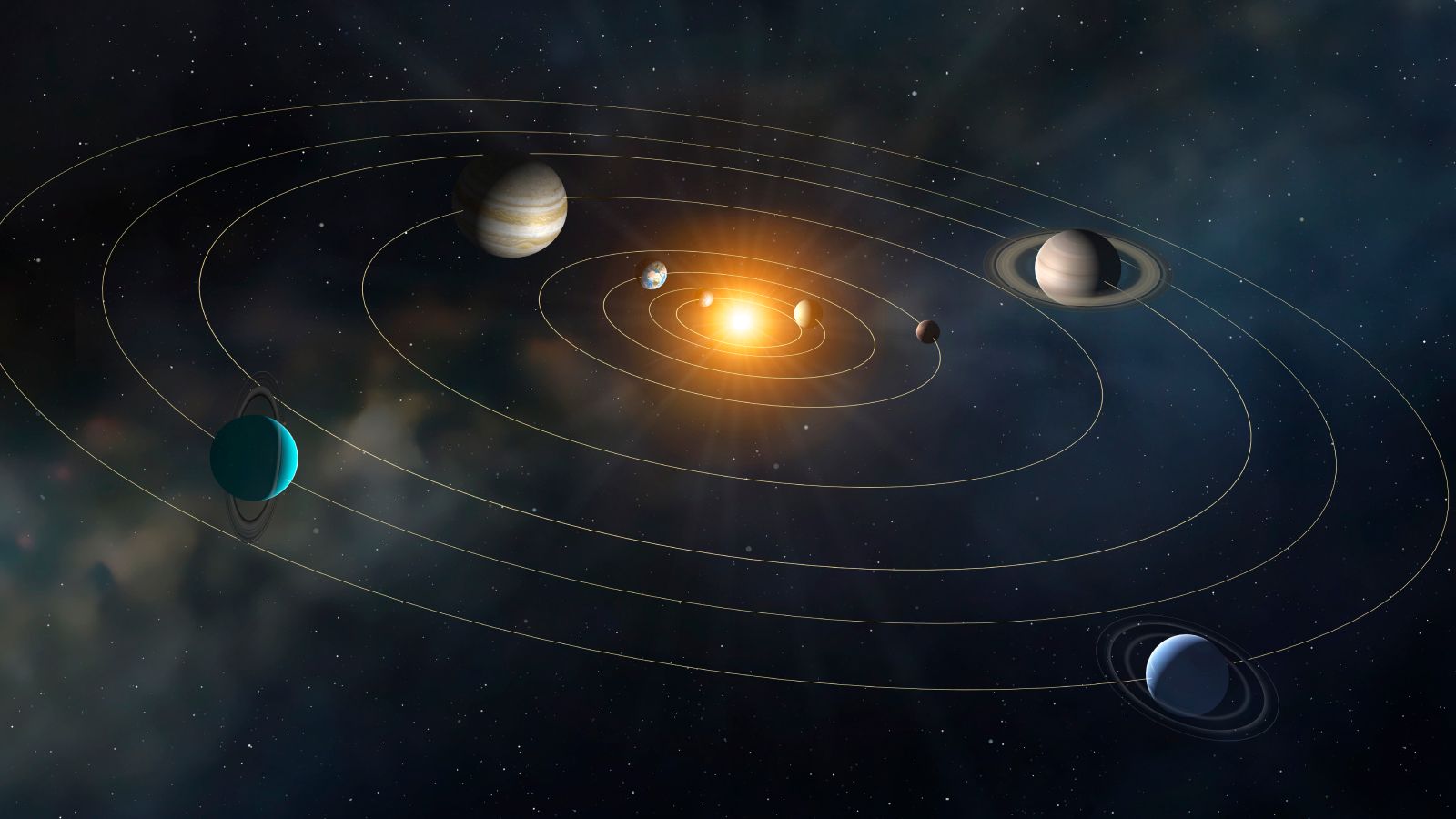
Jupiter-like Exoplanets Suggest Commonality in Solar Systems

A new study suggests that Jupiter-like planets may be common in the interplanetary space near our solar system, particularly around stars similar to our sun. If confirmed, this finding would challenge the notion that our solar system's architecture is unique. The study focused on the β Pic Moving Group, a cluster of stars about 130 light-years away, and found that 20 of the 30 stars studied are likely to host Jupiter-like planets in stable orbits. The research supports the theory that our solar system formed in a quiet, low-density environment. However, detecting these gas giants is challenging due to their long orbital periods, requiring decades of data collection to observe transits.