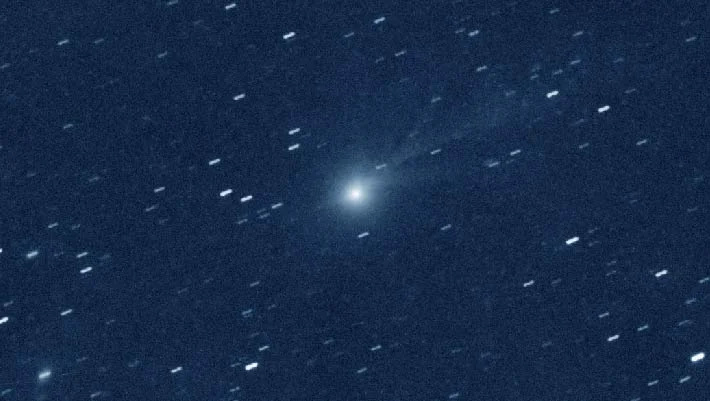
Astronomers captured detailed post-perihelion images of interstellar comet 3I/ATLAS, revealing complex jet structures and its trajectory as it moves away from the Sun into interstellar space, providing valuable insights into its composition and behavior.
A study finds a statistical link between mysterious sky lights, UAP sightings, and nuclear testing in the mid-20th century, suggesting these phenomena are real and potentially connected to nuclear activity, based on archival astronomical data and eyewitness reports.
Recent analysis suggests the interstellar comet 3I/ATLAS is unusually large and massive, possibly over three miles in diameter, with its mass and behavior challenging previous expectations about interstellar objects, raising questions about its composition and origin.
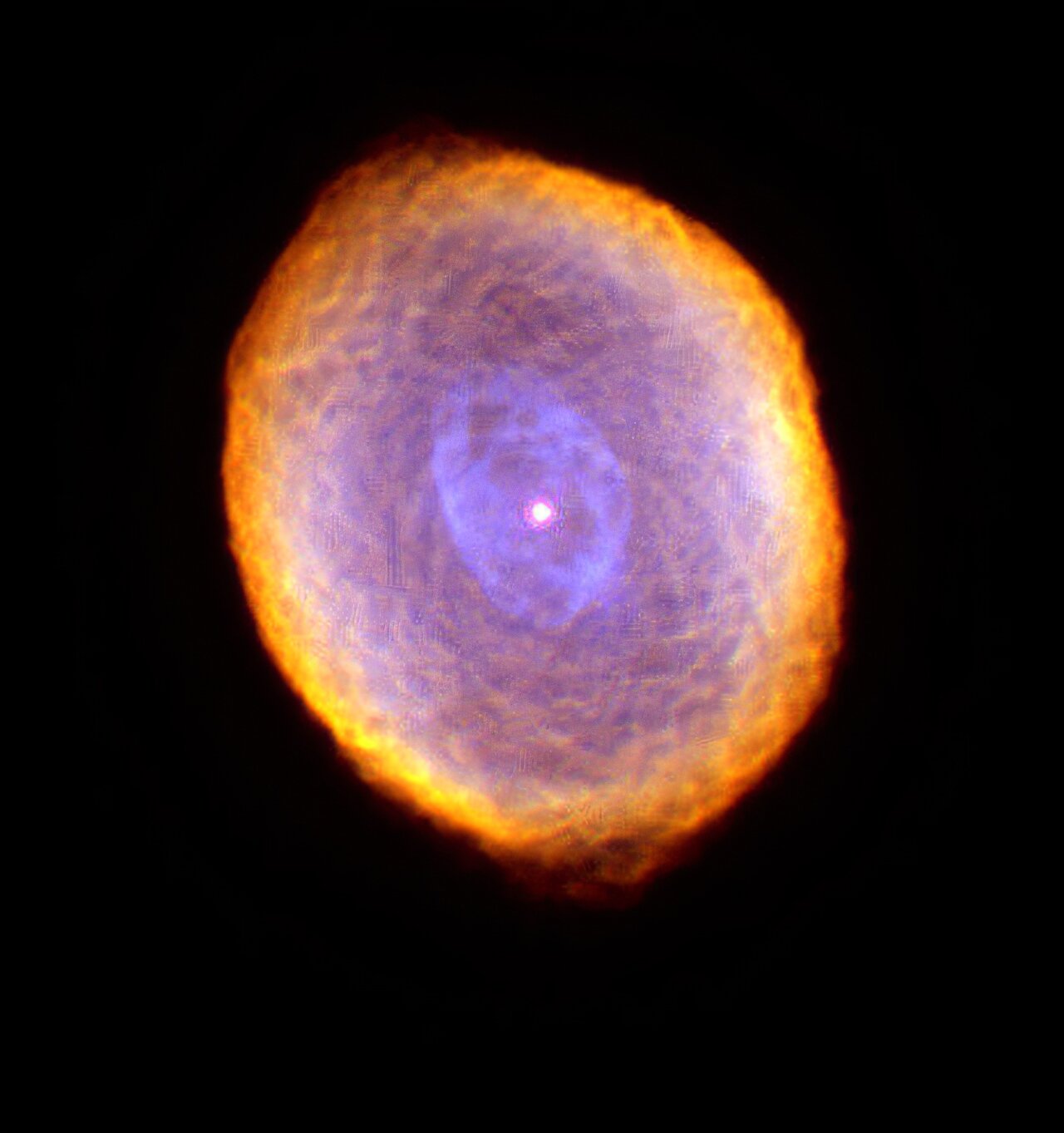
Scientists have tracked the 130-year evolution of the planetary nebula IC418, revealing its central star is heating up faster than previously thought, challenging existing models of stellar aging and offering new insights into the life cycle of stars.
Scientists continue to investigate the possibility of a massive undiscovered planet, 'Planet Nine', influencing the orbits of distant objects in the Kuiper Belt, though recent discoveries and limited observational data make its existence uncertain. The search relies on telescopic observations, as space travel to the outer solar system would take over a century.
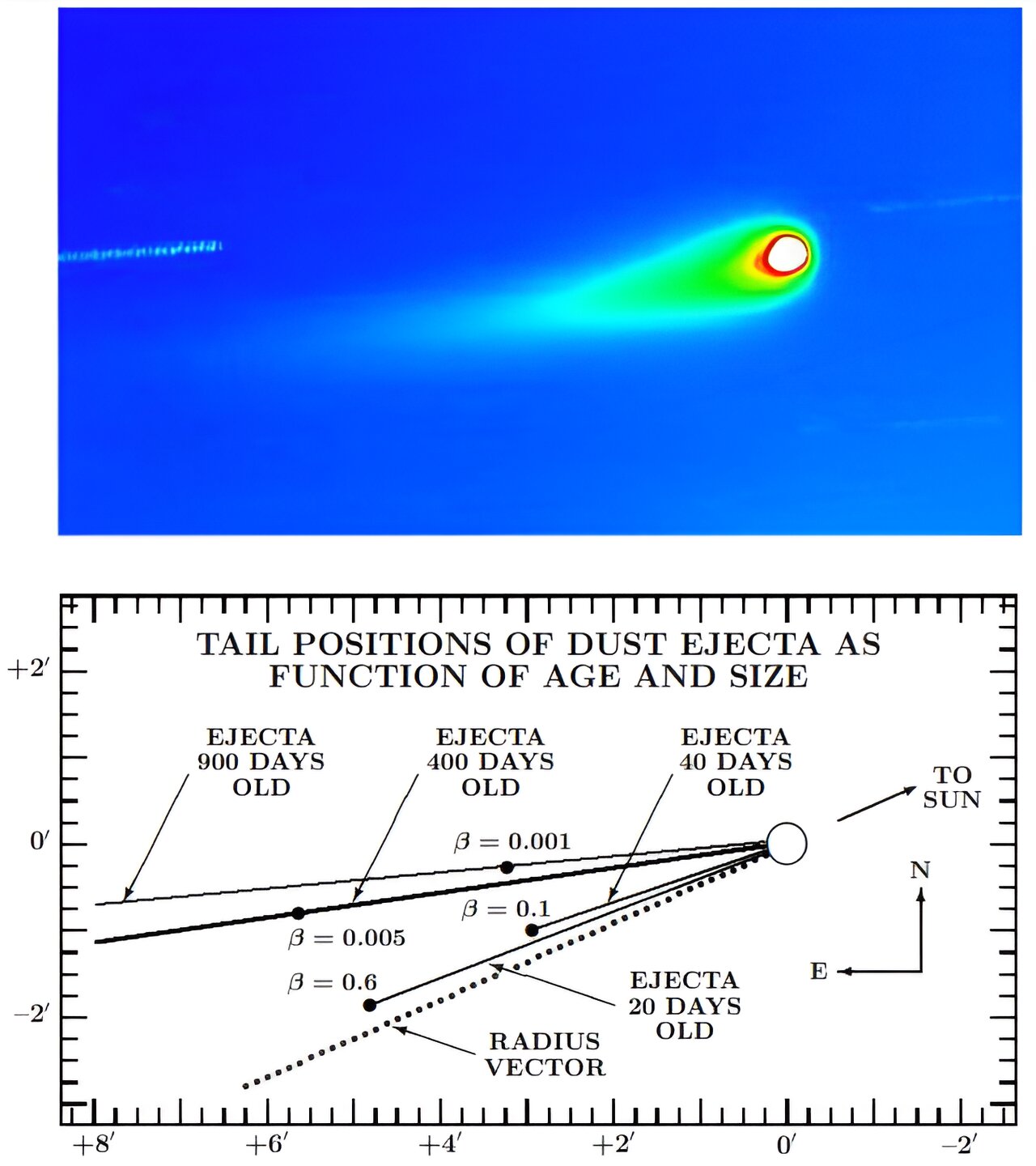
Comet Tsuchinshan-ATLAS (C/2023 A3) is showing signs of breaking up before its anticipated close pass to Earth this October, according to astronomer Zdenek Sekanina. Despite initial excitement about its visibility, the comet's lack of expected brightness and signs of advanced fragmentation suggest it will disintegrate into pieces too small to be seen from Earth.
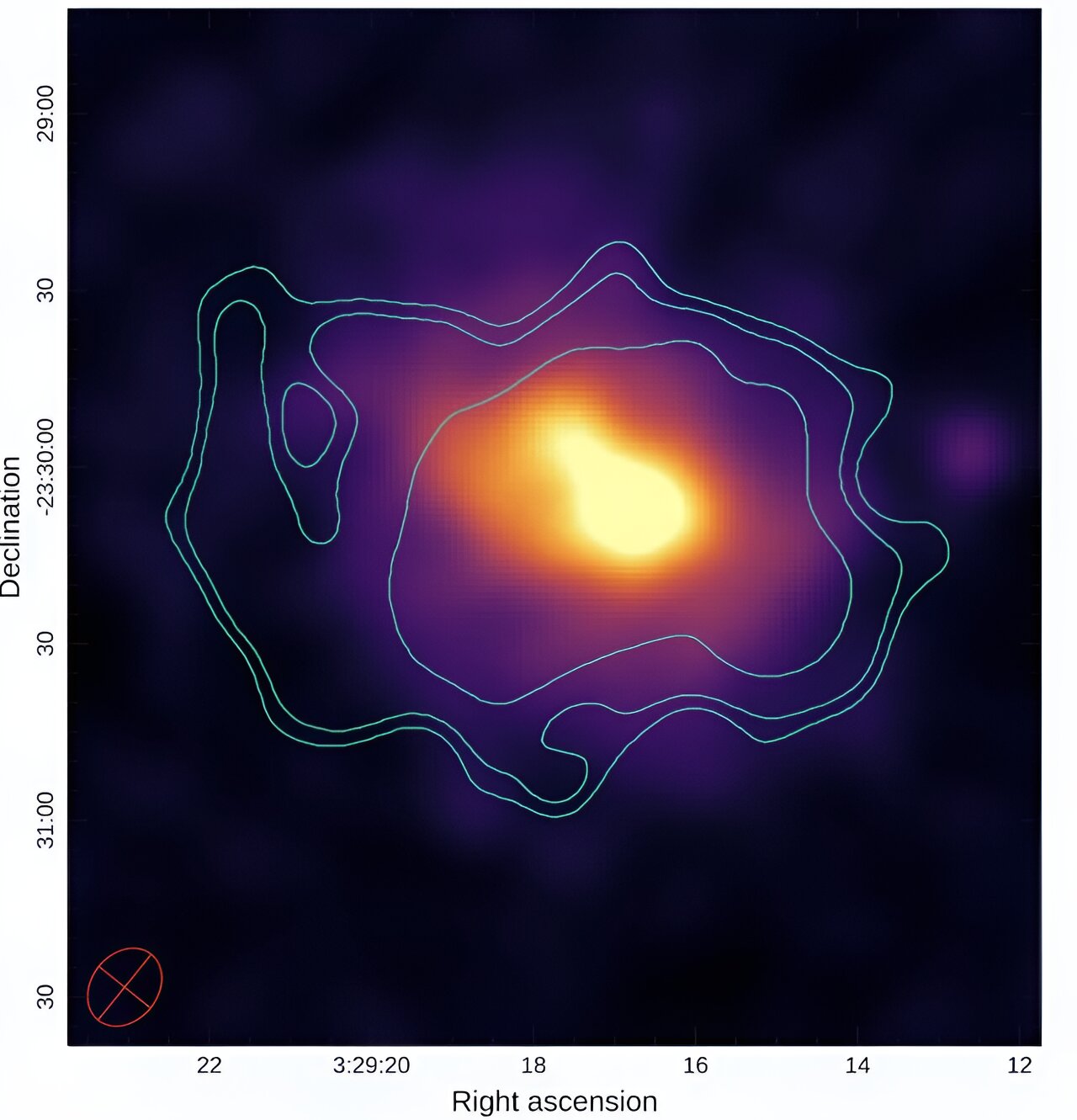
Astronomers have detected a new radio halo in the massive galaxy cluster ACT-CL J0329.2-2330, using L-band and UHF-band observations with the MeerKAT radio telescope. This discovery, reported in a research paper, marks the highest redshift halo detected so far and suggests rapid magnetic field amplification in galaxy clusters at high redshifts. The radio halo in ACT-CL J0329 exhibits a smooth, regular morphology and has a flux density of 3.44 and 6.11 mJy at L and UHF-band, respectively, indicating its luminosity comparable to halos found in nearby massive galaxy clusters.
Astronomers have conducted the first search for forming planets using the James Webb Space Telescope, aiming to find early clues about planet formation and their influence on protoplanetary disks. Three studies led by different universities combined JWST's images with prior observations to observe protoplanetary disks around young stars HL Tau, SAO 206462, and MWC 758. While no new planets were detected, the sensitivity of JWST's instruments provided groundbreaking results, ruling out the existence of additional planets in the outer regions of MWC 758 and placing stringent constraints on suspected planets. The search for forming planets is crucial for understanding planet formation processes and the evolution of planetary systems.
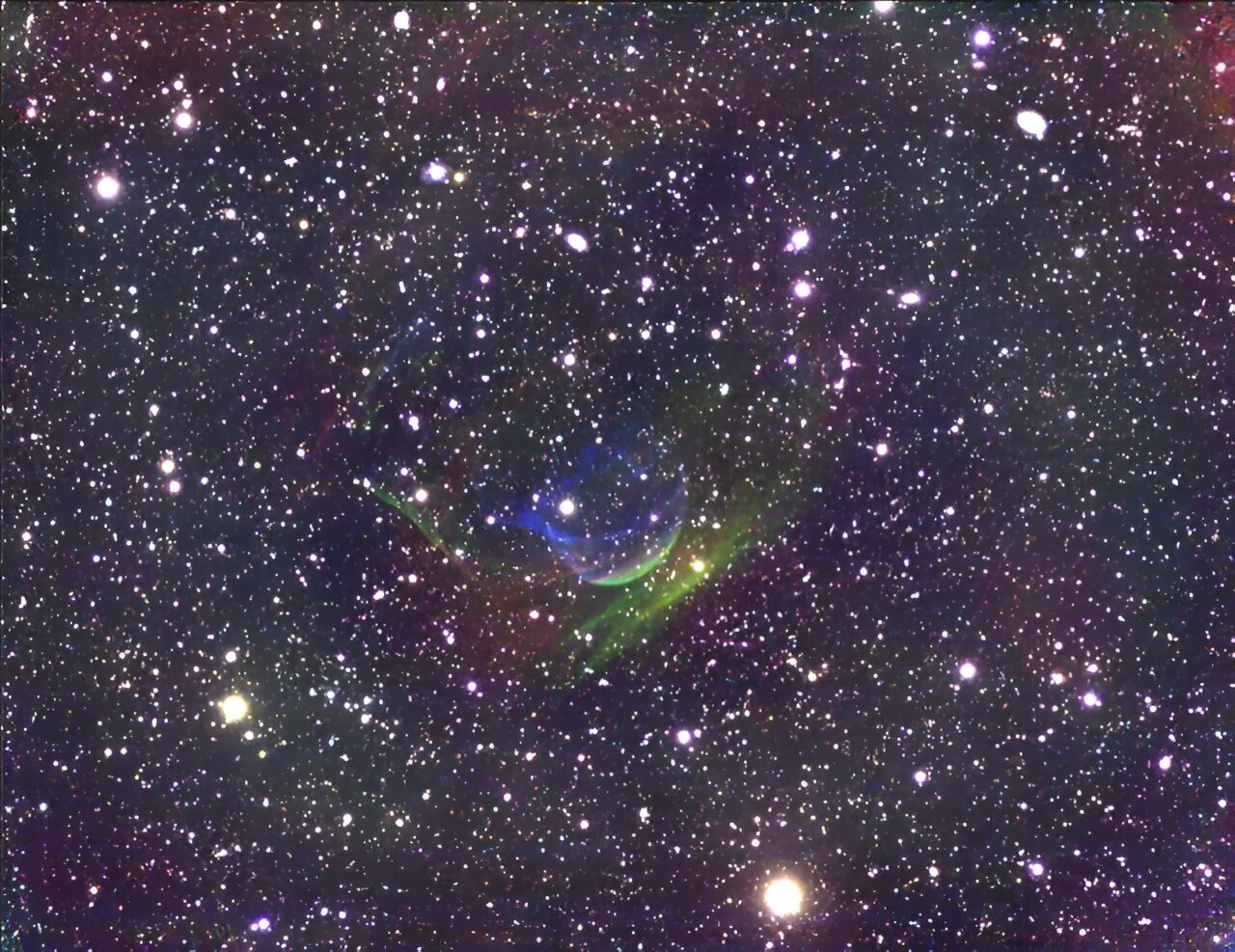
The new Condor Array Telescope, using computer technology to combine light from smaller telescopes, has enabled astrophysicists to study extremely faint astronomical features that were previously undetectable. The telescope's first scientific findings, published in the Monthly Notices of the Royal Astronomical Society, include the discovery of faint stellar streams around the galaxy NGC 5907, a complete shell of gas surrounding the dwarf nova Z Camelopardalis, and an extremely faint shell of gas surrounding another nova. These findings open up a new world of the very-low-brightness universe for astrophysicists and confirm long-standing hypotheses about the structures surrounding frequently erupting novae.
Astronomers have made a groundbreaking discovery of water vapor in a protoplanetary disk around a young star, shedding light on the formation of planets. The observations, made using the ALMA telescope, suggest that water may play a crucial role in planet formation by freezing onto dust particles and aiding in the aggregation of planetary building blocks. This finding provides new insights into the early stages of planetary formation and may offer clues about Earth's own formation over 4 billion years ago.
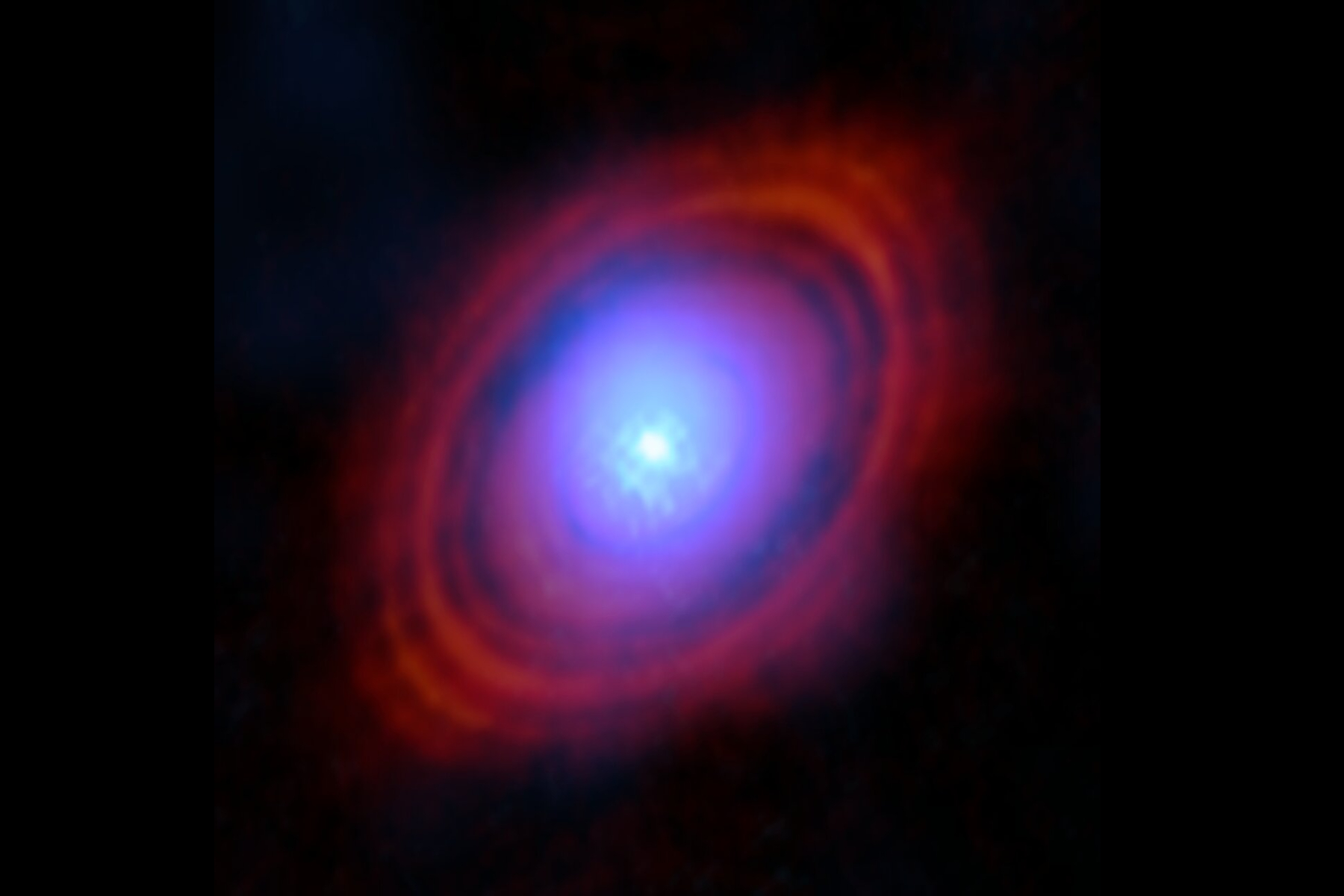
Astronomers have made a groundbreaking discovery by mapping the distribution of water vapor in a planet-forming disk around a young star, HL Tauri, shedding light on the potential origins of Earth's water. The observations, made using the ALMA telescope, revealed a significant amount of water vapor in the region where terrestrial planets like Earth are expected to form, suggesting that Earth may have been born with a large proportion of its water. This finding could provide valuable insights into the development of planetary systems, including our own Solar System.
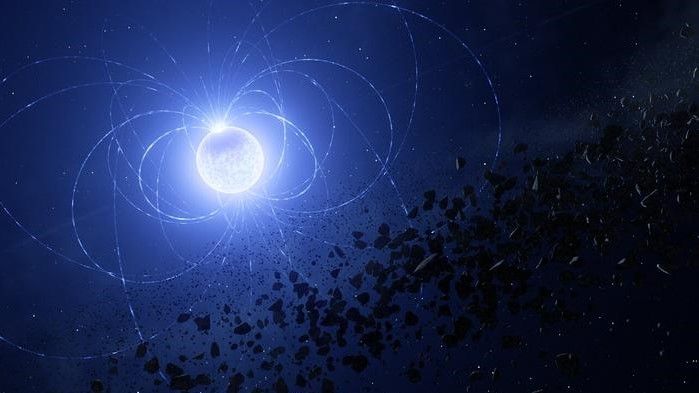
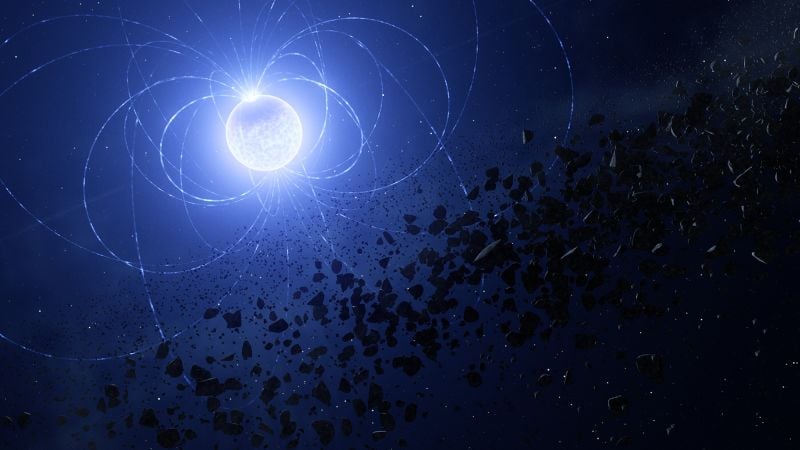
Astronomers have discovered a white dwarf star, WD 0816-310, with a metallic scar on its surface, believed to be the remnants of a planet it consumed. The scar was created by the star's powerful magnetic fields, which funneled the planetary material onto its surface. This discovery sheds light on the process of white dwarfs cannibalizing pieces of their planetary systems and provides unique insight into star systems beyond our own.
Astronomers have observed a dead star, known as a white dwarf, with a metal scar on its surface, indicating that it consumed a fragment of a planet. This sheds light on the dynamic nature of planetary systems even in the end stages of a star’s life cycle. The observation, made using the European Southern Observatory’s Very Large Telescope, revealed that the star’s magnetic field played a key role in this process, resulting in the scar on the white dwarf’s surface. This finding provides insight into the potential fate of our own solar system as our sun is expected to become a white dwarf in about 5 billion years.
Astronomers have discovered a white dwarf star, WD 0816-310, with a metallic "scar" on its surface, believed to be the remnants of a planetary fragment that came too close. This finding challenges previous assumptions about how planetary material is distributed on white dwarfs, as the scar appears to be held in place by the star's magnetic field. The discovery provides valuable insights into the composition of exoplanets and sheds light on the final moments of planetary fragments as they are tidally shredded and consumed by the white dwarf.
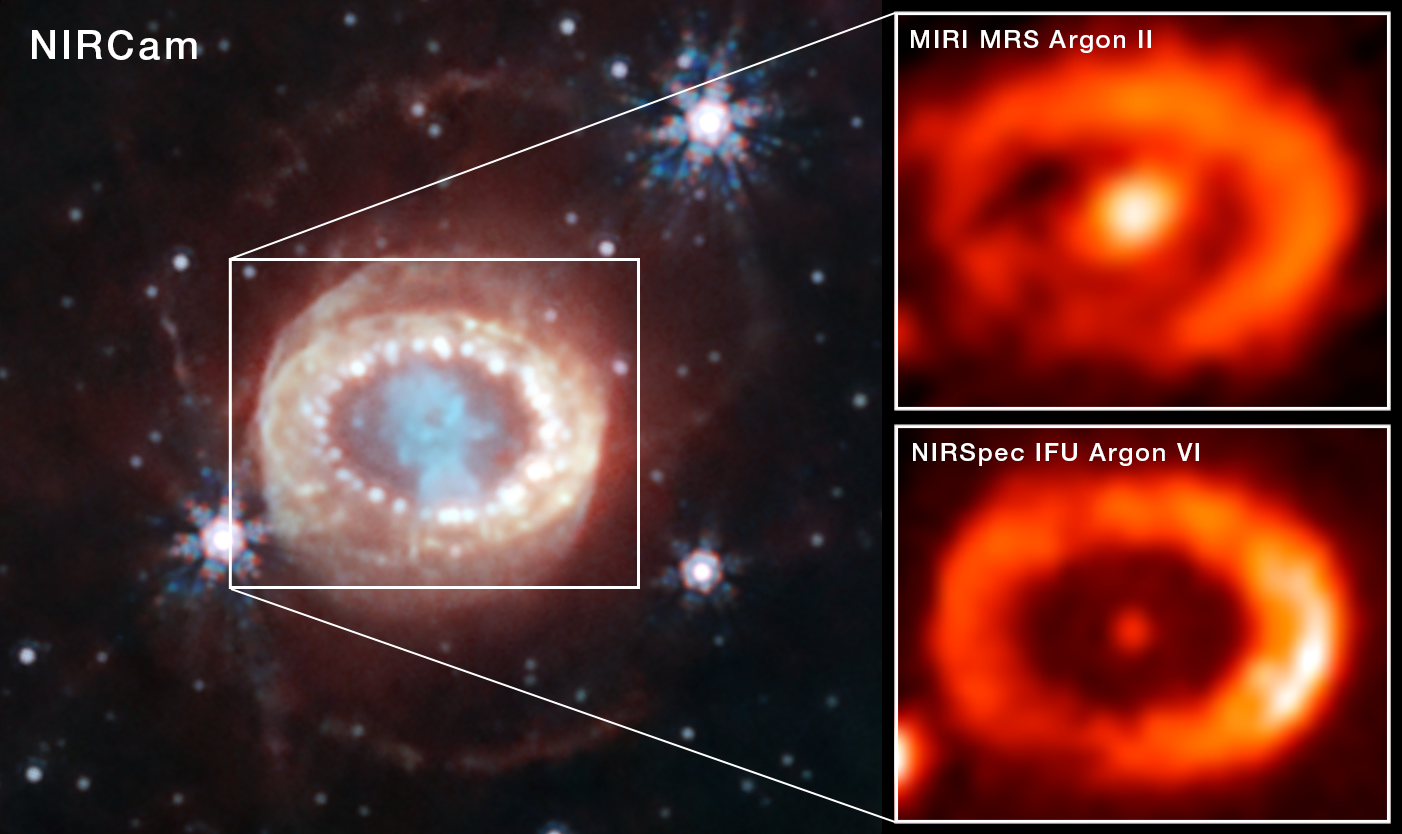
The James Webb Space Telescope has provided the best evidence yet for the presence of a neutron star at the site of the supernova SN 1987A, offering direct evidence of high-energy emission from the probable young neutron star. This discovery, made using the Medium Resolution Spectrograph mode of Webb’s MIRI, marks a significant step in understanding core-collapse supernovae and the formation of compact objects such as neutron stars or black holes. Further observations are planned to gain more insight into the processes occurring in the heart of the SN 1987A remnant.