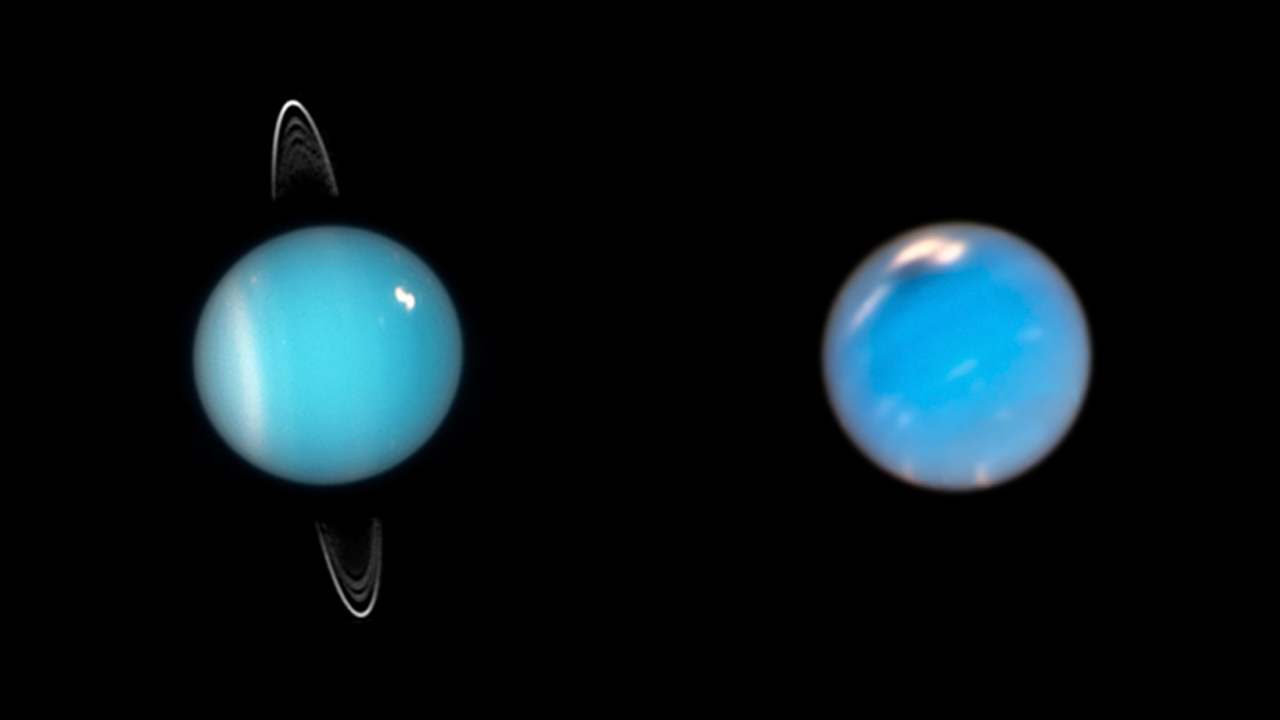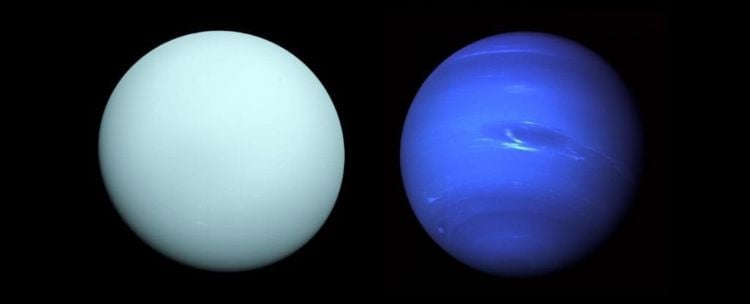
New research suggests that Uranus and Neptune may be more rocky and less icy than previously thought, challenging the traditional classification of these planets as 'ice giants' and highlighting the need for future missions to better understand their true nature.
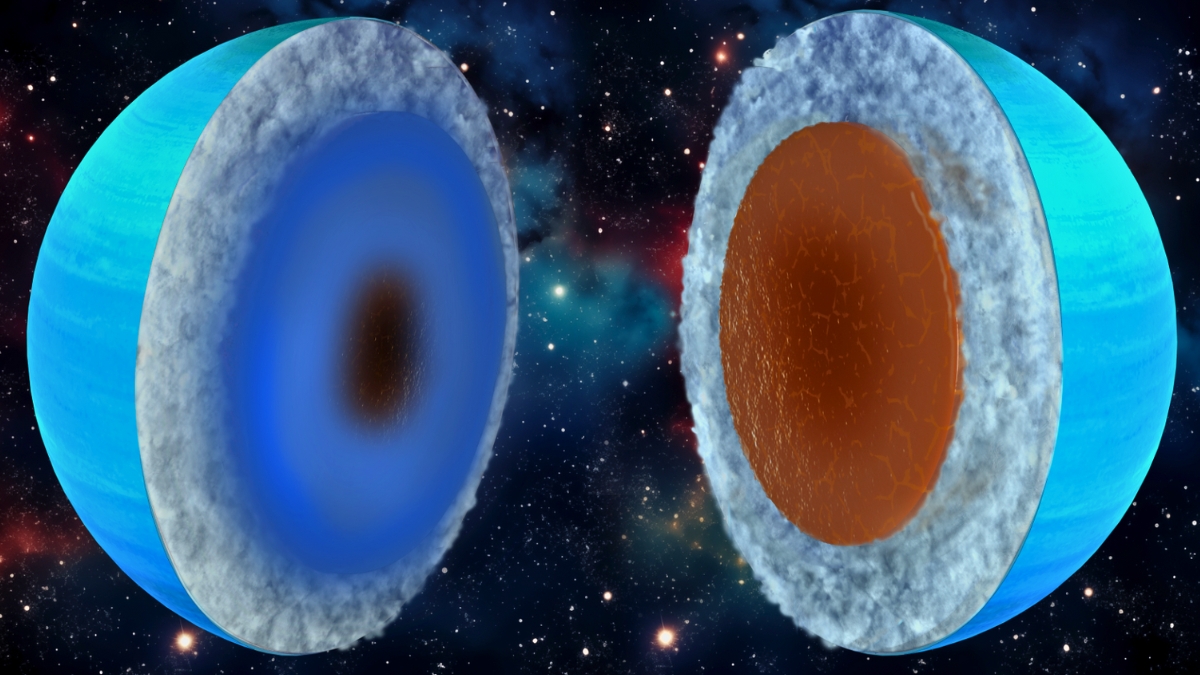
New research suggests that Uranus and Neptune may not be 'ice giants' as previously thought, but could instead be 'rocky giants' with interiors dominated by rock rather than ice, due to limited data and a wide range of possible interior compositions. This challenges existing models of solar system formation and highlights the need for dedicated missions to better understand these planets.
A recent study suggests that Uranus and Neptune may be better classified as 'rock giants' rather than 'ice giants' due to their interior compositions being dominated by rock and water, challenging longstanding classifications and offering new insights into planetary formation.
Scientists have discovered a new phase of superionic ice, called Ice XIX, which has a body-centered cubic structure and increased conductivity compared to its predecessor, Ice XVIII. Superionic ice is a strange form of ice that exists at extreme pressures and temperatures, such as those found in the interiors of Uranus, Neptune, and similar exoplanets. The enhanced conductivity of Ice XIX could explain the off-kilter magnetic fields observed in Uranus and Neptune, suggesting that these ice giants may have layers of superionic ice with differing conductivity, leading to the generation of multipolar magnetic fields. This discovery deepens our understanding of the unique properties of water in extreme environments and its role in shaping planetary interiors.