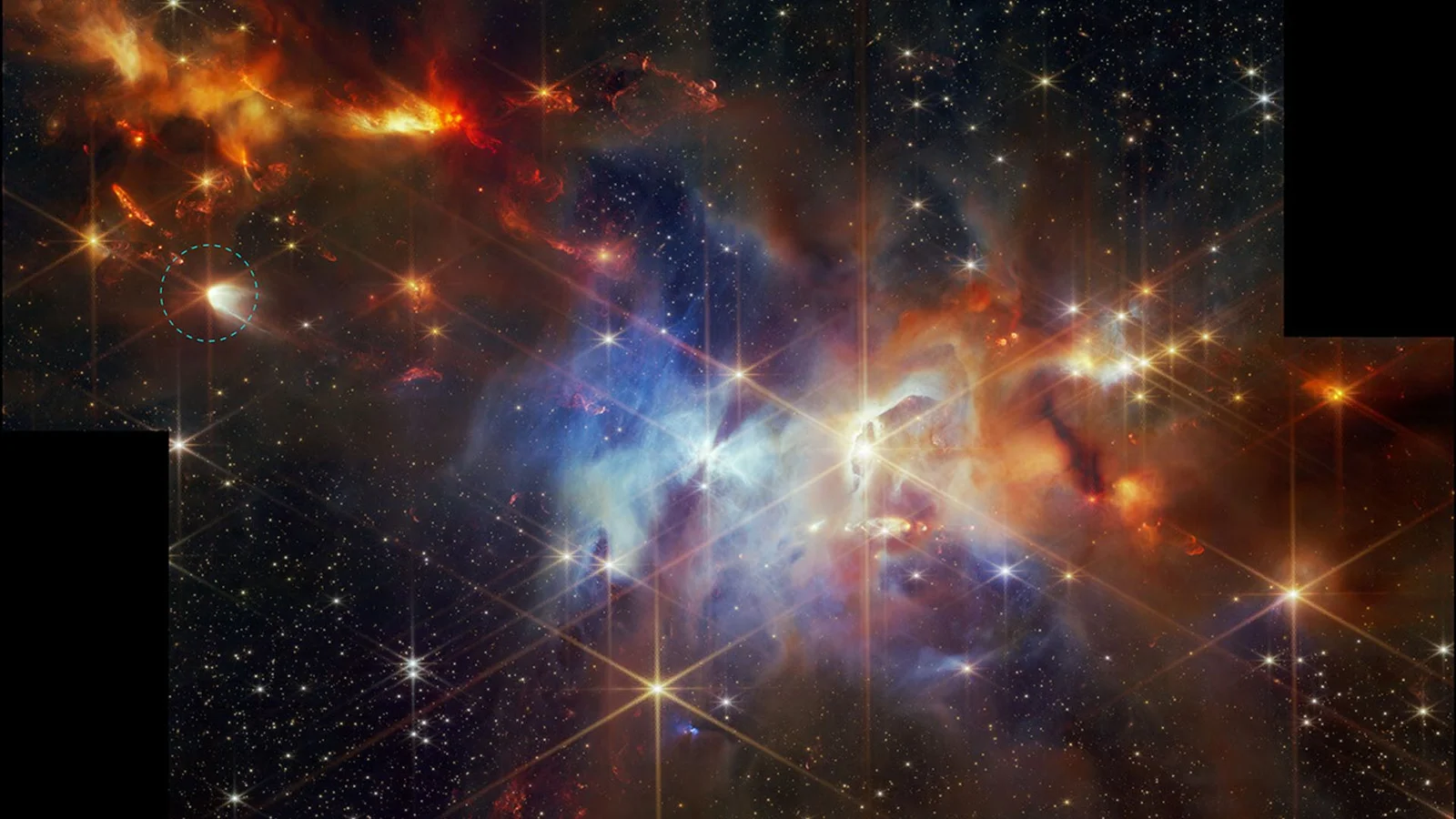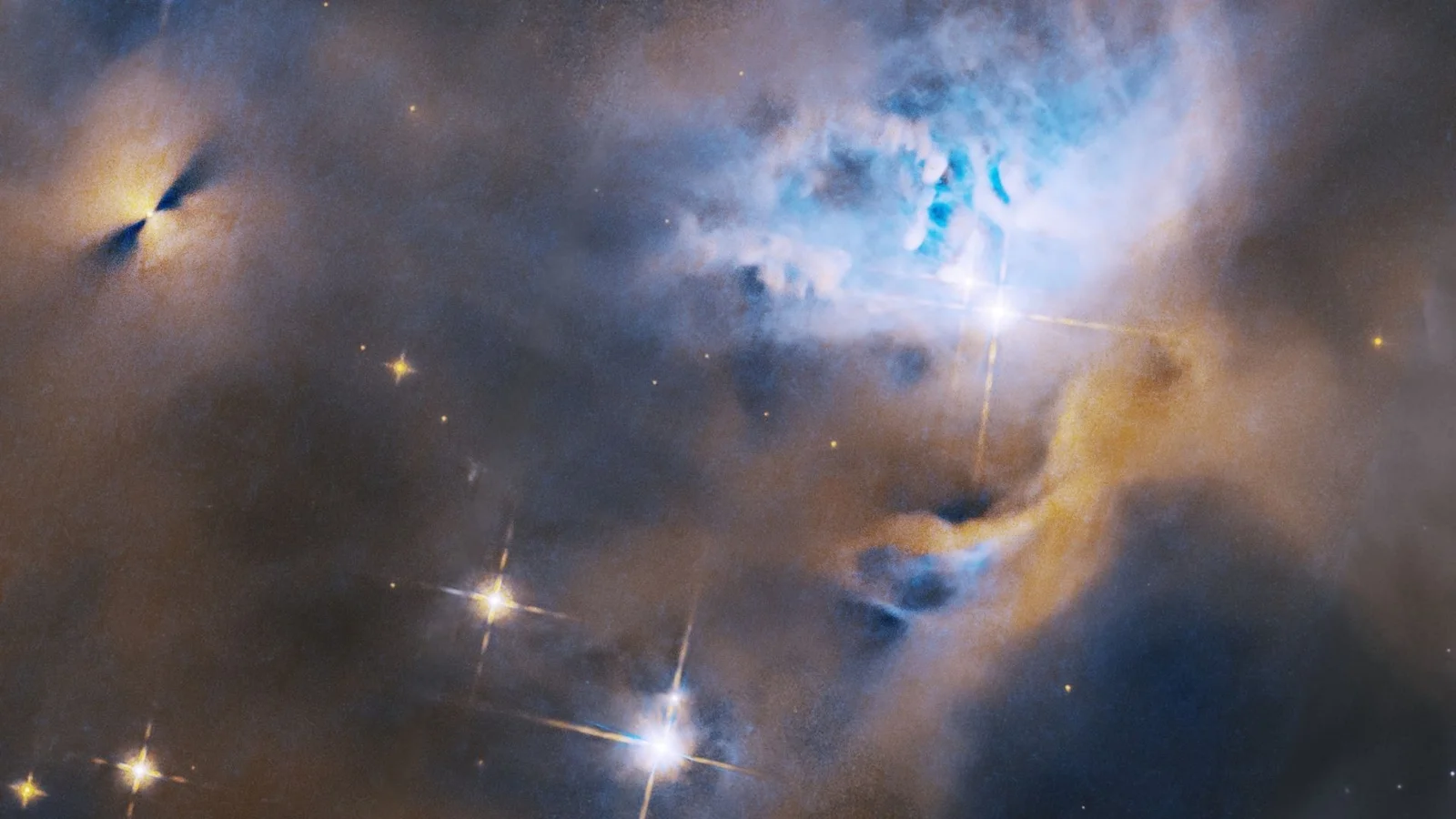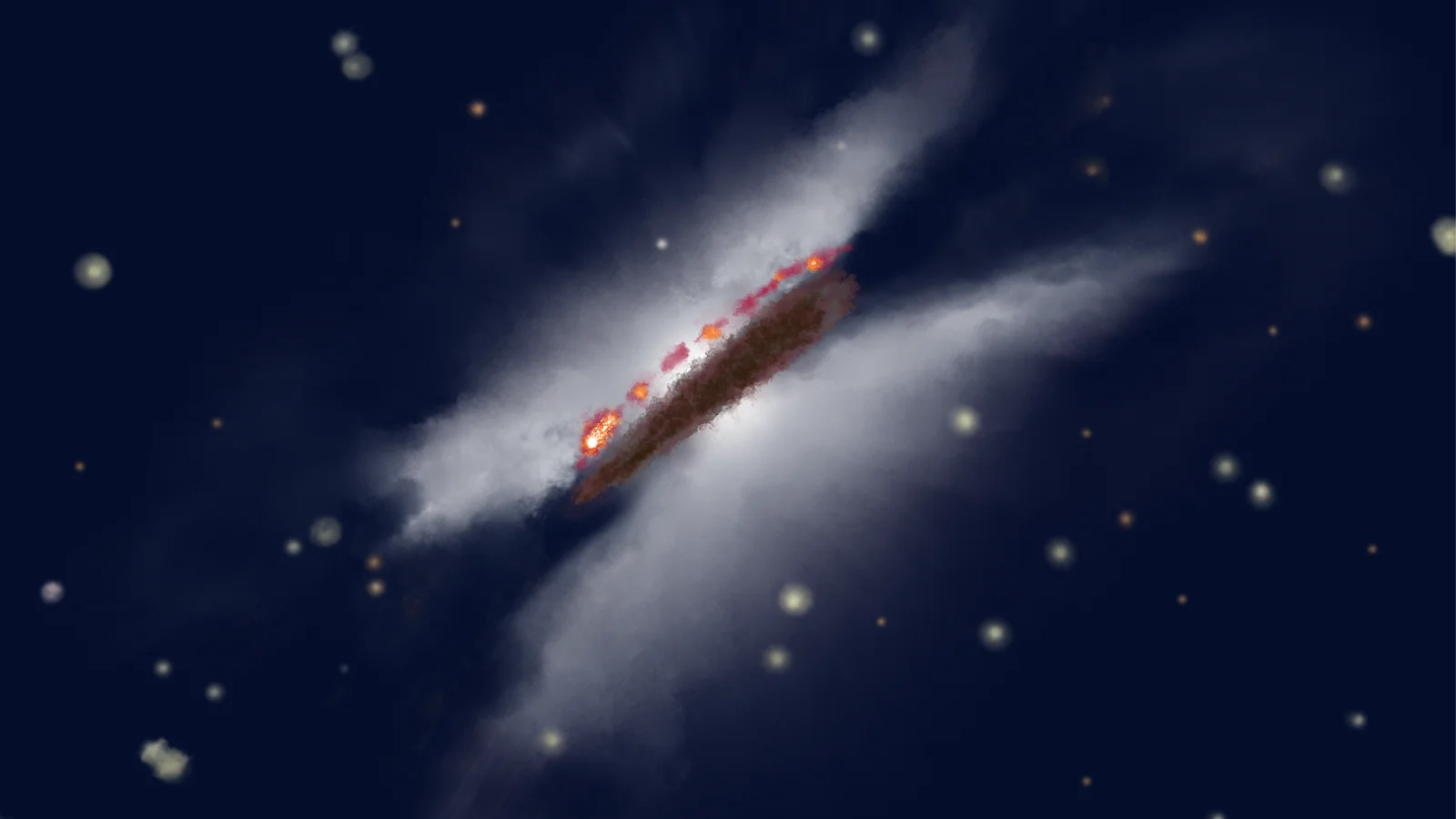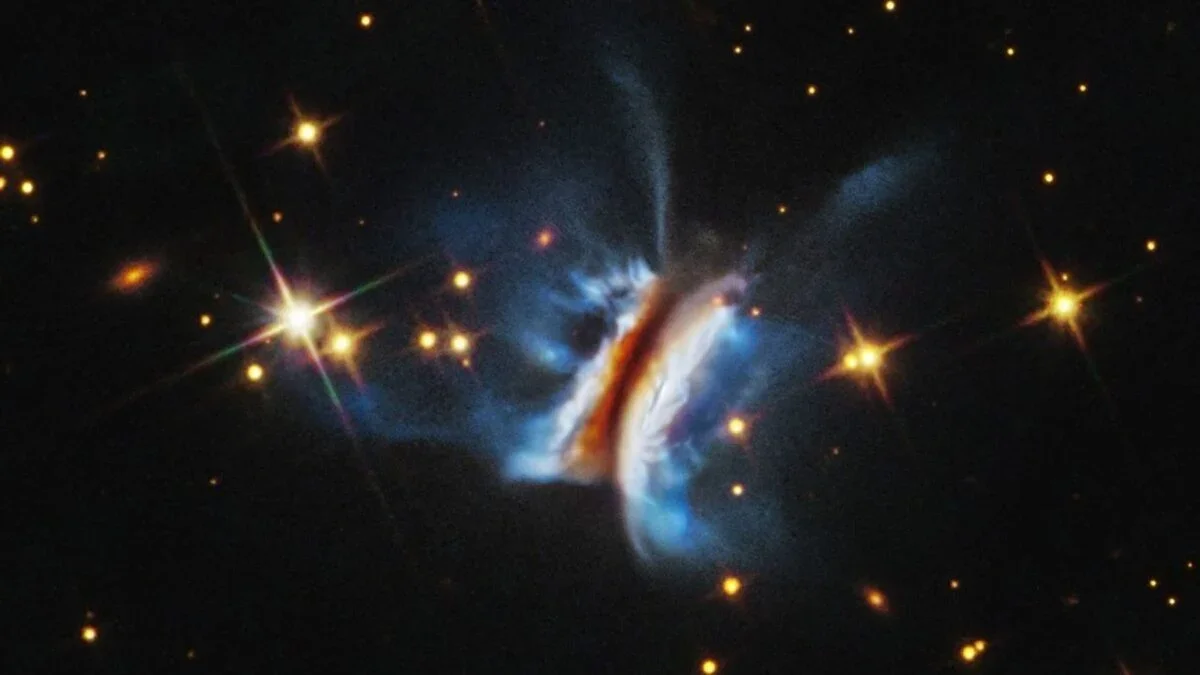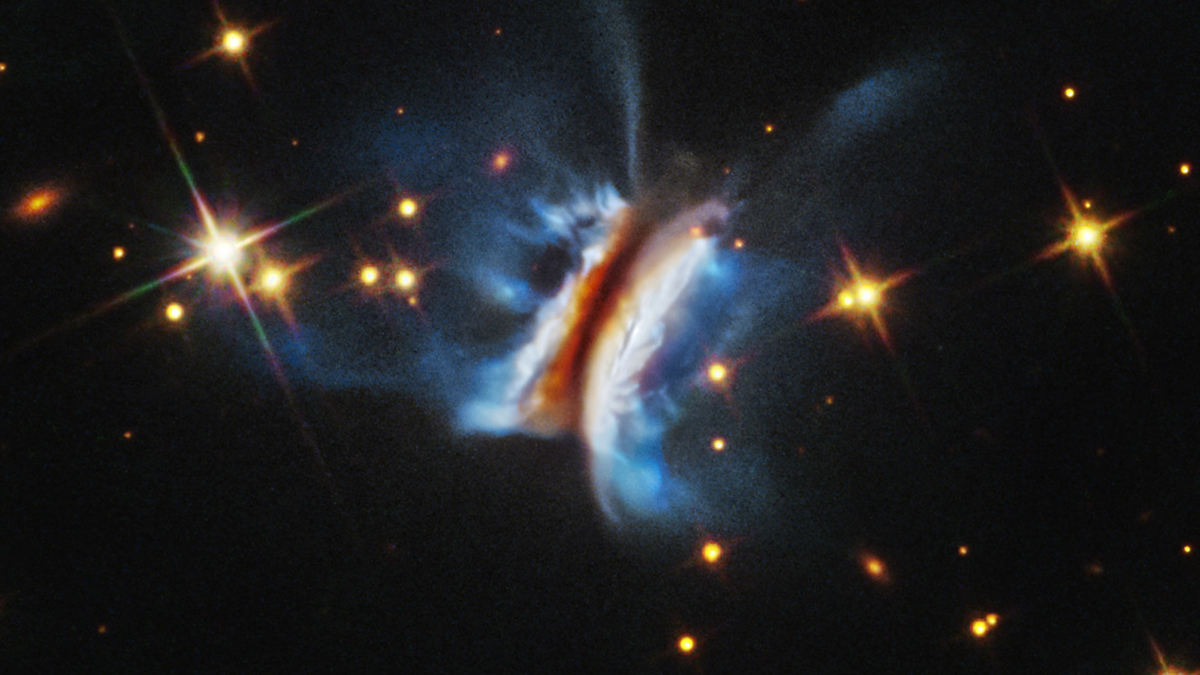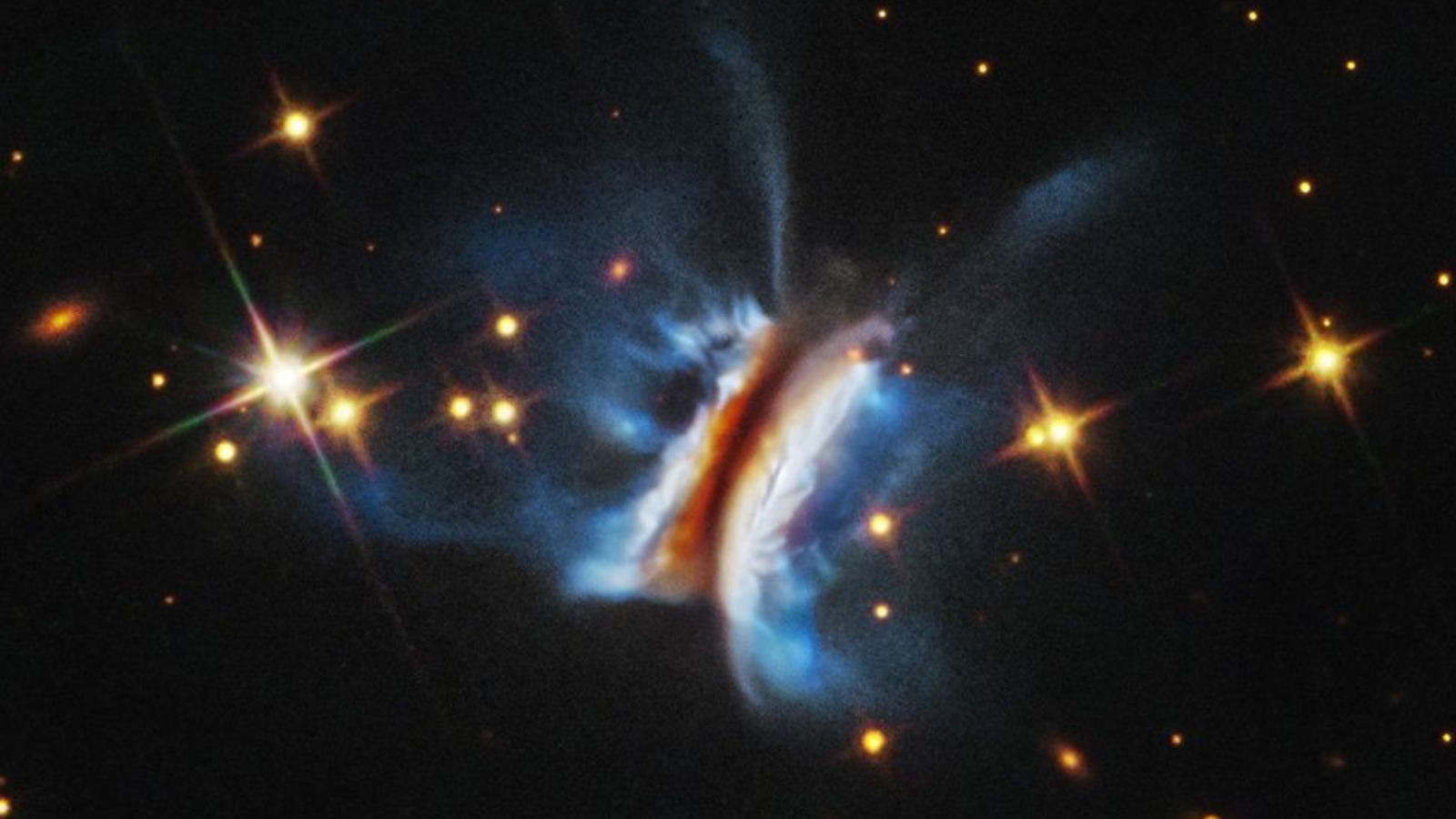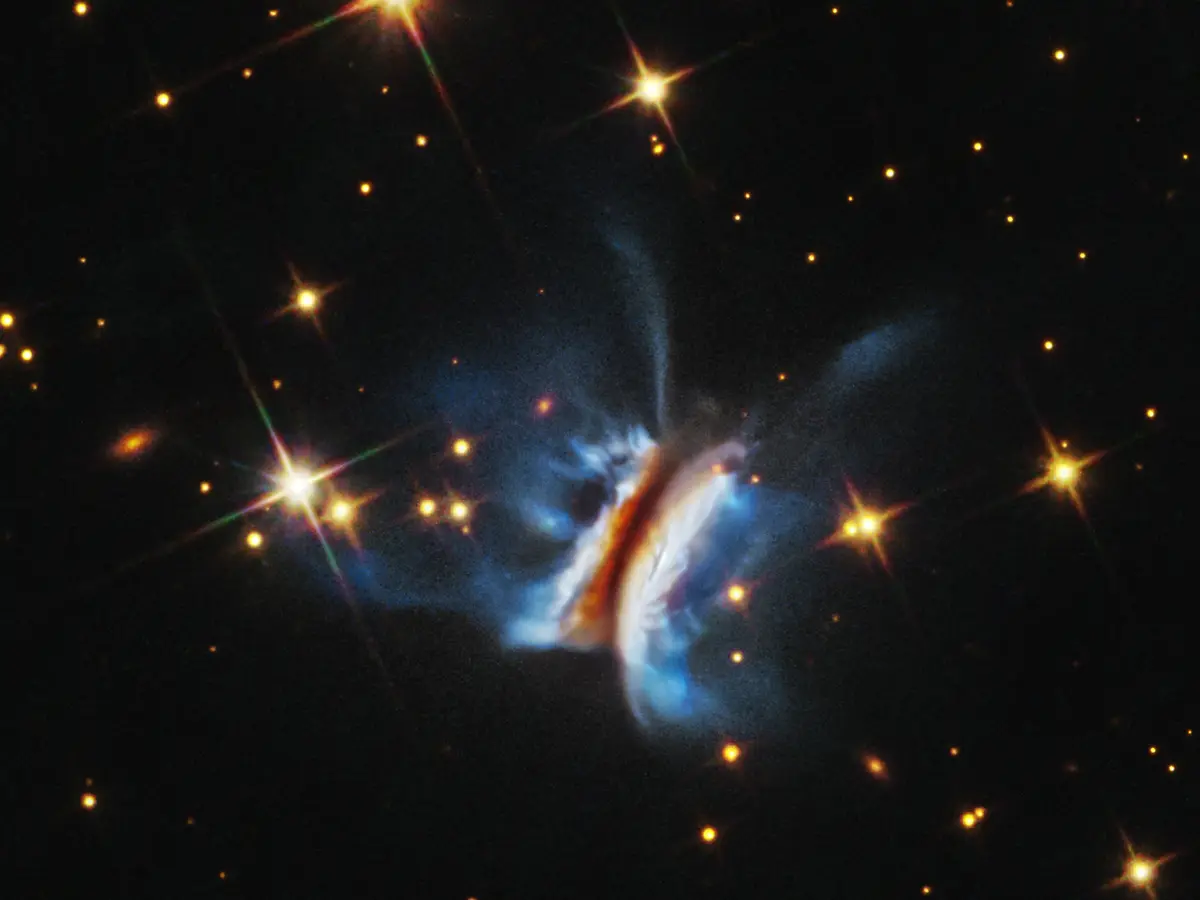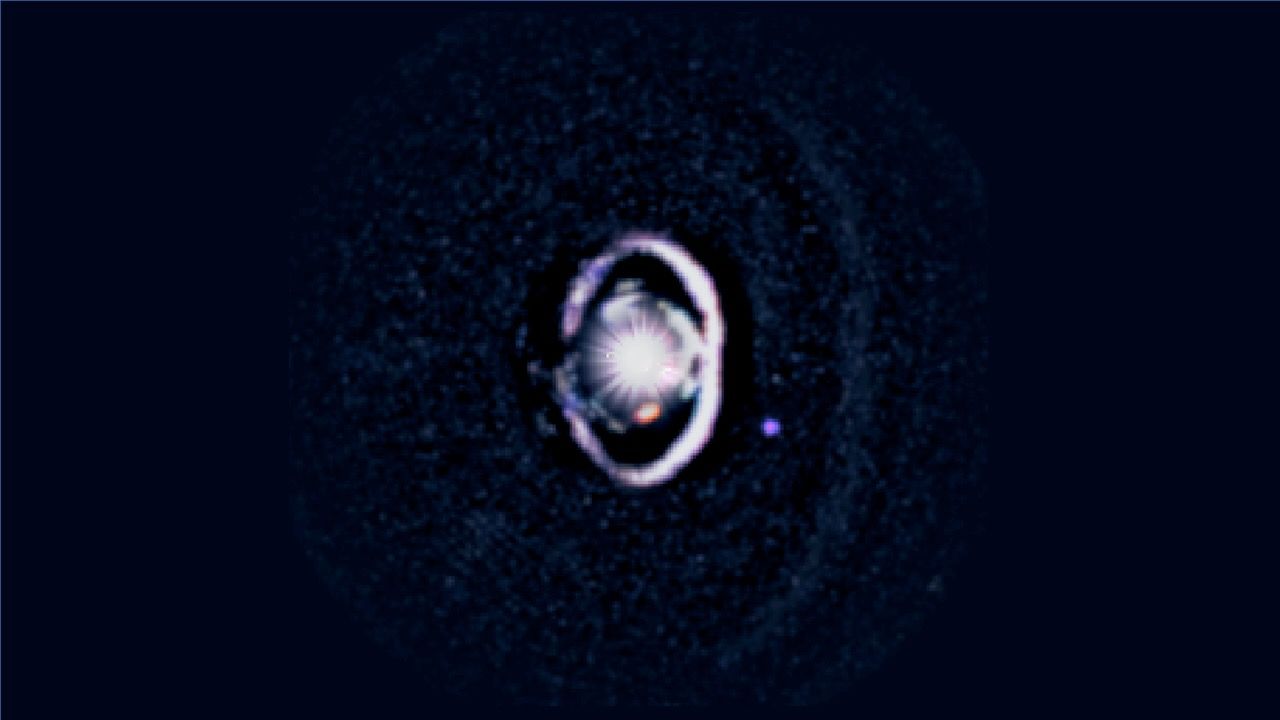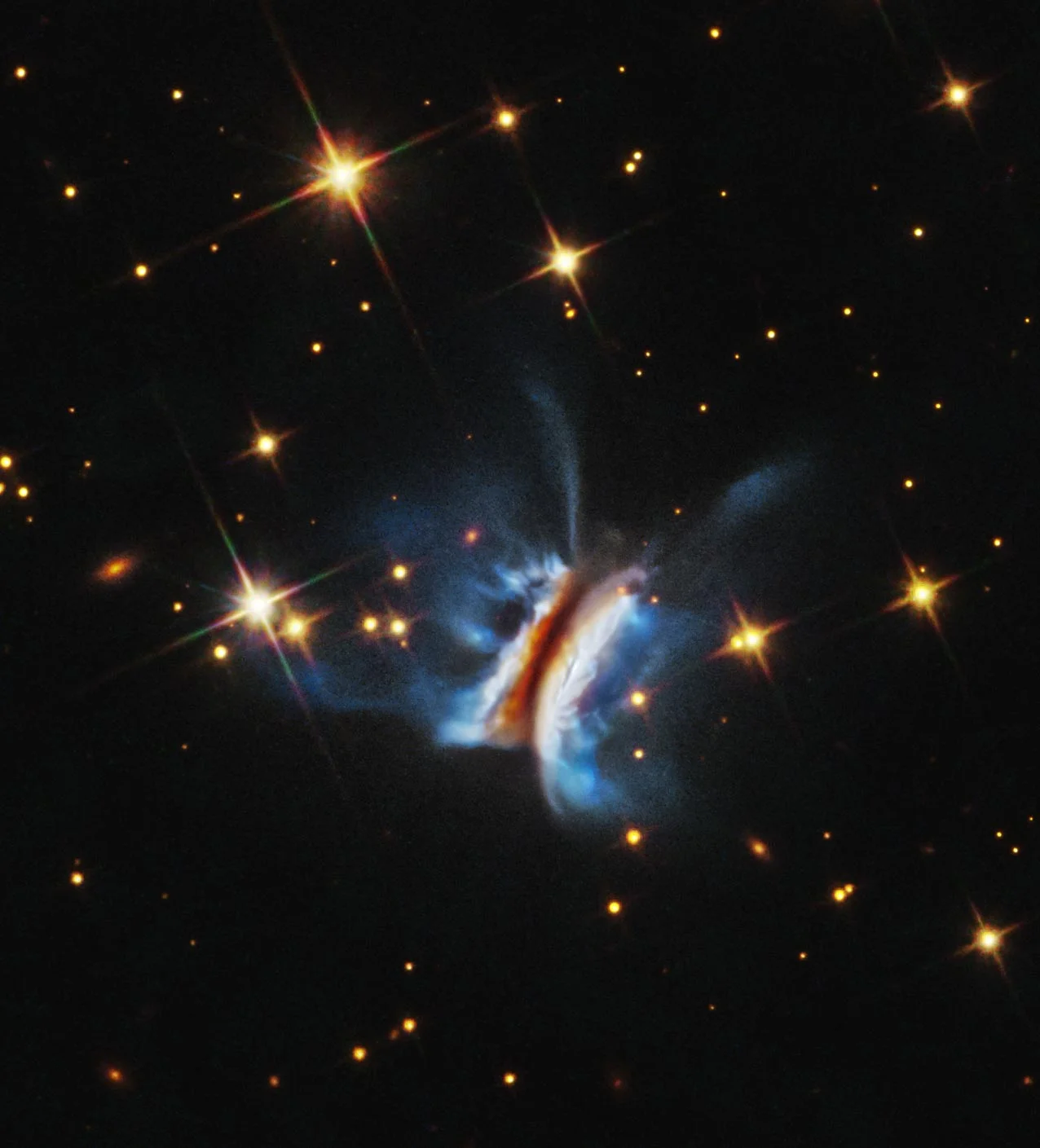
Astronomers have captured the first visible-light image of 'Dracula’s Chivito,' the largest and most chaotic planet-forming disk ever observed, located about 1,000 light-years away. This massive, asymmetric disk exhibits unusual features like extended filaments on one side, challenging previous assumptions about the serenity of planet nurseries. It serves as a scaled-up model of early solar system conditions, offering new insights into the complex processes of planet formation.
NASA's Hubble telescope has captured detailed images of the largest and most chaotic protoplanetary disk, IRAS 23077+6707, revealing turbulent structures and asymmetries that challenge traditional views of planet formation, providing a unique laboratory to study these processes in real-time.
Astronomers using the Hubble Space Telescope have captured the largest and most chaotic protoplanetary disk, nicknamed 'Dracula’s Chivito,' providing new insights into planet formation processes in a massive, active environment about 1,000 light-years away.
NASA's Hubble Telescope discovered a massive, chaotic protoplanetary disk called Dracula’s Chivito, 1,000 light-years away, which is about 40 times the size of our solar system and offers insights into early planet formation in turbulent environments.
Scientists have detected heavy water in a protoplanetary disk around the star V883 Orionis, providing the first direct evidence that water in planet-forming regions may be older than the star itself, suggesting Earth's water could be even older than the Sun.
Astronomers captured the first direct image of a baby exoplanet, WISPIT 2b, forming within a gap in its star's dust disk, providing new insights into how gas giants develop, using telescopes in Chile and Arizona.
Scientists have captured the first-ever observation of a planet, WISPIT 2b, forming within a protoplanetary disk around a young star 400 light-years away, providing new insights into planetary development and challenging existing models.
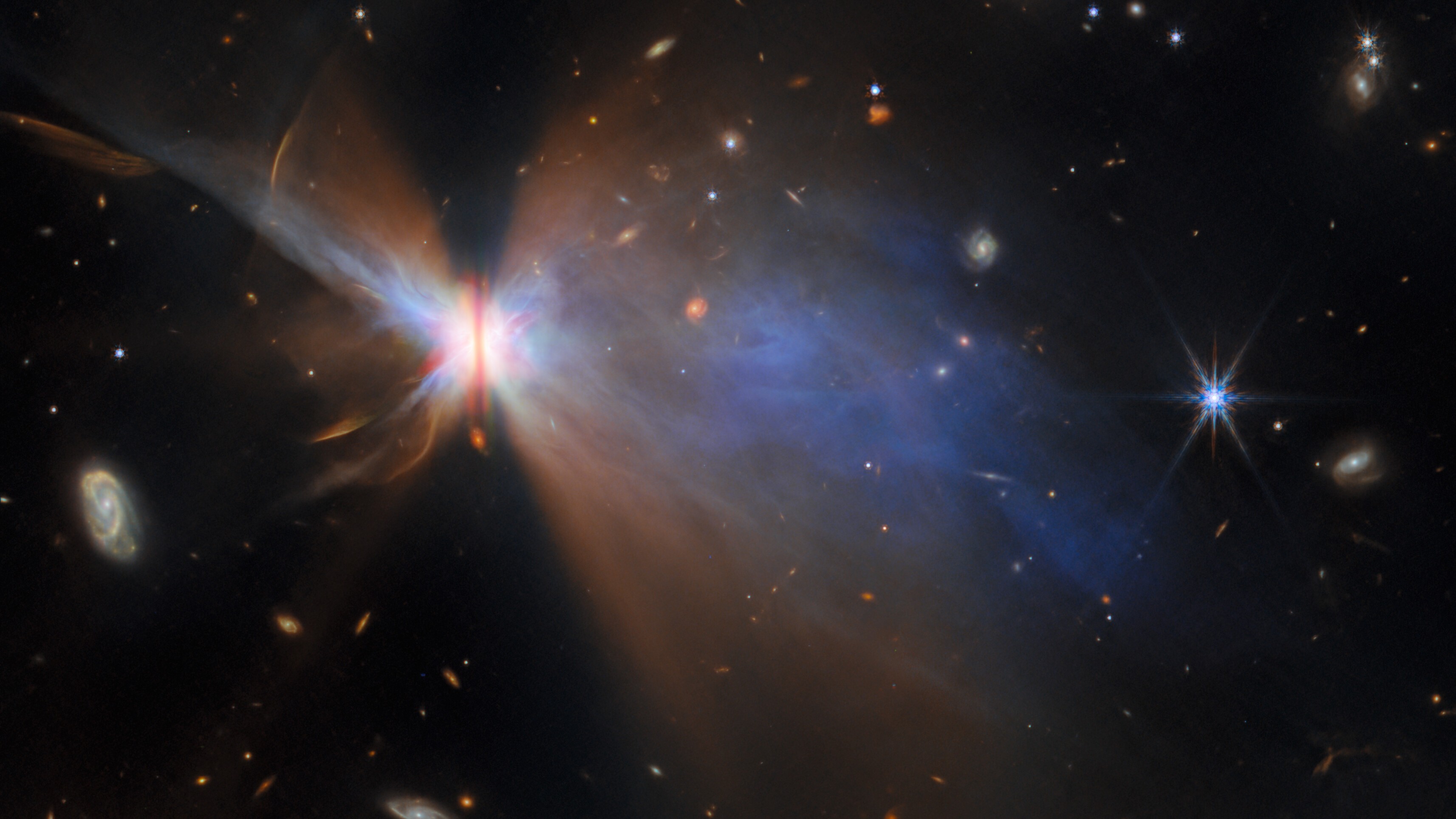
The James Webb Space Telescope captured a stunning image of the Butterfly Star in Taurus, revealing a massive, warped protoplanetary disk of gas and dust where planets are likely forming, providing insights into early planetary development and the processes that shaped our solar system.
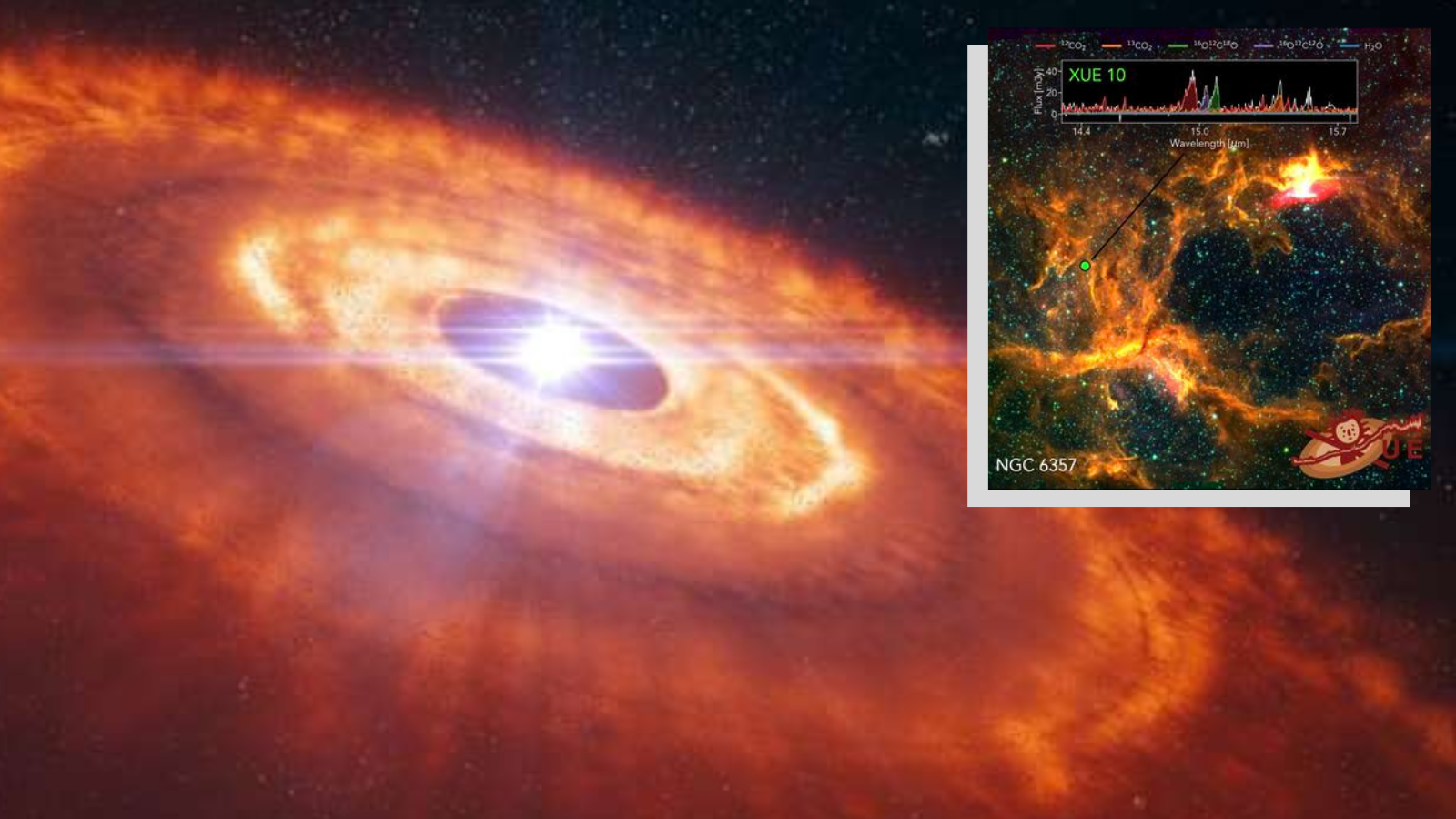
Using the James Webb Space Telescope, astronomers discovered a protoplanetary disk around the infant star XUE 10 with an unusual chemical composition, notably high in carbon dioxide and low in water, challenging current models of planet formation and suggesting intense ultraviolet radiation influences its chemistry.
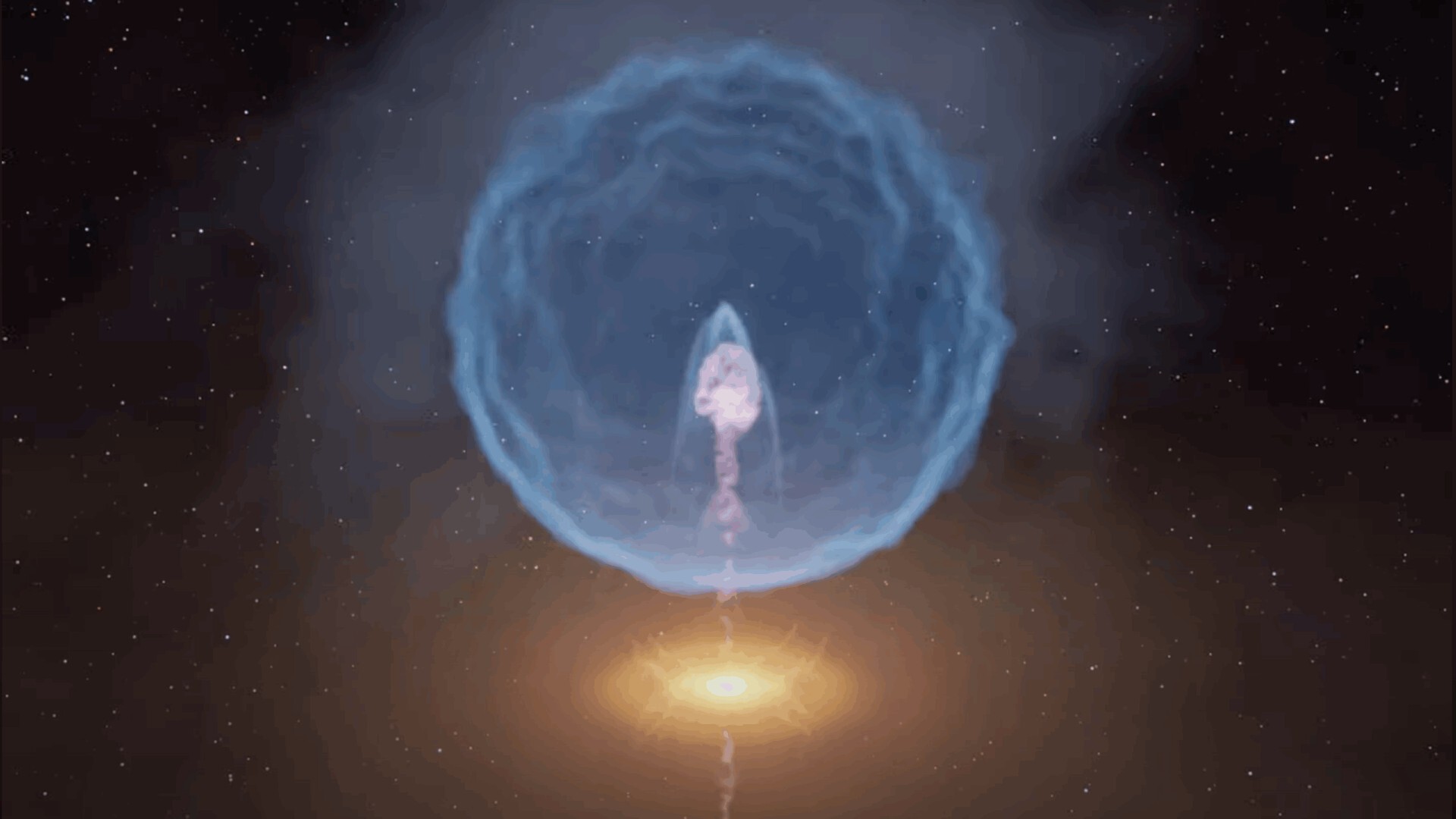
Japanese astronomers discovered a star-triggered explosion near a young star, which is distorting its surrounding protoplanetary disk, revealing that star and planet formation environments are more chaotic and intense than previously thought.
Astronomers observed a rare explosion near a young star, WSB 52, caused by a jet from the star colliding with cold gas, creating an expanding bubble that distorts the star's protoplanetary disk, suggesting young stars are exposed to more violent environments than previously thought.
Astronomers using ALMA detected complex organic molecules, including precursors to life, in a young star's planet-forming disk, suggesting that the chemical seeds of life are formed in space and inherited by emerging planets, challenging previous theories of chemical 'reset' during star formation.
Astronomers have directly observed a newborn planet forming within the dust and gas around the star HD 135344B, located 440 light-years away, providing new insights into planet formation processes and confirming that planets emerge from protoplanetary disks.
Scientists tentatively detected complex organic molecules, including ethylene glycol and glycolonitrile, in a planet-forming disk around V883 Orionis, suggesting that essential building blocks for life may be present during planet formation, potentially inheriting these compounds directly from their cosmic nursery.
Astronomers using ALMA discovered complex organic molecules, including tentative detections of ethylene glycol and glycolonitrile, in the disk of young star V883 Orionis, suggesting that the building blocks of life are inherited from earlier cosmic stages and are widespread in space.