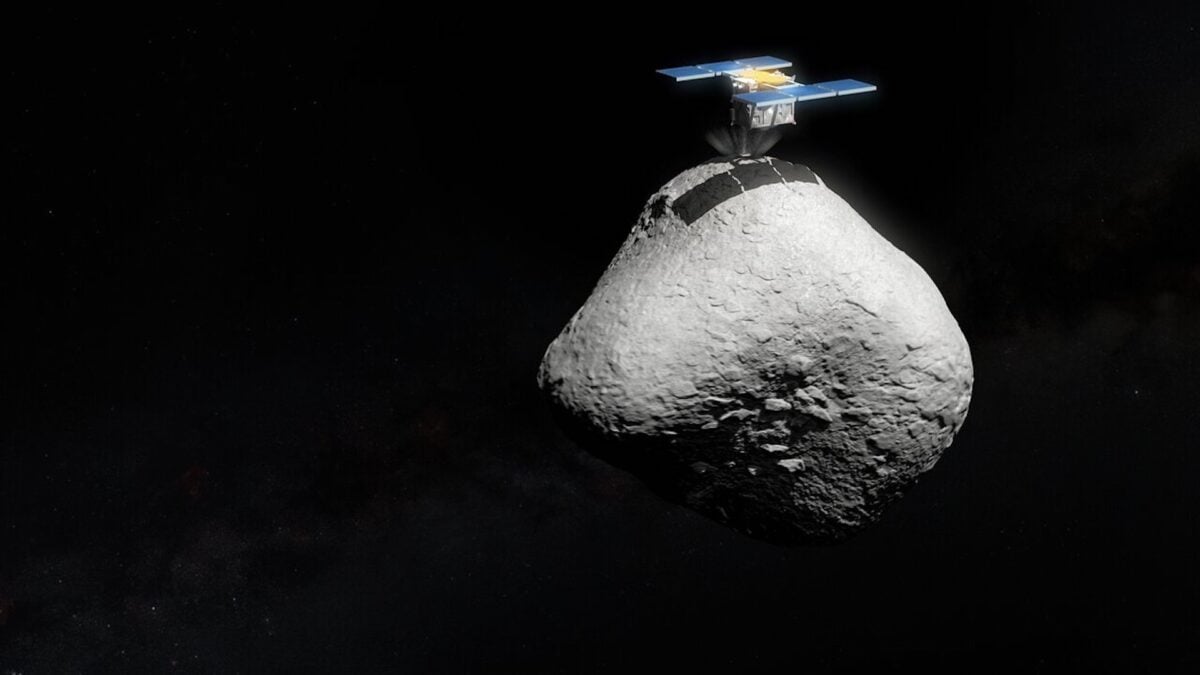
Japan's Hayabusa2 spacecraft, after returning samples from asteroid Ryugu in 2020, is now heading to asteroid 1998 KY26 for a 2031 mission, but recent data shows the asteroid is much smaller and faster-spinning than expected, making landing challenging.
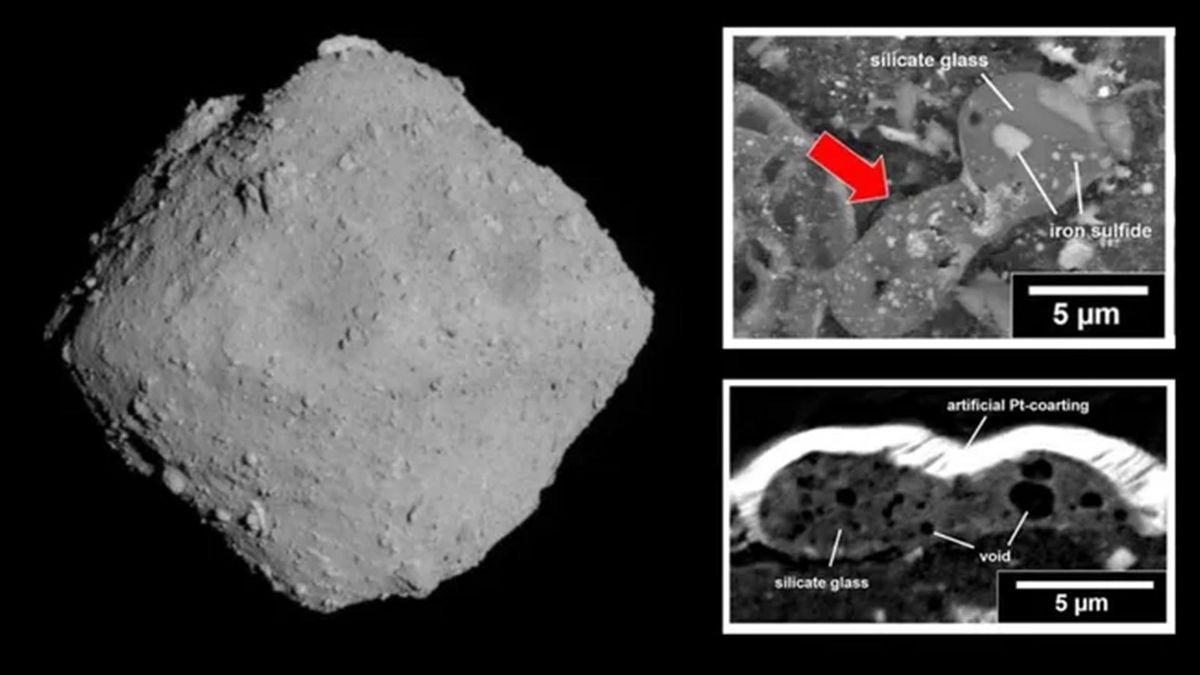
A tiny mineral grain from asteroid Ryugu revealed djerfisherite, a mineral typically formed in high-temperature, oxygen-poor environments, challenging previous assumptions about Ryugu's uniform composition and suggesting complex mixing and thermal histories in the early Solar System.
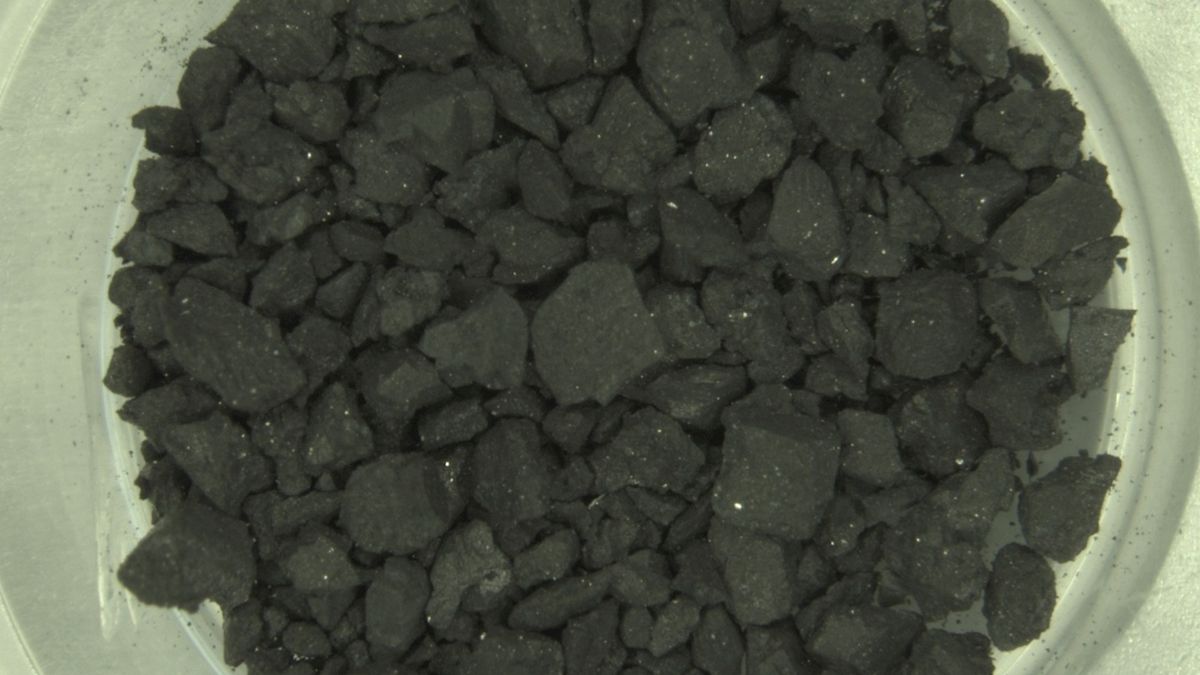
Samples collected from asteroid Ryugu by Japan's Hayabusa2 mission contain traces of comet particles, providing insight into the delivery of organic molecules throughout the Solar System shortly after its formation. Analysis of the samples revealed amino acids, vitamin B3, interstellar dust, and evidence of micrometeoroid impacts containing carbonaceous materials similar to ancient cometary dust. Researchers believe these materials may have been the small seeds of life delivered from space to Earth billions of years ago, shedding light on the origins of life in the Solar System.
Samples from asteroid Ryugu collected by Japan's Hayabusa2 mission contain organic matter similar to primitive organic material, likely delivered to Earth by ancient comets. The organic matter was found within "melt splashes" created when cometary dust struck the asteroid's surface, suggesting that cometary material was transported to the near-Earth region from the outer solar system. This discovery provides insight into the transportation of primordial organic material to the space around Earth over 4 billion years ago, prior to the emergence of life.
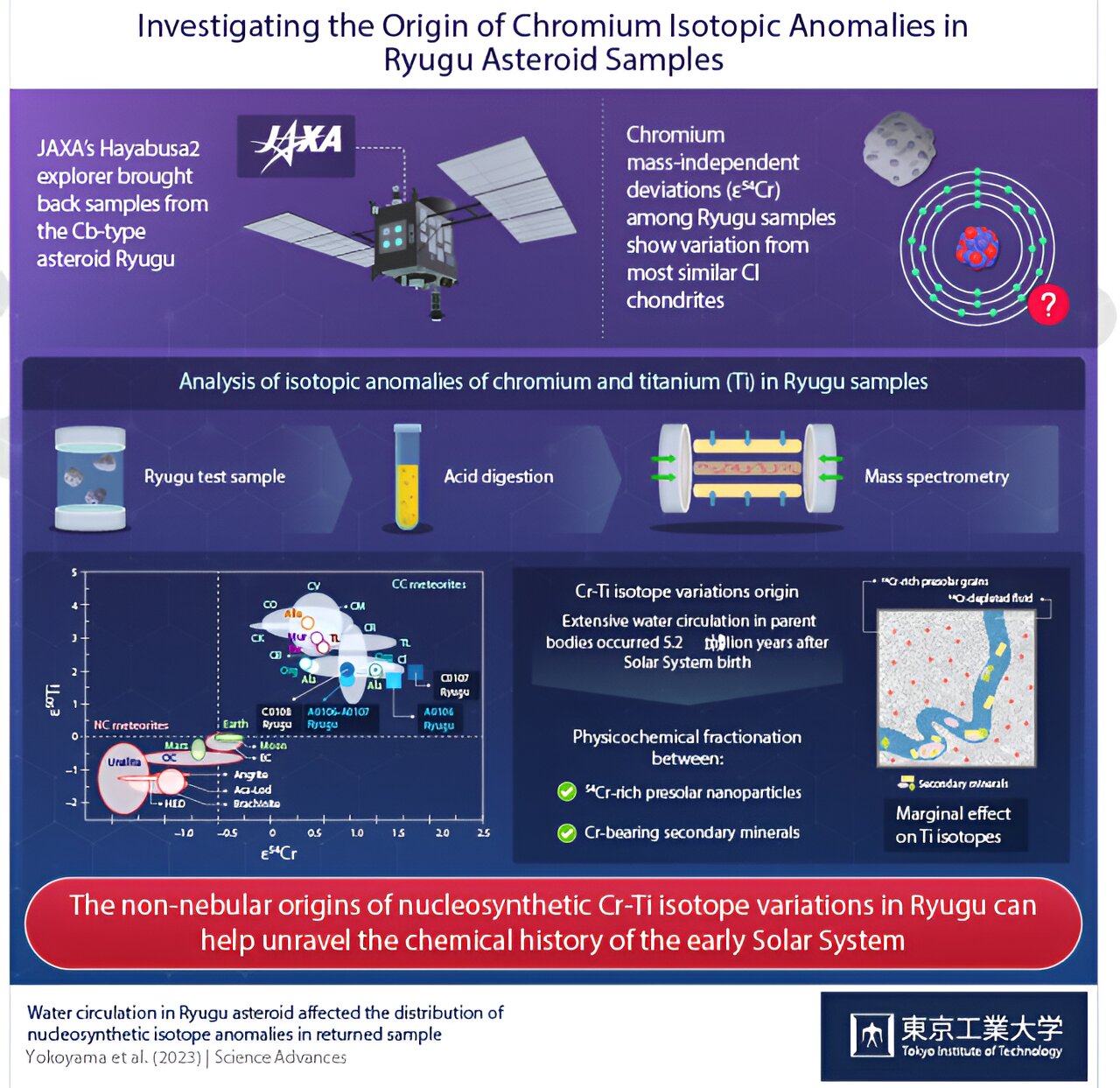
Water that existed on the parent of asteroid Ryugu has influenced the distribution of elements on the asteroid, according to a study. Researchers compared isotopes of chromium and titanium and found that the ratios between isotopes of chromium varied significantly, suggesting exposure to water. The findings indicate that water circulated on Ryugu's parent body, influencing the asteroid's chemical history before it broke away. This study aligns with previous research that also found evidence of water on Ryugu's parent body.
Samples from asteroid Ryugu contain clasts of rock with a chemical composition different from the rest of the asteroid, indicating they were acquired through a later impact. These clasts contain tiny grains of rock made from stars that died before the Sun existed, suggesting they originated in the outer reaches of the Solar System. The majority of these presolar grains came from asymptotic giant branch (AGB) stars, while one grain showed signs of a possible supernova origin. The impact that brought these grains to Ryugu or its parent body likely occurred after the loss of water, and some of the presolar grains may have originally come from a comet. This discovery provides insights into the early history of the Solar System.
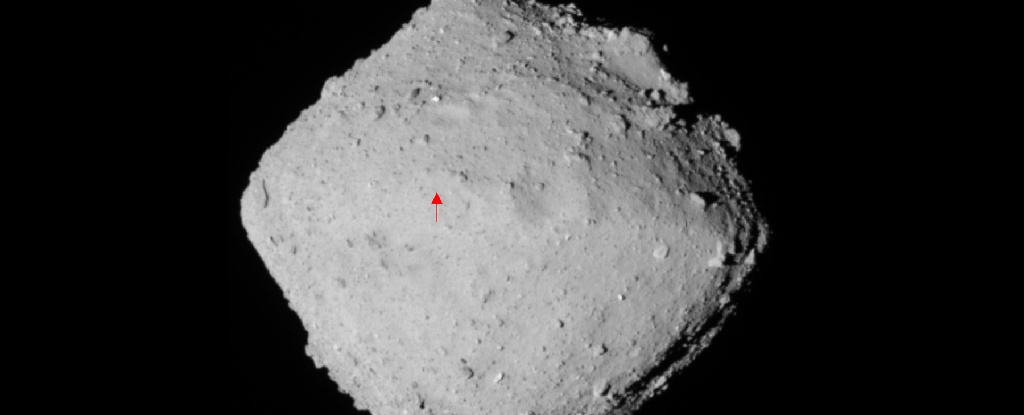
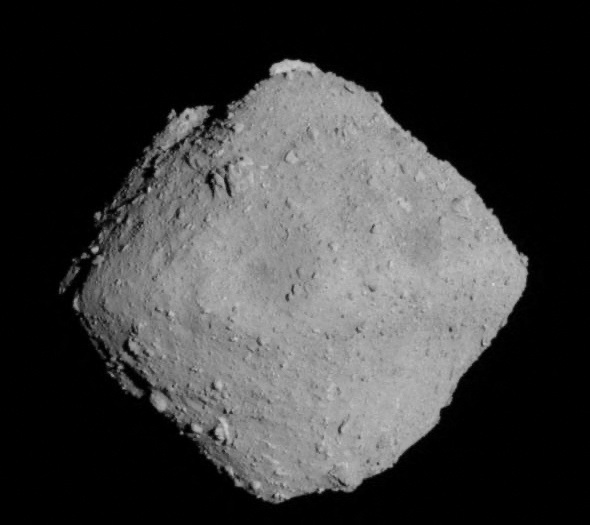
Analysis of grains collected from asteroid Ryugu reveals that the carbon-rich rock originated in the outer reaches of the Solar System before ending up in the asteroid belt and eventually near Earth. This suggests that asteroids can undergo multiple migrations through the Solar System and contain valuable records of its history. Ryugu, a C-type asteroid, is not located in the Main Belt but has similarities to asteroids in that region. The samples retrieved from Ryugu show characteristics consistent with material from the outer Solar System, such as organic matter and isotopes of oxygen. The findings indicate that Ryugu was once a planetesimal that formed in the outer Solar System before being disrupted and sent to the Main Belt, where it was altered by water. The research provides insights into the evolution of the Solar System.
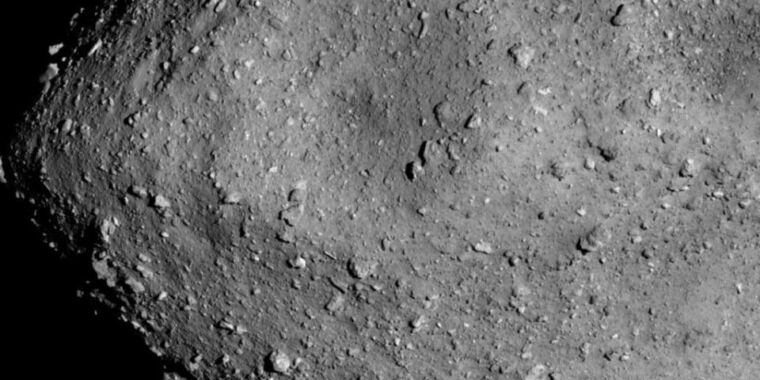
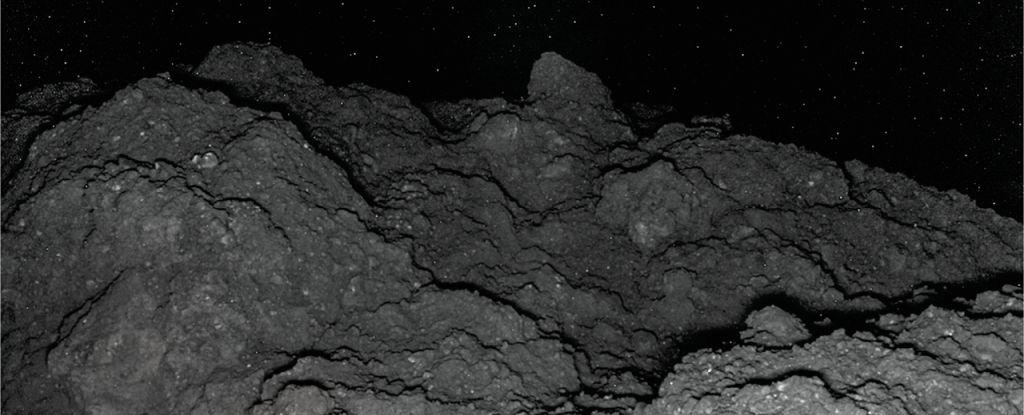
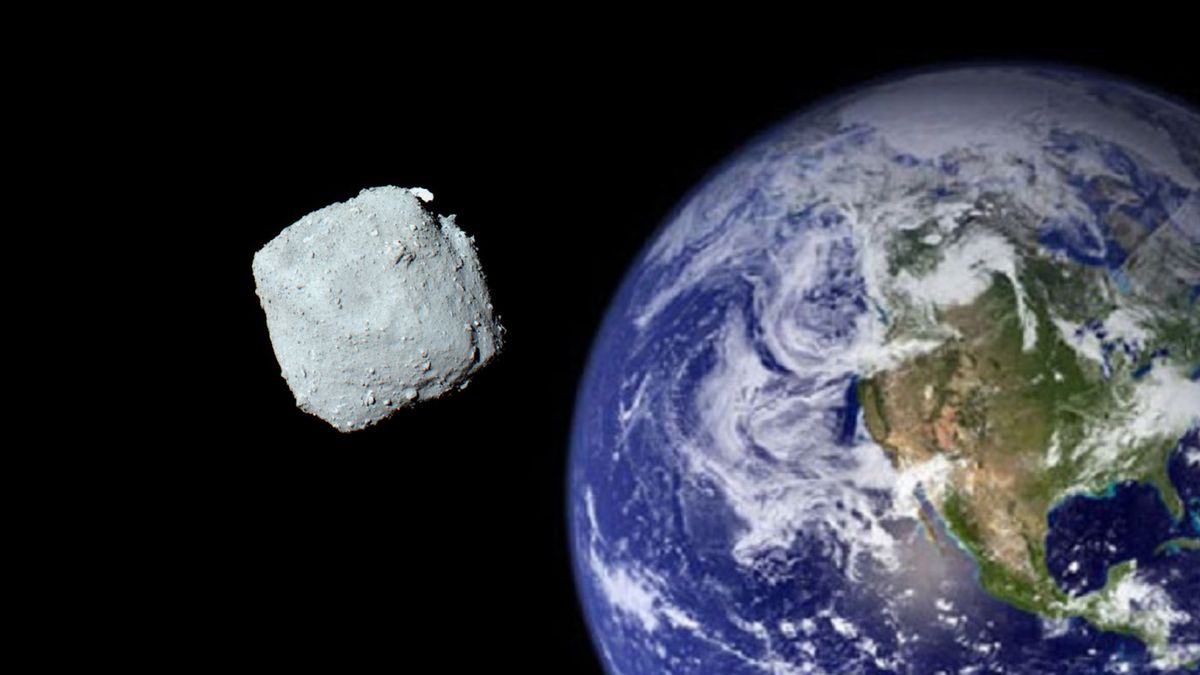
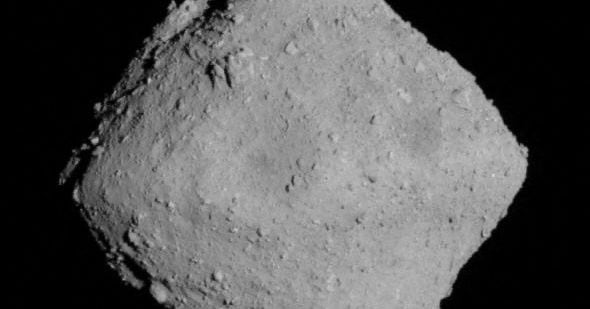
Scientists have calculated that if the asteroid Ryugu were to hit Earth, it would break up in the atmosphere resulting in an airburst similar to the Chelyabinsk meteor in 2013. Ryugu is considered a rubble-pile asteroid with low mechanical strength, meaning scientists would have to take great care to prevent it from breaking apart if they attempted to divert it. The asteroid's tensile strength is currently unknown, which could impact the size of the pieces that would fall to Earth. The analysis of samples returned by the Hayabusa2 spacecraft will help assess the impact of asteroids like Ryugu on Earth.
Two organic compounds, uracil and niacin, essential for living organisms, have been found in samples retrieved from the asteroid Ryugu, suggesting that some ingredients crucial for the advent of life arrived on Earth aboard rocks from space billions of years ago. The Ryugu samples were transported 155 million miles back to Earth and returned to our planet's surface in a sealed capsule that landed in 2020 in Australia's remote outback for analysis in Japan. The new findings fit well with the hypothesis that bodies like comets, asteroids, and meteorites that bombarded early Earth seeded the young planet with compounds that helped pave the way for the first microbes.
Two organic compounds, uracil and niacin, essential for living organisms have been found in samples retrieved from the asteroid Ryugu, suggesting that some ingredients crucial for the advent of life arrived on Earth aboard rocks from space billions of years ago. The Ryugu samples were transported 155 million miles back to Earth and returned to our planet's surface in a sealed capsule that landed in 2020 in Australia's remote outback for analysis in Japan. The new findings fit well with the hypothesis that bodies like comets, asteroids, and meteorites that bombarded early Earth seeded the young planet with compounds that helped pave the way for the first microbes.
Scientists have found two organic compounds, uracil and niacin, essential for living organisms in samples retrieved from the asteroid Ryugu. The discovery supports the hypothesis that some ingredients crucial for the advent of life arrived on Earth aboard rocks from space billions of years ago. The Ryugu samples were transported 155 million miles back to Earth and returned to our planet's surface in a sealed capsule that landed in 2020 in Australia's remote outback for analysis in Japan. The findings suggest that bodies like comets, asteroids, and meteorites that bombarded early Earth seeded the young planet with compounds that helped pave the way for the first microbes.
Samples from the asteroid Ryugu have provided evidence that the organic building blocks for life on Earth came from space. Researchers have discovered concentrations of uracil, one of the four nucleobases of RNA, in the samples, confirming that nucleobases are present in pristine asteroidal material dating back to the earliest days of the solar system. The discovery is a step towards understanding the origin of life and whether the processes that led to the appearance of life on Earth can be repeated elsewhere in the universe.