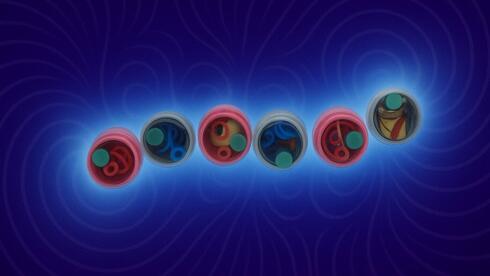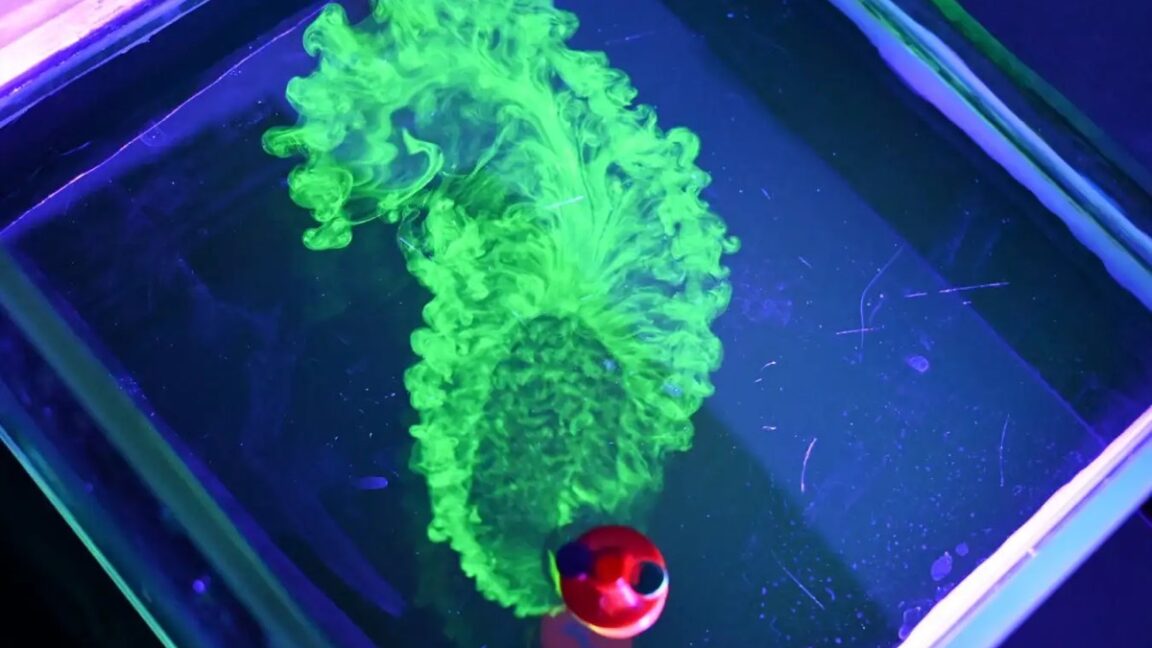
Israeli researchers at Tel Aviv University discovered that particles rotating in opposite directions within a fluid spontaneously form active, chain-like structures resembling polymers, which can move and reorganize on their own, providing insights into natural phenomena and potential applications in smart materials and microscopic robotics.
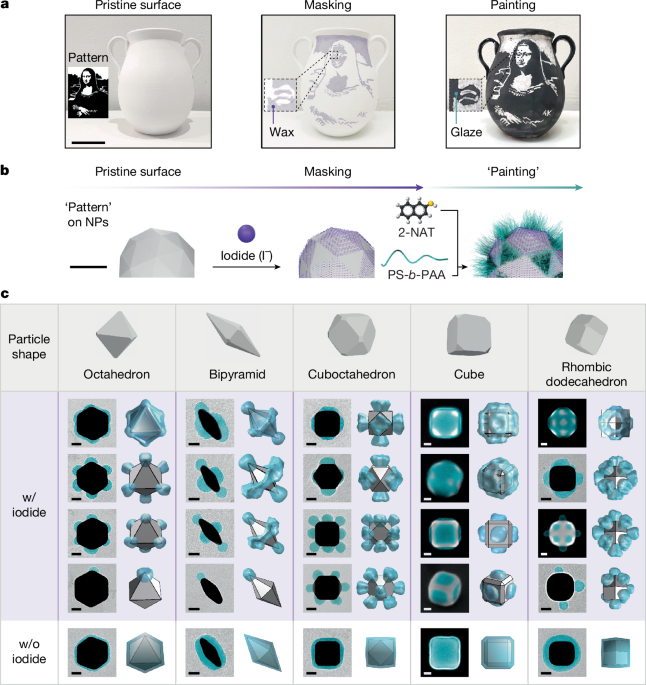
The article introduces a bottom-up atomic stencilling method to create highly precise and uniform patchy nanoparticles with diverse surface patterns, achieved through facet-selective iodide masking and polymer grafting, enabling advanced self-assembly into ordered superlattices and broad applications in nanotechnology.
Researchers have developed neural cellular automata (NCAs) that can reverse-engineer rules to self-assemble into desired shapes and regenerate after damage, mimicking biological processes and offering potential applications in medicine, engineering, and computing.
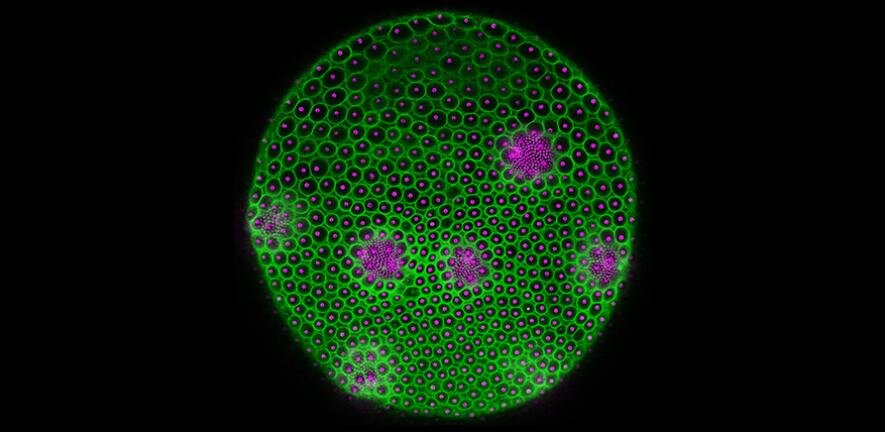
Researchers used advanced imaging and machine learning to uncover the intricate, foam-like structure of the extracellular matrix in Volvox algae, revealing how simple cells coordinate to form complex, spherical multicellular organisms despite noisy individual behaviors, providing new insights into developmental biology.
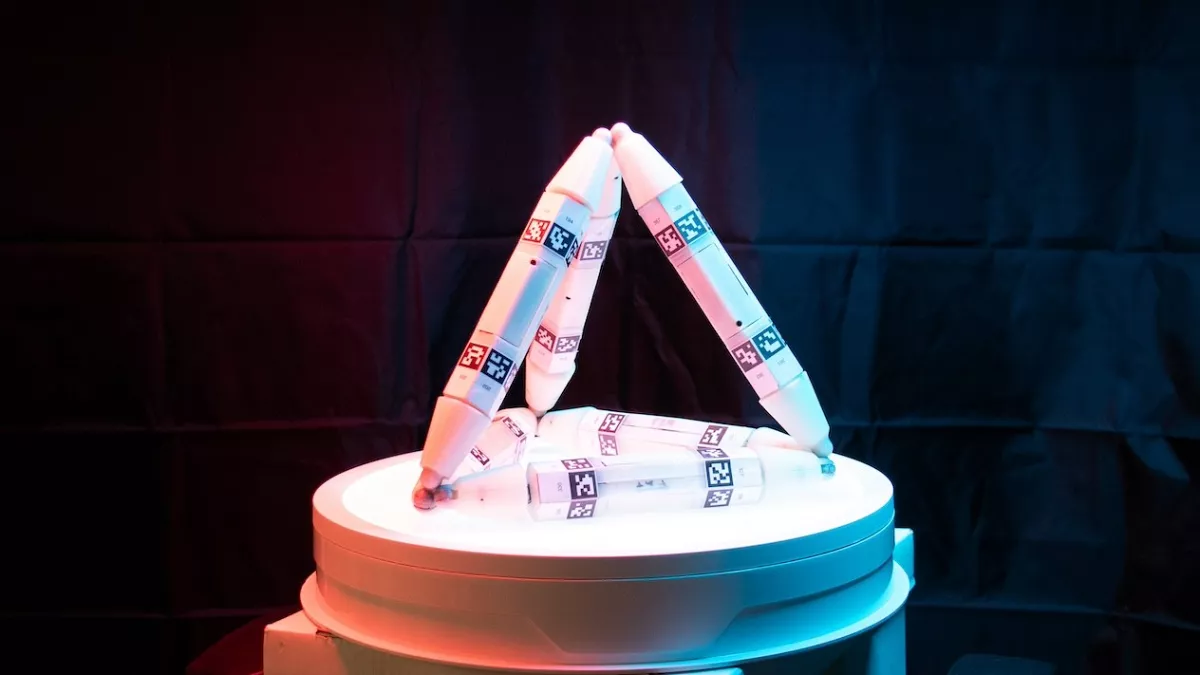
Researchers at Columbia University have developed a robotic system that can self-assemble, grow, and reconfigure by 'eating' other robots, inspired by biological metabolism, with potential future applications in building structures like lunar colonies. The project explores the concept of robotic metabolism and survivability, though it currently lacks real-world utility and diverse modules, aiming instead to develop autonomous, adaptable robotic ecosystems.
Scientists at Columbia University have developed the Truss Link, a robot that can grow and heal by consuming and merging with parts of other robots, enabling it to adapt and perform better, with potential applications in various fields including research and rescue.,
Researchers have developed a novel robot design inspired by the "Cheerios effect," which involves the natural clumping of floating objects due to surface tension and buoyancy. By using ethanol to power tiny robots across liquid surfaces, these devices can potentially perform various environmental or industrial tasks. The study, posted on the physics arXiv, highlights how the "Cheerios effect" can facilitate self-assembly of these robots, leveraging capillary action and surface tension to enhance their movement and clustering capabilities.
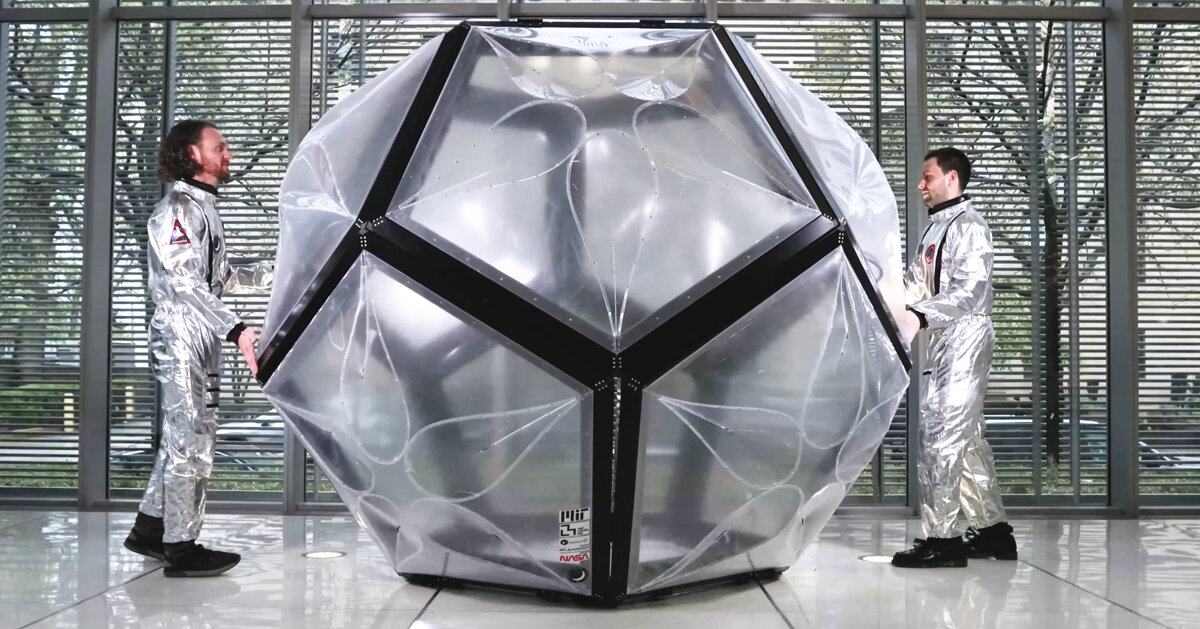
MIT has developed a modular habitat called Momo that self-assembles on the moon, featuring an aluminum frame and high-density polyethylene membrane, designed to support NASA's Artemis III mission and future lunar settlements.
Scientists have created the world's tightest molecular knot, a trefoil made of 54 atoms, which is 15 atoms smaller than the previous record. The accidental discovery, detailed in a study published in Nature Communications, has practical implications for understanding DNA and other naturally knotting molecules in the human body.
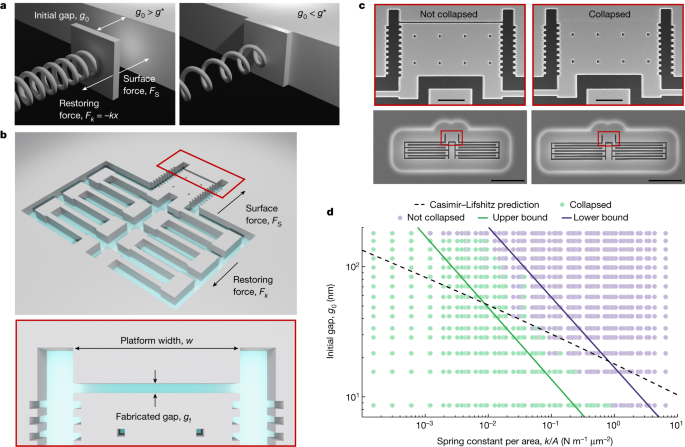
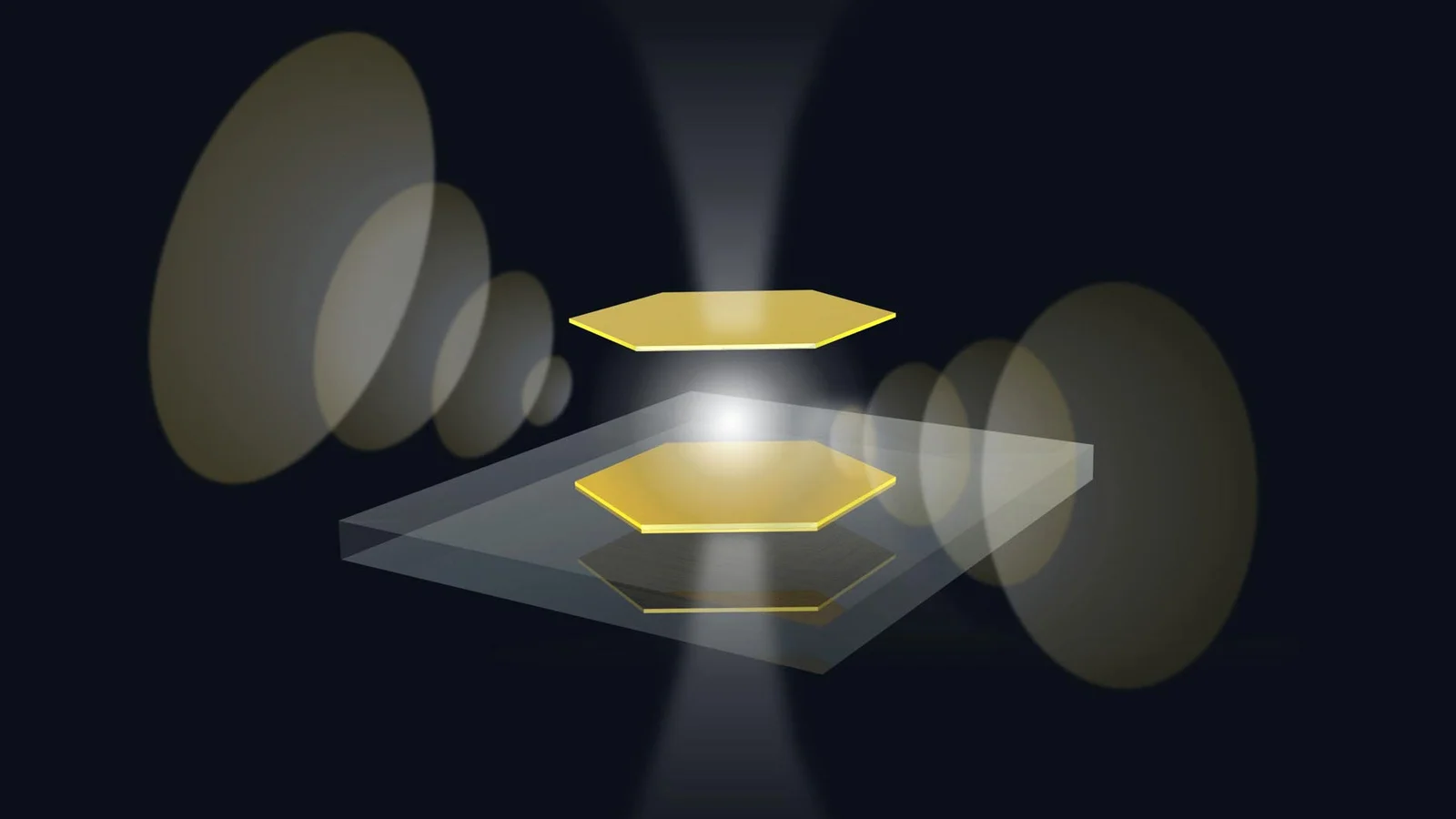
Researchers have developed a new method for manufacturing semiconductor devices using self-assembly and surface forces. By harnessing the pull-in instabilities between nearby objects, the researchers were able to fabricate nanostructures with few- or sub-nanometer dimensions. They demonstrated the application of this method by creating photonic nanocavities that confine light in air gaps in silicon membranes with aspect ratios exceeding 100. The self-assembled nanocavities exhibited high-quality factors and small mode volumes, surpassing previous experiments on dielectric cavities. The researchers also successfully integrated the self-assembled devices with photonic circuits, demonstrating the scalability and potential for interfacing with top-down planar technology.
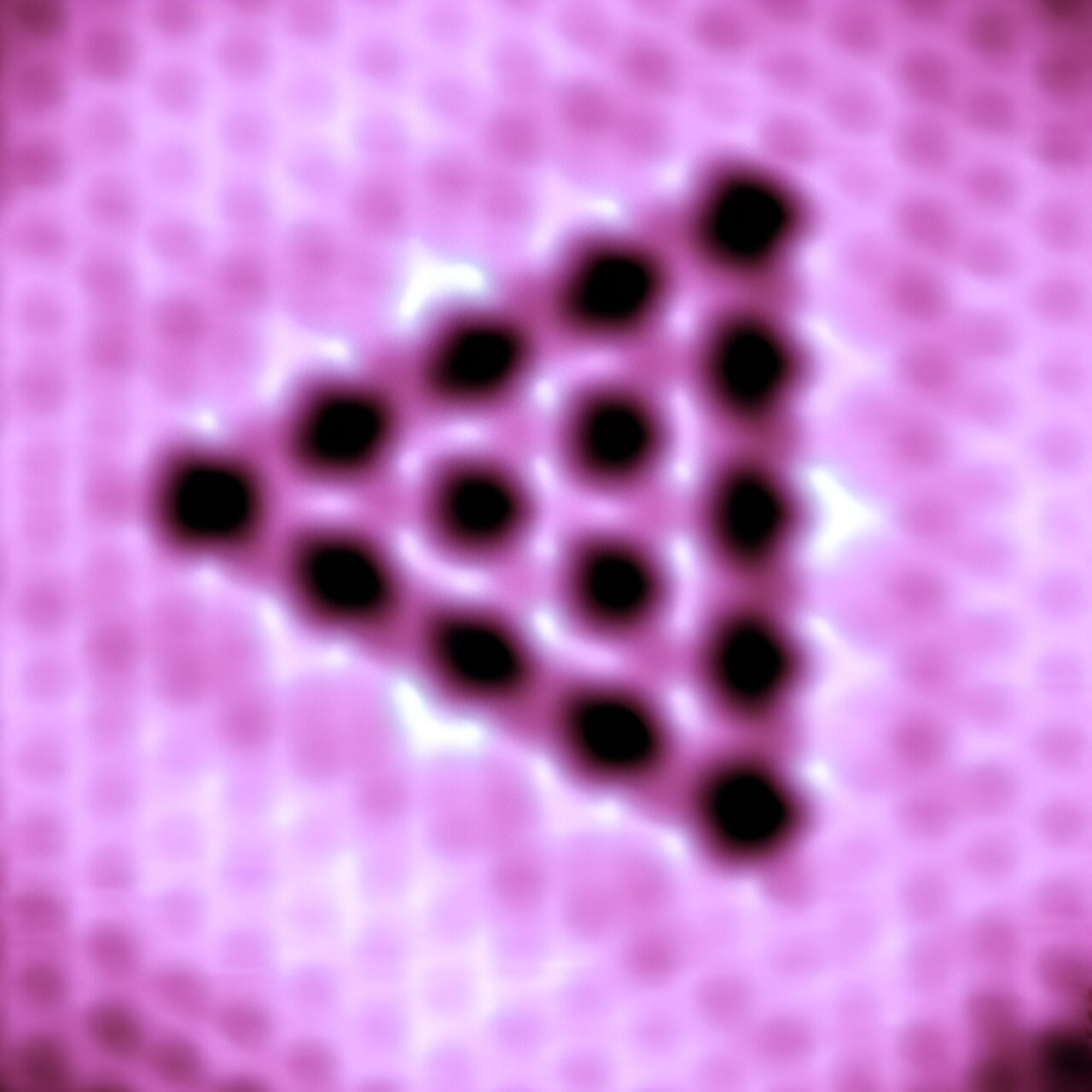
Scientists at the National University of Singapore have achieved a breakthrough in fabricating atomically precise quantum antidots (QAD) using self-assembled single vacancies (SVs) in a two-dimensional transition metal dichalcogenide (TMD). By strategically introducing antidot patterns into carefully designed lattices, they created artificial structures with unique quantum phenomena and transport properties. The QADs, which can be used for quantum information technologies, were fabricated through the self-assembly of SVs into a regular pattern. The structures exhibited robustness against environmental influences and could potentially advance various material technologies.
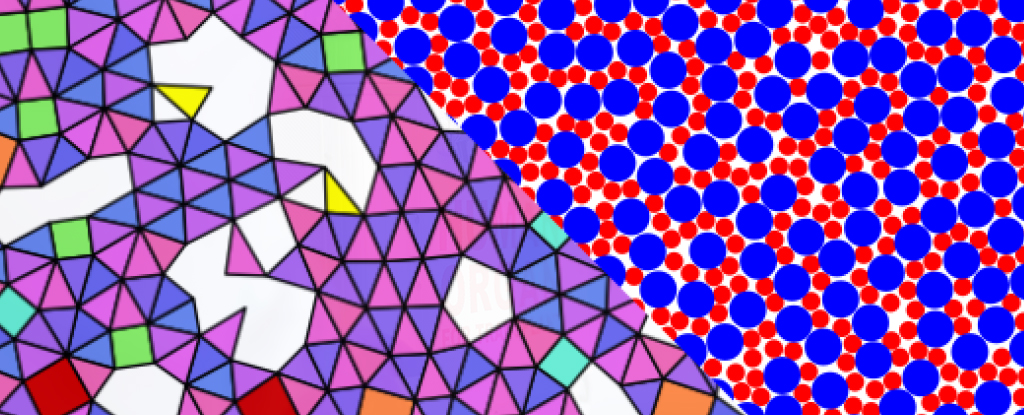
Physicists from the University of Paris-Saclay have observed the emergence of a quasicrystal, a combination of order and chaos, in a granular material for the first time on a millimeter-scale. The researchers used computer simulations to identify the necessary conditions for the formation of a quasicrystal and then conducted an experiment with vibrating steel spheres. The study found that small, localized configurations of differently sized spheres formed rapidly, but global alignment required rare collective rearrangements. The unexpected discovery suggests that quasicrystals can form in both atomic-scale and granular systems, opening up possibilities for applications in insulation and electronics.
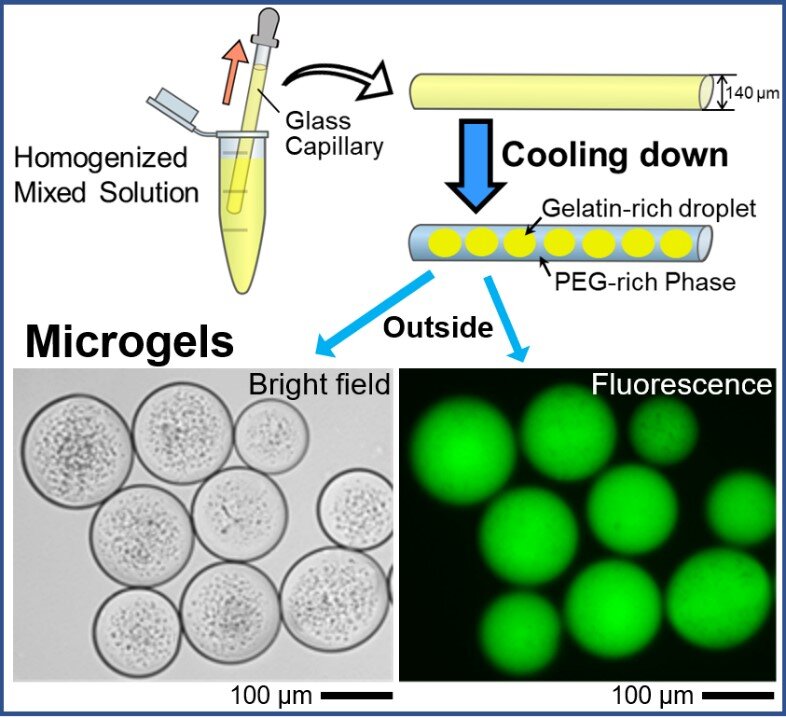
Researchers from Doshisha University in Japan have developed a one-step method for producing uniform gelatin-based cell mimetics called "microgels" that can be used to study cellular self-assembly. The microgels are created by generating domain structures comprising of polyethylene glycol (PEG) and gelatin, which are transformed into gel state by decreasing the temperature. The addition of DNA molecules to the gelatin-rich droplets spontaneously entrap them, giving rise to cell-mimicking microgels. The method proposed in the study may be useful for producing microgels for food, medicines, cosmetics, and other materials.
Researchers at Cornell University have discovered over 20 new self-assembled crystal structures using a targeted computational approach. The team developed a new functional form for particle interactions, allowing them to control various features of the particles' interaction landscape. The findings suggest that there are potentially limitless new and exotic materials configurations possible through controlled self-assembly, serving as design targets for researchers who make nanoparticles and colloids.
Researchers have used liquid-phase transmission electron microscopy to watch nanoparticles self-assemble into solid materials for the first time. The study provides unprecedented insights into the self-assembly process and could be used to design new materials, including thin films for electronic applications. The researchers used differently shaped nanoparticles to explore how shape affects behavior and found that particles collided into each other, sticking together to form layers, before forming a horizontal layer and then stacking vertically to form a crystalline structure.