The White House criticized NASA's emphasis on Diversity, Equity, and Inclusion (DEI) issues, highlighting a perceived political shift from the Trump to Biden administration's messaging on the Artemis moon missions, particularly regarding the focus on sending the first woman and person of color to the Moon.
NASA's Artemis III lunar mission faces delays due to technical issues with SpaceX's Starship, which is designed to be a versatile but currently unproven super-heavy-lift vehicle. The development challenges, including multiple failed test flights and payload capacity concerns, have led NASA to reopen the lunar landing contract to competitors like Blue Origin. The broader context involves the US government's unstable space policy and budget, impacting international collaboration and long-term planning for lunar exploration.
This Week In Space discusses NASA's efforts to beat China to a human moon landing, the Artemis III contract, SpaceX's launch record, and the broader context of lunar exploration, including upcoming tests and missions, with commentary on Elon Musk's responses and opportunities for model rocket enthusiasts.
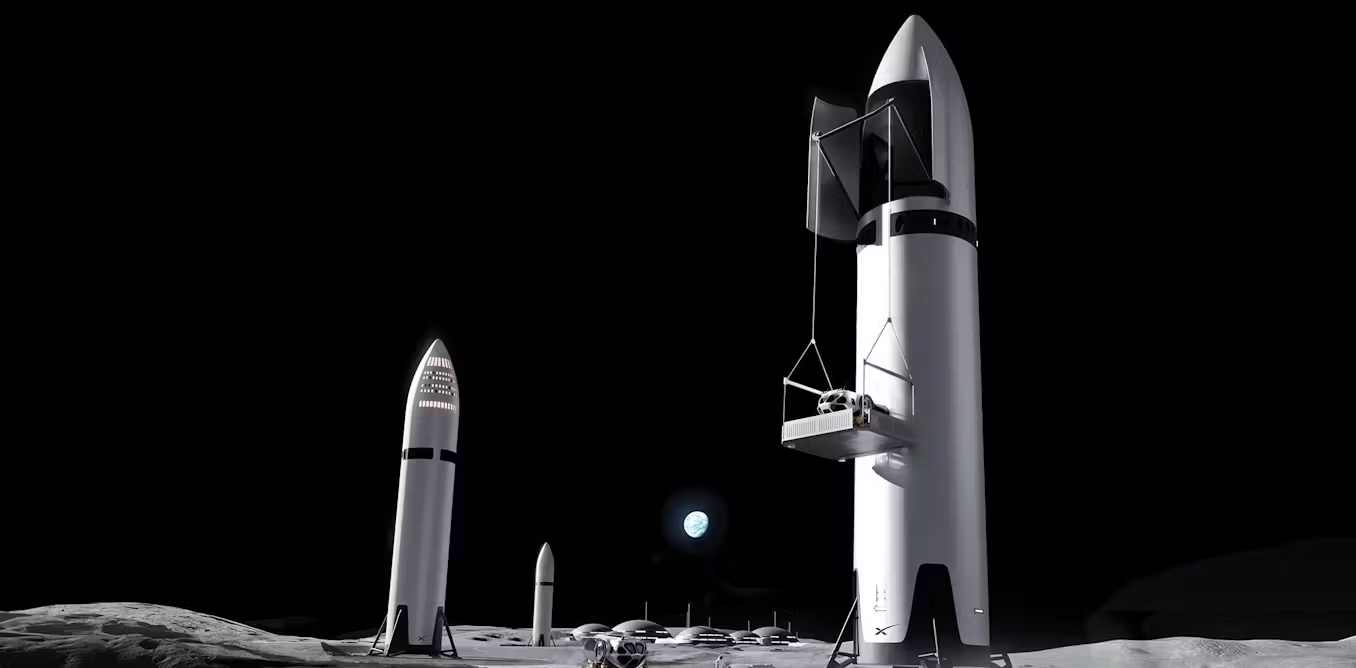
NASA's acting administrator Sean Duffy indicated that due to delays and setbacks with SpaceX's Starship lunar lander, the agency might consider other companies like Blue Origin for the Artemis III moon landing, which is now unlikely to occur before 2029, amid concerns about meeting the 2027 deadline and competing with China's lunar ambitions.
NASA is considering replacing SpaceX with other companies for its upcoming moon landing mission due to concerns over delays and development challenges, with Blue Origin as a potential alternative, as the agency aims to beat China in the lunar race.
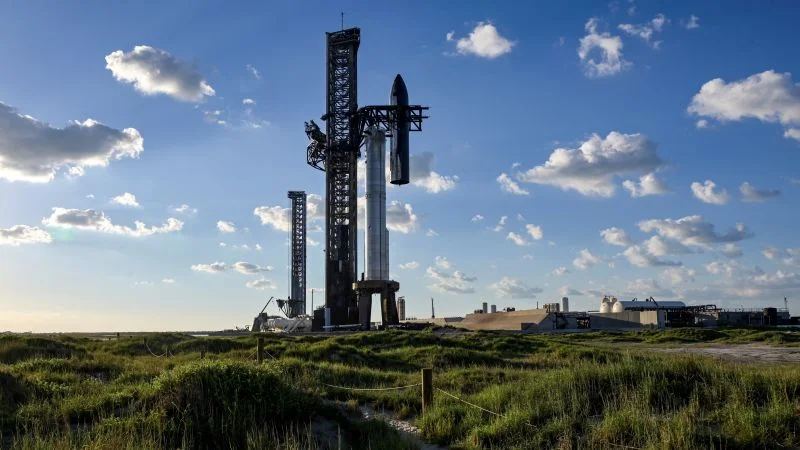
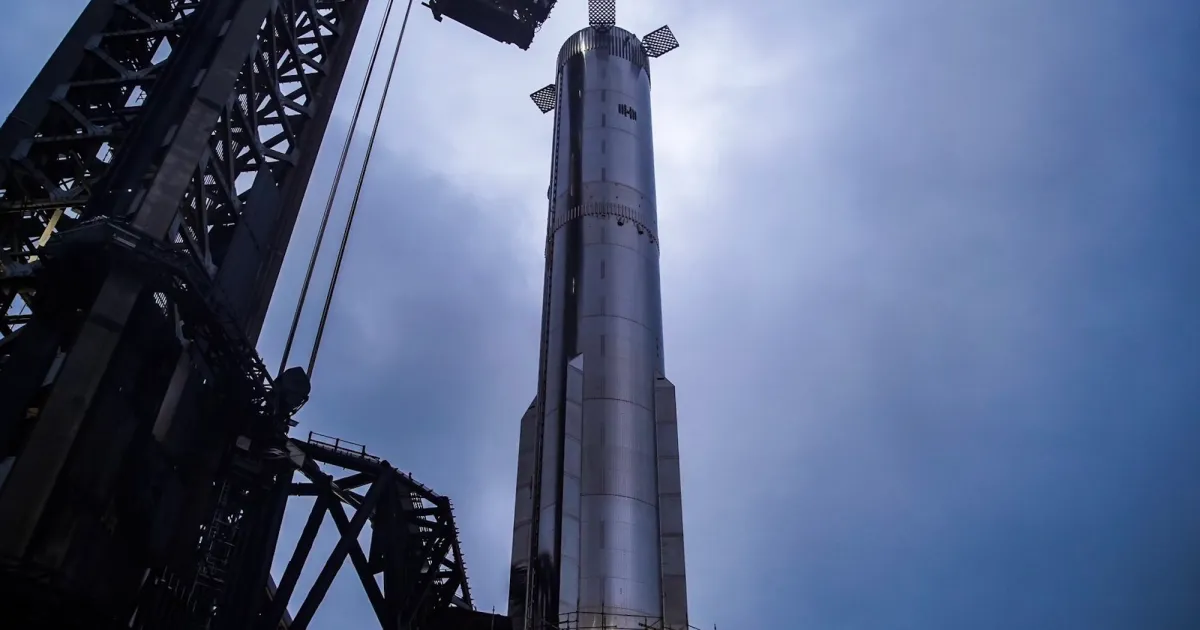
SpaceX is preparing for its 12th flight of the Starship rocket, which is crucial for advancing its space exploration goals, including potential missions to the Moon and Mars. The 12th flight's timing is uncertain but likely in early 2026, following recent successful tests and upgrades to the rocket's design, especially the new Block 3 version of the Super Heavy booster. This milestone is vital for SpaceX's plans to launch crewed lunar missions and expand its launch cadence.
NASA's plan to return humans to the moon using SpaceX's Starship faces significant technical and logistical challenges, with uncertainties about the vehicle's readiness and the complexity of the mission, raising concerns about whether the U.S. can beat China in the lunar race.
NASA's Aerospace Safety Advisory Panel doubts SpaceX's Starship will be ready in time for the 2027 Artemis III lunar landing, citing significant technical and testing challenges, with some estimates suggesting Starship may not be operational until 2032, raising concerns about the timeline for returning humans to the Moon.
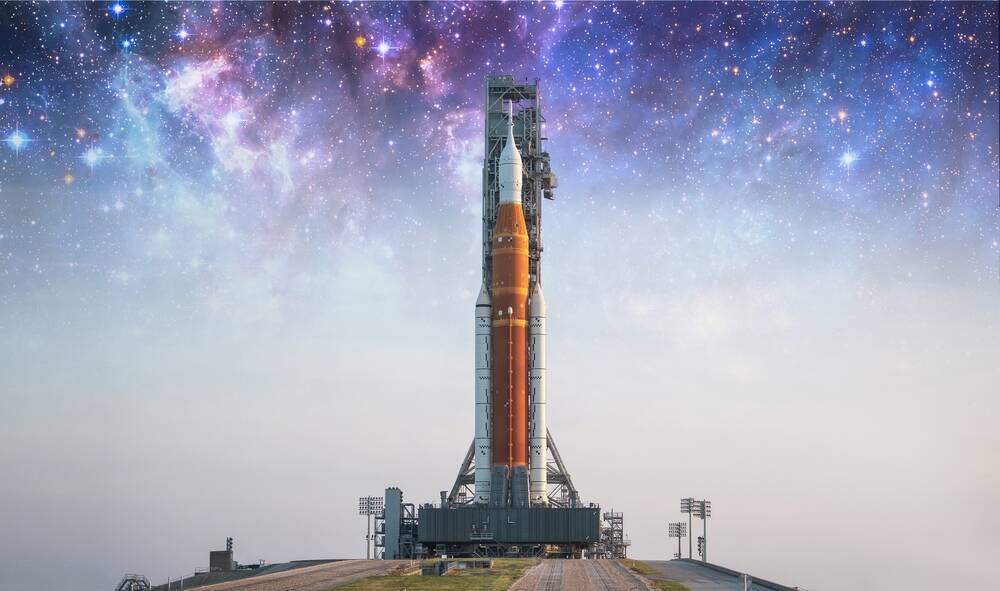
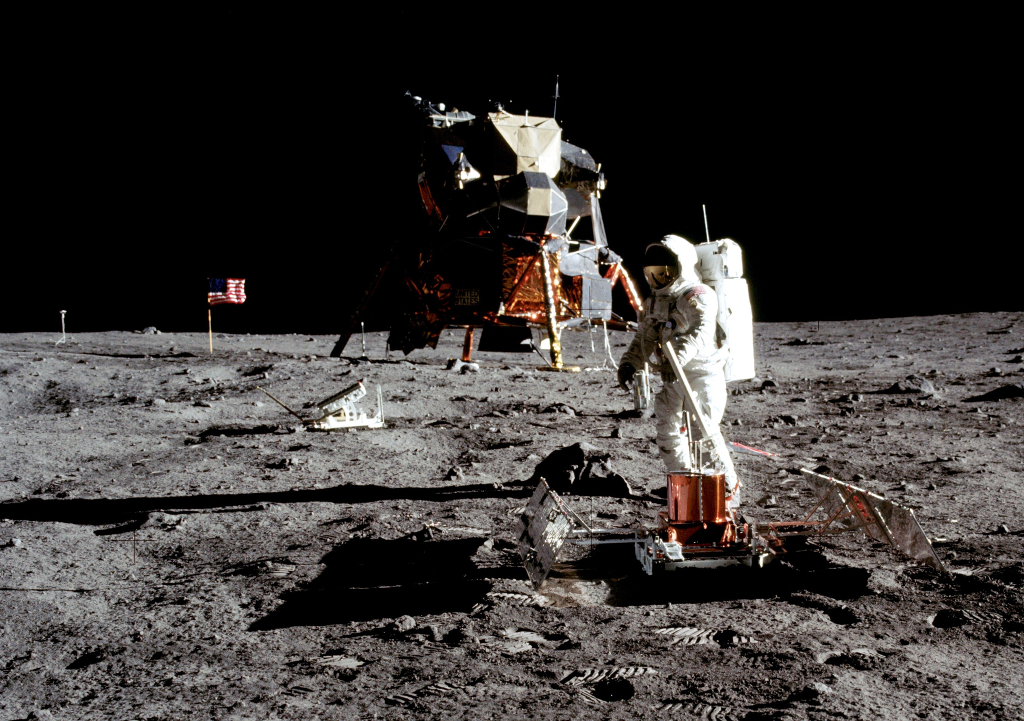
NASA has begun assembling the SLS rocket for the Artemis III lunar landing mission planned for 2027, aiming for a landing at the lunar South Pole, with potential delays and uncertainties due to budget issues and challenges with SpaceX's Starship tests.
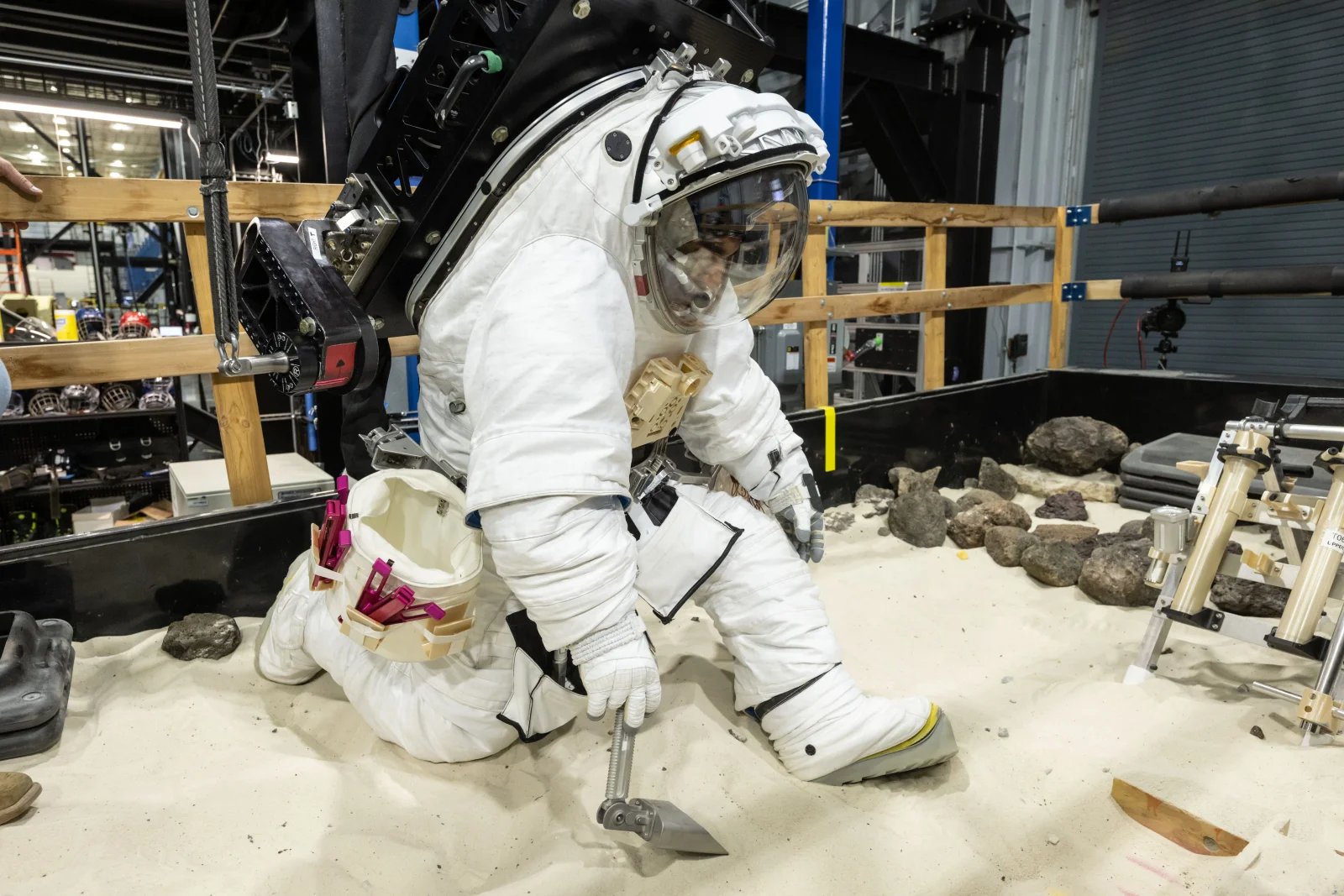
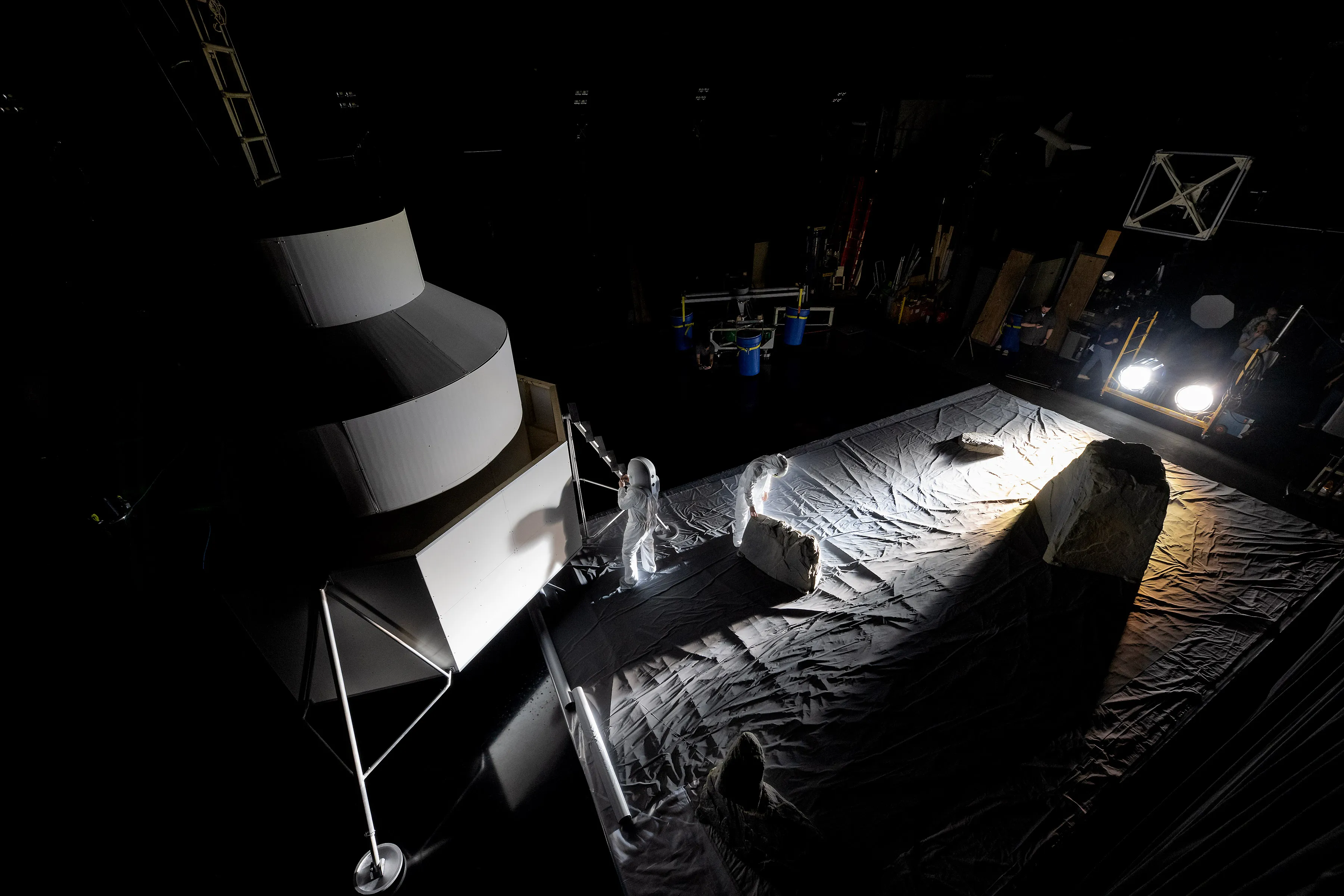
NASA engineers are simulating the lunar lighting environment at the Marshall Space Flight Center to better prepare Artemis III astronauts for the extreme lighting conditions on the Moon's South Pole, aiding in mission success and astronaut safety as part of their broader goal to explore the Moon and prepare for Mars missions.
SpaceX is preparing for the seventh test flight of its Starship rocket, with the Super Heavy booster now at the launchpad for preflight testing. The upcoming test, potentially scheduled for January 11, aims to further improve the rocket's performance, which has seen significant advancements since its first flight in April 2023. SpaceX and NASA plan to use a modified Starship for the Artemis III mission to land humans on the Moon by 2027, with future missions possibly targeting Mars colonization.
SpaceX is planning an ambitious orbital refueling test between two Starships, scheduled to begin in March 2025. This test is crucial for demonstrating Starship's capability to support NASA's Artemis III mission, which aims to return humans to the lunar surface. The test involves launching two Starships to low Earth orbit, where one will refuel the other, marking a significant milestone in space exploration. This development is part of SpaceX's broader goal to enable large-scale payload transport beyond Earth's orbit and to prepare for future lunar landings.
The LEAF project, part of NASA's Artemis III mission, aims to study plant growth on the Moon by 2028. Developed by Space Lab, the project will test the effects of lunar gravity, radiation, and light on three plant types in a controlled environment at the Moon's south pole. This initiative follows China's Chang'e 4 mission, which faced challenges with lunar night temperatures. LEAF's findings could inform future lunar agriculture efforts.
SpaceX's Starship rocket successfully completed its fourth test flight, achieving key goals including a successful return from space. This milestone supports Elon Musk's vision of reusable rockets and is promising for NASA's Artemis III mission to the moon. Despite some minor issues, the test flight marks significant progress in space exploration.
NASA is working to understand and establish a new method of tracking time on the Moon, as time passes differently there compared to Earth. This effort is crucial for the success of future lunar missions, including the Artemis III mission planned for 2026, which aims to put humans back on the Moon and establish a lunar base for deep space exploration.