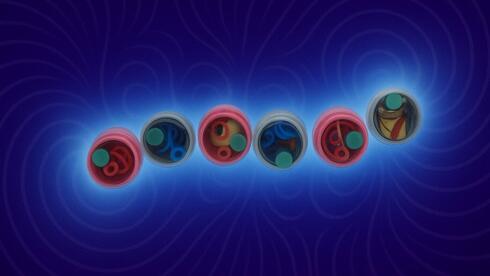
Israeli researchers at Tel Aviv University discovered that particles rotating in opposite directions within a fluid spontaneously form active, chain-like structures resembling polymers, which can move and reorganize on their own, providing insights into natural phenomena and potential applications in smart materials and microscopic robotics.
Scientists have discovered unexpected behavior in active particles whose propulsion speed varies with their orientation. These particles form non-circular clusters with a constant flow of particles entering and exiting. The findings have implications for controlling particle assembly, programmable matter, and advancements in medical technology.
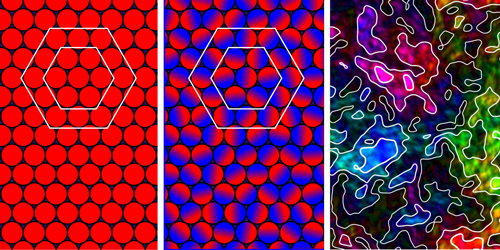
Active particles can form two-dimensional solids with long-range crystalline order and giant spontaneous deformations, which differ from those formed by nonmotile particles. These active systems exhibit quasi-long-range positional order and true long-range orientational order, similar to equilibrium solids. The power-law exponents describing the positional order in active systems cover a wide range, reaching values as high as 20. Understanding the interplay between order and fluctuations in active solids is crucial for integrating active elements into materials and fabrication processes.
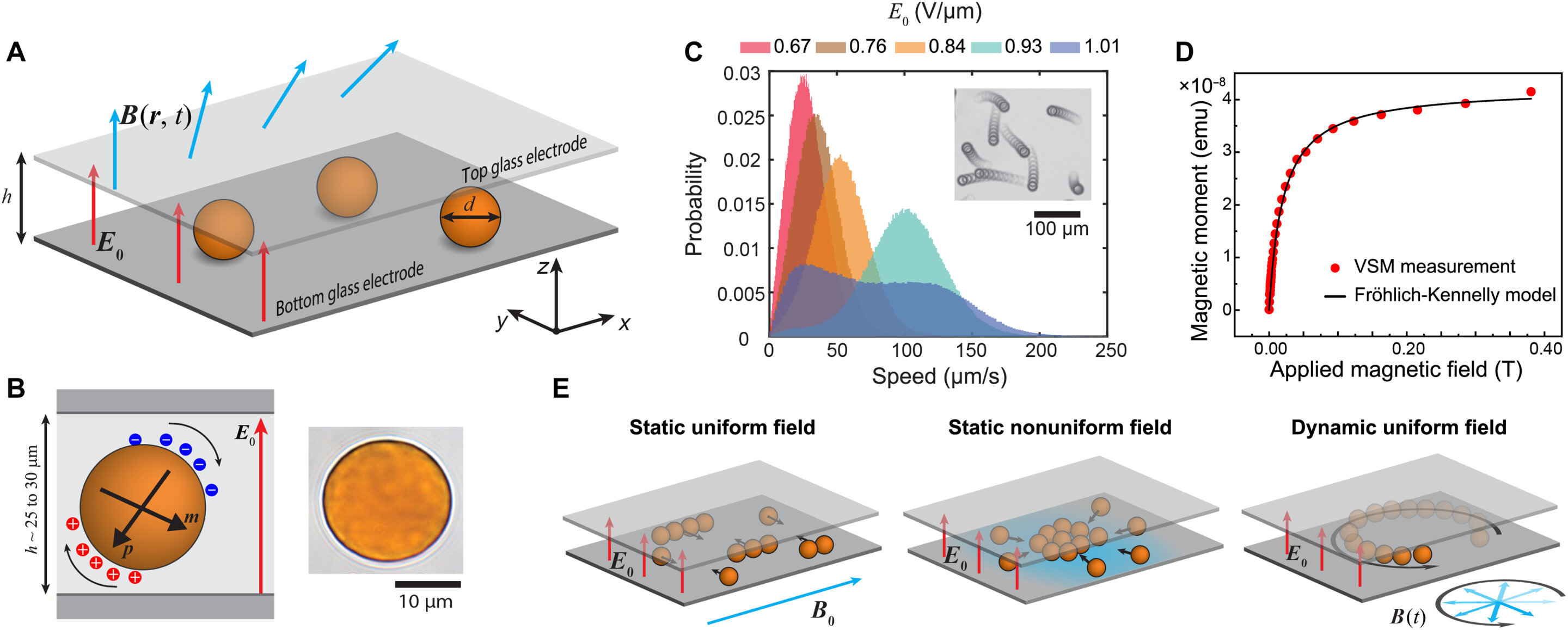
Researchers at Aalto University School of Science have developed magnetic Quincke rollers by doping silica particles with superparamagnetic iron oxide nanoparticles. These magnetic rollers can be controlled and regulated using external magnetic forces and torques, allowing for tunable interparticle interactions and programmable behaviors. The researchers demonstrated the formation of active chains, complex trajectories, and even teleoperated single-particle dynamics. This development opens up possibilities for applications in areas such as electro-hydrodynamics, colloidal self-assembly, and microrobotics.