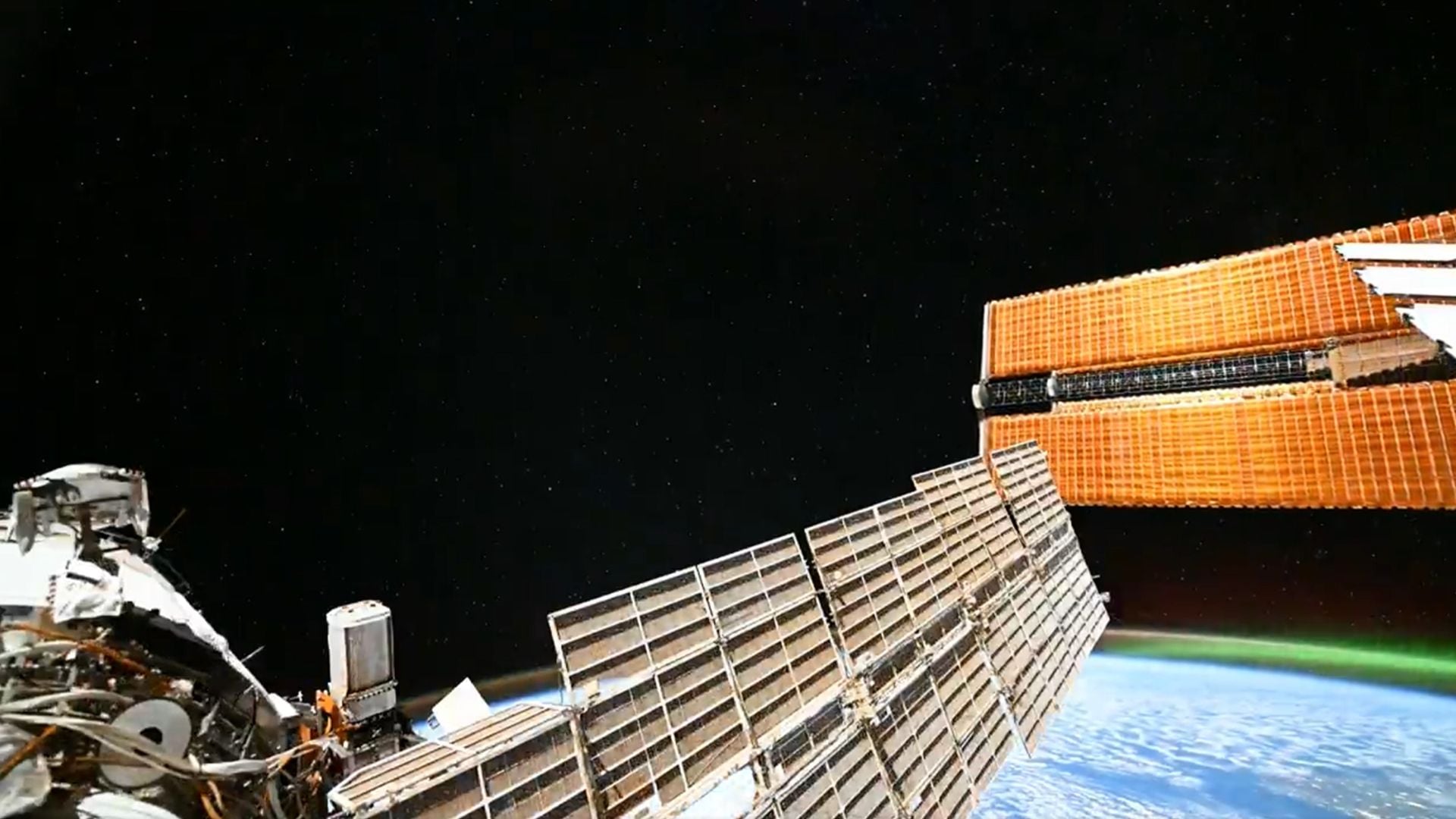
Astronaut Kimiya Yui captured a stunning timelapse video from the ISS showing zodiacal light, green auroras, and the Pleiades star cluster, highlighting the beauty of Earth's orbit and celestial phenomena.
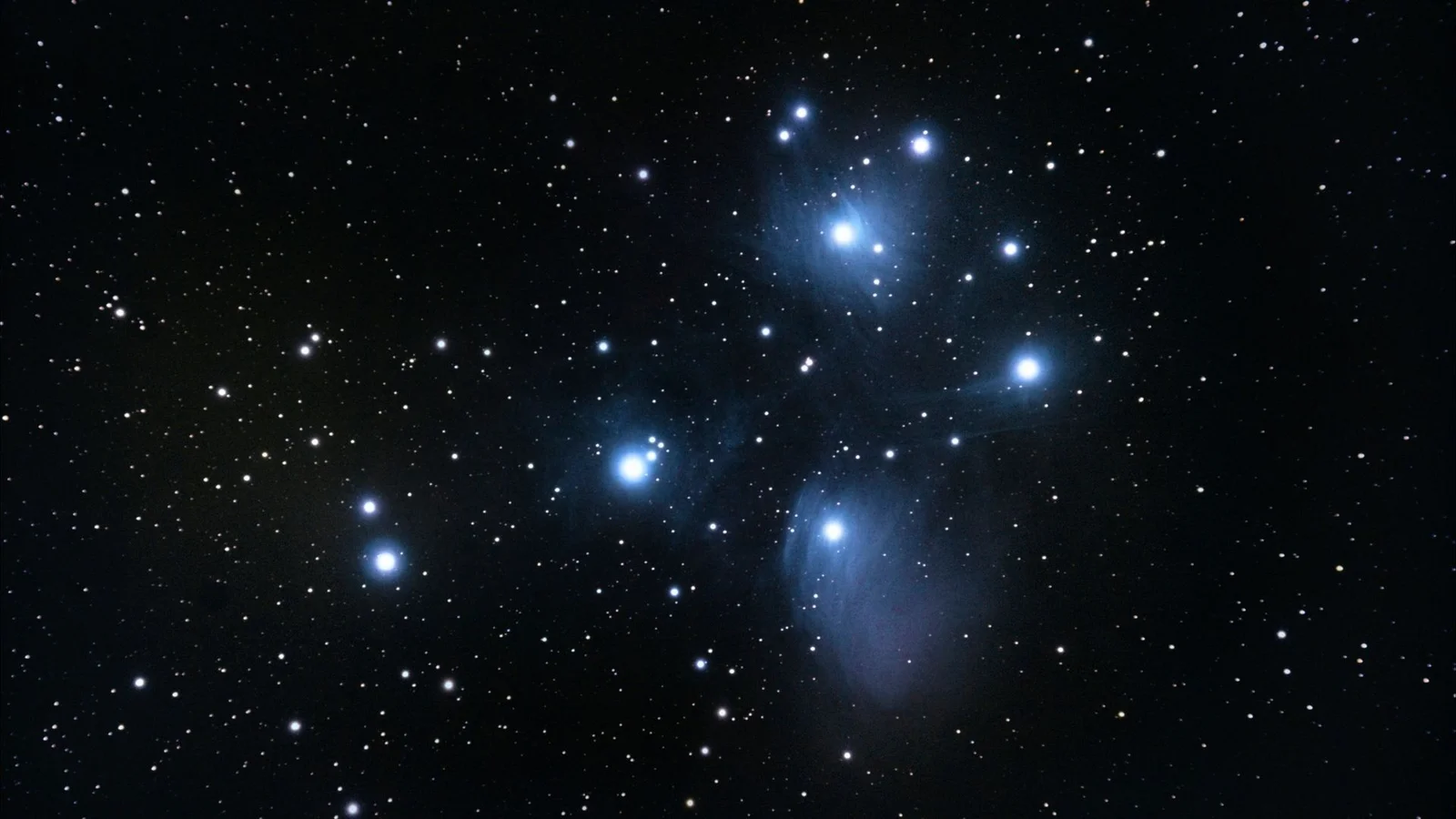
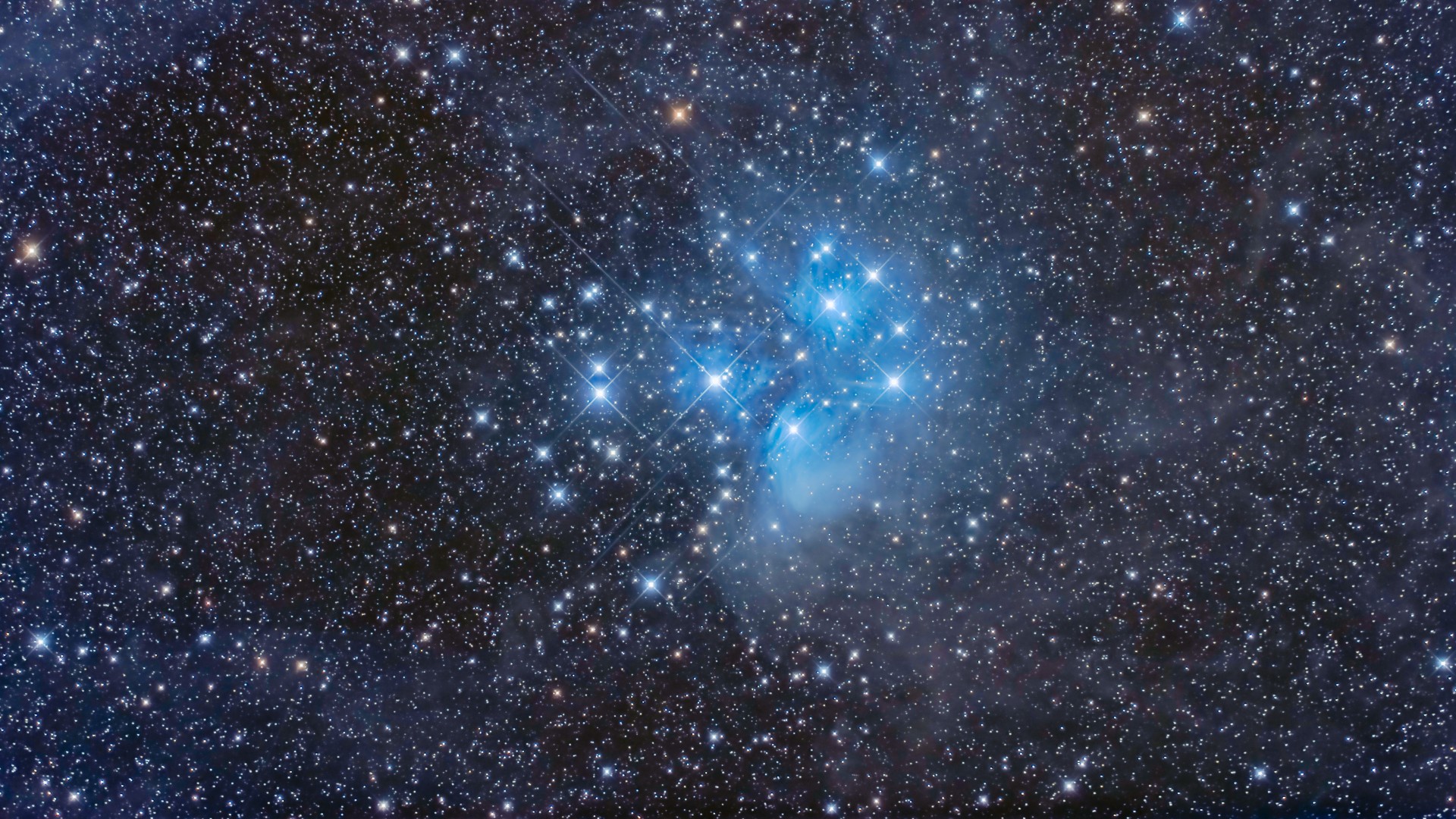
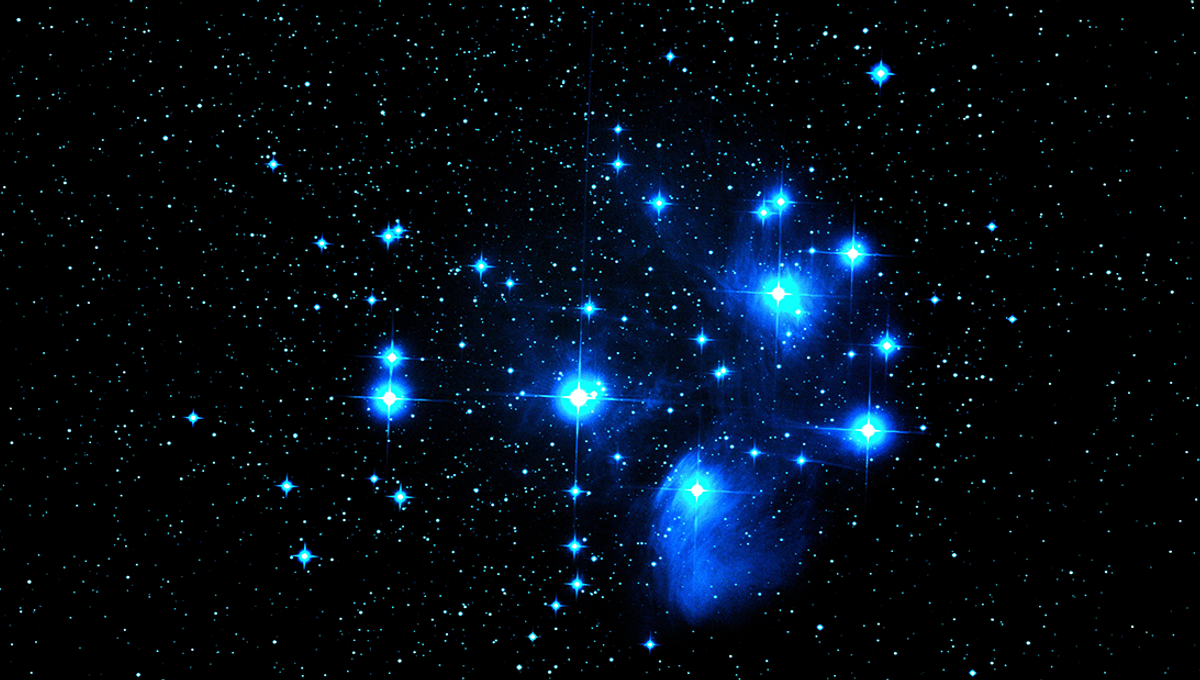
Astronomers using NASA's TESS and ESA's Gaia have discovered that the Pleiades star cluster is about 20 times larger than previously thought, containing thousands of stars instead of just seven, which could reshape our understanding of star formation and the galaxy's structure.
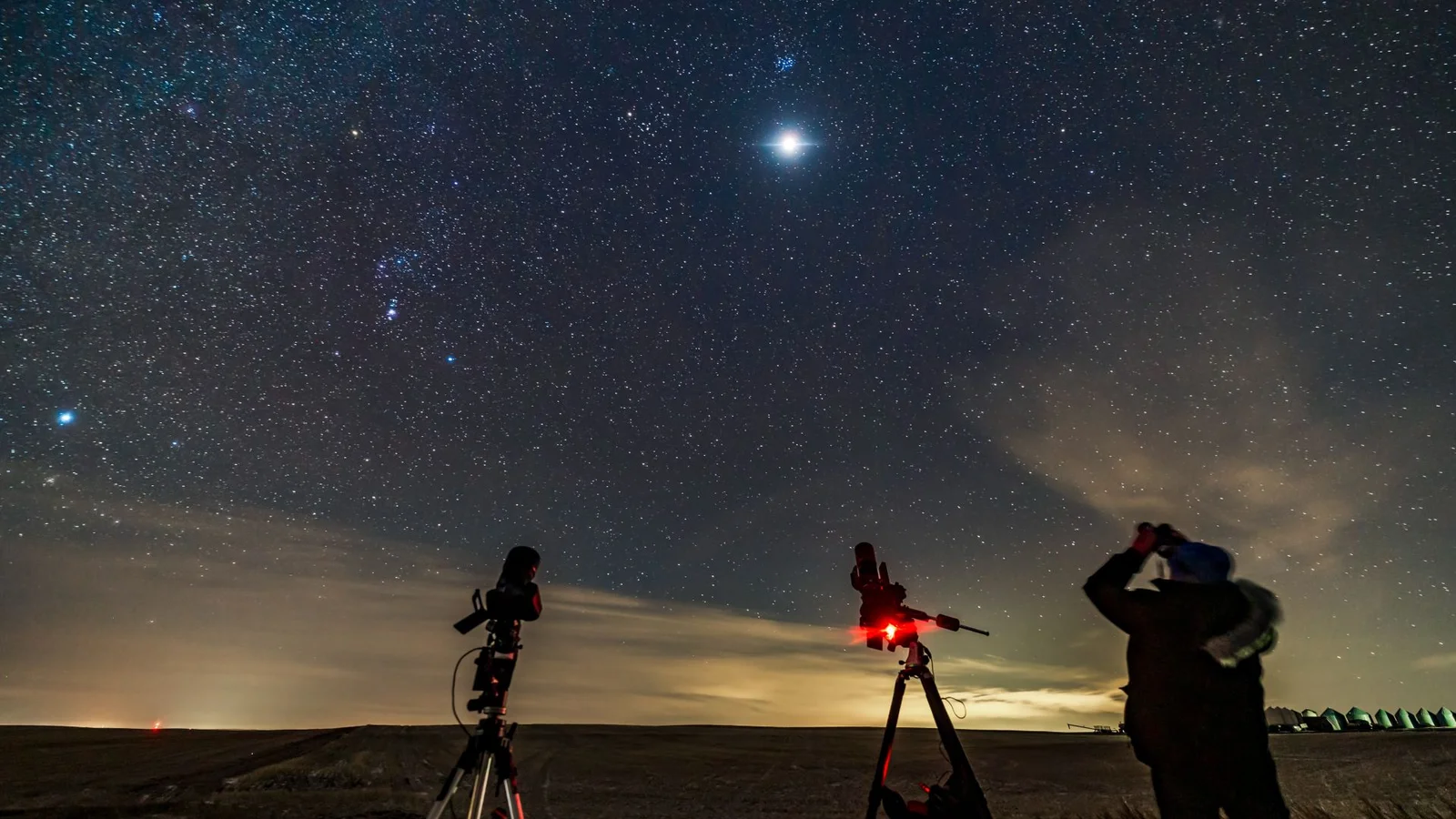
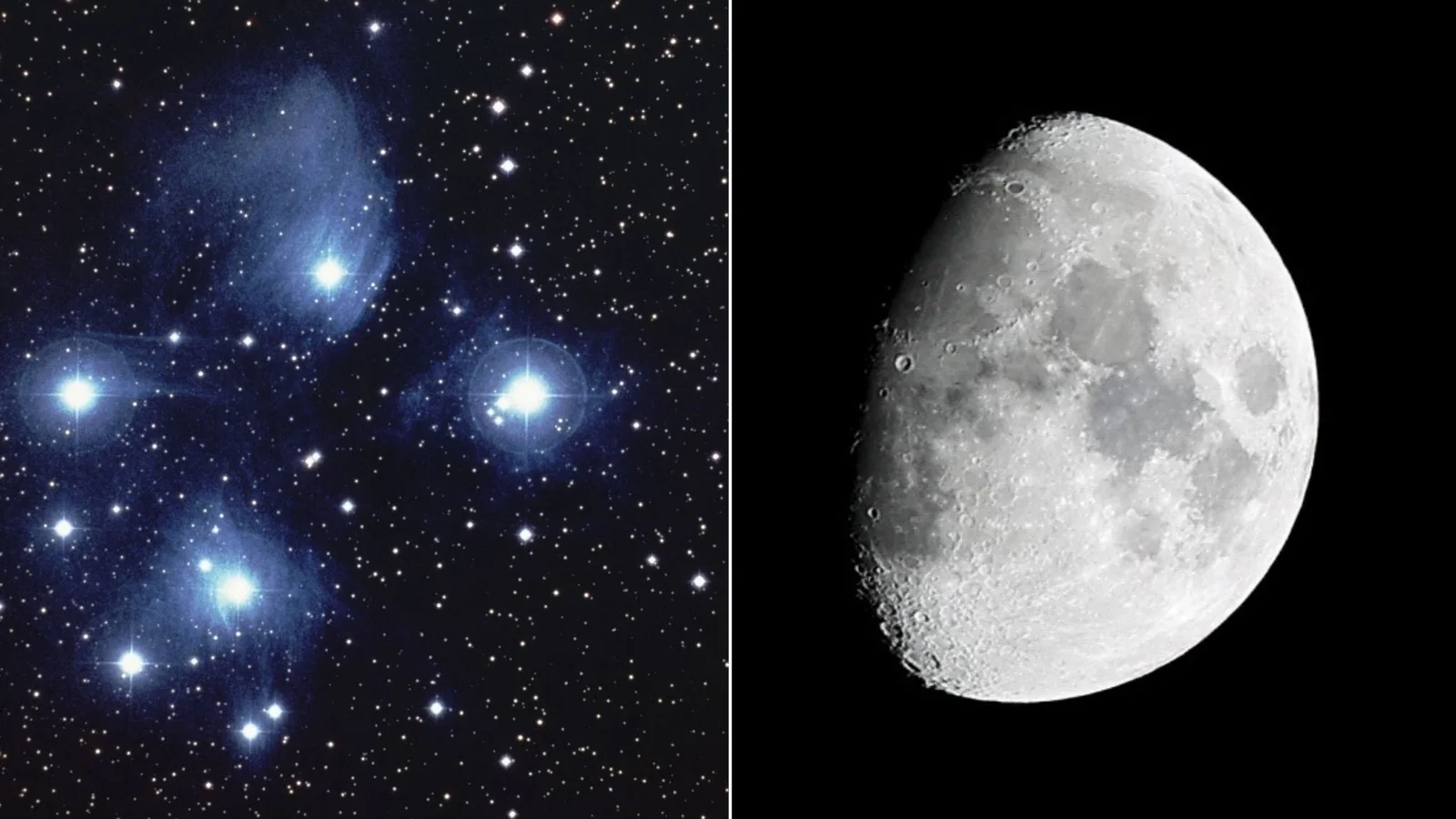
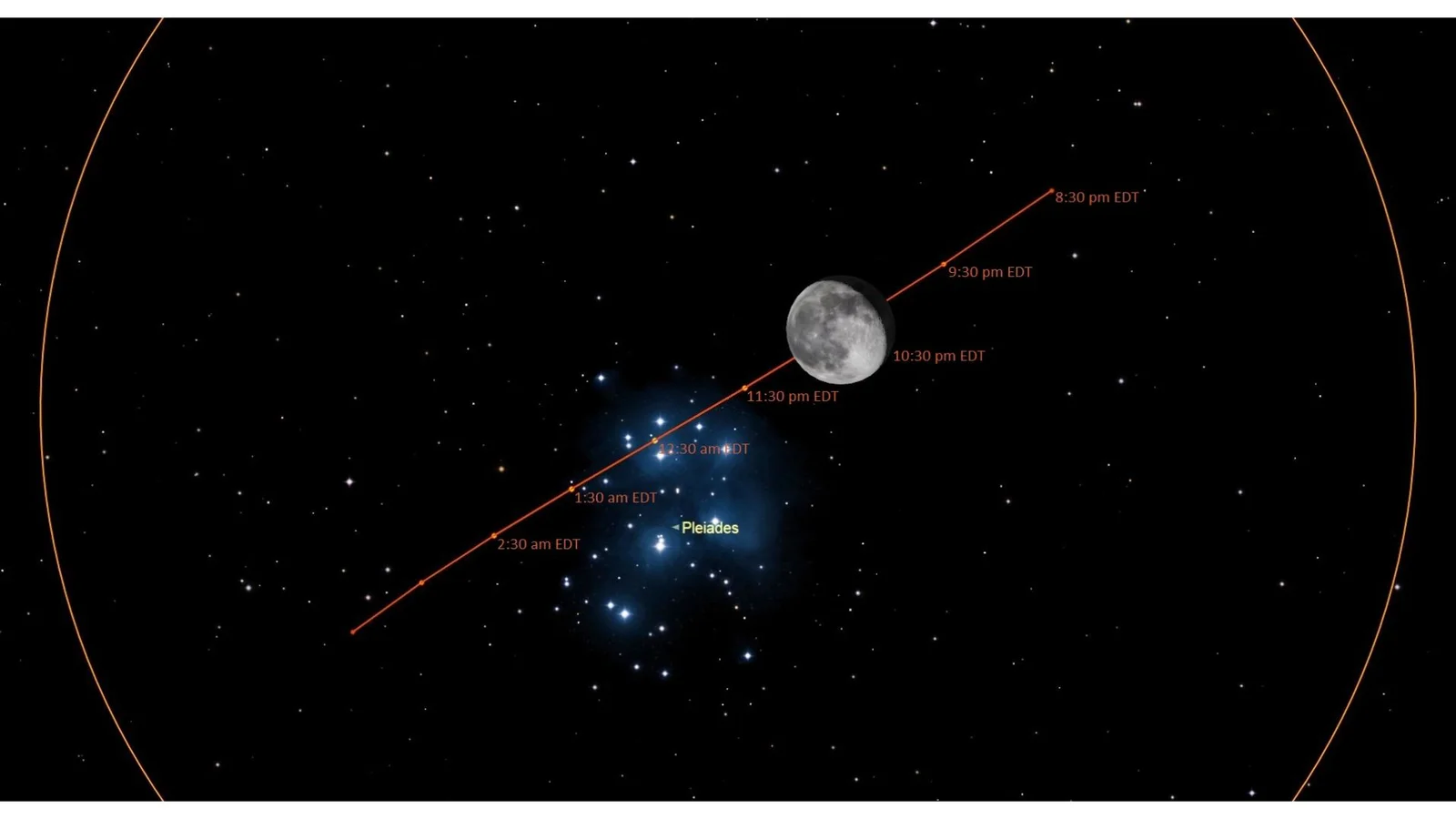
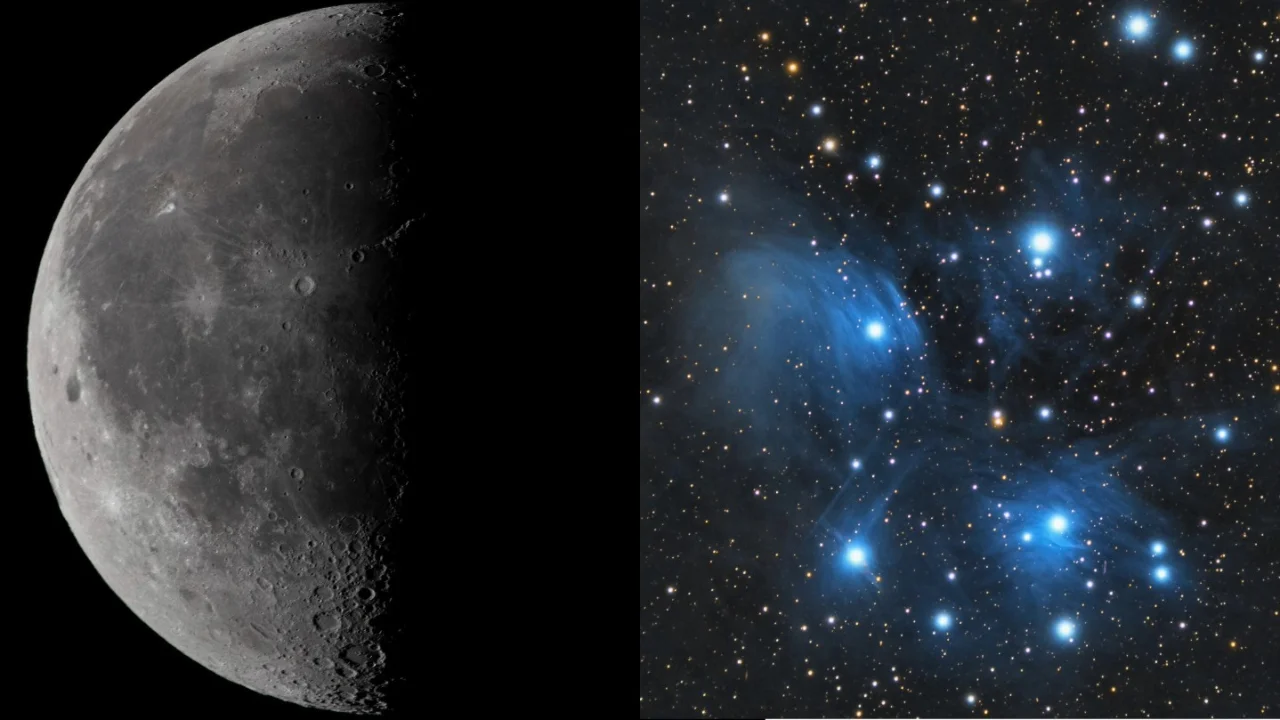
On November 6, early morning skywatchers can see the nearly full moon near the Pleiades star cluster in the western sky before dawn, with binoculars enhancing the view of the Seven Sisters and nearby Uranus, offering a spectacular celestial event.
The moon will pass in front of the Pleiades star cluster on October 9, 2025, offering a rare opportunity for skywatchers in North America to observe the occultation, with specific viewing times and locations provided for optimal viewing, especially using telescopes.
On September 12, viewers in the U.S. can observe the waning gibbous moon near the Pleiades star cluster and the distant planet Uranus in Taurus, with binoculars or a telescope enhancing the experience. The event offers a great opportunity for skywatchers to enjoy celestial sights, including Capella and Saturn, and to capture images of the moon and stars.
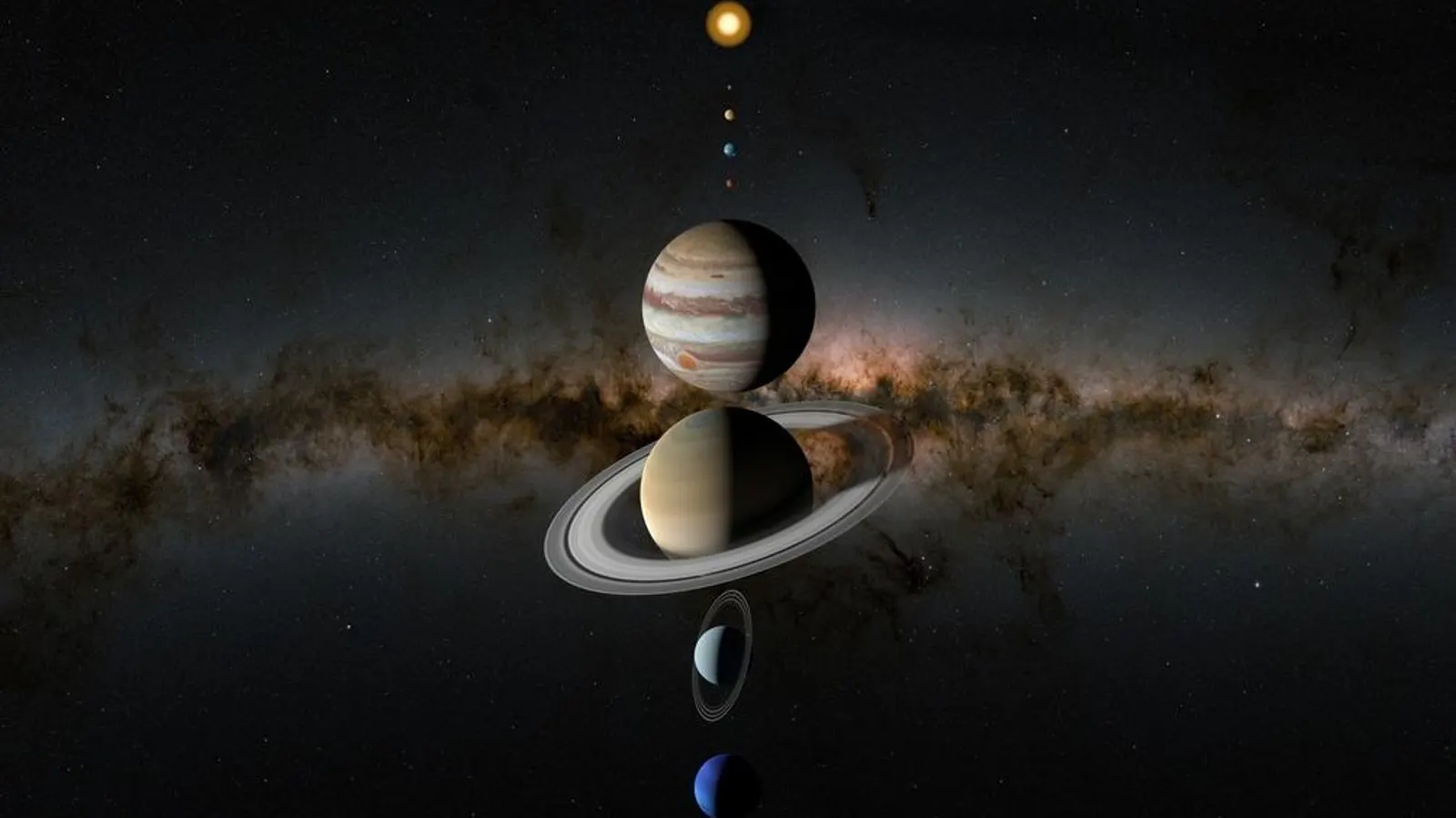
This weekend is an ideal time to observe a 'planet parade' in the pre-dawn sky, featuring Venus, Jupiter, Saturn, Neptune, Uranus, and the waning gibbous moon passing near the Pleiades star cluster and the constellations Taurus and Orion, with the best viewing about 45 minutes before sunrise. This event is the last notable planet parade until 2028.
Voyager 1, traveling at over 61,000 km/h and now 444 light years from Earth, is projected to pass through the Pleiades star cluster in about 100 million years, although it will be an inert object with no active systems by then, highlighting the vastness of cosmic time and human achievement.
The Subaru logo features six stars representing the original five companies that merged to form Fuji Heavy Industries, with the central star symbolizing Subaru itself. The design is inspired by the Pleiades star cluster, also known as the Seven Sisters, with the arrangement subtly forming an 'S' to connect to the brand name. The colors blue and silver symbolize trust, dependability, quality, and engineering, while the Subaru STI performance brand uses a cherry blossom red color inspired by Japanese culture. The logo's symbolism reflects Subaru's history, brand identity, and commitment to innovation.
August offers prime stargazing opportunities for observing spectacular star clusters like the globular cluster M13 in Hercules, the Hyades in Taurus, and the Pleiades, all visible from the Northern Hemisphere with binoculars or telescopes, providing a stunning view of our galaxy's diverse stellar groups.
The moon will pass close to the Pleiades star cluster in the early morning hours of August 16-17, offering a great opportunity for stargazing with binoculars or telescopes, and providing a chance to observe lunar impact craters and Uranus nearby. The event is best viewed an hour after midnight, with the moon's position changing relative to the Pleiades over the two nights.
On July 20, in North America, a lunar eclipse called the 'Seven Sisters Eclipse' will occur, where the Moon will pass in front of the Pleiades star cluster, temporarily obscuring it from view, an event visible to about 60% of the world's population.
On June 22, a rare celestial alignment will be visible just before sunrise, featuring the waning crescent moon, bright Venus, and the Pleiades star cluster, offering a stunning sky show enhanced by Earthshine on the moon's dark side, accessible to the naked eye and ideal for early risers and sky enthusiasts.
This weekend, early risers can enjoy a stunning pre-dawn sky display featuring a waxing crescent moon, Venus, and the Pleiades star cluster arranged in a triangle, best viewed about an hour before sunrise by looking east, with tips to enhance the experience using binoculars and clear horizons.
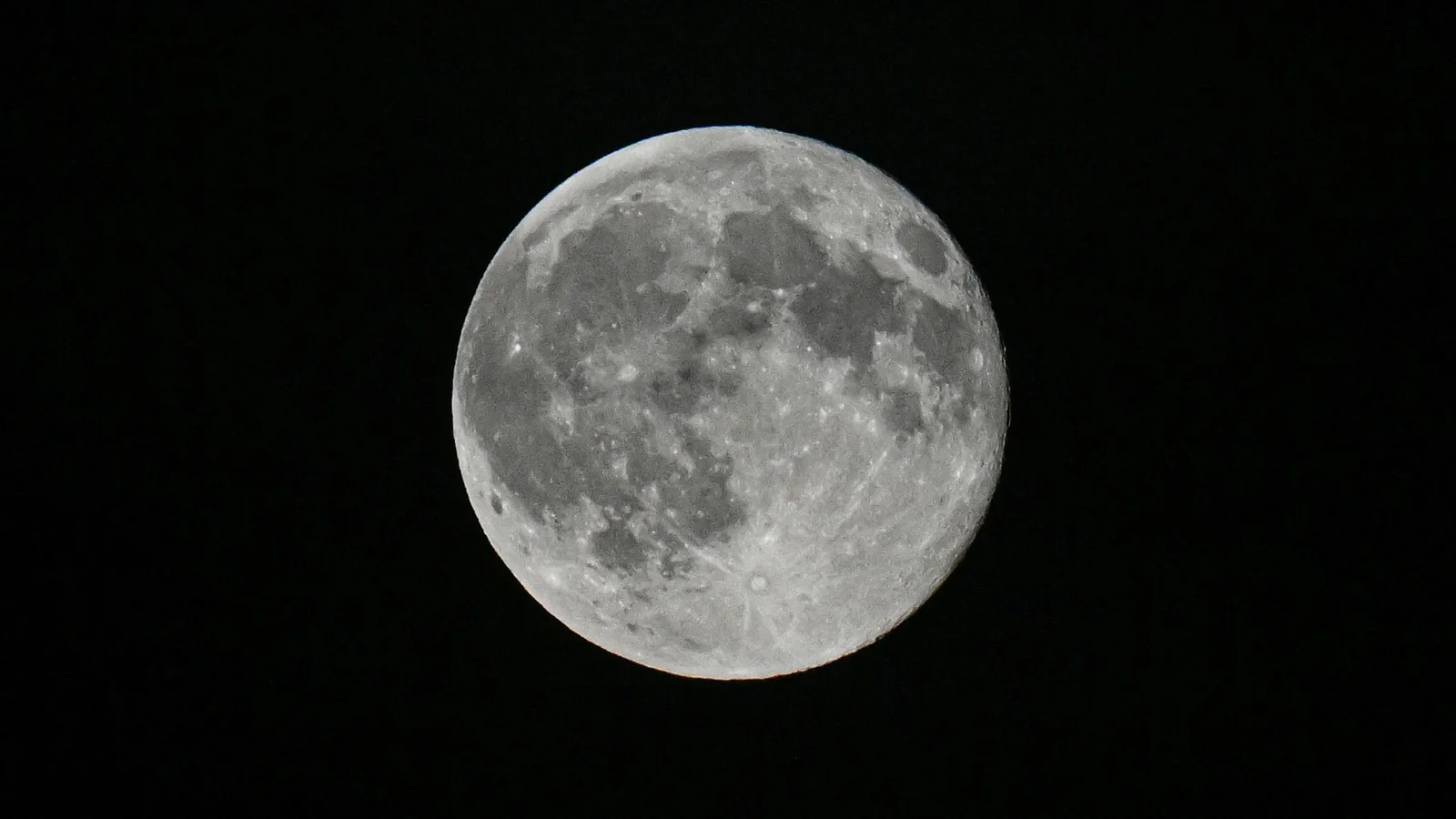
The final supermoon of 2024, known as the Beaver Moon, will be fully illuminated on November 15, but the best viewing time in North America is at moonrise on November 16. This supermoon will appear near the Pleiades star cluster, offering a spectacular sight. The Beaver Moon is named for the time when beavers build their winter dams, and it is the last of four supermoons in 2024. Observers can enhance their experience with binoculars or telescopes to see more lunar details.
This week offers several celestial highlights, including the start of the Perseids meteor shower, a conjunction of Mars and Uranus, and the full Buck Moon rising on July 20. Stargazers can also see Mars near the Pleiades and a waxing gibbous moon close to the star Antares.