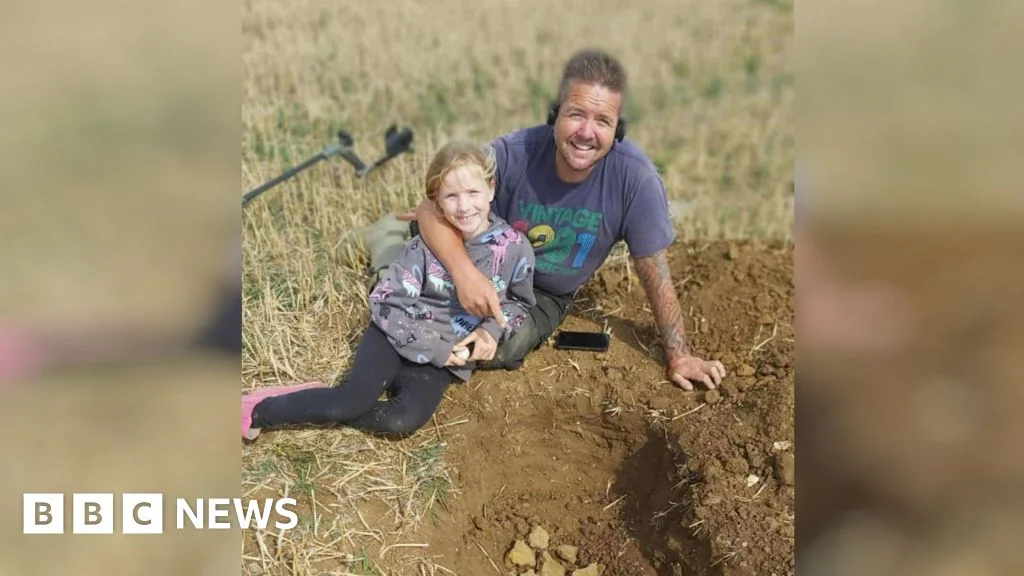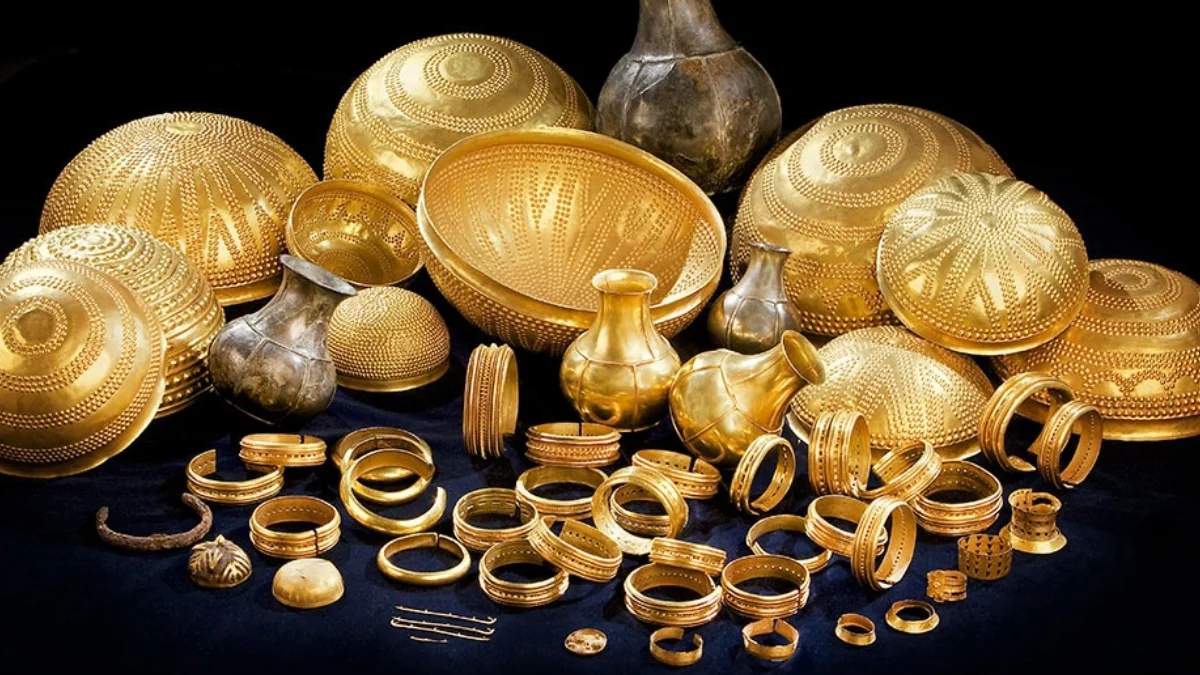
A family in Lewes, East Sussex, discovered 3,000-year-old Bronze Age copper ingots and bronze artifacts while metal detecting, which they donated to a local museum, highlighting the historical significance of their find.
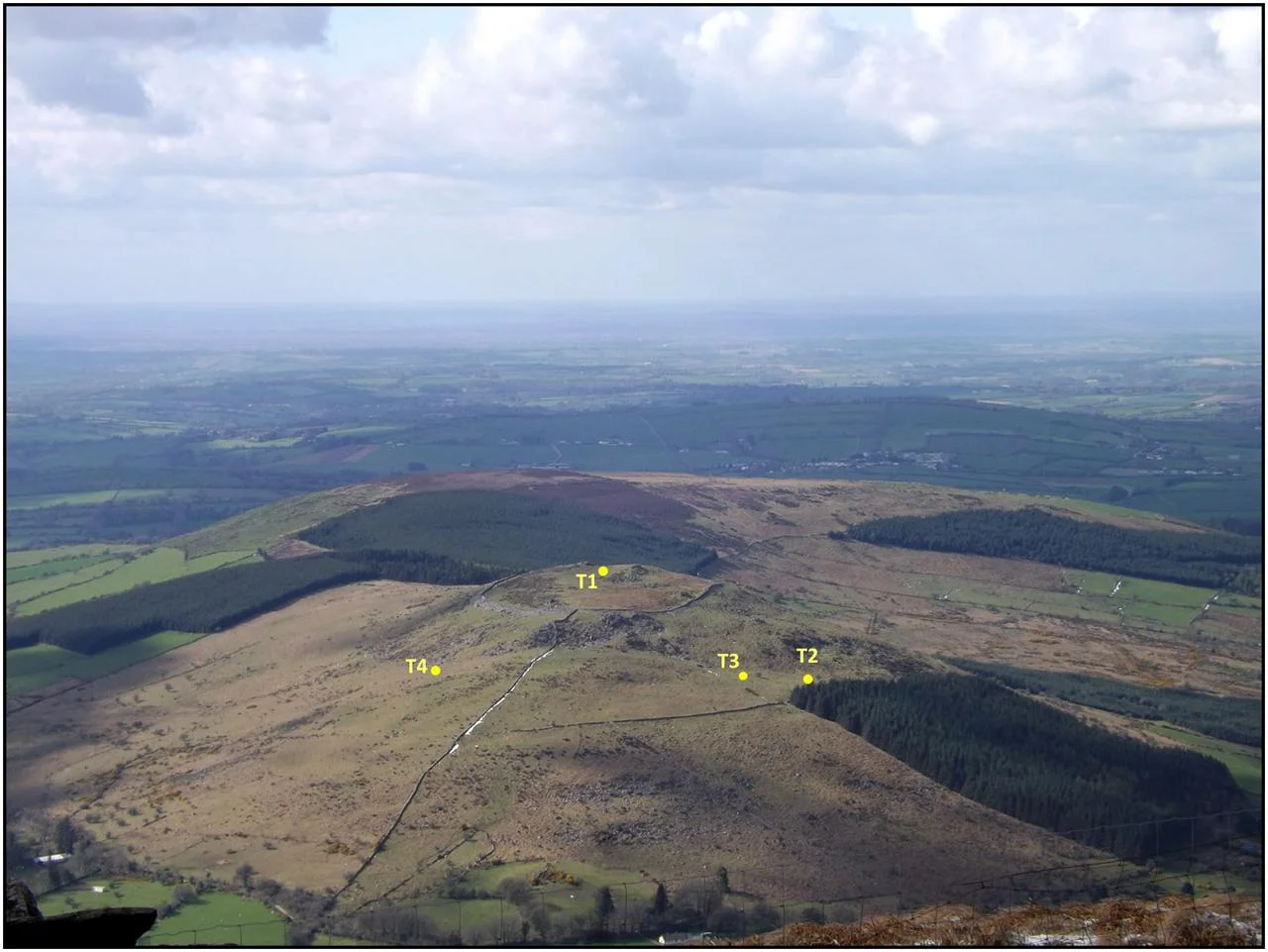
Scientists have uncovered Ireland’s largest prehistoric hillfort settlement at Brusselstown Ring, revealing over 600 dwellings and challenging previous notions of Bronze Age social organization, suggesting a large, egalitarian community with sophisticated planning, which was gradually abandoned in the third century BCE.
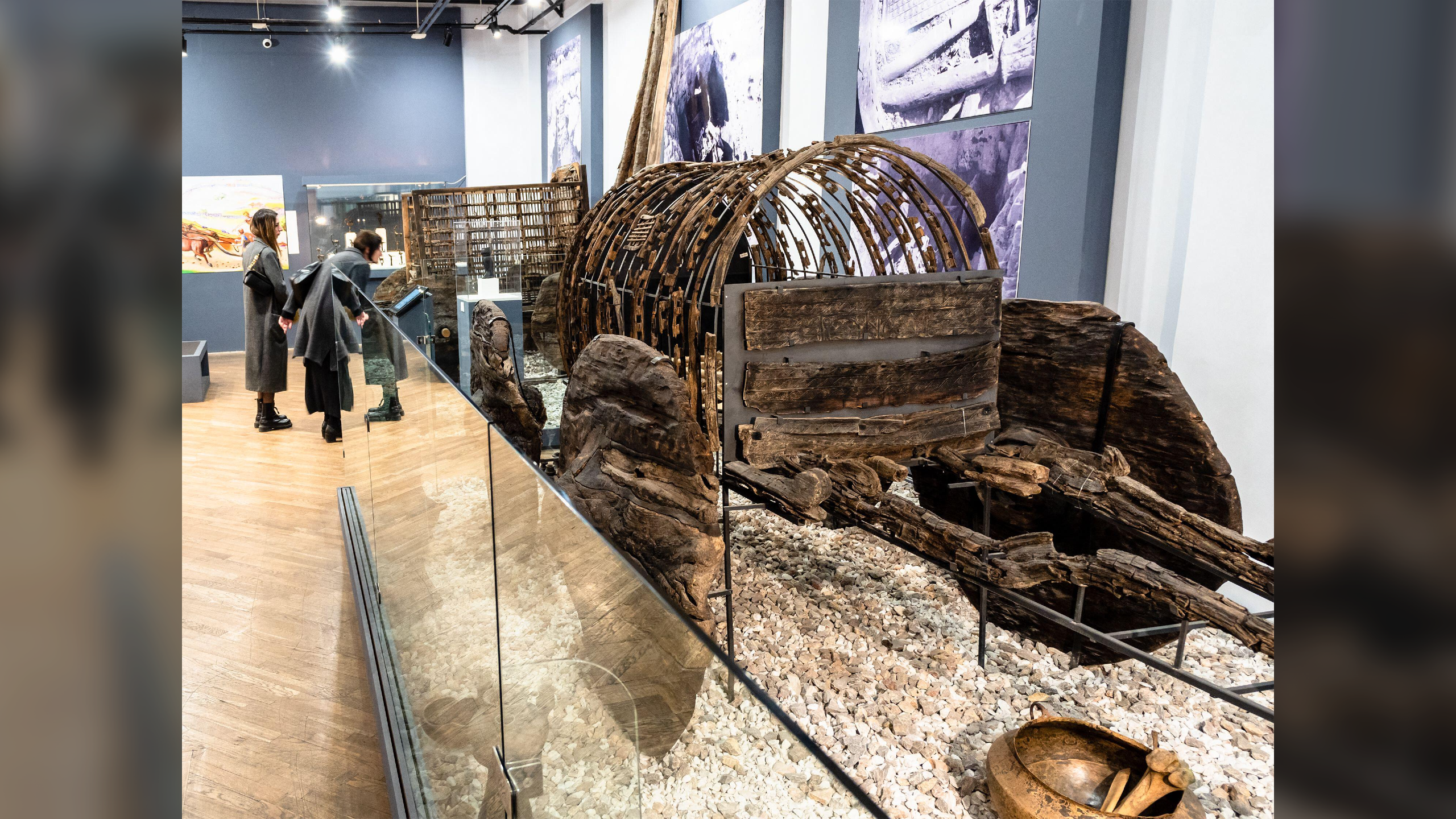
The Lchashen wagon, a well-preserved 3,500-year-old covered wagon from Armenia, was discovered in a Bronze Age cemetery and exemplifies early wheeled vehicle innovation, likely used for transporting a deceased leader to the afterlife.
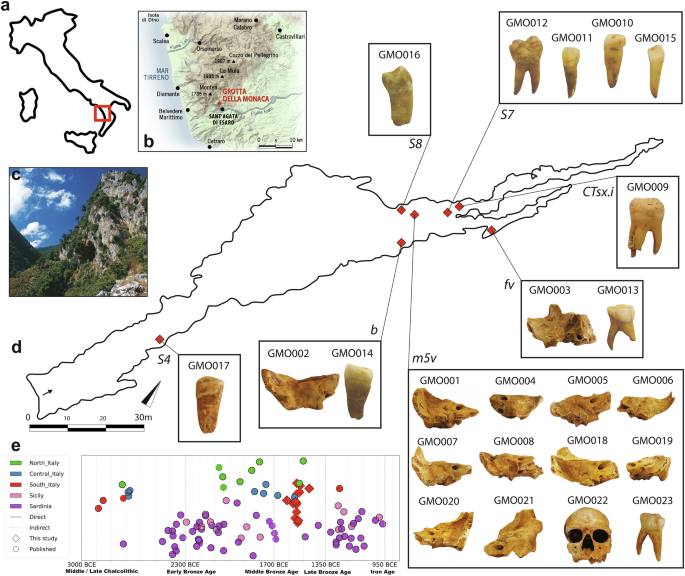
A genetic study of Bronze Age remains in southern Italy revealed extreme parental consanguinity, including a likely father-daughter incestuous relationship, providing insights into prehistoric social structures and kinship patterns in small, isolated communities.
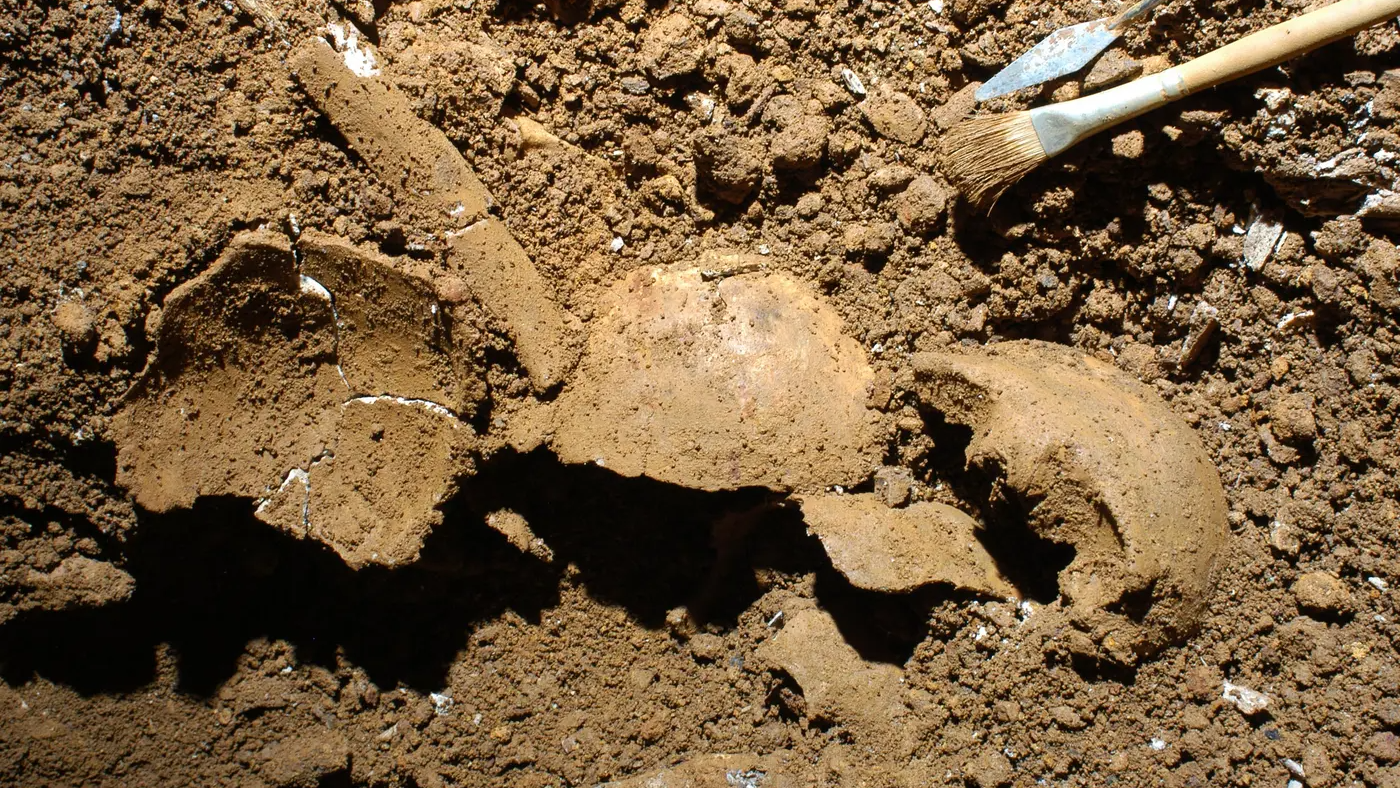
Archaeologists in Italy discovered the oldest known evidence of father-daughter incest from 3,700-year-old bones at Grotta della Monaca, revealing a rare case of first-degree inbreeding in ancient times, with genetic analysis showing the young male was the son of a buried adult male and his own daughter, though the reasons for this behavior remain uncertain.
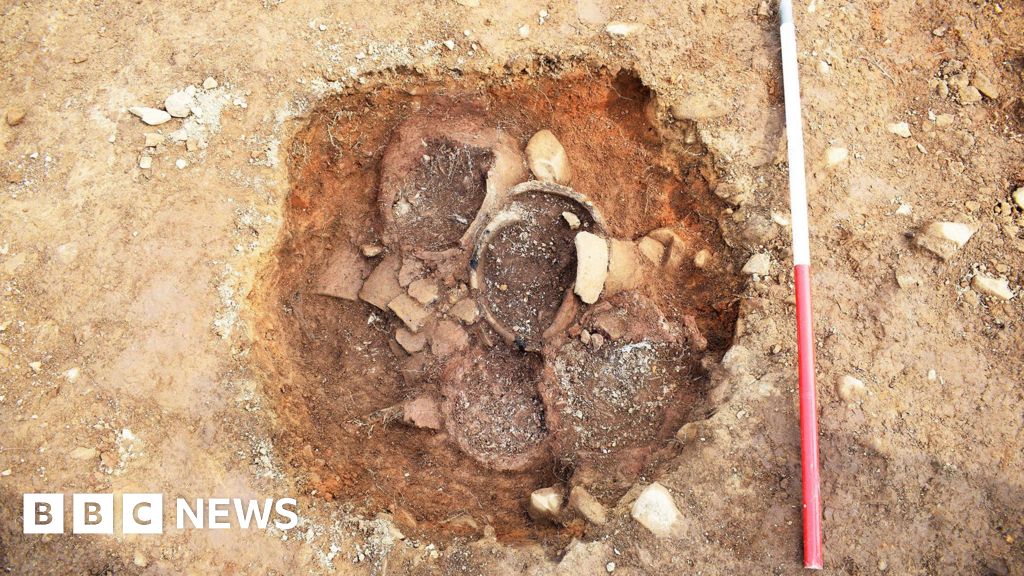
Archaeologists uncovered a mysterious Bronze Age mass burial site near Sanquhar, Scotland, dating back around 3,300 years, which likely resulted from a catastrophic event such as famine, with multiple individuals cremated and buried together in tightly packed urns during construction of a wind farm.
A groundbreaking DNA study has identified the world's earliest known plague carrier in a 4,000-year-old domesticated sheep from the Bronze Age, revealing how the plague spread before fleas became its primary vector, and highlighting the complex interactions between humans, livestock, and natural reservoirs in ancient Eurasia.
The study reconstructs the demography and social structure of a Middle Bronze Age community from Calabria, Southern Italy, revealing genetic continuity with Mediterranean populations, evidence of kinship and inbreeding, including a rare case of parent-offspring mating, and highlighting complex migration and interaction patterns in prehistoric Italy.
Amateur archaeologists in Wigan, England, discovered a Bronze Age burial site that may be built on an even older Neolithic henge, potentially dating back to 10,000 B.C., revealing a site of significant historical and ceremonial importance.
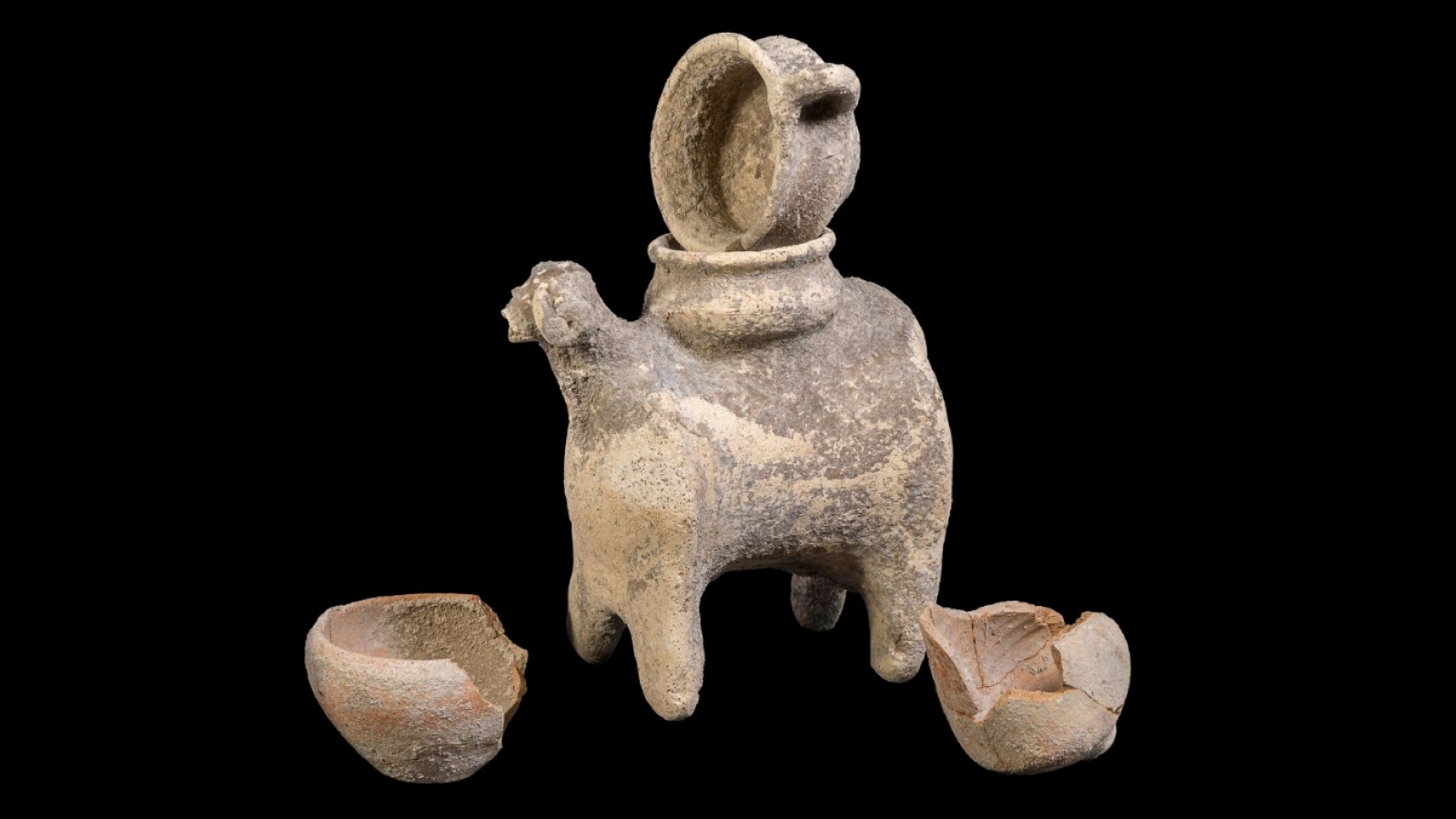
Archaeologists near Megiddo (Armageddon) in Israel discovered a 3,300-year-old Canaanite ritual tea set shaped like a ram, a miniature temple, and one of the oldest known winepresses, shedding light on ancient religious practices and daily life during the Late Bronze Age.
A study from Georgia's Kvemo Bolnisi site reveals Bronze Age metallurgists were experimenting with iron oxides as flux in copper smelting, indicating an early understanding of iron's properties that may have contributed to the development of iron smelting technology, predating 500 BC.
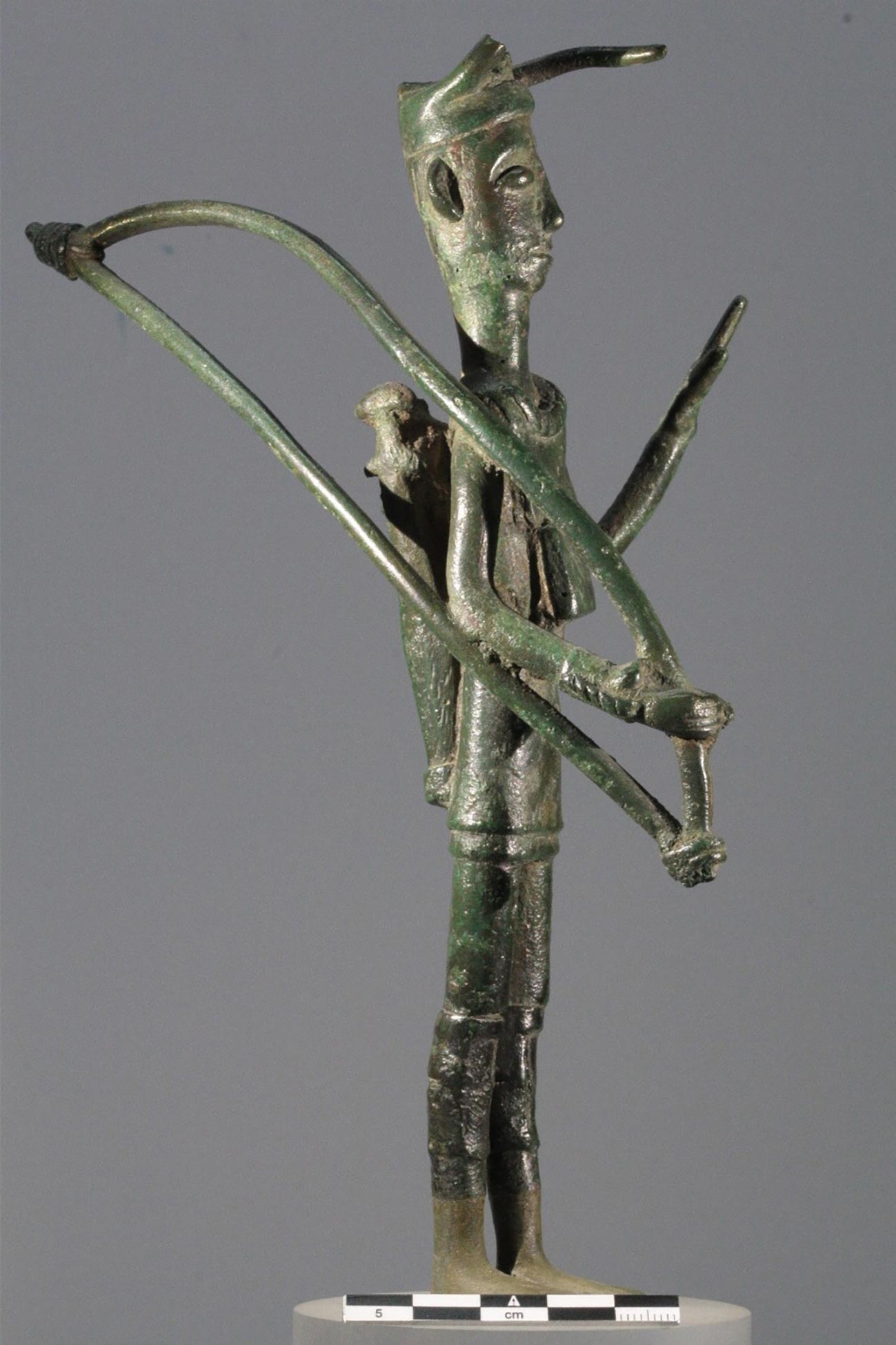
Scientists used advanced isotope analysis to trace the origins of copper in Sardinian Bronze Age bronzetti figurines, revealing they were primarily made from Sardinian and Iberian copper, with no evidence of Levantine sources, and uncovering unexpected cultural links between Sardinia and Scandinavia through stylistic features like horned helmets.
A study of animal bones from Bronze Age Britain reveals that people traveled long distances to participate in large feasts, which likely played a key role in community bonding during a time of climate and economic instability, with different regions favoring different meats and engaging in distinct social behaviors.
An archaeological discovery in Norway uncovered a 3,000-year-old cult site hidden beneath a landslide from around 800 B.C., revealing longhouses, burial sites, and engraved stones with ritual significance, providing unique insights into Bronze Age religious practices.
Scientists have discovered the first ancient Yersinia pestis genome in a 4,000-year-old sheep from Russia, suggesting livestock played a role in spreading the Bronze Age plague across Eurasia, predating the flea-borne transmission seen in later outbreaks like the Black Death.