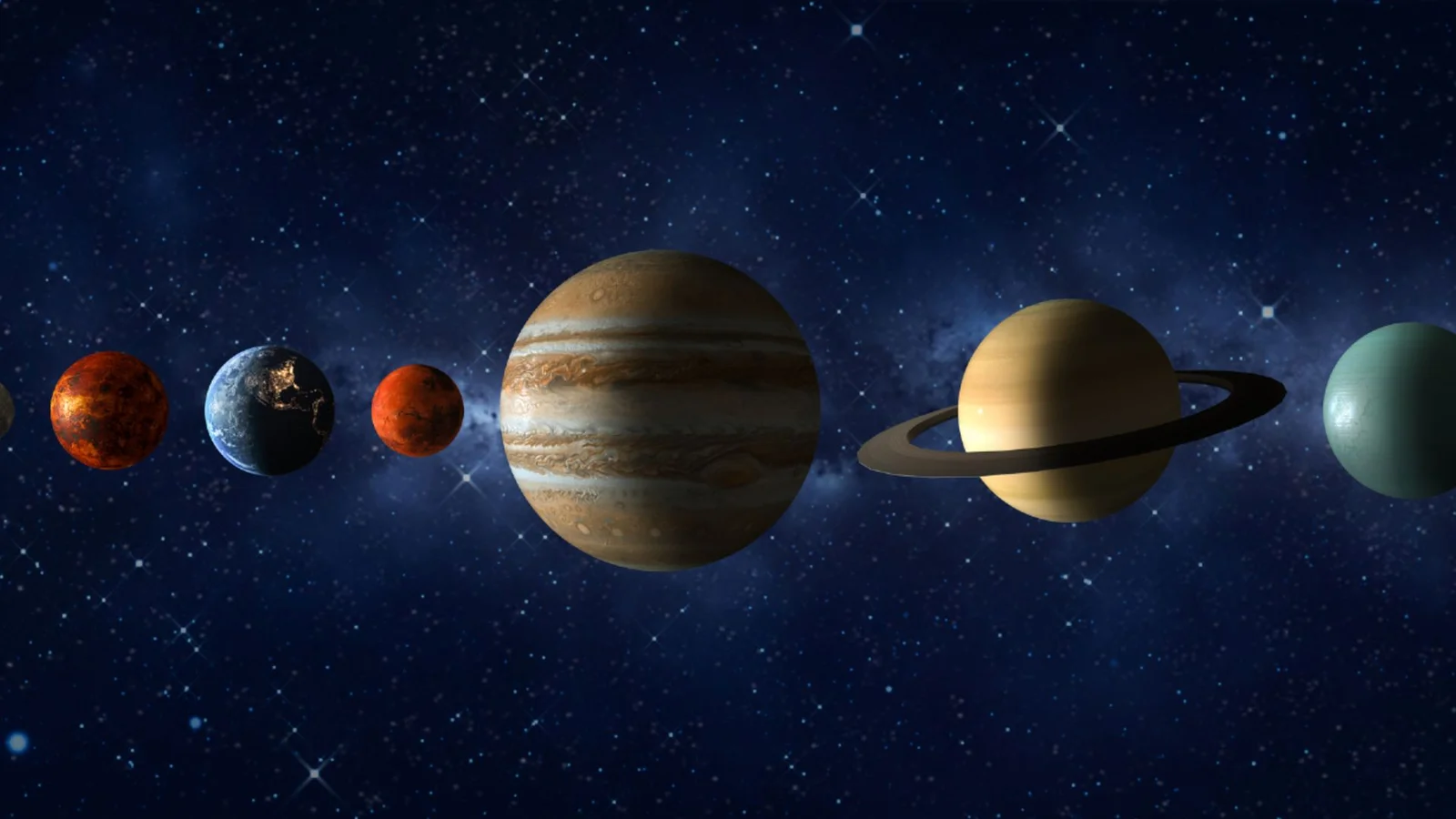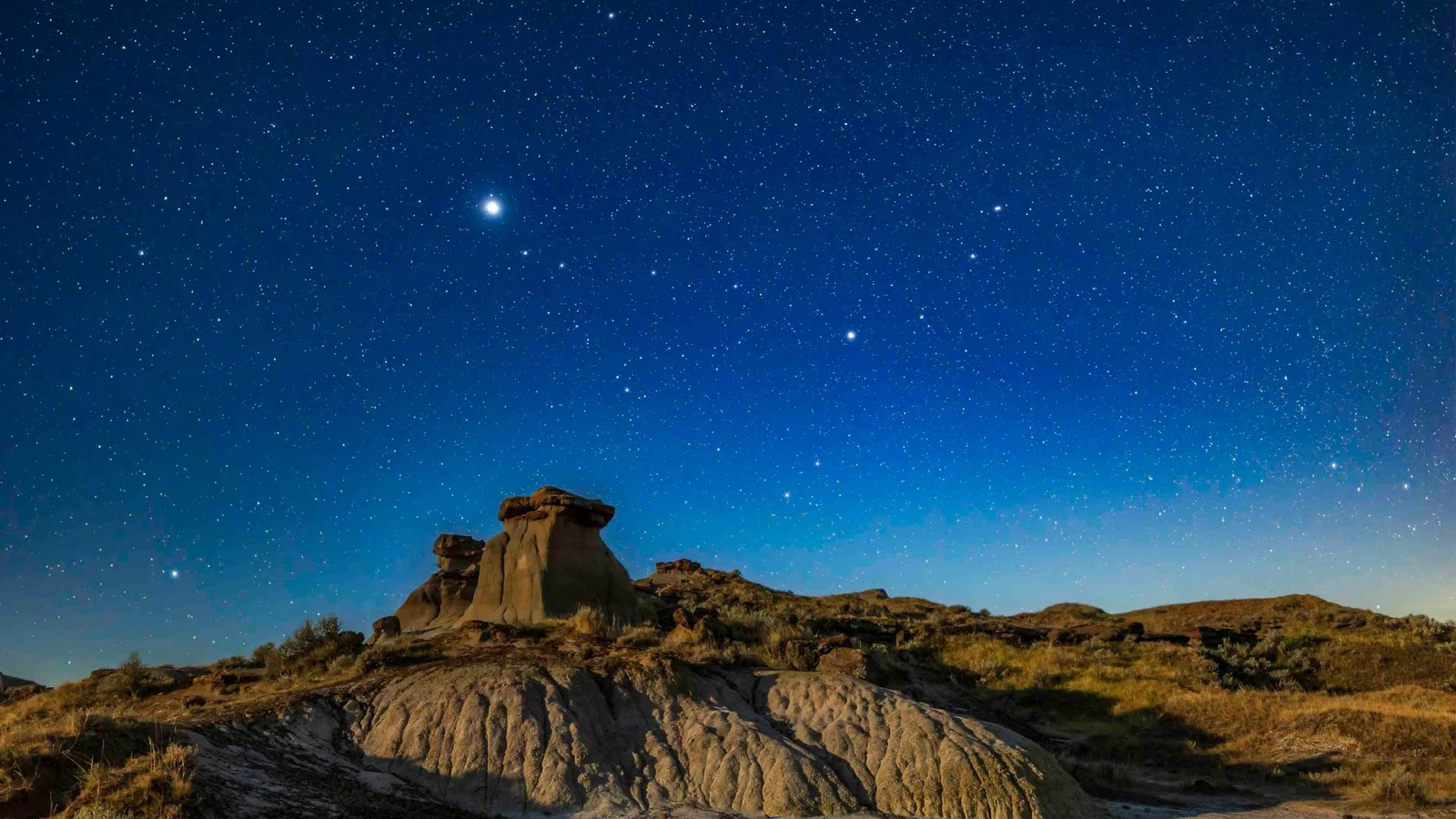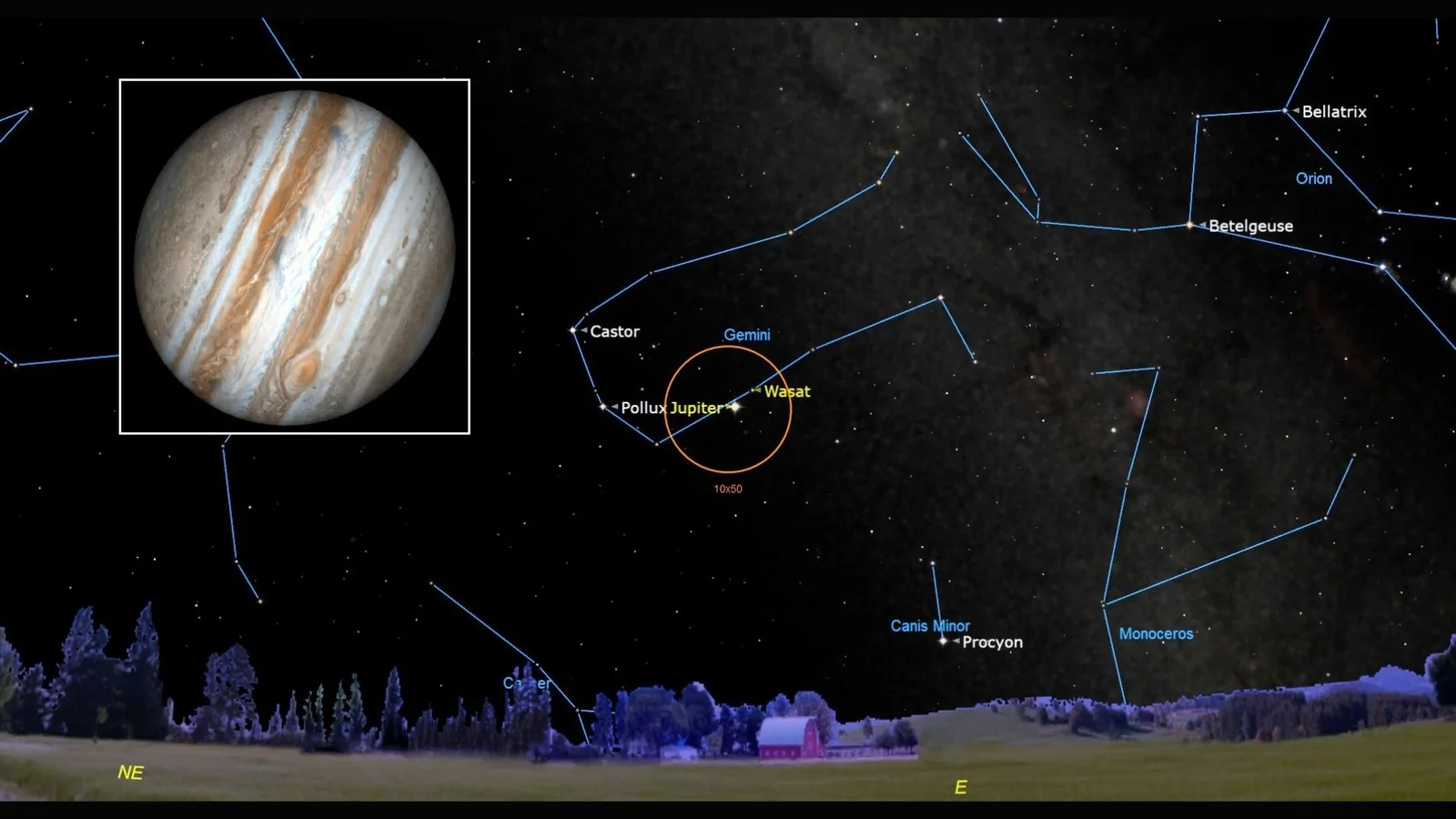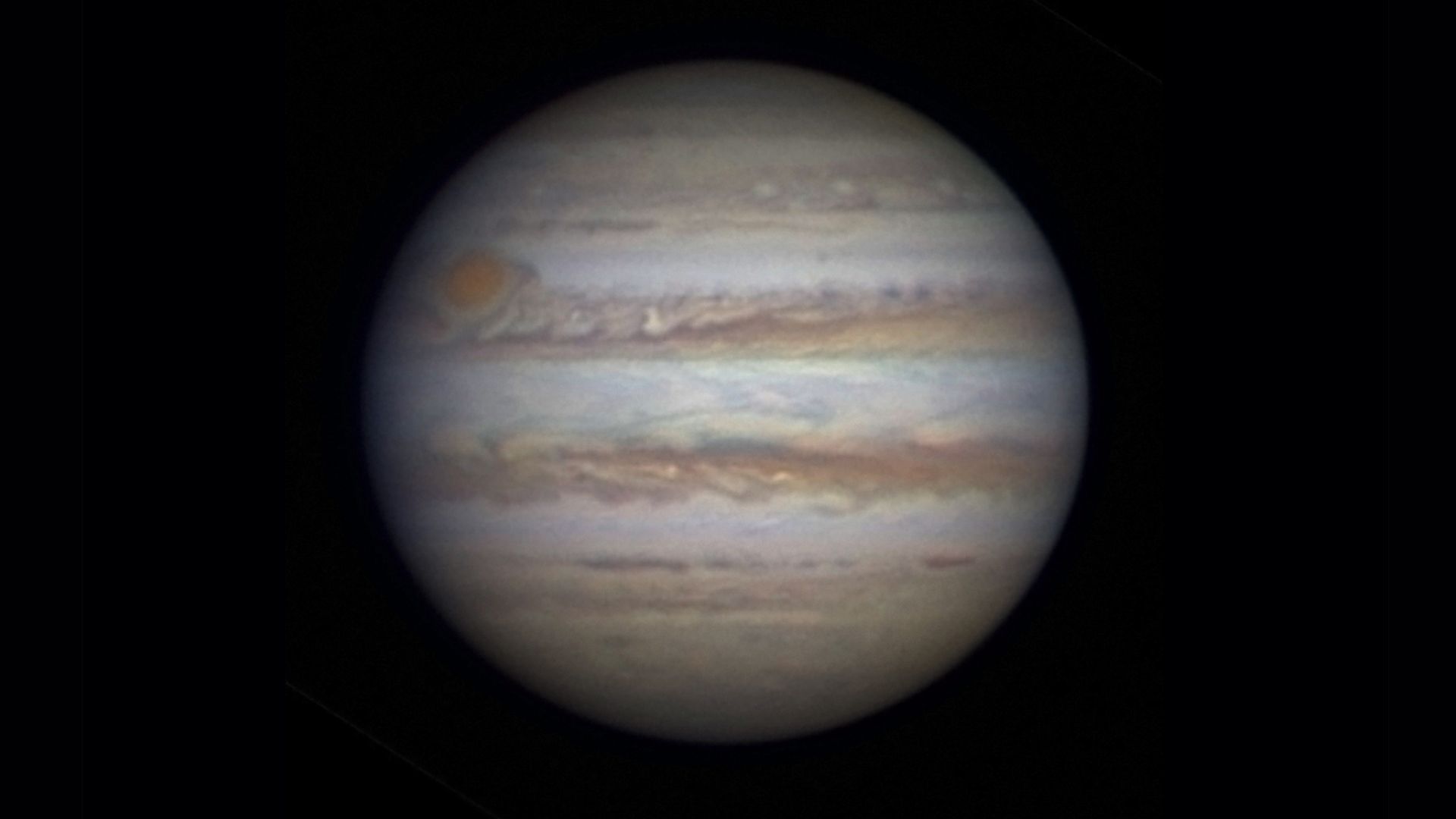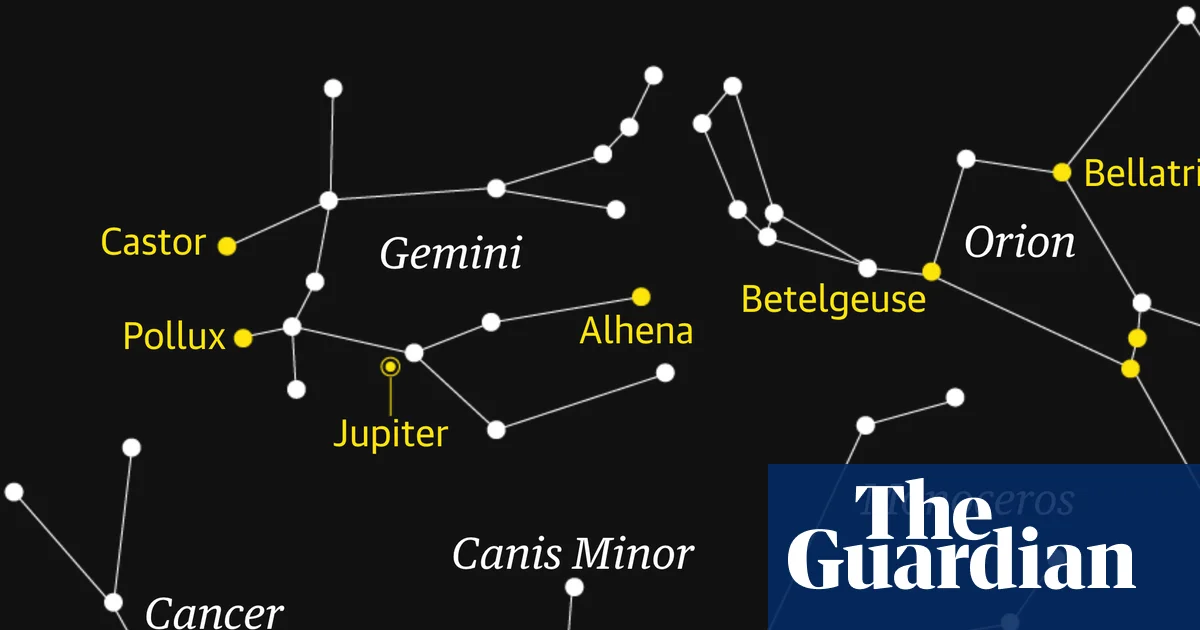
Jupiter will be at its brightest and most spectacular in 2026 during opposition on January 10, when it appears larger and brighter in the night sky, especially in the constellation Gemini, offering a great opportunity for observation with telescopes and the naked eye.
This weekend, Jupiter reaches opposition, making it the brightest and most visible in the night sky all year, especially near the constellation Gemini, offering a prime viewing opportunity with binoculars or telescopes to see its moons and cloud bands, and it will remain visible throughout January and into February.
Jupiter, the largest planet in the solar system, will be at its closest approach to Earth in 2026, making it highly visible and bright in the night sky, especially in Gemini, and can be observed with binoculars or small telescopes.
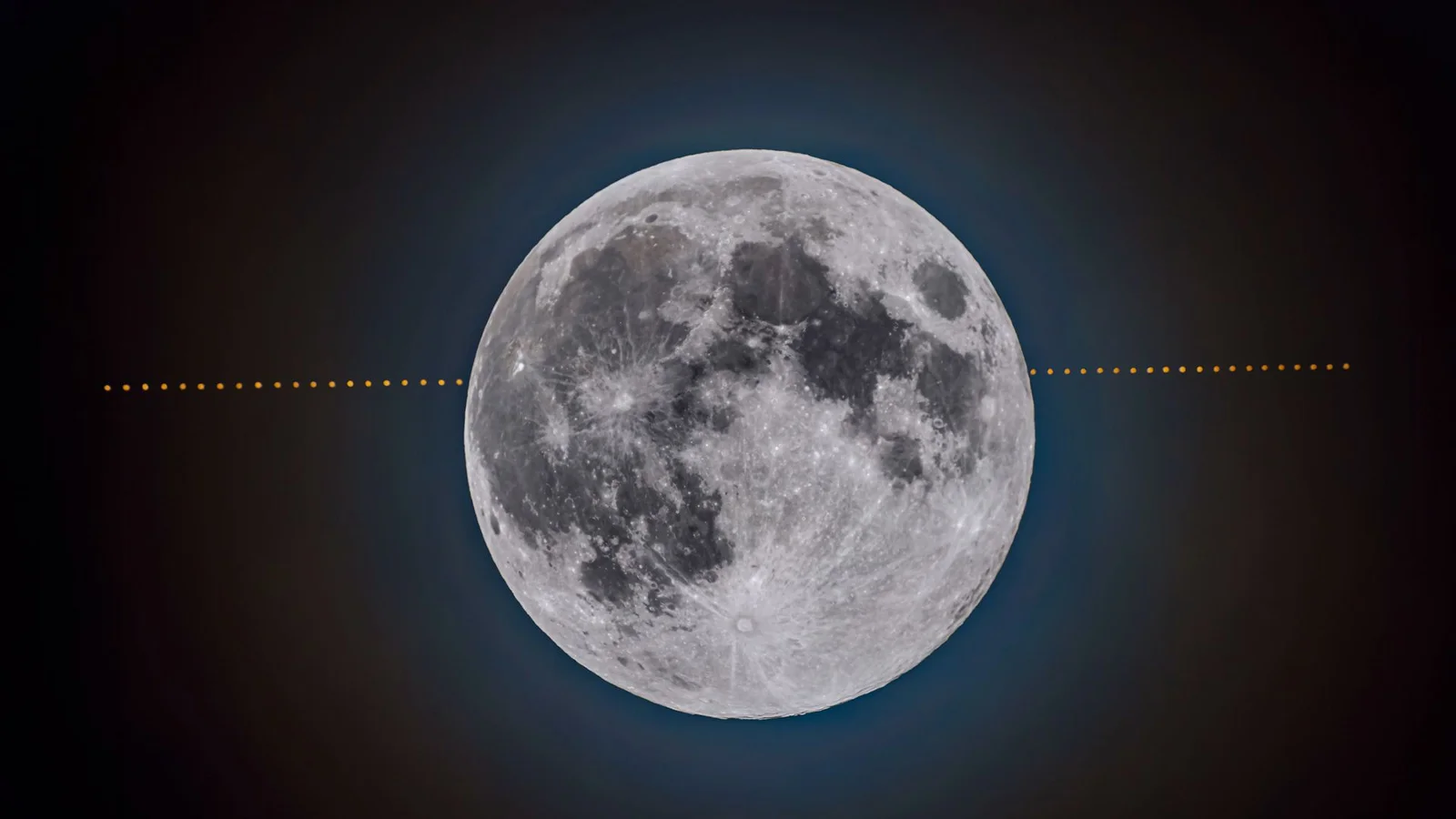
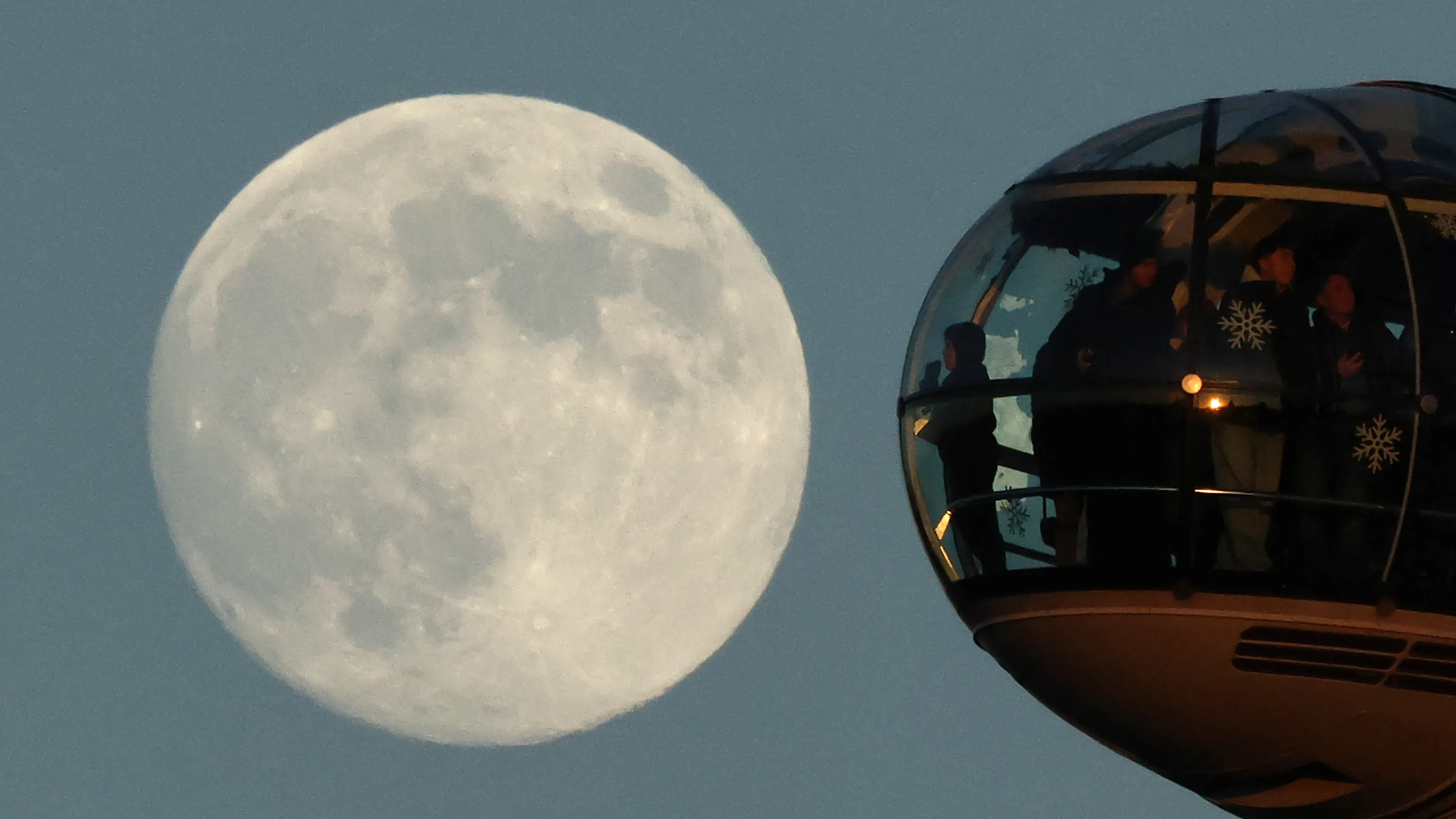
The article highlights stunning photos of the Wolf Supermoon, the first full moon of 2026, captured around the world on January 2, 2026, showcasing its appearance over various iconic locations and during different activities.
The first supermoon and meteor shower of 2026 will occur in January, with the Quadrantid meteor shower peaking and coinciding with a supermoon, though the bright moonlight may reduce the visibility of meteors. The event is mainly visible from the Northern Hemisphere, and the next major meteor shower will be in April.
In January, only Jupiter and Saturn are visible to the naked eye, with Jupiter reaching opposition on Jan. 10 and shining brightly, while Venus, Mercury, and Mars are hidden behind the sun for most of the month. The best viewing times are around these events, with Jupiter being the highlight of the month.
On December 18, after dark, viewers can observe Orion's Sword, featuring the Orion Nebula, a nearby and prominent star-forming region in the Milky Way, visible as a faint haze surrounding the middle star of Orion's Belt.
The article provides tips for photographing the northern lights, emphasizing checking aurora forecasts, choosing dark locations, planning compositions, using appropriate camera gear, and adjusting settings for optimal shots, especially during peak solar activity periods.
The Leonid meteor shower will peak on November 17, offering up to 15 meteors per hour during a nearly moonless night, making it one of the best viewing opportunities in recent years for stargazers, especially between midnight and dawn.
The Southern Taurid meteor shower peaks on November 4-5, offering a chance to see bright meteors and fireballs as Earth passes through debris from comet 2P/Encke, despite a full moon potentially dimming the display.
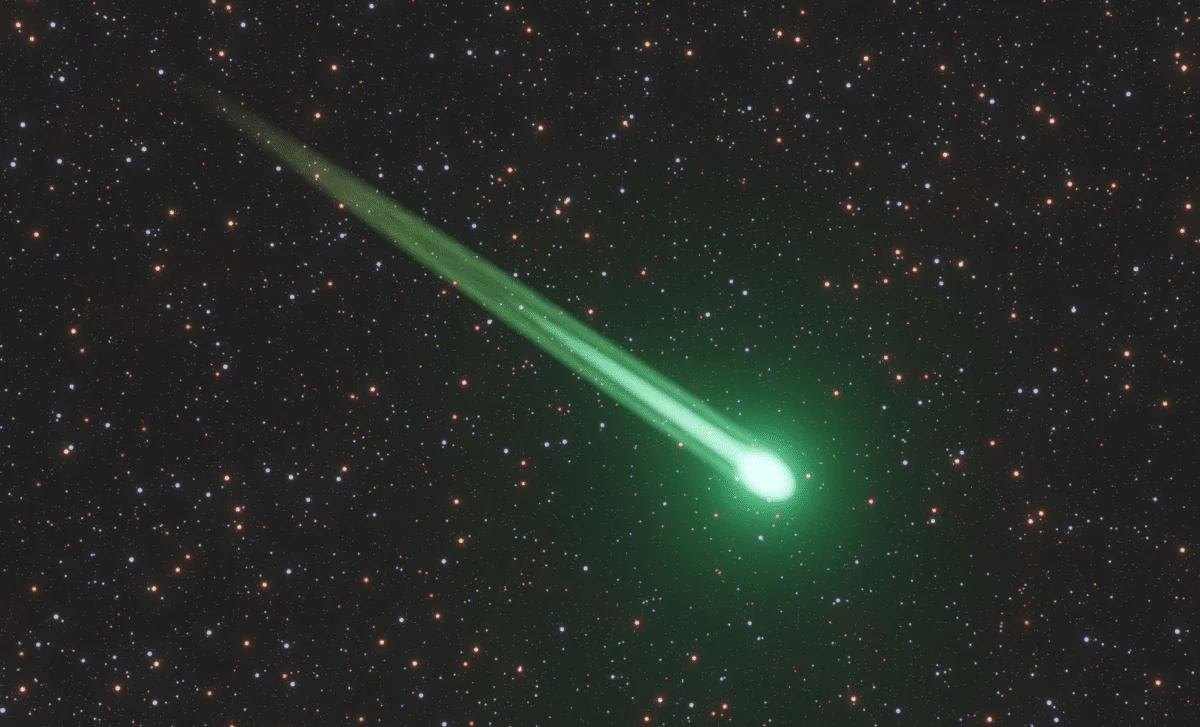
This article provides a guide for observing Comet Lemmon and Comet SWAN on October 29, 2025, highlighting the best viewing times and locations, and noting that the moonlight will make viewing more challenging. It also offers tips on how to find these comets using binoculars and star charts, emphasizing their positions in the sky relative to well-known stars.
November offers a variety of celestial events including the best chance to see Mercury in the evening sky, multiple meteor showers such as the Taurids and Leonids, a supermoon called the beaver moon, close approach of the moon to the Pleiades, and the opposition of Uranus, making it an exciting month for stargazing.
Comet Lemmon will pass through the constellation Serpens Caput on October 26, offering a rare celestial view for skywatchers, especially in dark locations, as it approaches the sun in early November.
This weekend is the last chance to see Comet Lemmon and Comet SWAN before they fade in the brightening moonlight, with optimal viewing on Saturday night about 90 minutes after sunset using binoculars or a telescope, in the northwest and southwest sky respectively.