Tag

Occultation

All articles tagged with #occultation

Hidden companion binds a vast cloud of vaporized metals around a distant star
astronomy1 month ago

Hidden companion binds a vast cloud of vaporized metals around a distant star

Astronomers observed a sun-like star, J0705+0612, being occulted by a colossal 120‑million‑mile‑wide cloud of metal-rich gas and dust for about nine months. Using high‑resolution spectroscopy from Gemini South (GHOST) and other telescopes, they mapped the cloud’s three‑dimensional motions and chemical makeup (iron, calcium), finding it is bound to another object heavy enough to exert gravity—likely a massive planet or a low‑mass star. The team proposes the cloud formed from a collision between two orbiting bodies, creating a circumplanetary or circumsecondary disk. The discovery, published in The Astronomical Journal, offers a rare glimpse into dynamic, late‑stage planetary systems and how such large structures can persist in a system thought to be ~2 billion years old.
Quaoar Dwarf Planet May Have an Additional Moon, Astronomers Find
science5 months ago

Quaoar Dwarf Planet May Have an Additional Moon, Astronomers Find

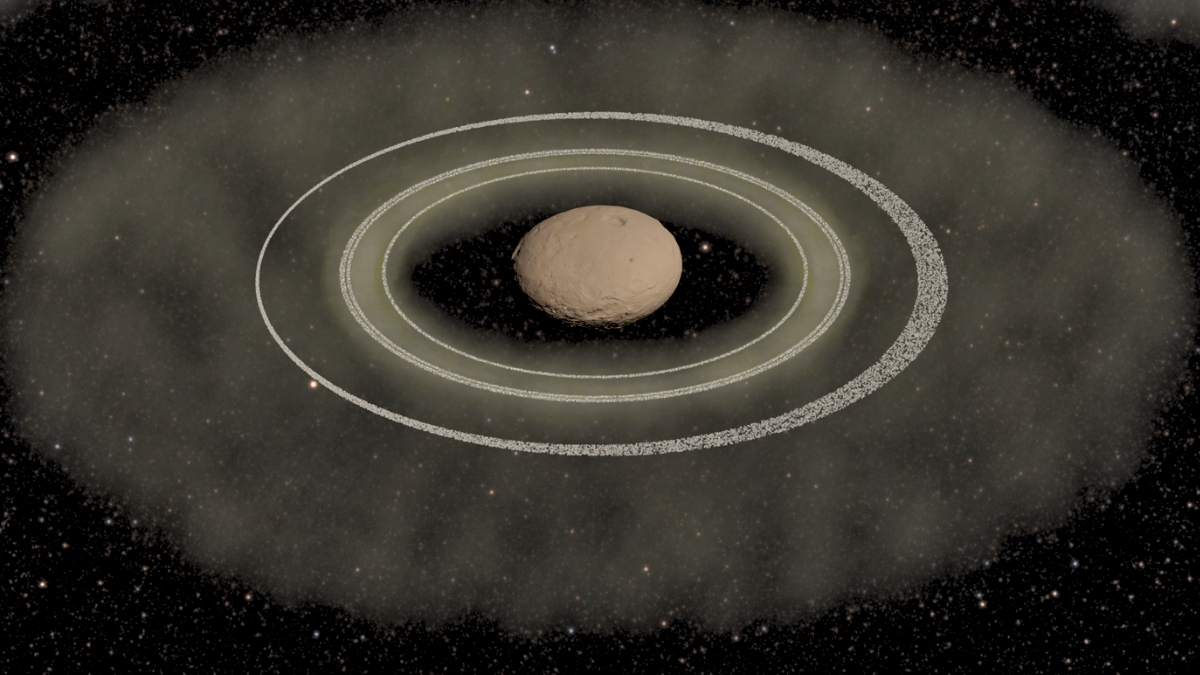
Astronomers may have discovered a new moon or a third ring around the dwarf planet Quaoar through occultation observations, with further confirmation needed. The findings suggest complex features in Quaoar's system, including potential new satellites or rings, and highlight the challenges of observing distant celestial bodies. The discovery was made during a carefully planned observation involving amateur and professional astronomers, emphasizing the importance of occultation studies in understanding the outer solar system.

Rare Eclipse: Asteroid Temporarily Obscures Betelgeuse, a Once-in-a-Lifetime Coincidence
astronomy2 years ago

Rare Eclipse: Asteroid Temporarily Obscures Betelgeuse, a Once-in-a-Lifetime Coincidence

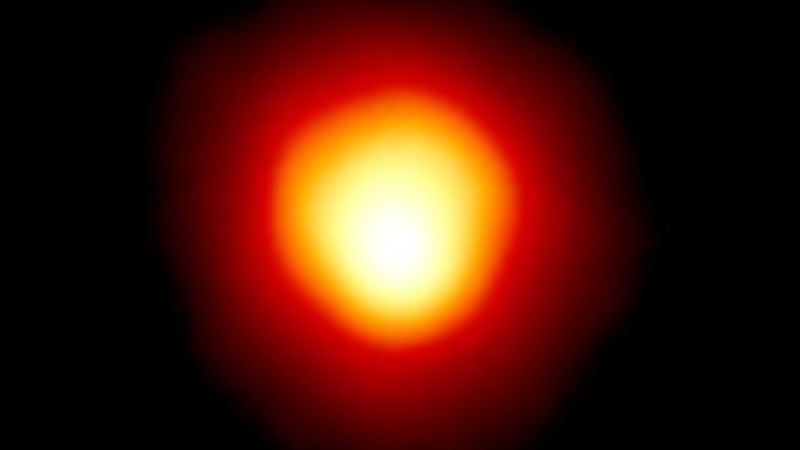
A rare type of eclipse occurred on Monday night when an asteroid named Leona crossed over the giant star Betelgeuse in the night sky. The eclipse, classified as an occultation, caused Betelgeuse's light to briefly fade and then brighten again. The event lasted less than 15 seconds and was visible in a narrow path from parts of Europe to Mexico and the southern tip of Florida. Astronomers used the opportunity to study both Leona and Betelgeuse, with the latter being of particular interest due to its potential to explode as a supernova in the future.

"Rare Celestial Event: Betelgeuse, a Bright Star, Temporarily Vanishes During Asteroid Encounter"
astronomy2 years ago

"Rare Celestial Event: Betelgeuse, a Bright Star, Temporarily Vanishes During Asteroid Encounter"

An asteroid will temporarily block the light of Betelgeuse, one of the brightest stars in the night sky, during a rare event called an occultation. The event will be visible to millions in a narrow strip that includes Mexico, southern Florida, Spain, Italy, Greece, Turkey, and Central Asia. Astronomers are excited to observe the occultation as it will provide valuable scientific data on both the asteroid and Betelgeuse, which experienced a dramatic dimming event in 2019 and 2020. This event could help shed light on the star's future, as it is one of the best candidates for a future supernova.

Asteroid Eclipse to Temporarily Vanish Betelgeuse, a Bright Star
astronomy2 years ago

Asteroid Eclipse to Temporarily Vanish Betelgeuse, a Bright Star

Tonight, an asteroid named 319 Leona will pass in front of the red giant star Betelgeuse, causing an occultation event where the star will be blocked from view for up to 15 seconds. This rare occurrence provides astronomers with a unique opportunity to study Betelgeuse's photosphere. The occultation will only be visible along a narrow path from central Mexico to southern Florida, and then from southern Europe and Eurasia. However, the Virtual Telescope Project in Rome will host a free livestream of the event. Betelgeuse is one of the largest and brightest stars in the night sky and has been the subject of speculation regarding a potential supernova explosion.

Rare Eclipse: Asteroid to Temporarily Obscure Betelgeuse, One of the Brightest Stars
astronomy2 years ago

Rare Eclipse: Asteroid to Temporarily Obscure Betelgeuse, One of the Brightest Stars

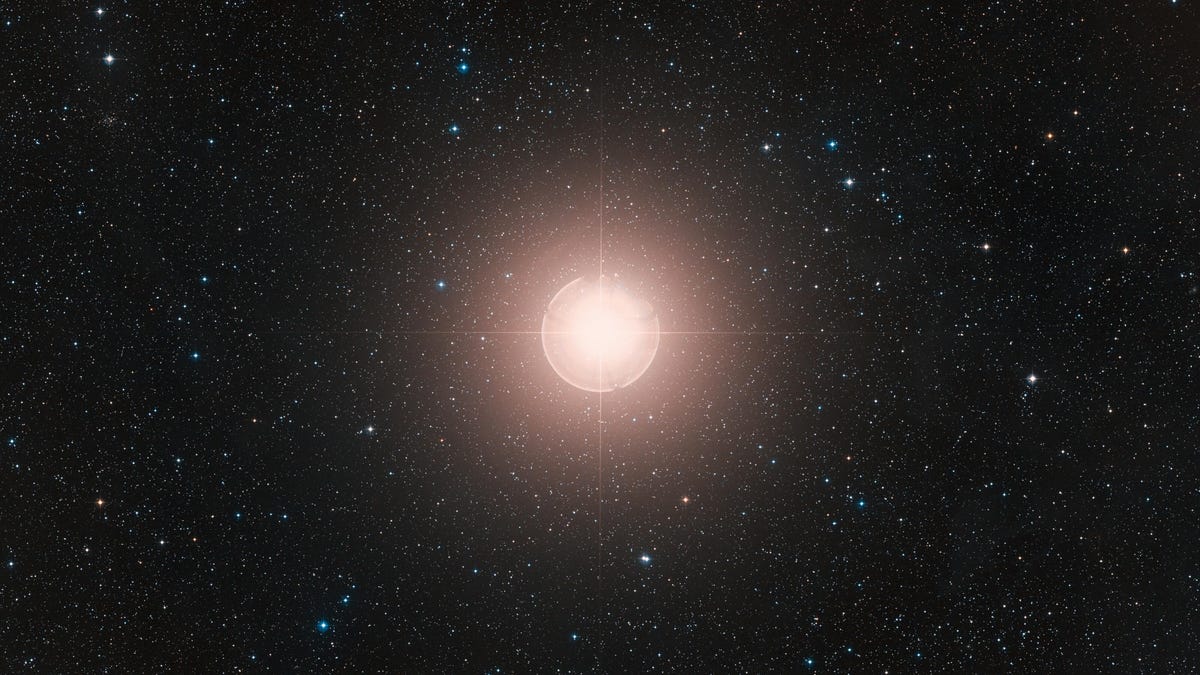
An asteroid named 319 Leona is expected to briefly obscure the star Betelgeuse in an event known as an occultation. Lasting for about 15 seconds, this rare celestial event will provide astronomers with an opportunity to study both the shape of the asteroid and the surface of Betelgeuse. The occultation will be visible in certain parts of the world, including Miami, the Florida Keys, parts of Mexico, Europe, and Asia. The Virtual Telescope Project plans to host a livestream for those unable to witness the event in person.

Betelgeuse Star to Temporarily Vanish on December 12
astronomy2 years ago

Betelgeuse Star to Temporarily Vanish on December 12

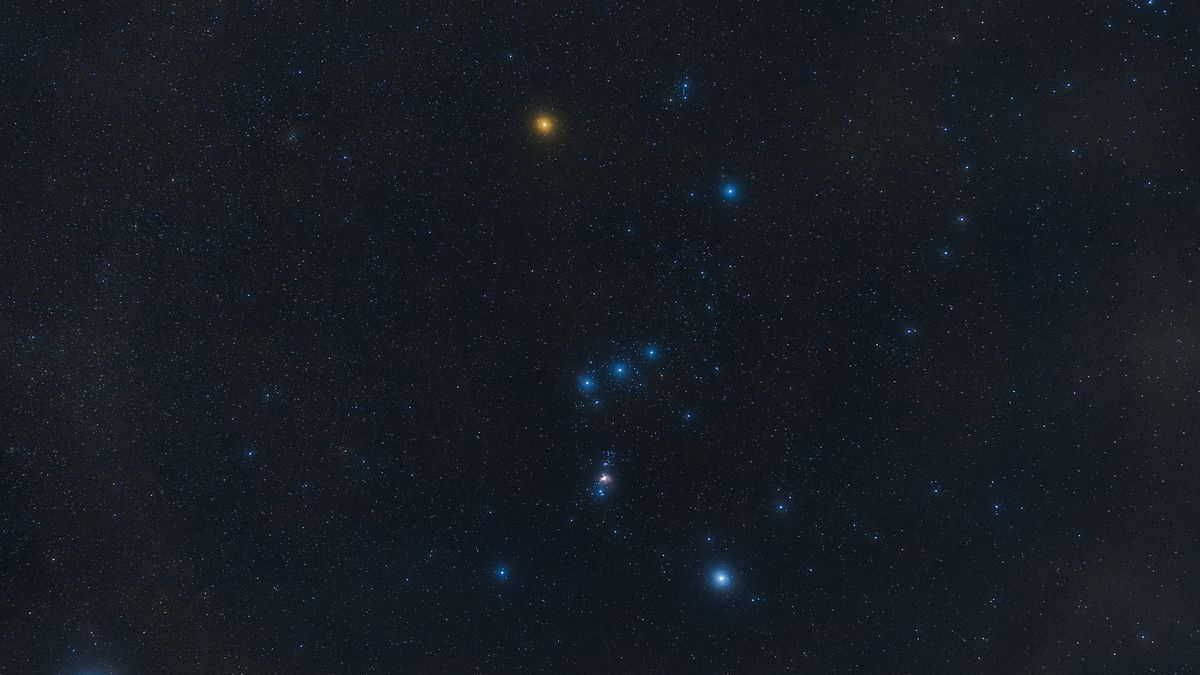
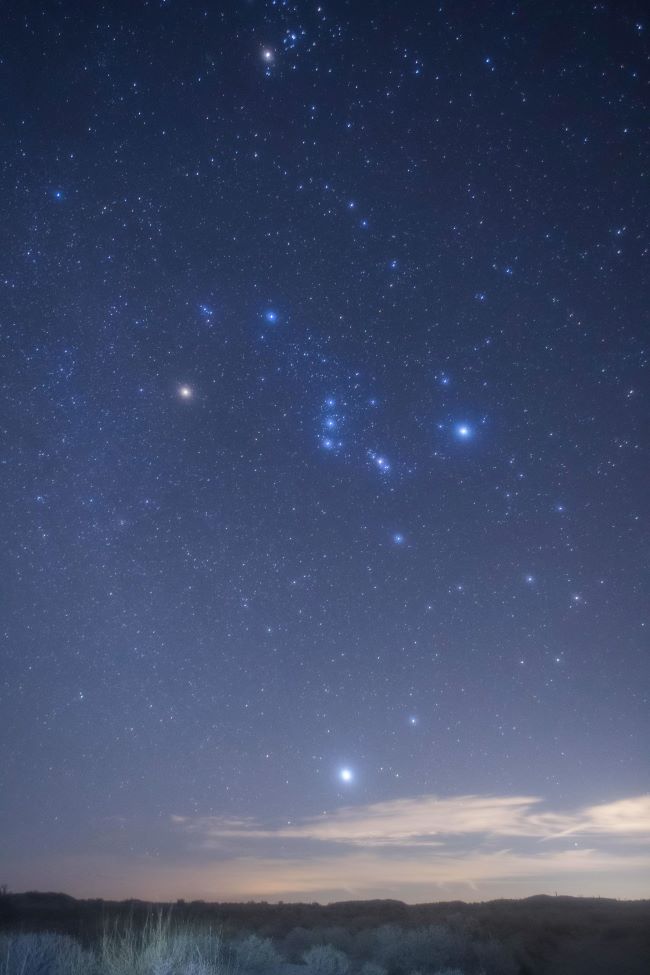
The bright star Betelgeuse, part of the Orion constellation, will be temporarily obscured by the asteroid Leona on December 11, causing it to vanish from sight for a few seconds. This rare event will only be visible along a narrow path on Earth, stretching from Mexico to central Asia. The occultation offers a unique opportunity for scientists to study Betelgeuse's behavior and characteristics, as well as gain insights into the asteroid Leona. The Virtual Telescope 2.0 project will livestream the event, allowing people outside the path to witness the spectacle.

Unveiling the Mysterious Phenomenon Between Saturn and Uranus
space-science2 years ago

Unveiling the Mysterious Phenomenon Between Saturn and Uranus

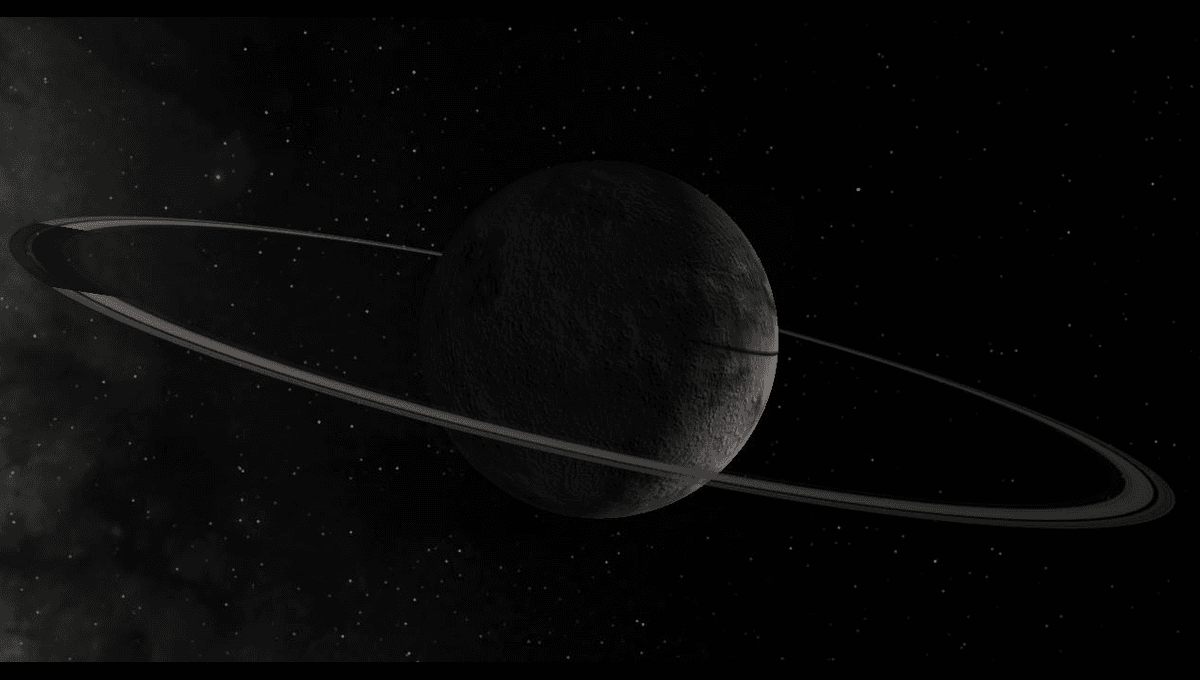
New research reveals that the minor planet Chiron, previously thought to have rings, actually has an ever-shifting disk of dust and gas. The true nature of the material orbiting Chiron remains unknown, but recent observations indicate that it is not a stable ring system. Chiron, one of the first objects in a new class known as centaurs, has shown signs of comet-like activity and has experienced changes in the amount of material blocking starlight over the years. Further investigation is needed to understand the complex nature of Chiron's disk and its relationship to other objects with apparent ring systems.

Betelgeuse's Fate: Dimming or Disappearing as Asteroid Approaches
astronomy2 years ago

Betelgeuse's Fate: Dimming or Disappearing as Asteroid Approaches

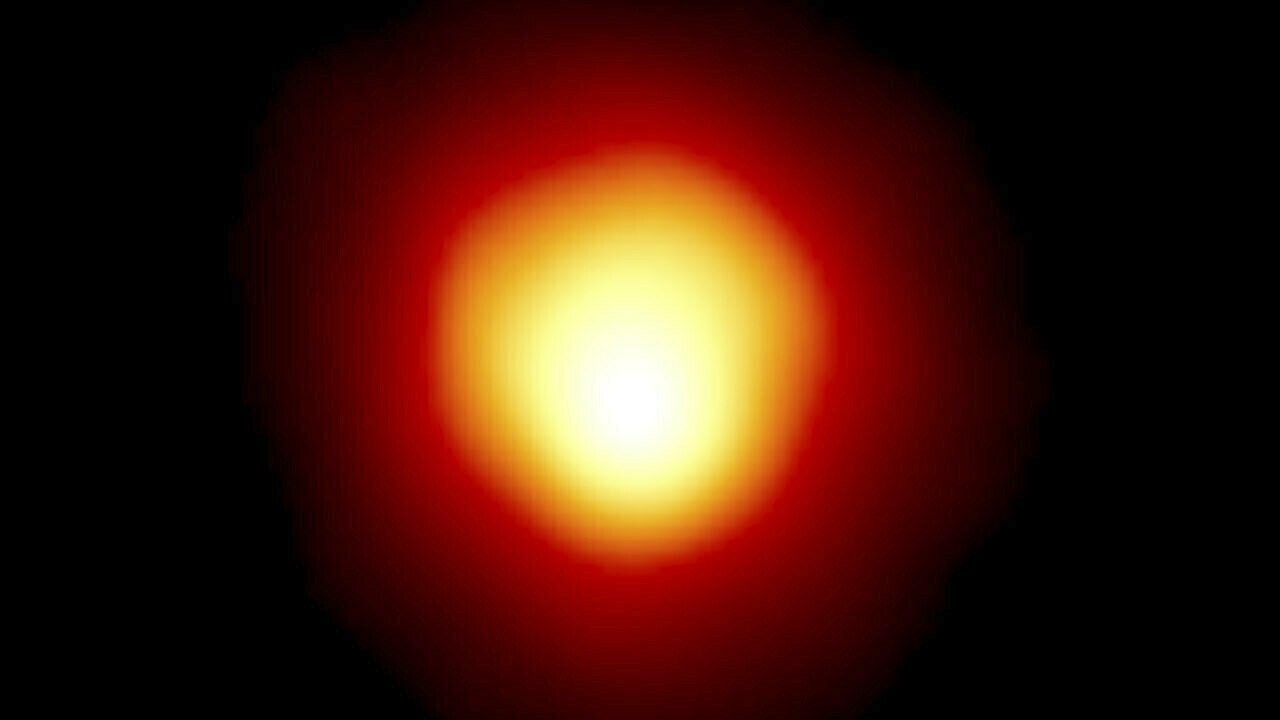
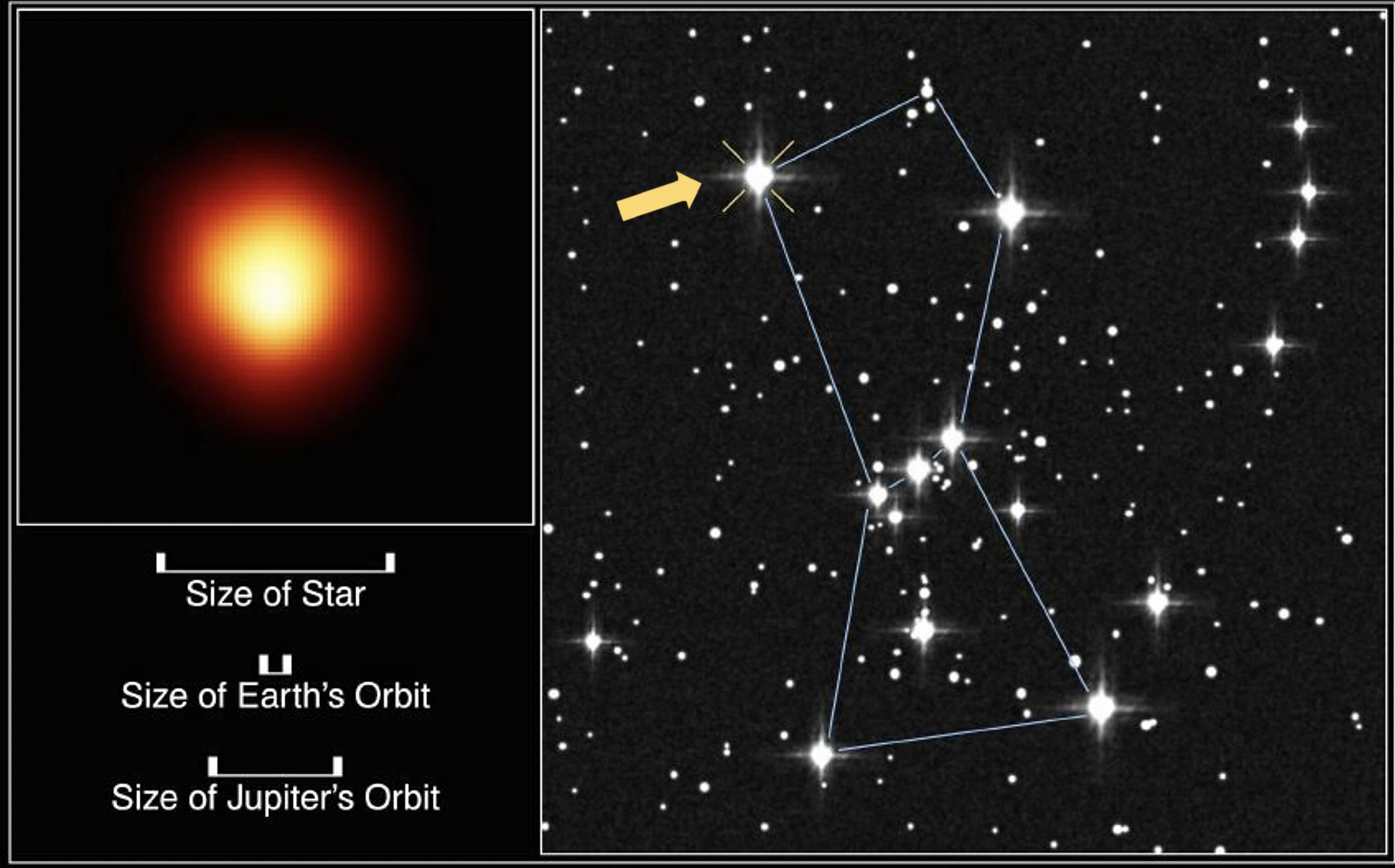
On December 11 or 12, 2023, observers in southern Europe, the Bahamas, southern Florida, and part of Mexico will have the opportunity to witness the star Betelgeuse dim or disappear for several seconds as asteroid Leona passes in front of it. This event presents a unique opportunity for astronomers to study both Betelgeuse and Leona, helping to refine their knowledge of the star's size and shape, as well as map its convective cells. Betelgeuse is known for its variability in brightness and is the nearest red supergiant star to Earth, located approximately 1,000 light-years away.

Rare Celestial Event: Betelgeuse to be Occulted by Asteroid on December 12th
astronomy2 years ago

Rare Celestial Event: Betelgeuse to be Occulted by Asteroid on December 12th

On December 12th, asteroid 319 Leona will pass directly in front of Betelgeuse, the red giant star in the constellation of Orion. This rare event, known as an occultation, will be visible to observers along a corridor from central Asia and southern Europe to Florida and Mexico. The passage of the asteroid in front of Betelgeuse will provide scientists with an opportunity to study the star's behavior and learn more about the orbit and shape of the asteroid. Observers are advised to be aware of uncertainties in the predictions and to be prepared for the star to either completely blink out or fade during the event.