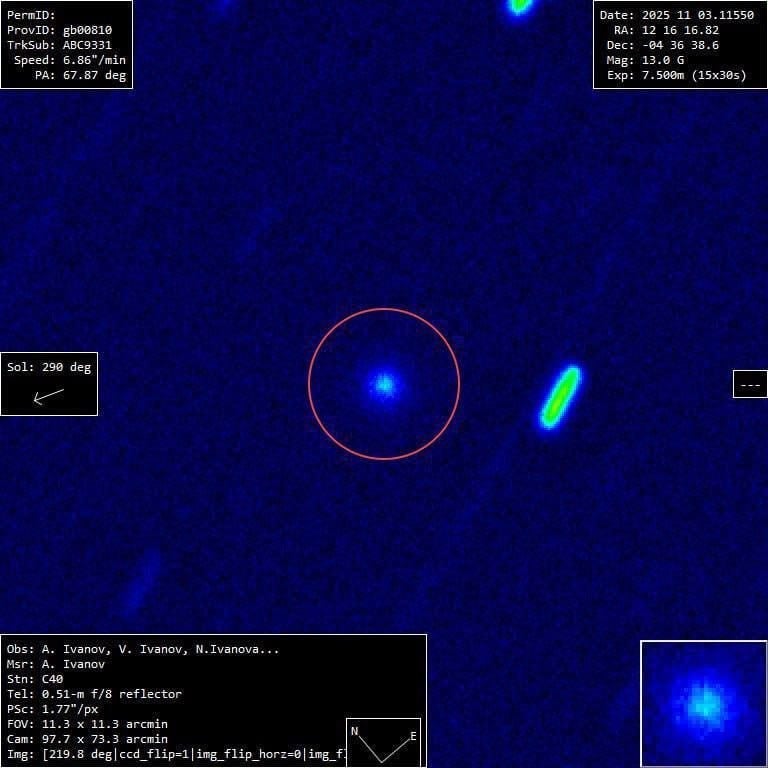
A new object, C/2025 V1, discovered by Gennady Borisov, is likely a natural object from the Oort cloud and not related to the interstellar object 3I/ATLAS, based on its orbit and non-gravitational acceleration. The article discusses the potential for distinguishing natural from technological origins of such objects through spectroscopic analysis during their close approach to Earth in December 2025.
Recent findings from NASA and Japan suggest that the building blocks of life, such as amino acids, may have been delivered to Earth via asteroids, supporting the panspermia theory that life or its ingredients could have originated elsewhere in the universe and been transported here, challenging traditional views on the origin of life.
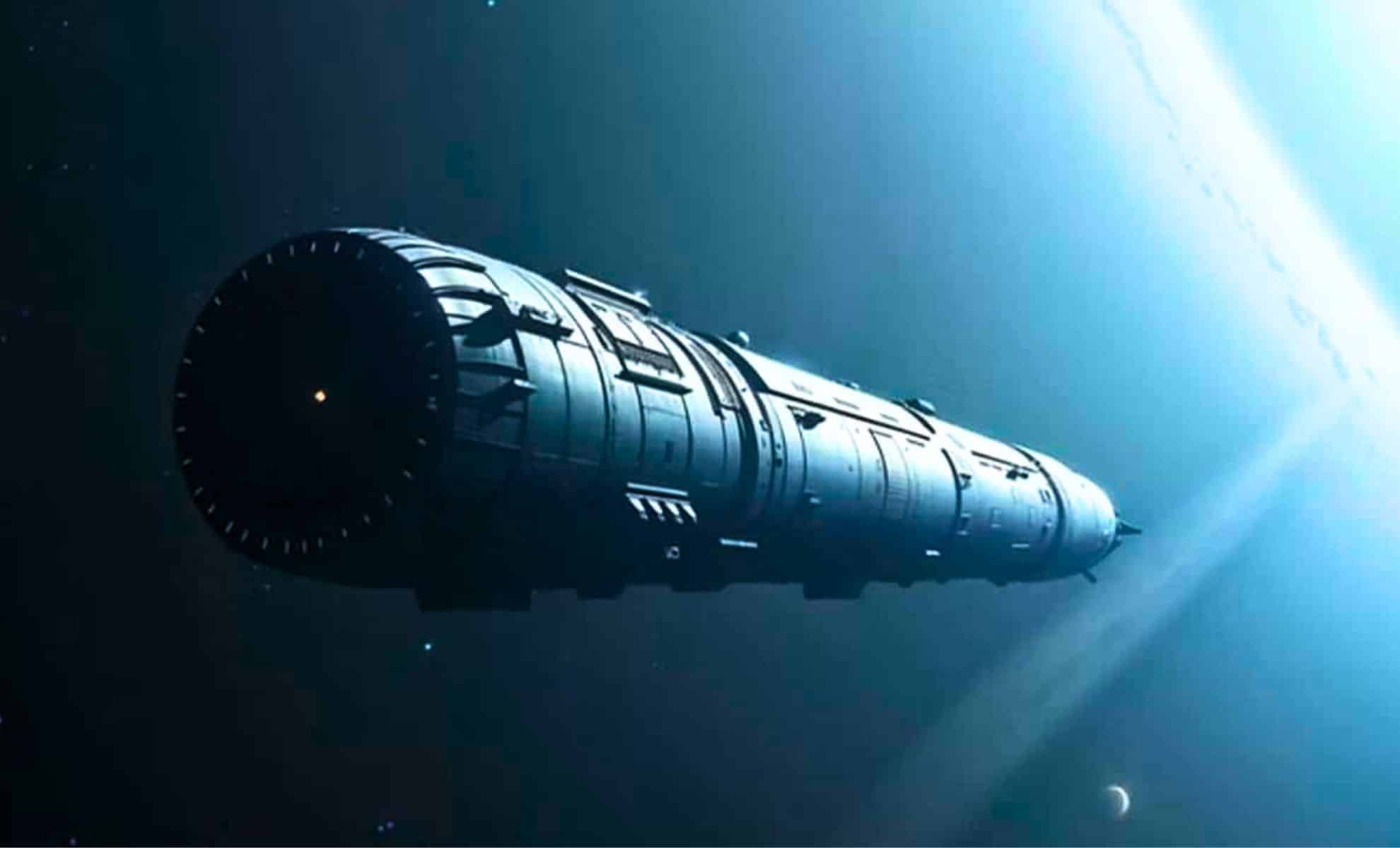
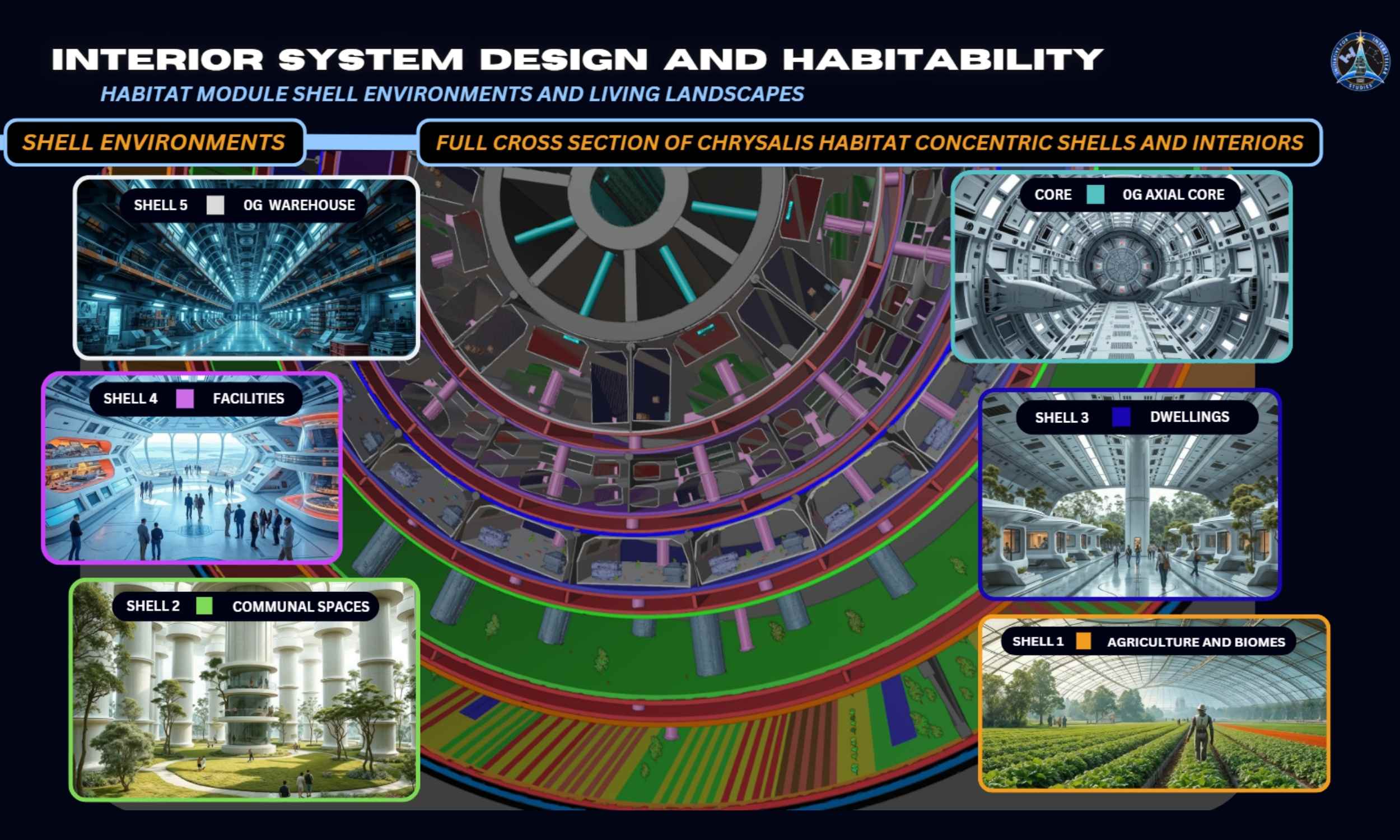
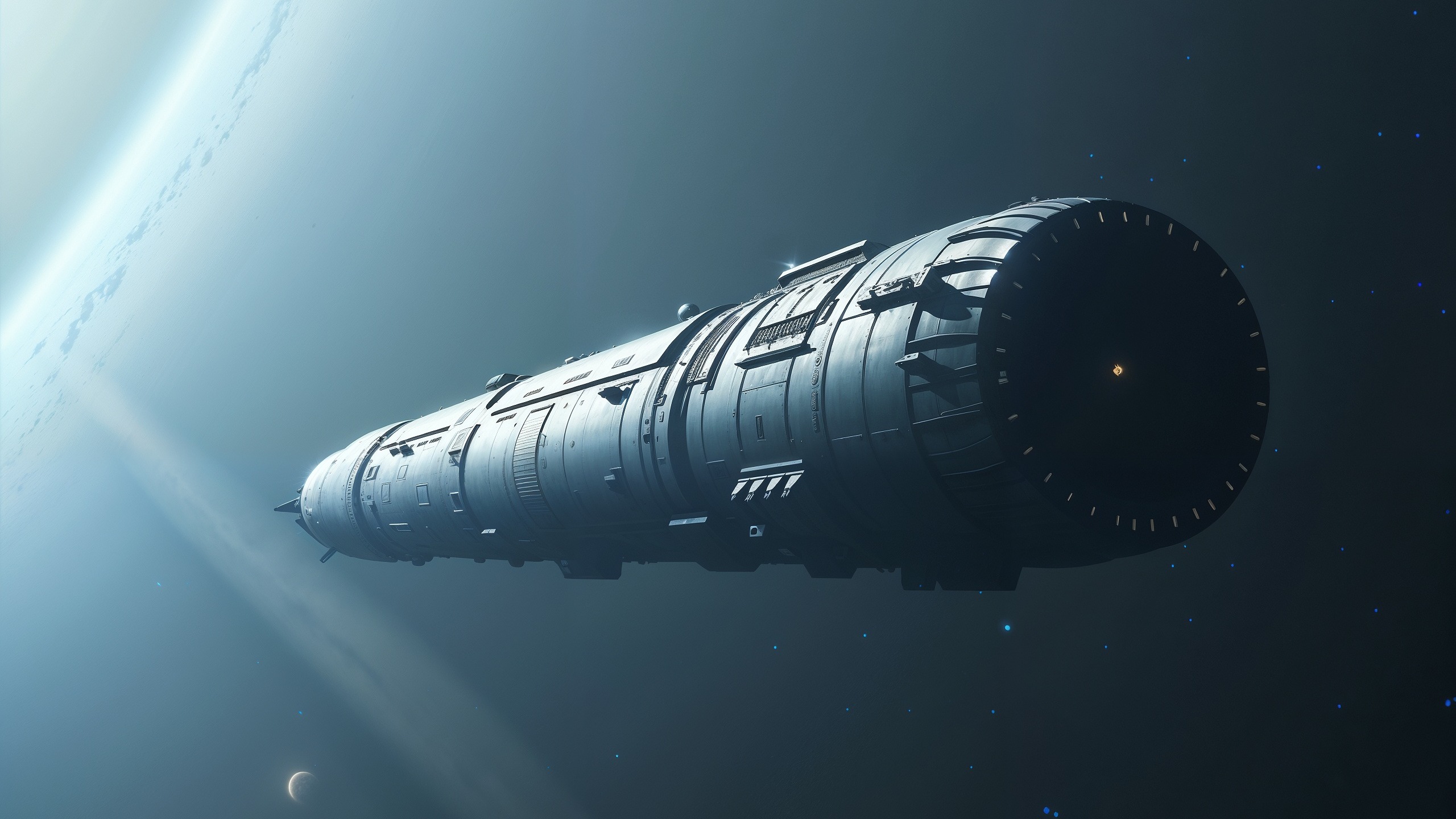
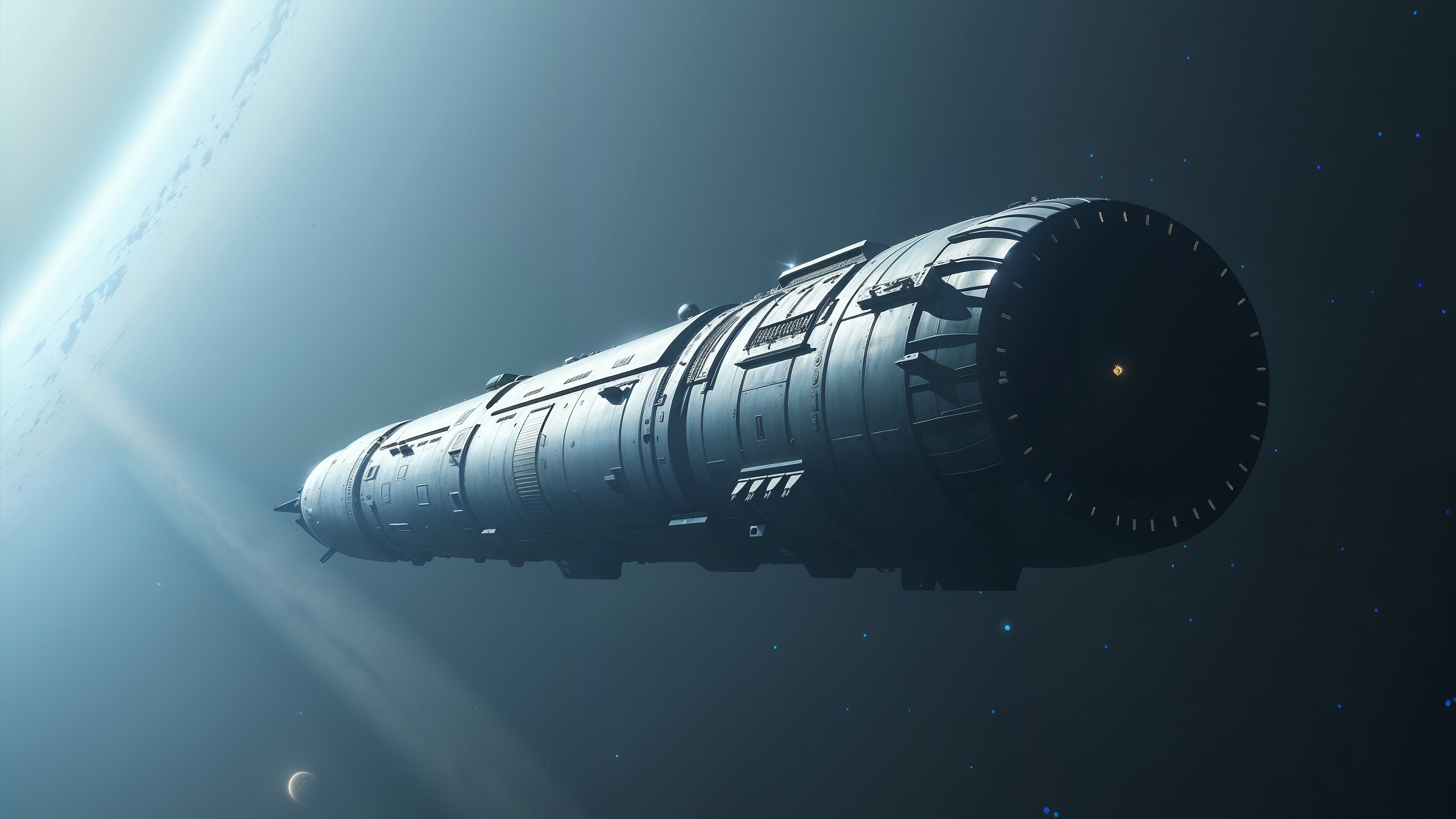
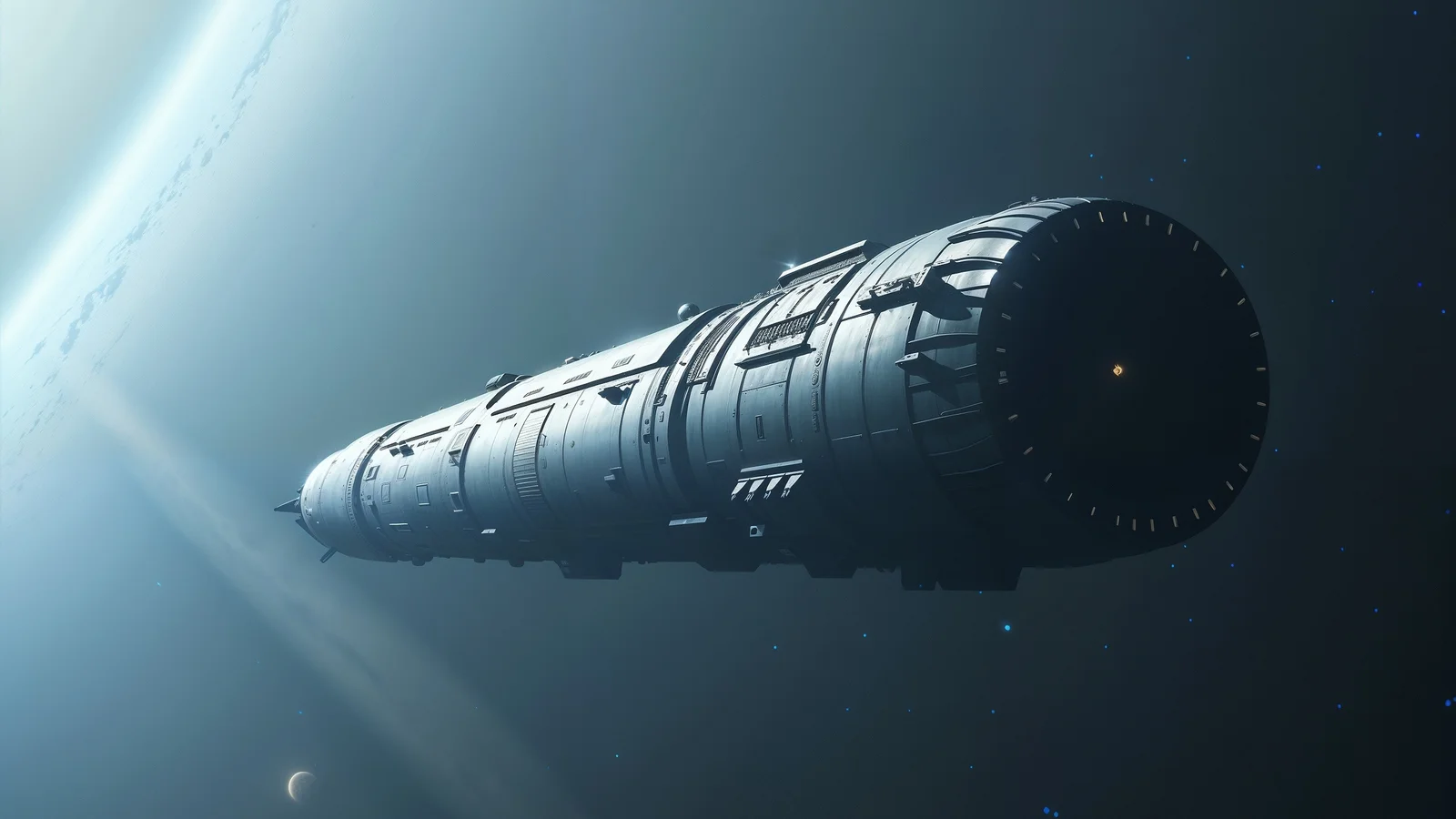
Chrysalis is a theoretical 36-mile-long generation ship designed to carry 1,000 humans to Proxima Centauri b over 400 years, featuring self-sustaining ecosystems, artificial gravity, and in-space construction, aiming to create a mobile civilization far from Earth without plans for return.
The article discusses a proposed 36-mile-long spacecraft designed to take humanity to the stars, with no possibility of return, highlighting a bold vision for interstellar exploration.
The Chrysalis concept proposes a 36-mile rotating habitat for a one-way, 400-year journey to Alpha Centauri, designed to sustain a self-sufficient society with layered habitats, artificial gravity, and onboard manufacturing, aiming to enable humanity's first multi-generational interstellar voyage.
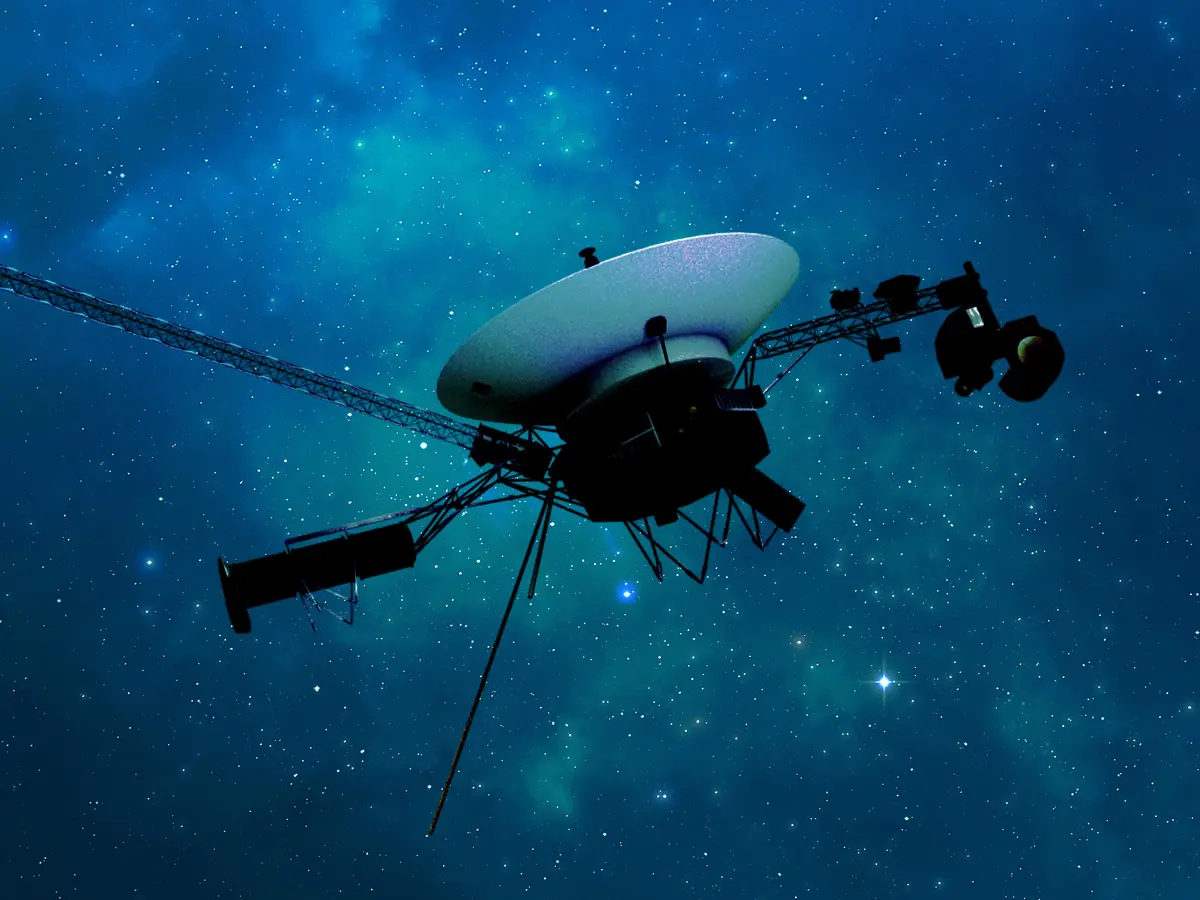
Voyager 2, traveling at 55,000 km/h, would take over 100,000 years to reach Sirius, the closest bright star at 8.6 light years away, and by then it would be a silent, inactive relic of human technology, highlighting the immense timescales involved in interstellar travel.
Voyager 1, traveling at over 61,000 km/h and now 444 light years from Earth, is projected to pass through the Pleiades star cluster in about 100 million years, although it will be an inert object with no active systems by then, highlighting the vastness of cosmic time and human achievement.
Voyager 1 is projected to pass by the star Gliese 445 in approximately 40,000 years, offering insights into interstellar travel and the star system of Camelopardalis.
A Live Science poll reveals that 45% of over 3,300 respondents would consider a 400-year one-way trip to Alpha Centauri aboard a multigenerational spaceship, with opinions varying based on comfort, technology, and Earth's future conditions.
A hypothetical 400-year journey to Alpha Centauri aboard a multigenerational spacecraft called Chrysalis has won a design competition, raising the question of whether people would be willing to undertake such a long, one-way space voyage.
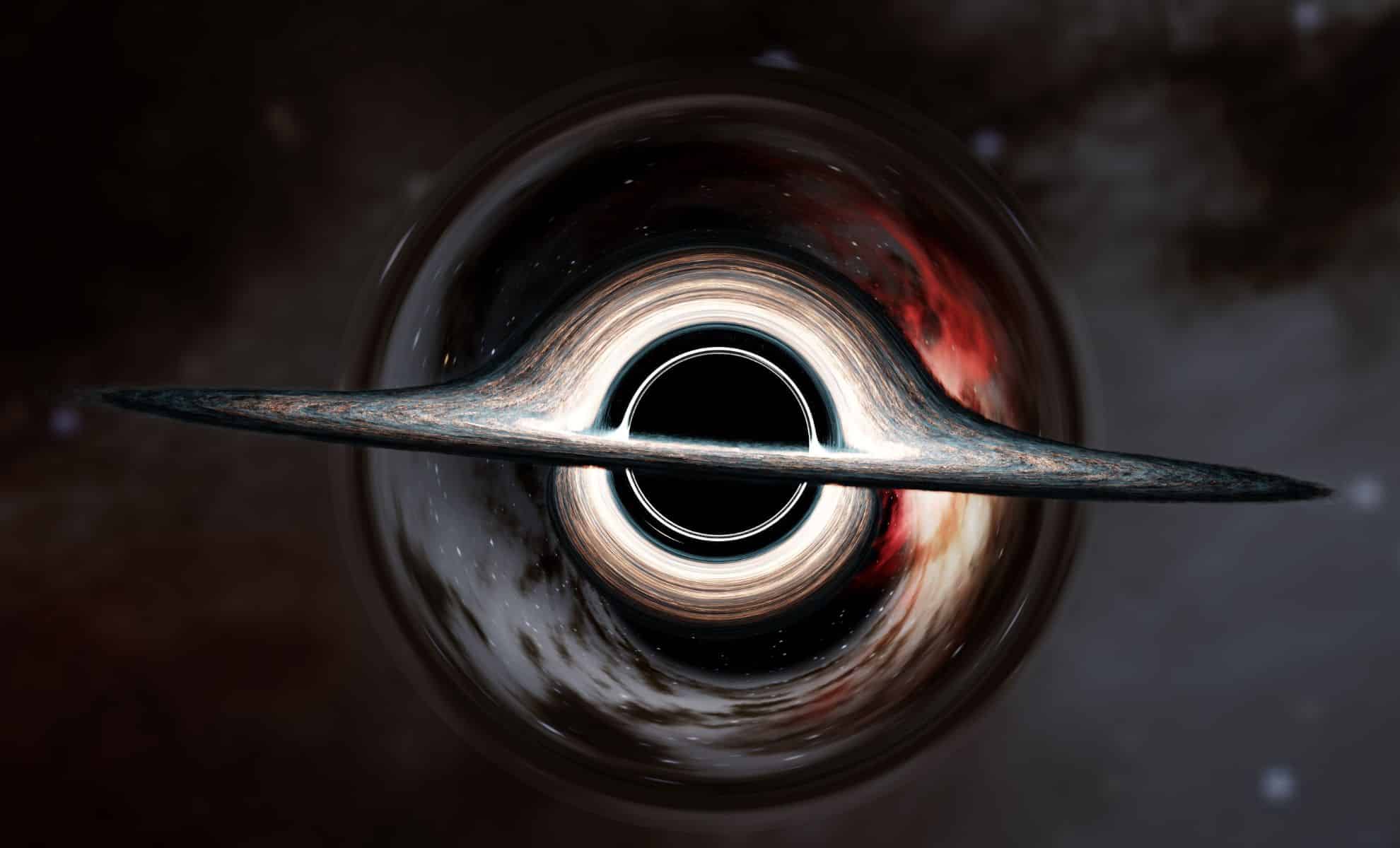
Astrophysicist Cosimo Bambi proposes sending a spacecraft to study a nearby black hole, potentially within 20 light-years, to test general relativity and explore the black hole's interior, despite significant technological and distance challenges. The mission would involve high-speed travel, multiple probes, and could take around 100 years, but promises groundbreaking insights into these mysterious cosmic objects.
A new proposal suggests that miniature, laser-propelled spacecraft could travel to a nearby black hole within 60-75 years to test Einstein's theory of general relativity and investigate the existence of event horizons, potentially advancing our understanding of black holes and fundamental physics within the next few decades.
Engineers have designed a hypothetical spacecraft called Chrysalis that could carry up to 2,400 people on a one-way, 400-year journey to Alpha Centauri, with the goal of reaching the potentially habitable exoplanet Proxima Centauri b, featuring a modular, layered design and life support systems for multiple generations.
Originally Published 5 months ago — by Hacker News
The article discusses the concept of interstellar ship design competitions, highlighting the technical, societal, and philosophical challenges of building generation ships capable of long-term space travel, including propulsion, self-sufficiency, human psychology, and cultural sustainability.
Experts have proposed innovative designs for interstellar generation ships, including jellyfish-shaped crafts and 3D-printed habitats, to support multi-generational space travel, emphasizing sustainability, psychological resilience, and evolving social structures, with the Chrysalis design winning for its detailed plan to enable crew survival and flourishing over centuries.