Scientists are now viewing autism as a complex condition with multiple forms, challenging traditional views and offering new insights into its origins, as exemplified by recent cases like Ellis Easton’s.
The NCIS and NCIS: Origins crossover featured Mark Harmon returning as Gibbs, a poignant storyline connecting past and present investigations, and the return of Roma Maffia as Vera, with insights from producers and stars about the significance of the event and character developments.
EA has refused pitches from BioWare to remake or remaster Dragon Age: Origins, citing the complexity of the game and EA's general reluctance towards remasters, despite the success of the Mass Effect Legendary Edition. The studio proposed a trilogy remaster, but EA has been hesitant due to technical and strategic reasons.
The exact origins of April Fools' Day remain uncertain, with theories linking it to Roman times and a calendar change in 1582 in France. Some famous pranks include the BBC's spaghetti harvest broadcast in 1957, a 2008 report on flying penguins, and Taco Bell's 1996 claim of buying the Liberty Bell. Additionally, in 1997, "Jeopardy" host Alex Trebek and "Wheel of Fortune" host Pat Sajak swapped places as an April Fools' Day joke, and in 2015, Netflix shared faux public service announcements to remind viewers to "Binge Responsibly."
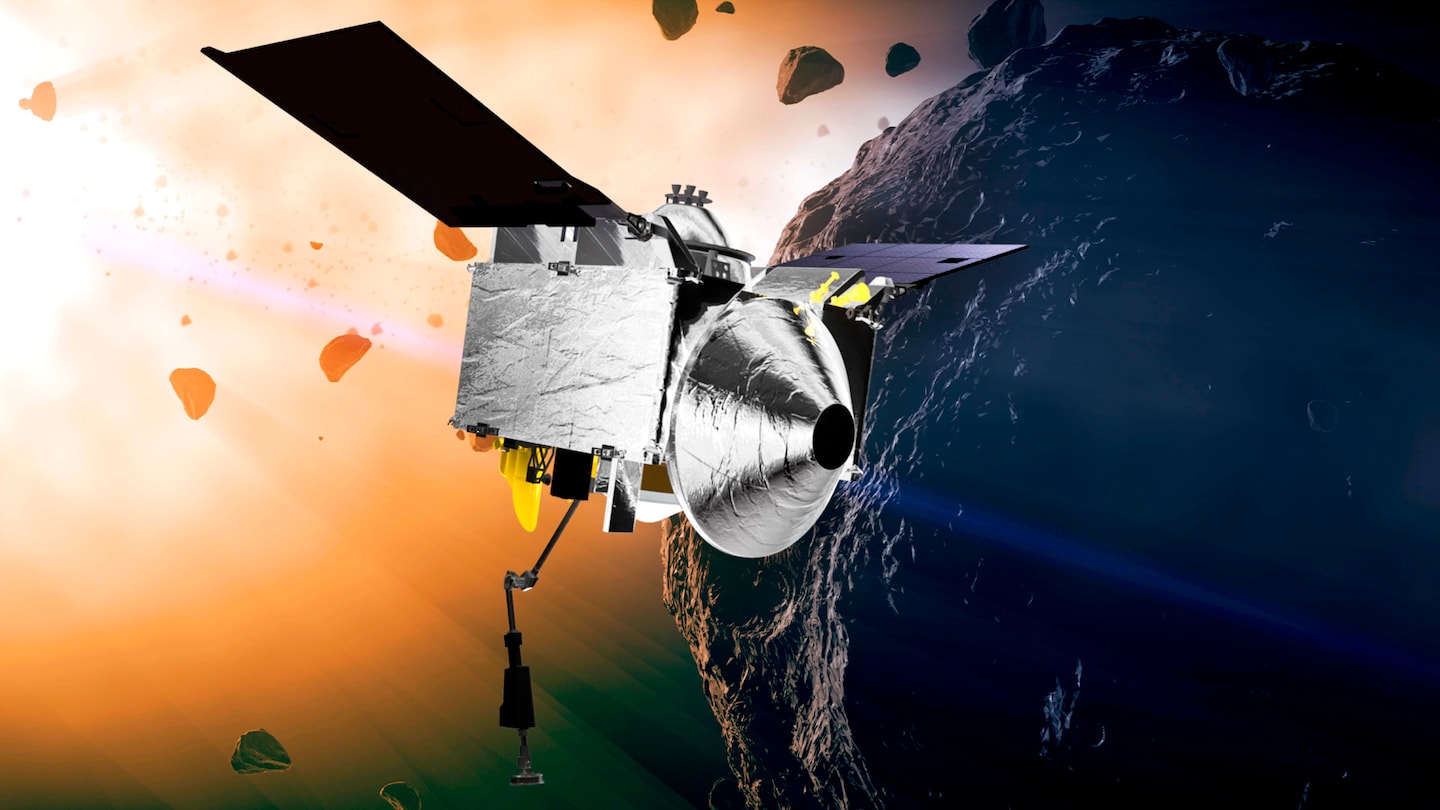
Dante S. Lauretta's book "The Asteroid Hunter" recounts the ambitious OSIRIS-REx mission to study and collect a sample from the near-Earth asteroid Bennu, shedding light on the fragility and interconnectedness of life and celestial bodies. While the mission faced challenges and surprises, the return of Bennu's unaltered carbon silt provides a time capsule of our solar system's early days, offering insights into the origins of life on Earth and the shared cosmic heritage of all existence.
Australian epidemiologist Professor Raina MacIntyre suggests that the possibility of Covid-19 originating from a lab in China is as plausible as the natural origin theory, citing a study using the Grunow-Finke tool to assess intelligence from various sources. She emphasizes the need for a comprehensive investigation into the virus's origins, including input from different disciplines and intelligence sources. MacIntyre points to historical examples, such as the Sverdlovsk anthrax leak, to highlight the potential for lab leaks to be initially misclassified as natural occurrences.
Documents obtained by House Republicans reveal that Chinese virologist Dr. Lili Ren isolated and mapped out COVID-19's structure and submitted it to a US database two weeks before Beijing officially identified the virus. Her work was nearly identical to what Beijing eventually presented to the World Health Organization, raising questions about the global response to the pandemic and the development of vaccines. The incident suggests possible interference from Beijing, prompting calls for further investigation into what Chinese and US health officials knew in the early days of the pandemic.
Scientists are proposing a two-pronged solution to better understand human evolution: find more fossils and improve the dating techniques of existing ones. By exploring underexplored regions and using improved dating methods, researchers hope to fill in gaps in the evolutionary puzzle and resolve longstanding dilemmas. Techniques such as radiocarbon dating and amino acid dating have been used, but challenges remain, such as the open system of bone dating. The use of uranium series dating has provided more precise timings for human fossils, revealing surprising findings and raising new questions. As dating techniques continue to improve, researchers aim to refine ages and gain a better understanding of human evolution.
Life may have emerged just seconds after the Big Bang, according to a broad definition of life as anything subject to Darwinian evolution. Earth's first life forms likely appeared over 3.7 billion years ago, but simpler versions of life could have arisen even earlier. The necessary elements for life, such as carbon and oxygen, are created in the cores of stars, so as long as there have been one or two generations of stars in the universe, Earth-like life could have emerged. Additionally, there is the possibility of life without chemistry, such as hypothetical "dark life" that could have existed before the first stars, powered by unknown forces.
Newly released emails and Slack messages obtained through the Freedom of Information Act reveal that the virologists behind the influential article "The proximal origin of SARS-CoV-2" privately expressed concerns about the possibility of the virus originating from a lab, contradicting their public statements. The messages also show the involvement of prominent figures like Anthony Fauci in shaping the article, which helped dismiss the lab leak theory and promote a natural origin narrative. The virologists' private doubts, contradictory statements, and jokes about the lab leak theory raise questions about the integrity of their work and the scientific process. The controversy surrounding the article remains unresolved, with calls for its retraction and accusations of fraud.
Astronomers have discovered a rare solar system 100 light-years away with six planets moving in perfect sync, providing insights into the origins of our own solar system. The planets are similar in size to Neptune and have orbits closer to their star than Mercury in our solar system. The discovery was made using NASA's Transiting Exoplanet Survey Satellite (TESS) and the European satellite CHaracterising ExOPlanet Satellite. Further study with the James Webb Space Telescope will help characterize the atmosphere of these synchronized planets.
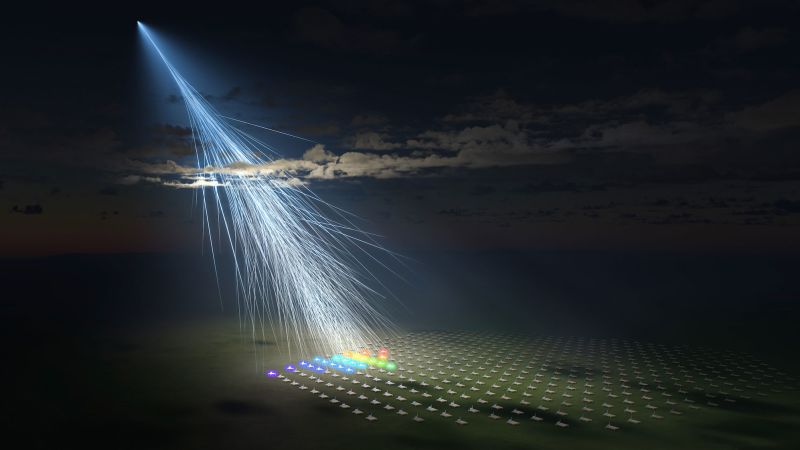
Scientists have detected an ultra-high-energy cosmic ray, nicknamed the Amaterasu particle, that rivals the energy of the famous "Oh-My-God" particle. These particles, which are thought to originate from other galaxies and extragalactic sources, are still not fully understood. The recently discovered particle was detected by the Telescope Array in Utah and has an energy equivalent to dropping a brick on your toe from waist height. The origins of these high-energy particles remain a mystery, with the biggest ones appearing to come from voids or empty space. The Telescope Array is expanding to capture more data and potentially provide answers about the origins of these cosmic rays.
Daylight saving time, the practice of changing clocks to extend daylight during certain months, has been a subject of debate for over a century. While its origins have been attributed to various individuals, including Benjamin Franklin and George Hudson, it was Germany that first implemented daylight saving time in 1916 to conserve fuel during World War I. The U.S. followed suit in 1918 but repealed it the following year. It was reinstated during World War II and established as the current system in 1966. Despite occasional attempts to make it year-round, the twice-yearly clock change remains in place.
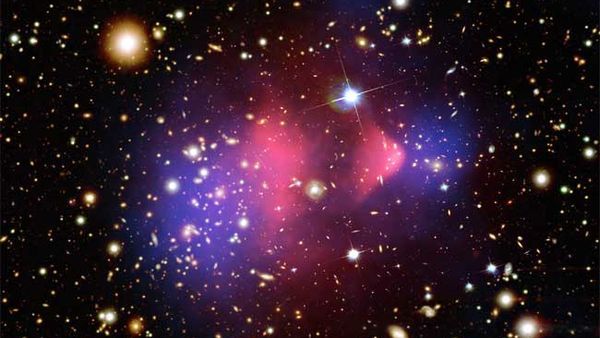
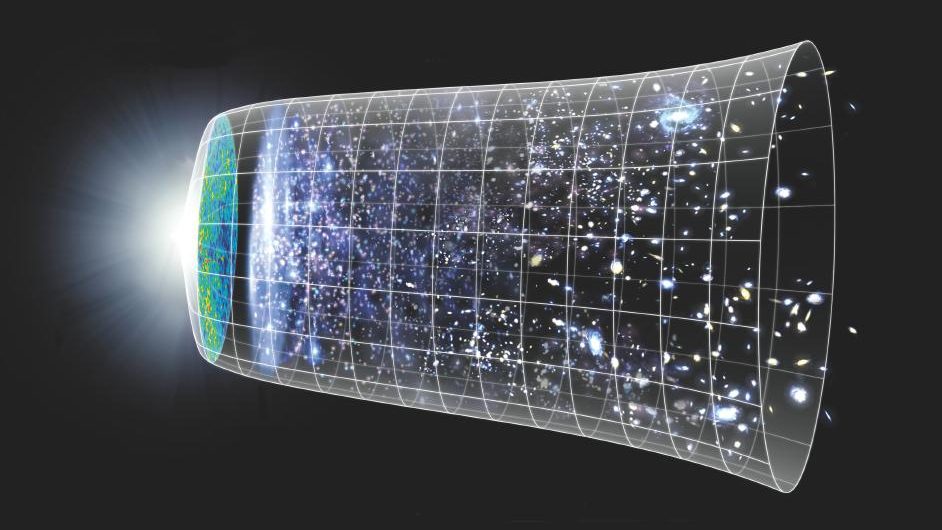
The question of how the universe truly began remains unanswered, as science lacks a convincing answer supported by measurable data. The hot Big Bang theory, which explains the expansion and cooling of the universe, is limited in its ability to explain the initial conditions. The theory of cosmic inflation, which precedes the Big Bang, addresses some of these limitations by solving three key problems: the horizon problem, the flatness problem, and the monopole problem. However, inflation itself raises questions about the ultimate beginning of the universe, as it cannot be extrapolated back to a singularity. Eternal inflation suggests that our universe is just one of many spawned by inflation, but the origin of inflation itself remains unknown. While we may never know how or if the universe truly began, ongoing research at the frontiers of science may one day provide answers.
Australian researchers from the Australian National University claim to have created the most complete map of the universe's history to date. The study offers new insights into the beginnings of all objects in the universe and suggests that the universe may have started as an instanton rather than a singularity. The maps show the temperature, density, mass, and size of the universe as it expanded and cooled. Understanding the universe's origins could help answer questions about life beyond Earth.