The article highlights seven practices from the 1960s and 70s—such as indoor smoking, corporal punishment, drunk driving, casual drug prescribing, unregulated workplace behavior, children roaming freely, and deceptive advertising—that would be illegal or scandalous today, illustrating how social norms and laws evolve with increased understanding of health, ethics, and safety.
Apollo 16 astronaut Charles Duke left a family photograph and personal items on the Moon in 1972, including a heartfelt message, as a tribute to his loved ones and his career, creating a lasting personal legacy on the lunar surface.
The article examines the controversial legacy of 16th-century explorer Magellan, highlighting both his role in global exploration and the brutal treatment of indigenous peoples during his voyages, while also acknowledging his contributions to introducing Christianity to the Philippines.
A family in Lewes, East Sussex, discovered 3,000-year-old Bronze Age copper ingots and bronze artifacts while metal detecting, which they donated to a local museum, highlighting the historical significance of their find.
The article draws parallels between the current U.S. intervention in Venezuela and the late 19th-century American imperialist policies, emphasizing how historical notions of civilization, territory, and wealth continue to influence U.S. foreign policy today, with a cautionary note on the risks of meddling abroad.
The article commemorates the Battle of New Orleans, a pivotal victory in the War of 1812 that secured American independence and heroized Andrew Jackson, emphasizing its enduring legacy of courage and resilience as part of America's 250th anniversary celebrations.
Medieval monks managed cold climates by utilizing specific architectural features like warming rooms (calefactory) and wearing minimal winter clothing, with some monasteries having dedicated heated spaces to provide warmth during harsh winters, reflecting the importance placed on warmth for monastic life.
The article explores the life and thought of Vietnamese philosopher Trần Đức Thảo, highlighting his struggles with French philosophy, his political activism for Vietnamese independence, and his philosophical shift from phenomenology to Marxist dialectical materialism, emphasizing his principled stance against colonialism and his tragic life story.
The article explores Thucydides' perspective on technology and human elements in war, emphasizing that he documented a period of significant change in warfare, primarily driven by human factors and strategic evolution rather than technological innovation, with a focus on the Peloponnesian War's impact on Greek military practices.
Five years after the Capitol riot, legal repercussions have largely faded due to presidential pardons, and the event's historical narrative remains contested, fueling ongoing political division and concerns about future violence, with debates about accountability and remembrance continuing in Congress.
The Carolina Panthers made the playoffs with a losing record, becoming the fifth team since 1982 to do so, and history shows that such teams can succeed in the first round, as seen with past teams like the 2010 Seahawks and 2014 Panthers. Coach Dave Canales, with experience from the Seahawks' 7-9 season, emphasizes that once in the playoffs, record doesn't matter—only the next game does.
In 1991, a couple named Ida Sabelis and Jupp participated in an experimental MRI scan while having sex to study body responses, resulting in iconic medical images that contributed to understanding female anatomy and the shape of the penis, and the experiment is also remembered as a love story.,
Alan Allport's 'Advance Britannia' critically examines Britain's role in WWII, challenging myths of British resilience and highlighting the empire's exploitation and decline, influenced by American dominance and colonial neglect.
A pioneering project using ground-penetrating radar (GPR) is being conducted on Lincoln Cathedral to uncover its hidden history, including evidence of earlier structures and burials, potentially dating back to the Roman period, with results expected in spring.
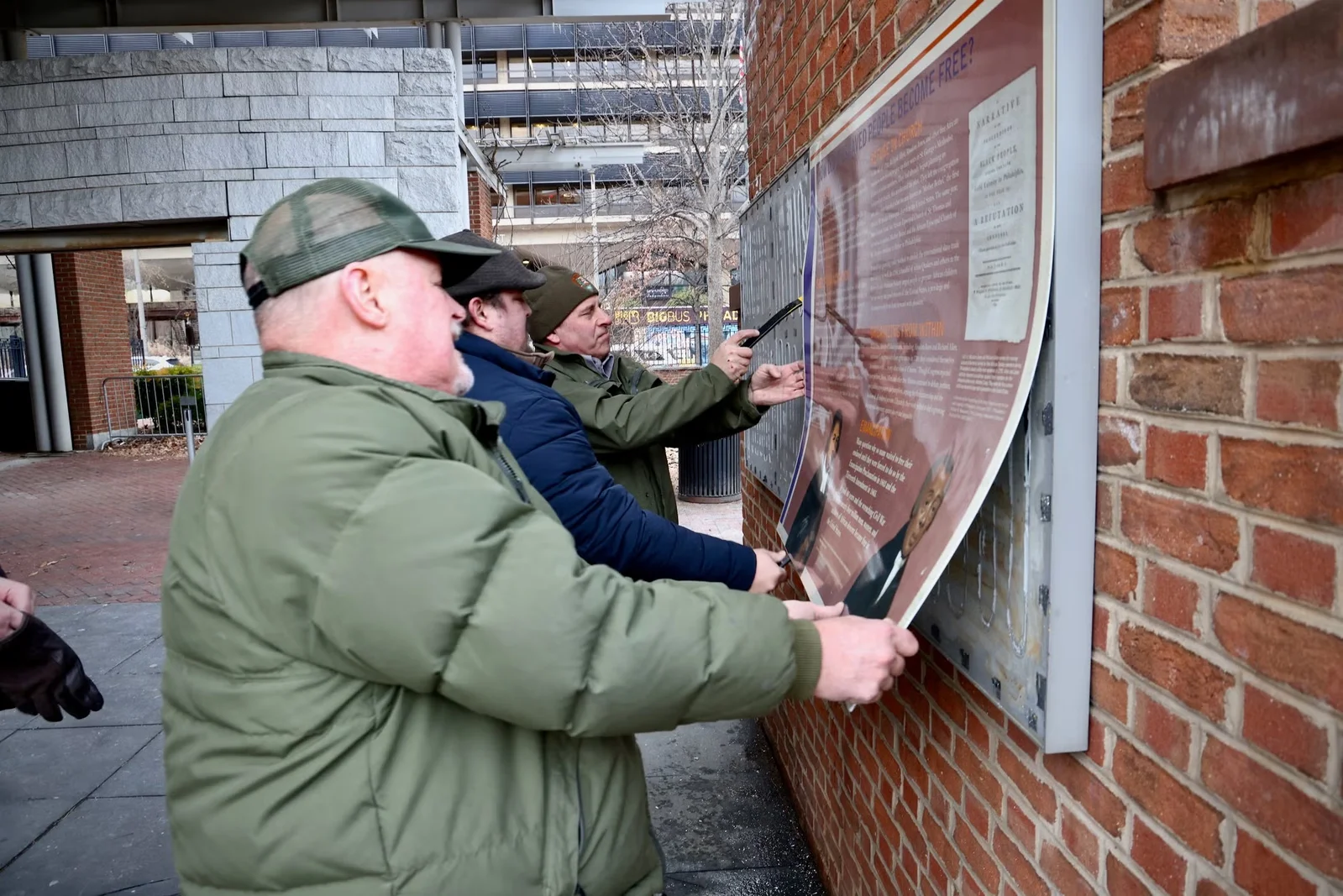
Carrie Gibson's book 'The Great Resistance' explores the 400-year fight to end slavery in the Americas, highlighting lesser-known stories of enslaved people's resistance, the brutal realities of the transatlantic slave trade, and the lasting legacies of slavery in society today.