‘The Copenhagen Test’ is a Peacock espionage thriller with potential that is undermined by a convoluted plot, overstuffed characters, and poor execution, resulting in a flat and unengaging series despite a promising premise.
Scientists are now viewing autism as a complex condition with multiple forms, challenging traditional views and offering new insights into its origins, as exemplified by recent cases like Ellis Easton’s.
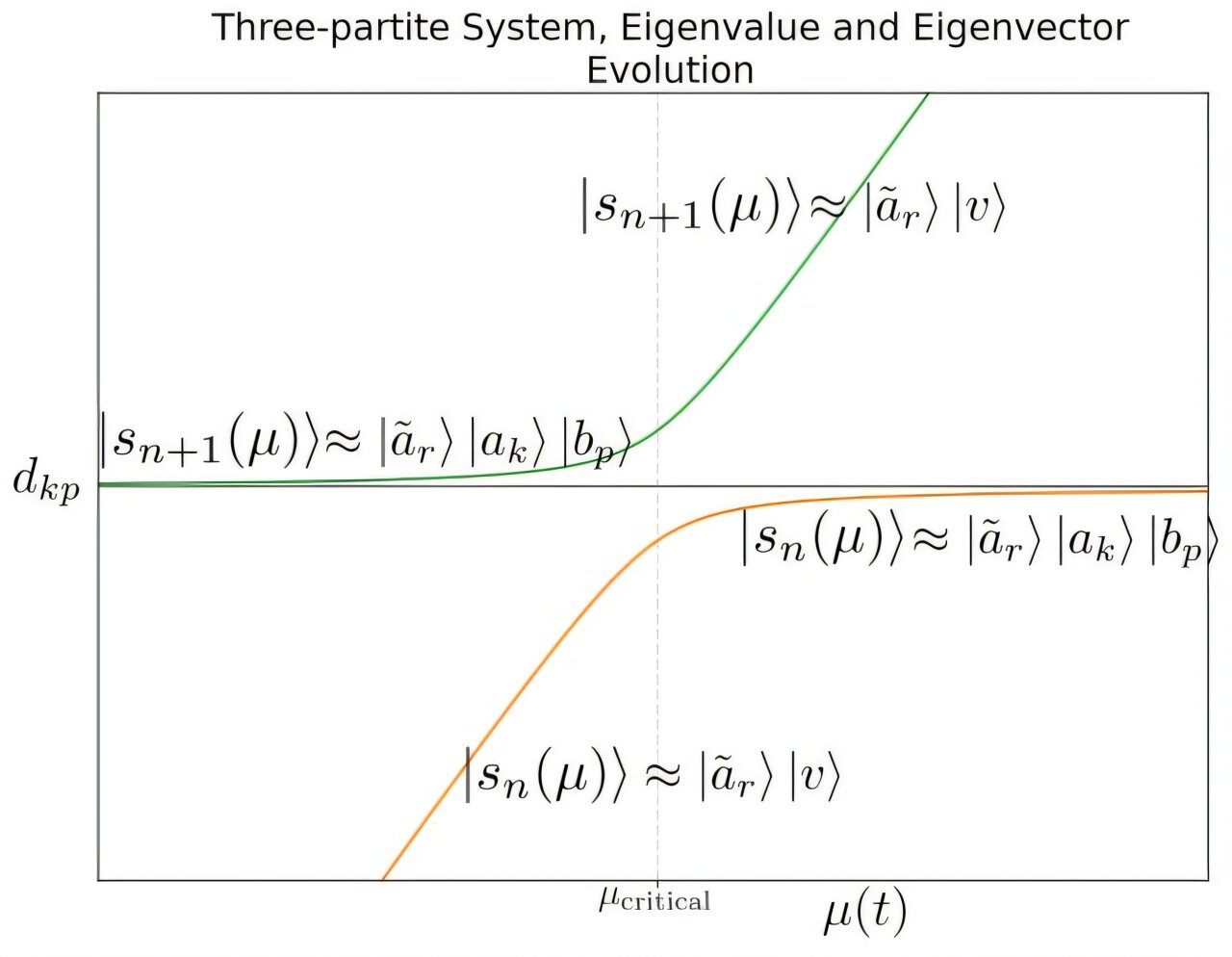
A recent study reveals that the speed limit of quantum computers is dictated by the complexity of entanglement required to solve problems, linking problem difficulty to physical entanglement structures, and providing a new framework for optimizing quantum algorithms.
The article emphasizes that cognitive load, or the mental effort required to understand and modify code, is crucial in software design. It discusses how simplicity, subjective perceptions of what is simple, and practices like minimizing complexity, proper naming, and commenting can reduce cognitive load. The author advocates for balancing rules with judgment, understanding that complexity is inevitable but manageable through experience, good design, and team practices. Ultimately, minimizing cognitive load helps make software more maintainable and adaptable, aligning with principles from John Ousterhout's philosophy.
The article emphasizes that in software development, especially at scale, the goal should be to do the simplest thing that could possibly work, acknowledging that complexity is inevitable but often unnecessary. It advocates for careful consideration, staged implementation, and understanding the problem deeply before opting for simplicity, while warning against over-engineering and the false allure of overly complex solutions. Experience and context are crucial in determining what 'simple' truly means in each scenario.
A team of researchers proposes a new law of nature suggesting that the complexity of entities in the universe increases over time with an inevitability similar to the second law of thermodynamics, implying that complex and intelligent life should be widespread, challenging traditional views on the rarity of such life.
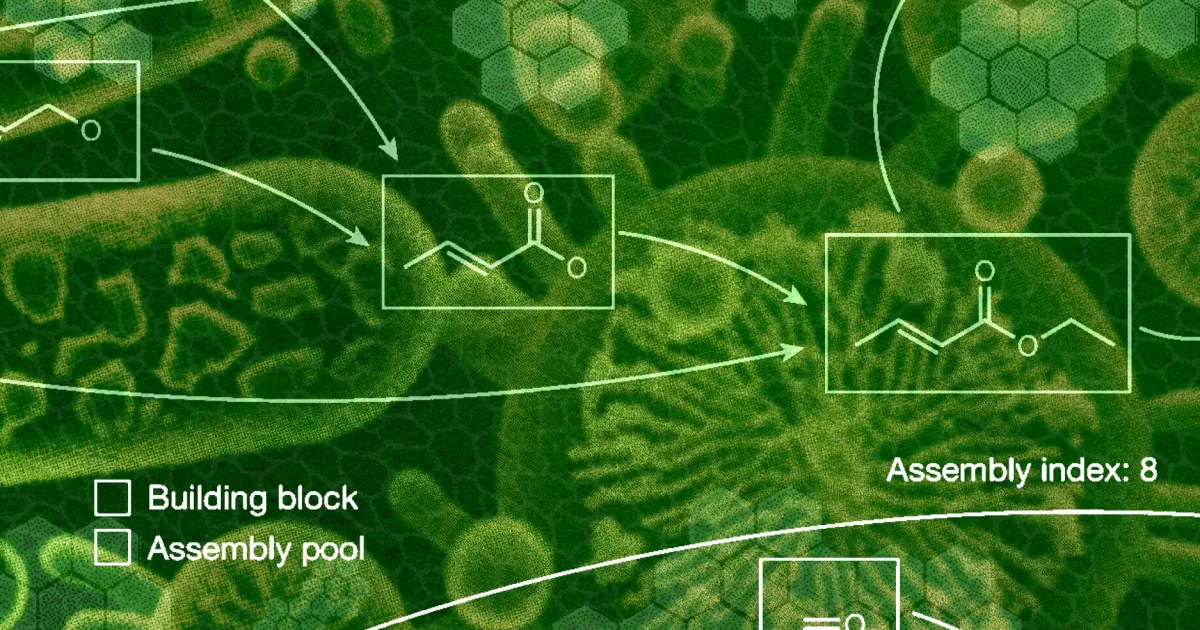
The article discusses theoretical physicist Sara Imari Walker's work on Assembly Theory, a framework exploring the rise of complexity in lifeless systems and the fundamental differences between living and non-living matter. Walker's theory emphasizes the role of information and complexity in understanding life's unique properties, focusing on how complex structures emerge and persist. The conversation highlights the importance of measuring complexity and information in physical terms, and the potential of Assembly Theory to offer new insights into life's evolution and existence in the universe.
Physicist Nigel Goldenfeld discusses the "unreasonable" success of mathematics in describing the universe, the importance of asking the right scientific questions, and the concept of emergence, which allows new properties to arise in systems at different scales, simplifying the complexity of the universe. He also highlights the challenges in the "soft" sciences like biology and economics, where such simplifications are harder to achieve.
New research on the Atlantic Meridional Overturning Circulation challenges the idea of straightforward early warning signals for climate disasters, revealing the climate system's complexity and unpredictability. The study emphasizes the need for an integrated approach to climate science and warns against relying on nature to provide clear indicators of climate disasters. The research shows that the stability of the system is more complex than previously assumed, with potential major impacts on regional and global climates. Predicting the behavior of the climate, particularly the Atlantic meridional overturning circulation, is challenging due to its incredible complexity, and the study paves the way for a new outlook on climate through statistical mechanics and complexity theory.
Researchers have discovered exquisitely preserved microfossils of eukaryotic organisms dating back 1.64 billion years, revealing a surprising diversity and complexity in their forms. The fossils, found in Australia's Northern Territory, exhibit advanced characteristics such as evidence of cytoskeletons and structures suggestive of internal vesicles, challenging previous assumptions about the uniformity of early eukaryotes. This discovery prompts further exploration into the environments and adaptations of early eukaryotes, shedding light on their evolution and the emergence of key characteristics such as aerobic metabolism and mitochondria.
League of Legends developers have released a cheat sheet for the new champion Hwei due to the overwhelming complexity of their kit, which includes ten different abilities. Hwei's spellbooks focus on damage, utility, and crowd control, making him one of the most complex champions in the game with a high skill ceiling.
Former President Barack Obama emphasized the need to acknowledge the complexity of the Israeli-Palestinian conflict in order to find a way forward. He criticized the discourse on social media and "TikTok" activism, urging people to engage in meaningful conversations with those they disagree with. Obama highlighted the importance of recognizing the atrocities committed by both sides and the unbearable conditions faced by Palestinians under occupation. As the Israeli military intensifies its offensive against Hamas, American officials believe there is limited time to achieve objectives before the humanitarian crisis reaches a tipping point.
The complexity of the adult immunization delivery system in the United States is hindering vaccine uptake. The increasing number of recommended vaccines for adults, along with the lack of a centralized system for tracking and administering vaccines, has made it difficult for individuals to stay up to date on their immunizations. Issues such as limited access to healthcare providers, confusion about which vaccines are covered by insurance, and the lack of a comprehensive program for uninsured adults further contribute to the problem. Simplifying the system, improving access, and implementing a Vaccines for Adults program could help increase vaccination rates and protect more people from preventable diseases.
Scientists have proposed a new scientific law called "the law of increasing functional information" that applies to the evolution of life, minerals, planets, stars, and other systems in the universe. The law states that systems evolve and become more complex over time when different configurations of the system undergo selection for one or more functions. This law expands on Darwin's theory of evolution by suggesting that non-living systems also evolve when novel configurations improve function. While some scientists praise the law as transformative, others argue that it may not be a new underlying principle but rather a manifestation of existing laws of physics and chemistry.
A group of scientists and philosophers have proposed a new law of nature that expands on Charles Darwin's theory of evolution. The "law of increasing functional information" suggests that complex natural systems, both living and non-living, evolve towards greater patterning, diversity, and complexity. This law applies to various systems, including atoms, minerals, planetary atmospheres, planets, and stars. The authors argue that evolution occurs when different configurations of interacting building blocks are subject to selection for useful functions. The proposed law provides a new perspective on the evolution of diverse systems in the cosmos and may offer insights into the development of unfamiliar systems, such as organic chemistry on Saturn's moon Titan.