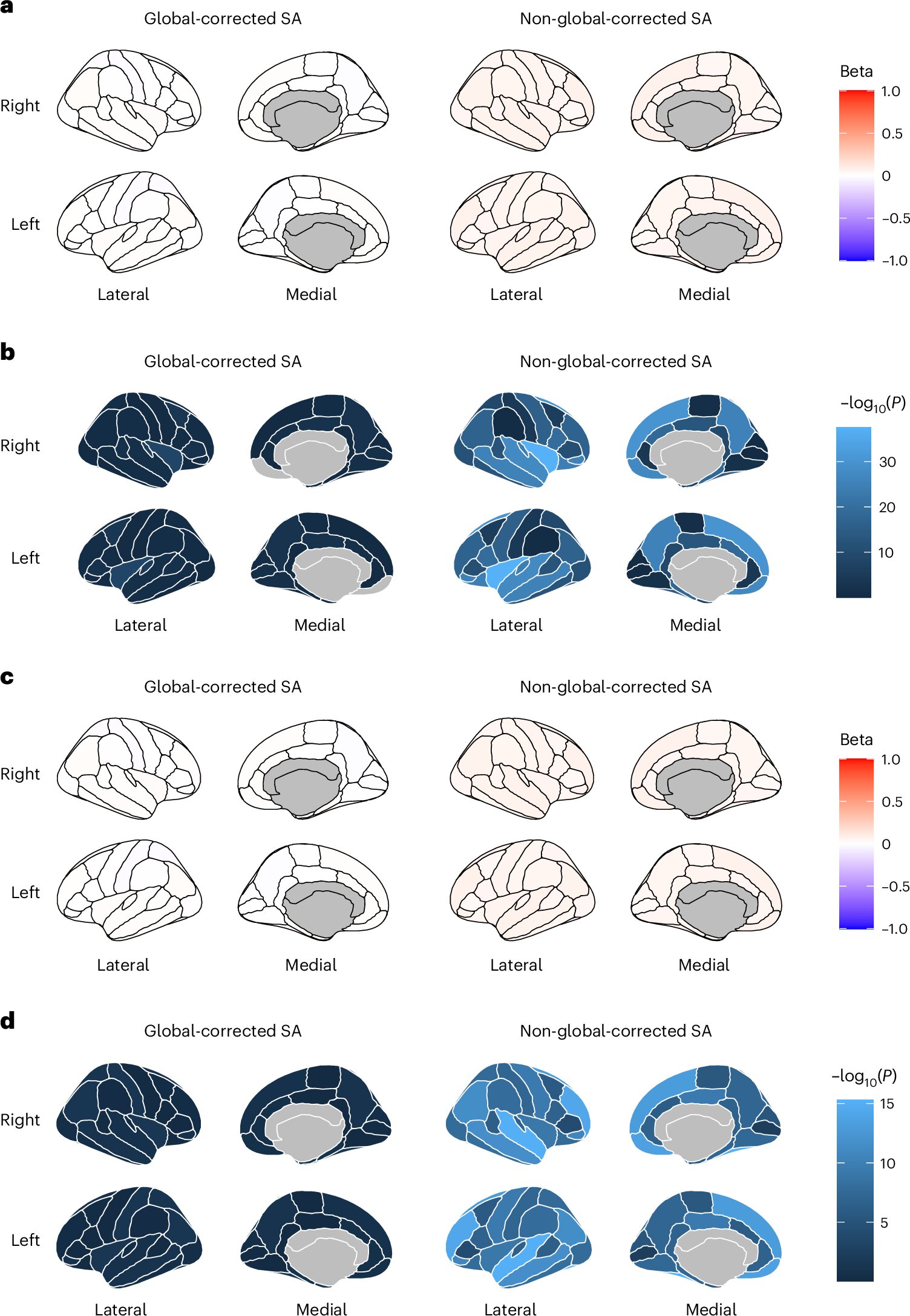
A study published in Nature Mental Health found that the surface area and thickness of the brain's cortex are causally linked to mental abilities and psychiatric conditions, with implications for early diagnosis and treatment of disorders like schizophrenia.
A global research effort involving 131 scientists from 105 labs in seven countries has revealed a link between brain metabolism problems, changes in brain acidity, and a range of neuropsychiatric and neurodegenerative disorders, including autism, Alzheimer's, depression, epilepsy, schizophrenia, intellectual disability, and bipolar disorder. The study identified alterations in brain pH and lactate levels as key signs of metabolic dysfunction, which may lead to new ways of diagnosing and treating these complex disorders affecting a large portion of the global population. The findings suggest that changes in brain pH and lactate levels could serve as biological markers for neuropsychiatric disorders with cognitive impairment, and future studies will focus on uncovering effective treatment strategies across diverse animal models with brain pH changes.
A global research effort involving 131 scientists from 105 laboratories across seven countries has identified alterations in brain pH and lactate levels as key indicators of metabolic dysfunction in a spectrum of neuropsychiatric and neurodegenerative disorders, including intellectual disability, autism spectrum disorders, schizophrenia, bipolar disorder, depressive disorders, and Alzheimer’s disease. The study, published in eLife, suggests a potential common biological underpinning for these conditions and highlights the impact of both genetic and environmental factors on brain metabolism. The findings could pave the way for new approaches to diagnosing and treating these complex disorders, although further research is needed to understand the exact mechanisms at play in humans.
A global study involving 131 researchers from 105 labs across seven countries has found altered brain pH and lactate levels across various animal models of neuropsychiatric and neurodegenerative disorders, indicating a common energy metabolism dysfunction. Elevated lactate levels were predominantly associated with impaired working memory, highlighting a direct impact on cognitive function. The identification of altered brain energy metabolism as a transdiagnostic endophenotype paves the way for innovative treatment approaches targeting shared metabolic dysfunctions in disorders such as schizophrenia, autism, and Alzheimer’s.
Researchers at Boston Children’s Hospital have uncovered the brain mechanism responsible for transitioning from daydreaming to alertness and memory formation, centered around activity in the dentate gyrus. This mechanism helps the brain realign cognitive focus to immediate realities and process new information, potentially offering insights into neuropsychiatric disorders such as ADHD, PTSD, epilepsy, and Alzheimer’s disease. The study, which analyzed mouse models, found that dentate spikes in the hippocampus play a crucial role in this shift and in associating memories with sensory stimuli, opening new avenues for targeted treatments.
Researchers have successfully mapped the brain's 'dysfunctome' by analyzing data from 261 patients who underwent deep brain stimulation (DBS) for disorders like Parkinson’s, dystonia, OCD, and Tourette’s syndrome. This mapping has identified specific frontal cortex circuits crucial for symptom improvement, paving the way for more personalized and effective therapies, including both surgical and non-invasive treatments like transcranial magnetic stimulation (TMS). The study's findings have already led to successful symptom alleviation in patients with severe OCD, demonstrating the potential for tailored therapies based on specific brain circuit dysfunctions.
Stanford Medicine researchers have developed a new artificial intelligence model that can distinguish between male and female brains with over 90% accuracy, revealing distinct brain organization patterns. The study, published in the Proceedings of the National Academy of Sciences, suggests that understanding these differences is crucial for addressing neuropsychiatric conditions affecting women and men differently. The model identified key brain networks contributing to the differences and successfully predicted cognitive performance based on sex-specific brain features. The research was sponsored by the National Institutes of Health and aims to make the model publicly available for broader applications.
Gene variants inherited from the Denisovans, an extinct human species, may increase the risk of developing neuropsychiatric disorders such as depression and schizophrenia. Modern humans interbred with Denisovans, resulting in traces of their DNA in some populations today. A gene called SLC30A9, inherited from the Denisovans, codes for a protein that regulates zinc transport and cellular metabolism. Zinc dysregulation has been linked to neuropsychiatric disorders, and the SLC30A9 variant may have been beneficial in the past but detrimental now. However, the specific advantages and disadvantages of this variant are still speculative. Further research is needed to understand how this gene variant influences the brain and its role in neuropsychiatric conditions.
Gene variants inherited from the Denisovans, an extinct human species, may increase the risk of developing neuropsychiatric disorders such as depression and schizophrenia. Modern humans interbred with Denisovans, resulting in traces of their DNA in some populations today. A gene called SLC30A9, inherited from the Denisovans, was found to regulate zinc transport and cellular metabolism. Zinc dysregulation has been linked to neuropsychiatric disorders. However, the advantages and disadvantages of this gene variant are still speculative. The study highlights a potential link between natural selection and zinc metabolism, but further research is needed to understand how this variant influences the brain and the complex nature of neuropsychiatric conditions.
A study led by the Institute of Evolutionary Biology and Pompeu Fabra University has identified a widespread genetic contribution from the Denisovans, an extinct human species, to modern humans. The genetic variant observed affects zinc regulation and may have provided an evolutionary advantage in adapting to the cold. However, this adaptation may have also predisposed modern humans to neuropsychiatric disorders such as depression and schizophrenia. The variant is found in populations worldwide, except in Africa, and is associated with a greater susceptibility to various mental illnesses. Further research is needed to understand the full implications of this genetic heritage on mental health.
Researchers from the University of California San Diego have mapped gene switches in different brain cell types by analyzing over a million human brain cells, revealing the relationship between specific cell types and neuropsychiatric disorders such as schizophrenia, bipolar disorder, Alzheimer's disease, and major depression. They also used artificial intelligence to predict the effects of high-risk gene variants. This study is part of the BRAIN Initiative, which aims to revolutionize understanding of the mammalian brain and develop new ways to treat neuropsychiatric illnesses.
Researchers at the University of Rochester have identified a potential treatment target for neuropsychiatric disorders like autism and schizophrenia during critical periods of brain development. By stimulating underperforming neurons in the dopamine system that connect to the frontal cortex, they were able to rescue structural brain deficiencies and potentially alter the course of the diseases, with long-lasting effects into adulthood. This discovery could lead to targeted interventions during key developmental windows, offering the possibility of changing the trajectory of these disorders.
Researchers at the Del Monte Institute for Neuroscience at the University of Rochester have found that targeting underperforming dopamine neurons in mice during adolescence could offer a way to change the progression of neuropsychiatric disorders like schizophrenia and autism. Stimulating these neurons led to long-lasting changes and rectified structural brain deficiencies. The findings suggest that interventions during developmental windows could alter the course of these disorders.
Researchers at Virginia Tech have identified a brain circuit responsible for rapid, coordinated response to threats in animals, which could provide a foundation for further research on brain connections in more complex social situations and potential therapeutic targets. The study focused on synchronized immobility in pairs of mice and revealed a crucial connection between two parts of the brain—the ventral hippocampus and basolateral amygdala—in coordinating threat response. This discovery could improve our understanding of social communication, which is often compromised in neuropsychiatric disorders.