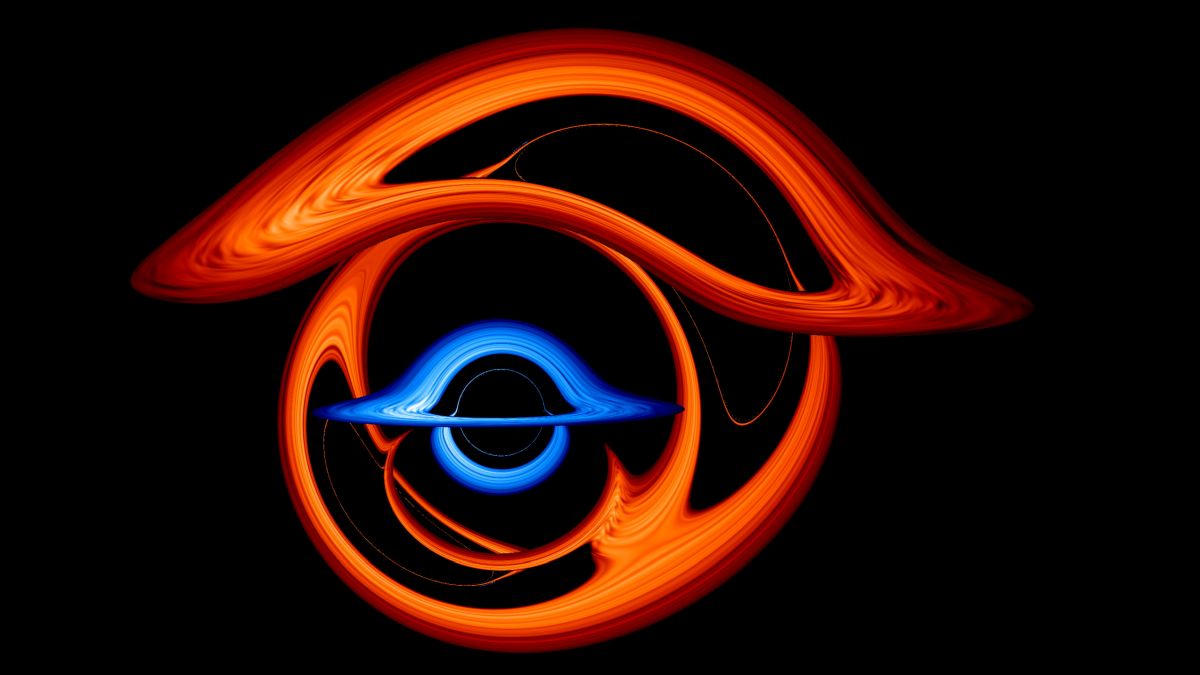
Astronomers have captured the first image of two black holes orbiting each other in quasar OJ287, confirming a 40-year-old hypothesis and providing new insights into binary black hole systems using high-resolution radio imaging.
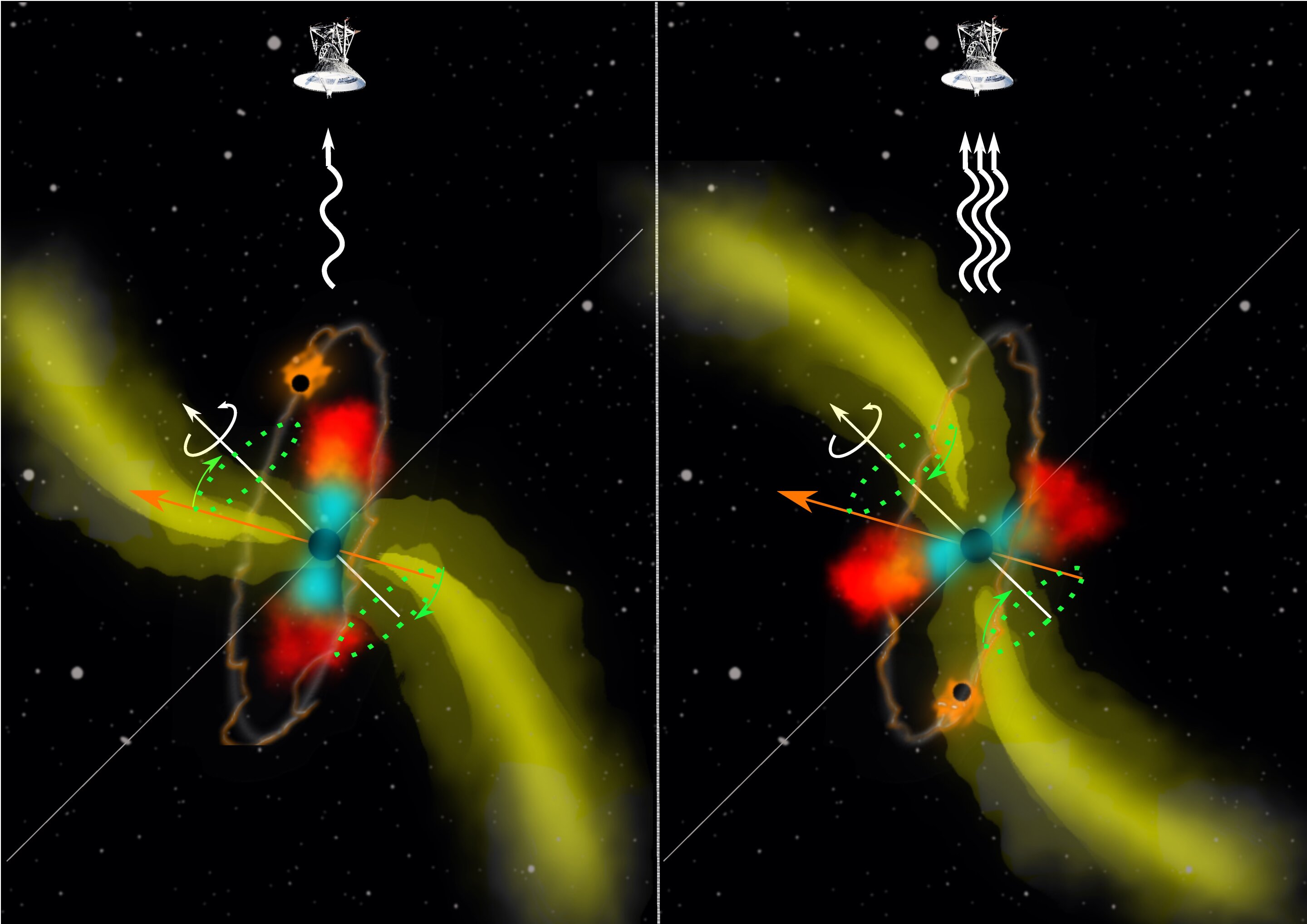
Astronomers have captured the first direct radio image of two supermassive black holes in a binary system within galaxy OJ 287, confirming models of their interaction and jet emissions, with observations suggesting the secondary black hole's jet is moving more slowly and twisting due to its orbit.
Astronomers have captured the first direct radio image of two supermassive black holes orbiting each other within the quasar OJ287, providing the clearest evidence yet of binary black holes, and confirming long-standing predictions about their existence.
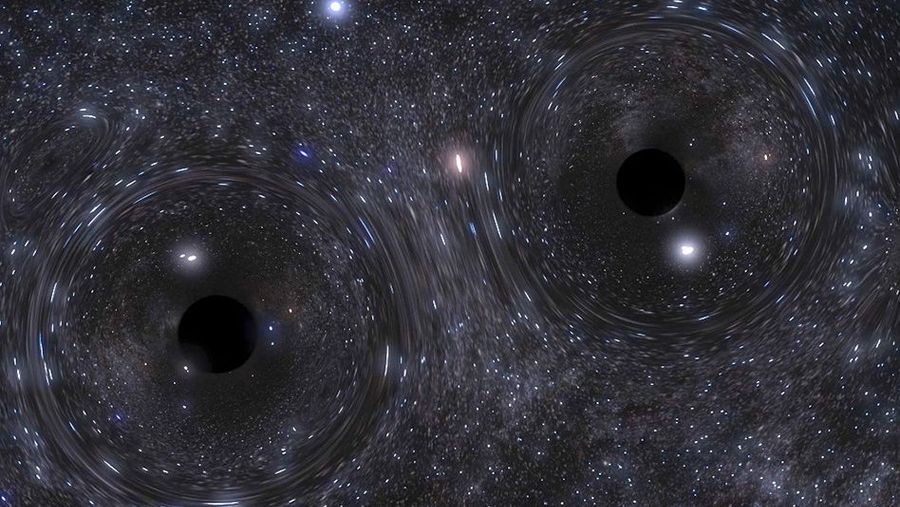
Astronomers from the Shanghai Astronomical Observatory have discovered evidence suggesting that binary black holes may orbit a third, more massive object, possibly a supermassive black hole, based on unusual gravitational wave signals from GW190814. This groundbreaking finding indicates the presence of a third compact object influencing black hole mergers, opening new avenues for understanding black hole systems and their formation. Future advanced detectors will likely uncover more such complex systems.
Researchers from SHAO have found evidence suggesting that a binary black hole merger (GW190814) occurred in the gravitational influence of a third compact object, possibly a supermassive black hole, indicating that binary black holes may often be part of more complex systems. This discovery was made by analyzing gravitational wave signals for line-of-sight acceleration effects, providing new insights into black hole formation and evolution.
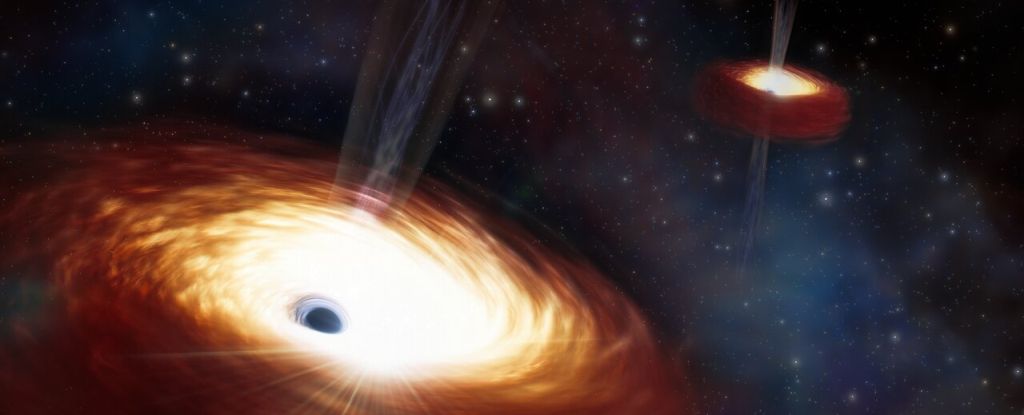
Astronomers have discovered a galaxy hosting the heftiest pair of supermassive black holes ever seen, with a combined mass of 28 billion times that of the Sun. The binary black holes, located in a galaxy called B2 0402+379, exhibit peculiar properties that are helping scientists understand the process of black hole growth. The discovery suggests a potential solution to the final parsec problem, as the orbital decay of the binary has stalled due to the lack of nearby stars and gas to transfer orbital momentum. Further investigations will focus on determining whether the supermassive black holes can eventually merge or will remain stranded as a binary.
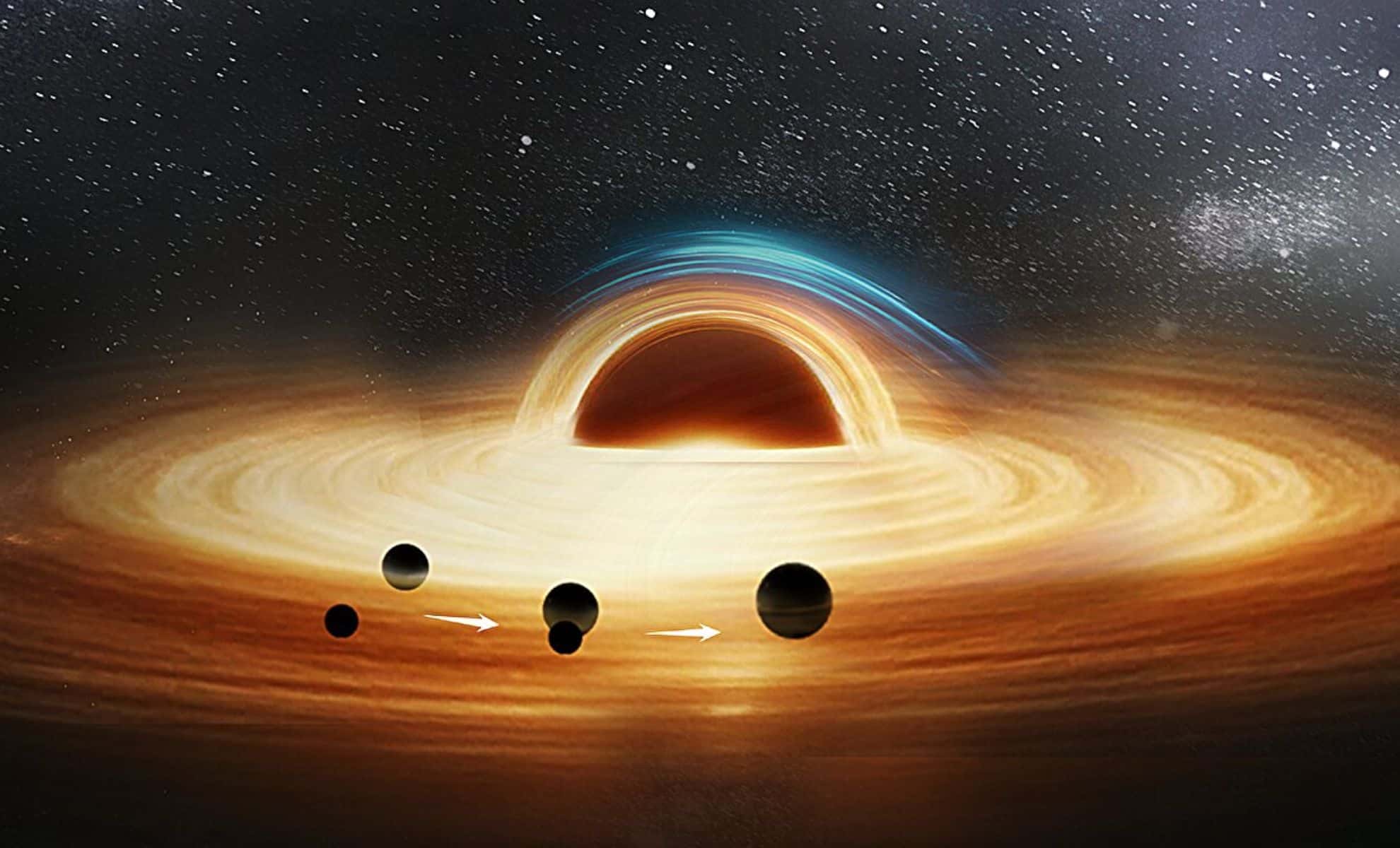
Binary black holes may be more stable than previously thought, thanks to the action of dark energy. The expansion of the universe caused by dark energy helps black holes in binary pairs maintain a safe distance from each other. As black holes move, they create gravitational waves that carry angular momentum away from the system, causing the black holes to spiral together and eventually collide. However, the researchers found that two non-rotating black holes could exist in equilibrium, with the gravitational attraction between them counteracted by expansion. This means that from a distance, a pair of black holes would look like a single black hole. The researchers believe their solution could also apply to rotating black holes and more complex black hole systems.
Astronomers have discovered that some blazars, bright active galactic nuclei, may contain double supermassive black holes at their cores. The presence of a binary black hole system can cause the jets emitted by one black hole to appear curved and snaky, and can also lead to periodic changes in brightness. By studying an object called OJ 287, researchers found evidence of two black holes in its core, supporting the idea of binary black holes in other blazars. This discovery could help astronomers probe for other binary black holes and gain a better understanding of the inner workings of these black hole systems.
An international research team has presented evidence that the variability in brightness and jet curvature observed in blazars, accreting supermassive black holes in the centers of galaxies, is likely caused by the precession of the jet source. This precession can be attributed to the presence of a second massive black hole or a warped accretion disk. The study suggests that blazar variability may be of deterministic nature rather than stochastic, and the jet curvature could be a signature of binary black holes. Radio observations using Very Long Baseline Radio Interferometry (VLBI) provide the highest resolution for studying these phenomena.