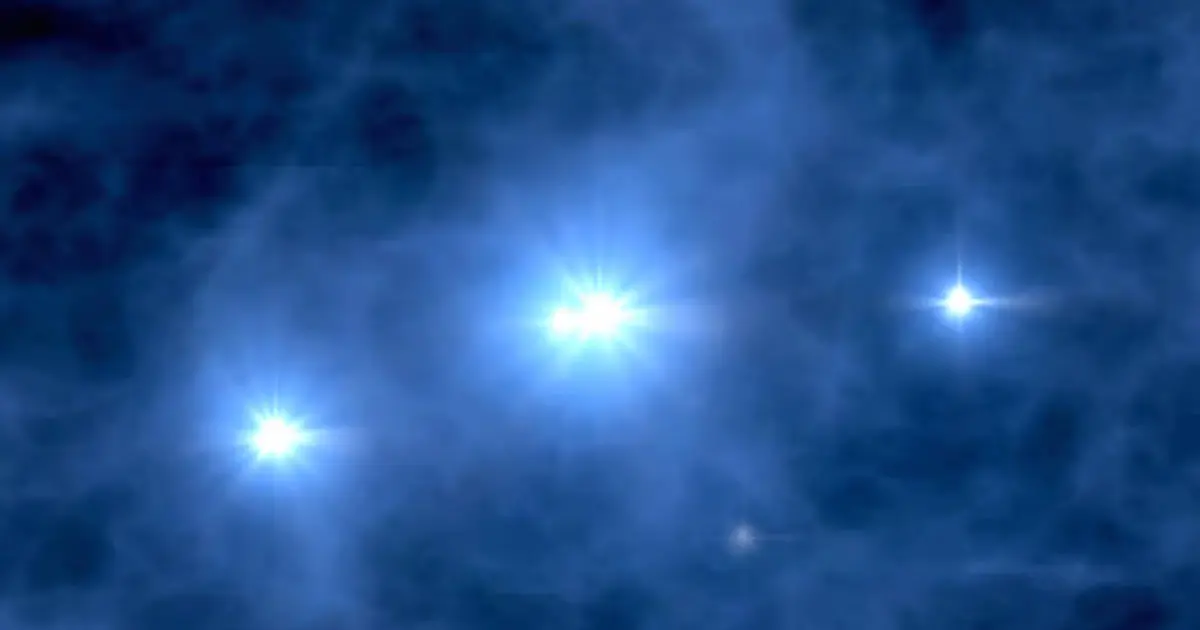
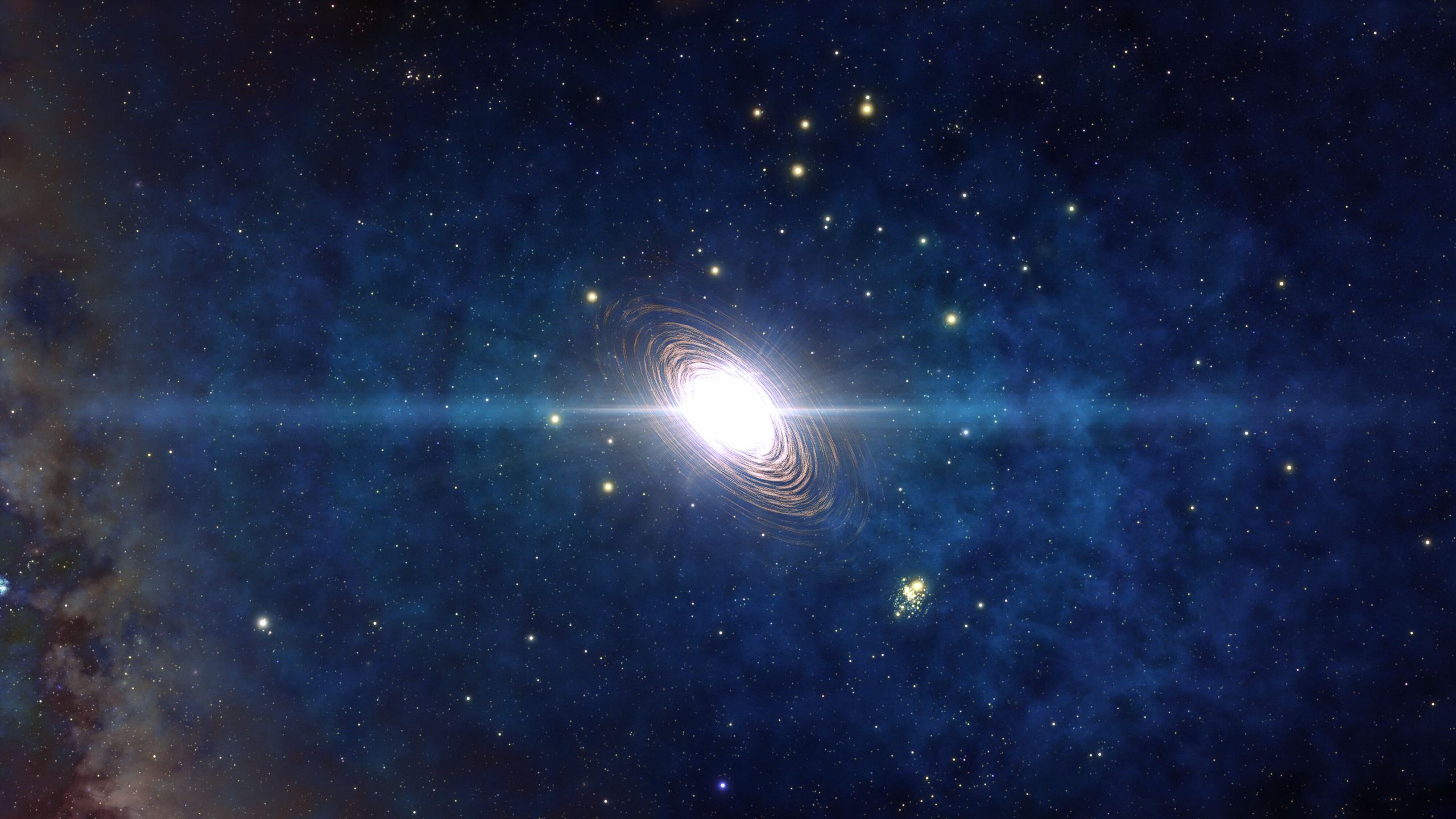
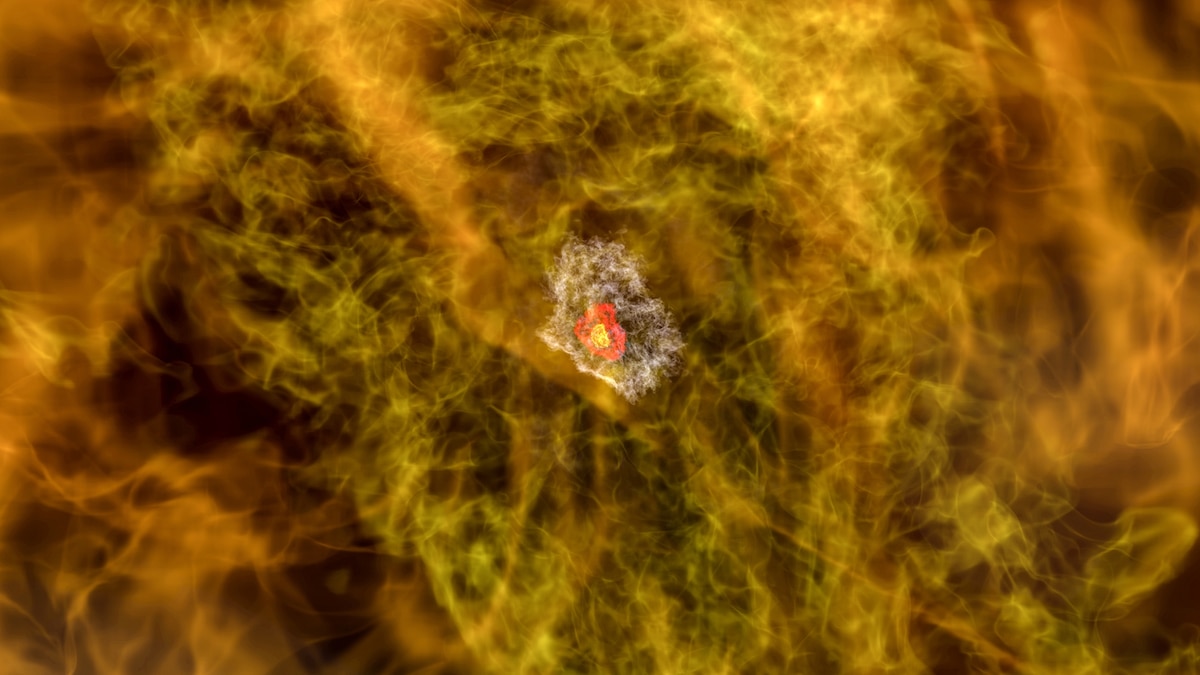
Scientists may have identified light from the universe's first stars, known as Population III, using the James Webb Space Telescope and gravitational lensing, marking a significant breakthrough in understanding the early cosmos.
Recent research suggests that the universe's first stars were more diverse in mass than previously thought, with new findings indicating the formation of lower-mass stars due to the presence of molecular coolants like helium hydride and turbulence in gas clouds, challenging the long-held belief that only massive stars existed in the early cosmos.
Recent studies suggest that the first stars in the universe may not have been exclusively massive, as previously thought, but could have included lower-mass stars due to earlier and more abundant formation of molecular hydrogen and turbulence in gas clouds, potentially allowing for earlier and more diverse star formation in the universe's history.
Scientists are exploring the faint radio signals emitted by neutral hydrogen in the early universe to potentially identify and understand the properties of the first stars, using advanced radio telescopes like SKA and REACH. Modeling suggests these signals could reveal the masses and characteristics of these primordial stars, shedding light on the universe's transition from darkness to light.
Astronomers propose using radio signals, specifically the 21-centimeter signal from hydrogen, to study and 'weigh' the universe's first stars during the Cosmic Dawn, potentially revealing new insights into the early universe's evolution. The REACH project and upcoming SKA array aim to analyze these signals to understand the properties and distribution of Population III stars, which are otherwise hidden from direct observation.
Scientists have shown that studying the 21-centimeter radio signal from hydrogen gas in the early universe can reveal the masses of the first stars, using upcoming radio telescopes like REACH and SKA to better understand the universe's transition from darkness to light during the Cosmic Dawn.
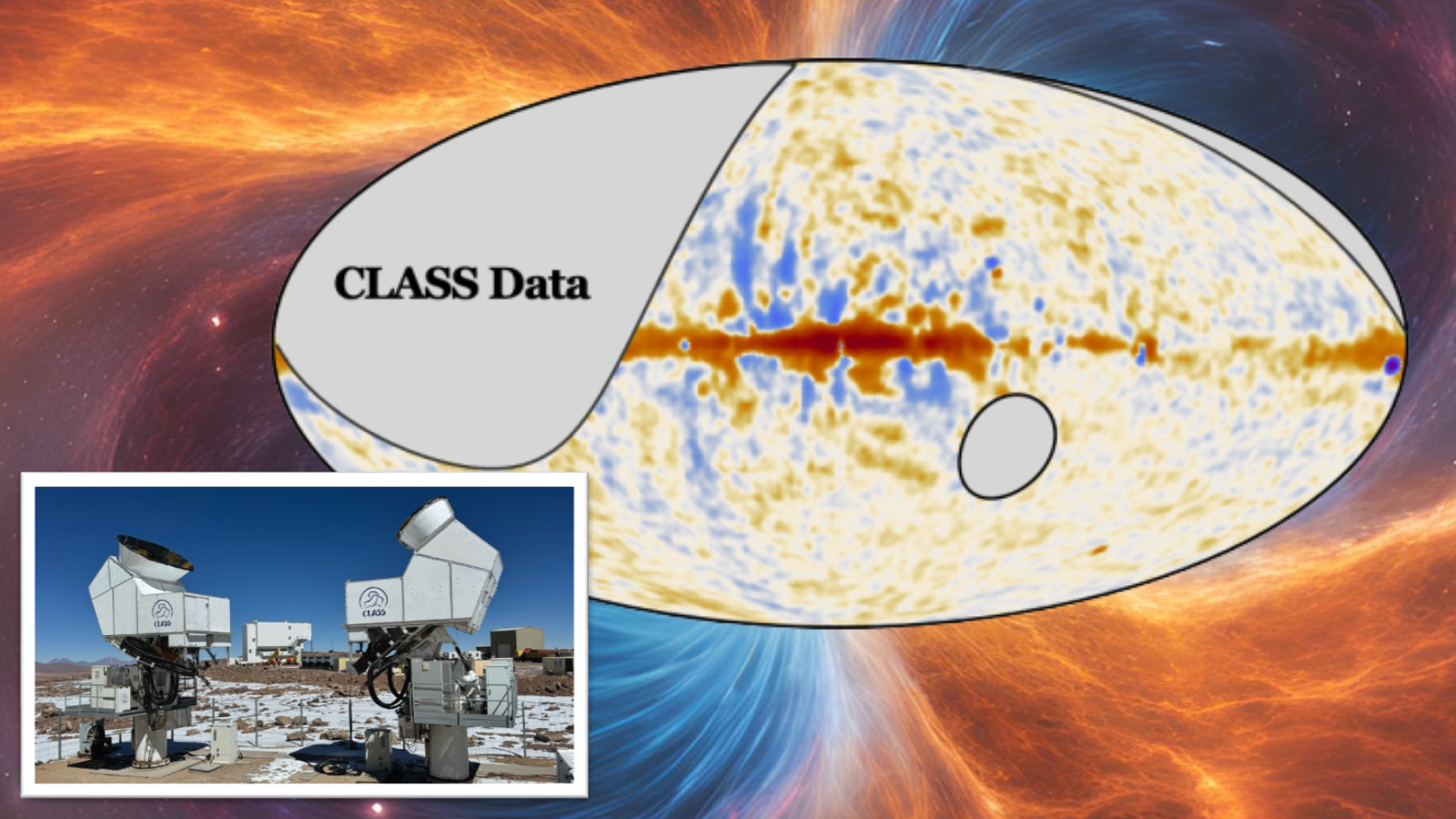
Astronomers using the CLASS telescopes in Chile have for the first time observed signals from the universe's first stars, shedding light on the Cosmic Dawn approximately 800 million years after the Big Bang by detecting faint polarized microwave signals from the cosmic microwave background, which helps understand the universe's early evolution.
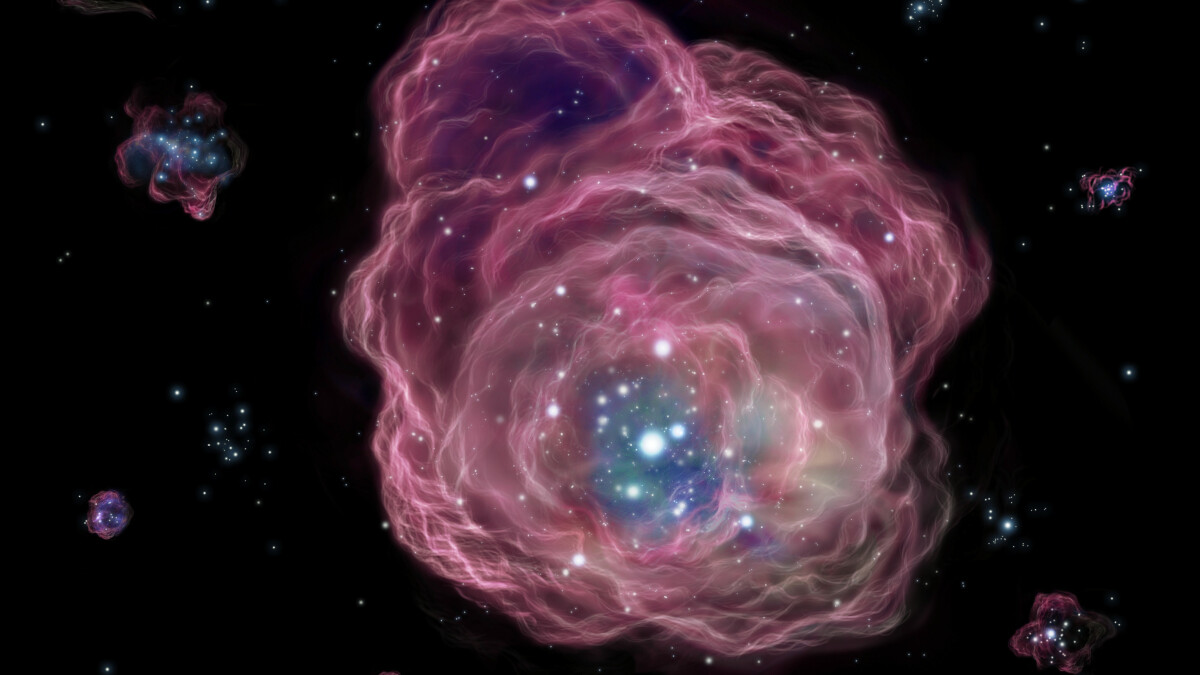
The article explains that the 'first stars' in the universe, known as Population III stars, formed from pristine hydrogen and helium shortly after the Big Bang, around 50-100 million years later, and were much larger and shorter-lived than stars today. Despite advanced telescopes like JWST, these first stars have not yet been observed directly, but their formation is predicted by simulations based on cosmic evolution models.
The James Webb Space Telescope has advanced our understanding of distant galaxies but is unlikely to detect the very first stars due to cosmic extinction. Future telescopes focusing on longer wavelengths, such as far-infrared or radio observations from the Moon's far side, hold promise for uncovering the universe's earliest stellar populations, potentially revealing the first stars formed after the Big Bang.
Researchers at the Institute of Astronomy and Astrophysics, Academia Sinica (ASIAA) have used supercomputer simulations to decode the birth mass of the first stars, known as Population III (Pop III) stars, in the early universe. Their findings suggest that supersonic turbulence effectively fragments star-forming clouds into clumps, each with dense cores ranging from 22 to 175 solar masses, leading to the formation of first stars with masses of about 8 to 58 solar masses. This reconciles the mass discrepancy between previous simulations and observations, providing a strong theoretical foundation for understanding the first star formation.
The James Webb Space Telescope has potentially discovered evidence of the first stars in the universe by detecting a clump of helium in the halo of galaxy GN-z11, which existed when the universe was only about 430 million years old. This finding supports the theory of Population III stars, which are believed to have formed from pristine pockets of gas before the existence of metals. The telescope's ability to observe infrared wavelengths allows it to study the early cosmos and potentially witness the universe's first stars and galaxies.
The James Webb Space Telescope (JWST) may be able to detect the universe's first stars, known as Population III stars, by utilizing gravitational lensing. These ancient stars formed 50 to 100 million years after the Big Bang and played a crucial role in reionizing the universe during the Epoch of Reionization. If successful, the JWST will provide observational evidence for this early period in the universe's history and shed light on the formation of supermassive black holes and the creation of metals. However, identifying these metal-poor stars spectroscopically is challenging due to factors such as binary pairs and surrounding nebulous hydrogen.
The James Webb Space Telescope (JWST) may be able to find the Universe's first stars, known as Population III stars, with the help of gravitational lensing. These ancient stars formed shortly after the Big Bang and played a crucial role in the reionization of the Universe. By detecting these massive stars, the JWST could provide observational evidence for the Epoch of Reionization and shed light on the early stages of the Universe. However, identifying these stars spectroscopically is challenging due to factors such as binary pairs and surrounding nebulous hydrogen. If successful, the JWST will further solidify its status as a groundbreaking telescope.
While we have yet to directly observe the first stars of the cosmos, a new study suggests that their direct descendants, known as second-generation stars, may be lurking in our own galaxy's halo. These stars can be identified by their ratios of carbon and magnesium to iron, rather than their iron-to-helium ratio. Stars with a high carbon-to-iron ratio likely formed from the remnants of a single first-generation star, while those with a lower ratio likely formed from a mix of first and second-generation material. As more sky surveys come online, it is expected that these second-generation stars will be discovered, providing insights into the early history of our universe.
Scientists are using supercomputer simulations to study the birth of the first stars, which were massive and short-lived compared to stars today. These early stars formed during the cosmic dark ages, when the universe was filled with opaque hydrogen gas. The simulations reveal how gas accumulated in dense pockets due to the gravitational forces of dark matter, leading to the ignition of the first stars. The intense energy released by these stars not only created heavier elements through supernovae but also played a crucial role in reionizing the universe. Simulations provide insights into the early stages of cosmic evolution that telescopes cannot yet observe.