Tag

Cognitive Functions

All articles tagged with #cognitive functions

Neuroscientists uncover rhythmic pattern guiding brain networks

Originally Published 2 months ago — by PsyPost

Featured image for Neuroscientists uncover rhythmic pattern guiding brain networks
Source: PsyPost

Neuroscientists have discovered a repeating, clock-like rhythm in the brain that organizes large-scale network activity, cycling through different cognitive functions every 300 to 1,000 milliseconds. This structured cycle may help coordinate mental processes such as attention, memory, and sensory processing, and varies with age, genetics, and behavior, offering new insights into brain organization and potential implications for cognitive health and disorders.
"Unraveling the Mystery of Mind Blanking: Insights from Neuroscience Research"

Originally Published 1 year ago — by PsyPost

Featured image for "Unraveling the Mystery of Mind Blanking: Insights from Neuroscience Research"
Source: PsyPost

New neuroscience research published in The Journal of Neuroscience reveals that mind blanking, a phenomenon where individuals find themselves unable to recount their immediate-past mental content, is associated with a marked reduction in brain activity across several key regions. The study provides insights into the neural correlates of mind blanking, shedding light on the passive nature of this state of consciousness and differentiating it from induced thought suppression. The findings open new avenues for understanding the complexity of human thought and consciousness, prompting further exploration into the biological basis and potential impact of mind blanking on individuals.

"Deciphering the Function of FAM81A Protein in Synaptic Mechanisms"

Originally Published 1 year ago — by Neuroscience News

Featured image for "Deciphering the Function of FAM81A Protein in Synaptic Mechanisms"
Source: Neuroscience News

Researchers at Kobe University have identified FAM81A as a critical protein involved in forming postsynaptic protein agglomerations essential for synaptic function in the brain. FAM81A interacts with key postsynaptic proteins, regulates their assembly, and impacts neuron function through liquid-liquid phase separation. The protein's presence in the postsynaptic density suggests its significance in maintaining synaptic activity, providing insights into synaptic mechanisms and the evolution of cognitive functions in higher vertebrates. This discovery opens new avenues for exploring potential implications for neuropsychiatric conditions.

"Relaxing Words in Sleep Slow Heart Rate: The Key to Deeper Rest"

Originally Published 1 year ago — by PsyPost

Featured image for "Relaxing Words in Sleep Slow Heart Rate: The Key to Deeper Rest"
Source: PsyPost

A study by researchers from the University of Liège and the University of Fribourg reveals that hearing relaxing words during sleep slows down the heart rate, indicating a deeper state of sleep compared to neutral words. The study suggests a connection between bodily states and cognitive processes, emphasizing the importance of considering both brain and body information for a full understanding of how we think and react to our environment. The findings highlight the unique information about sleep functions that cardiac activity provides, beyond what can be captured by brain markers alone, and call for further exploration of the role played by the heart in other sleep functions.

"Revolutionizing Neurotherapy: The Promise of Low-Intensity Focused Ultrasound"

Originally Published 1 year ago — by Medical Xpress

Featured image for "Revolutionizing Neurotherapy: The Promise of Low-Intensity Focused Ultrasound"
Source: Medical Xpress

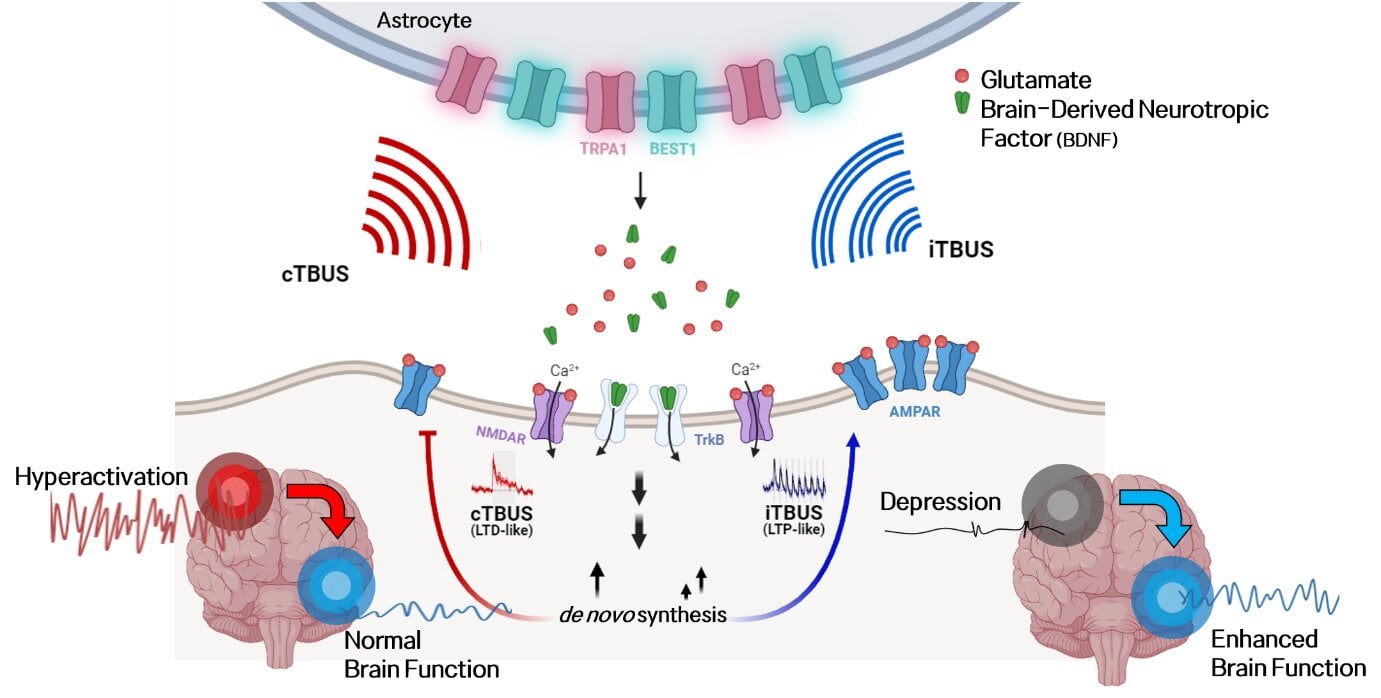
A new non-invasive brain stimulation technique called Patterned Low-Intensity Low-Frequency Ultrasound (LILFUS) has been developed by researchers, showing promise for treating brain disorders. This technique, which uses ultrasound to stimulate specific brain areas, has the potential to induce long-lasting changes in brain function by modulating neural plasticity. The study found that LILFUS can improve motor skill learning and may have applications in treating conditions such as depression. The researchers plan to continue studying the technology for the treatment of brain disorders and the enhancement of cognitive functions.

"Revolutionizing Neuroscience: 7 Game-Changing Brain Insights"

Originally Published 1 year ago — by PsyPost

Featured image for "Revolutionizing Neuroscience: 7 Game-Changing Brain Insights"
Source: PsyPost

Recent neuroscience studies have revealed new insights into the gut-brain connection during weight loss, the role of the superior colliculus in visual perception, the complexity of moral cognition, predicting relapse in addiction, the link between breathing and memory consolidation, unique neural responses in autistic individuals, and the early development of moral cognition in infants, highlighting the dynamic and interdisciplinary nature of neuroscience research and its potential to inform therapeutic strategies and enhance understanding of human behavior and cognition.

The Link Between Negative Self-Thinking and Adolescent Depression Levels

Originally Published 2 years ago — by PsyPost

Featured image for The Link Between Negative Self-Thinking and Adolescent Depression Levels
Source: PsyPost

A study published in Acta Psychologica has found a link between persistent negative self-referent thinking and current depressive symptoms in adolescents, but not necessarily future symptoms. The research, conducted by Eline Belmans and team at KU Leuven Research University, used an Emotional Reversal Learning Task to measure participants' adaptation to changing reward conditions and found that those who persistently engaged in negative self-referent thinking had higher levels of depressive symptoms. However, this thinking pattern was not a significant predictor of future symptoms. The study sheds light on depressive cognition in adolescents and suggests potential avenues for preventive strategies in adolescent mental health, but has limitations in terms of self-reporting and the short follow-up period.

Decoding the Energetic Costs and Evolution of Human Intelligence

Originally Published 2 years ago — by PsyPost

Featured image for Decoding the Energetic Costs and Evolution of Human Intelligence
Source: PsyPost

A new study published in Science Advances reveals that certain areas of the human brain involved in complex cognitive functions require significantly more energy than others. This challenges the belief that larger brain sizes are solely responsible for our cognitive abilities. The study found a linear relationship between the brain's glucose metabolism and its functional connectivity, with frontoparietal networks responsible for high-level cognitive tasks using up to 67% more energy than areas involved in basic sensory or motor functions. The research also suggests that the development of energy-intensive brain regions, regulated by neuromodulators like dopamine and serotonin, may be crucial to the evolution of human cognition.

"Unlocking Mental Sharpness: How Wasabi Boosts Cognitive Function in Seniors"

Originally Published 2 years ago — by Interesting Engineering

Featured image for "Unlocking Mental Sharpness: How Wasabi Boosts Cognitive Function in Seniors"
Source: Interesting Engineering

A recent study conducted by researchers from Tohoku University in Japan explored the impact of 6-MSITC, the main bioactive compound in wasabi, on cognitive functions in older adults aged between 60 and 80. The study focused on working memory and episodic memory and found that 6-MSITC from wasabi improved cognition in older adults.

The Future of AI: Superhuman Skills, Lethal Potential, and the Rise of AGI

Originally Published 2 years ago — by Fox News

Featured image for The Future of AI: Superhuman Skills, Lethal Potential, and the Rise of AGI
Source: Fox News

The CEO of OpenAI, the company behind ChatGPT, has warned that AI systems could develop "superhuman persuasion" abilities before achieving superhuman general intelligence, potentially leading to "strange outcomes." While some experts question the legitimacy of these fears, others argue that AI already has the potential to persuade and mislead. The key lies in questioning and pressure testing the information provided by both human and machine experts. Concerns over AI's ability to simulate human behavior and perpetrate fraud are also raised, with one expert jokingly suggesting that AI androids might one day run for Congress.

"Brain's Learning Process Mirrors Computational Models"

Originally Published 2 years ago — by MIT News

Featured image for "Brain's Learning Process Mirrors Computational Models"
Source: MIT News

Two studies from researchers at MIT's K. Lisa Yang Integrative Computational Neuroscience Center suggest that the brain may develop an intuitive understanding of the physical world through a process similar to self-supervised learning used in computational models. The studies found that neural networks trained using self-supervised learning generated activity patterns similar to those seen in the brains of animals performing the same tasks. The findings indicate that these models can learn representations of the physical world to make accurate predictions, suggesting that the mammalian brain may use a similar strategy. The research has implications for understanding the brain and developing artificial intelligence systems that emulate natural intelligence.

Jellyfish Study Challenges Understanding of Brain Function

Originally Published 2 years ago — by New York Post

Featured image for Jellyfish Study Challenges Understanding of Brain Function
Source: New York Post

A new study from the University of Copenhagen suggests that jellyfish, specifically the poisonous Caribbean box jellyfish, have a much more advanced ability to learn than previously thought, despite having only 1,000 nerve cells and no centralized brain. The research challenges the prevailing scientific opinion that more advanced nervous systems equate to higher learning potential. The findings could provide insights into human cognitive functions and the process of dementia. The study also offers opportunities to study the precise changes that occur in nerve cells during advanced learning, potentially leading to a better understanding of memory and the development of treatments for dementia.

"The Cognitive Advantage of Bilingualism: Strengthening Memory and Predictive Abilities"

Originally Published 2 years ago — by Neuroscience News

Featured image for "The Cognitive Advantage of Bilingualism: Strengthening Memory and Predictive Abilities"
Source: Neuroscience News

Bilingual individuals have an advantage in memory retention and word prediction due to the "competing words" effect. The same neural apparatus processes both languages in bilinguals, activating competing words from both languages. Bilinguals with high proficiency in their second language show enhanced memory and prediction abilities compared to monolinguals and bilinguals with low second-language proficiency. Eye-tracking data supports the claim that bilinguals focus longer on objects with overlapping word sounds, leading to improved memory retention. Bilingualism enhances basic cognitive functions such as memory and categorization.

Cracking the Code: Understanding How the Brain Processes Numbers.

Originally Published 2 years ago — by Neuroscience News

Featured image for Cracking the Code: Understanding How the Brain Processes Numbers.
Source: Neuroscience News

Researchers at the Technical University of Munich have developed a new method to measure human brain activity at the cellular level, using microelectrodes during "awake" brain surgery. The researchers found that individual neurons in the human brain specialize in handling specific numbers, becoming especially active when their "preferred" number is presented. This breakthrough brings us a step closer to understanding the mechanisms of cognitive functions. The development of the procedure was possible due to patients with brain tumors who agreed to have sensors implanted and performed test tasks during their surgeries.

The Deleted Genes That Changed Human Evolution Forever

Originally Published 2 years ago — by SciTechDaily

Featured image for The Deleted Genes That Changed Human Evolution Forever
Source: SciTechDaily

Humans lost around 10,000 fragments of genetic information over evolutionary history, which differentiate us from our closest primate relatives, like chimpanzees. Some of these “deleted” fragments relate to neuronal and cognitive functions, including those involved in brain cell formation. These deletions, present in other mammals but absent in humans, became conserved across all humans, suggesting they provided a biological advantage. The team used Massively Parallel Reporter Assays (MPRA) technology to screen and measure the function of thousands of genetic changes among species, contributing to our understanding of what makes humans unique.