Tag

Age Related Macular Degeneration

All articles tagged with #age related macular degeneration

Innovative Eye Implants Enable Reading for the Legally Blind

Originally Published 2 months ago — by SciTechDaily

Featured image for Innovative Eye Implants Enable Reading for the Legally Blind
Source: SciTechDaily

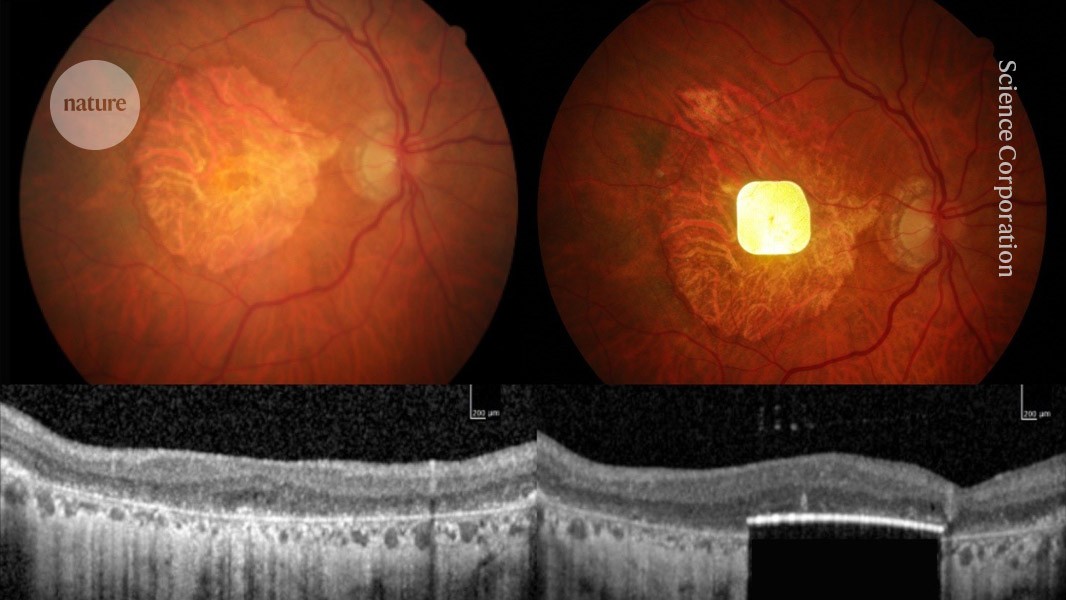
A new solar-powered retinal implant combined with AI-enhanced glasses has successfully restored reading vision in patients with dry age-related macular degeneration, marking a significant breakthrough in artificial vision technology and offering hope for those with untreatable blindness.

Revolutionary Retinal Implant Restores Sight to Blind Patients

Originally Published 2 months ago — by Nature

Featured image for Revolutionary Retinal Implant Restores Sight to Blind Patients
Source: Nature

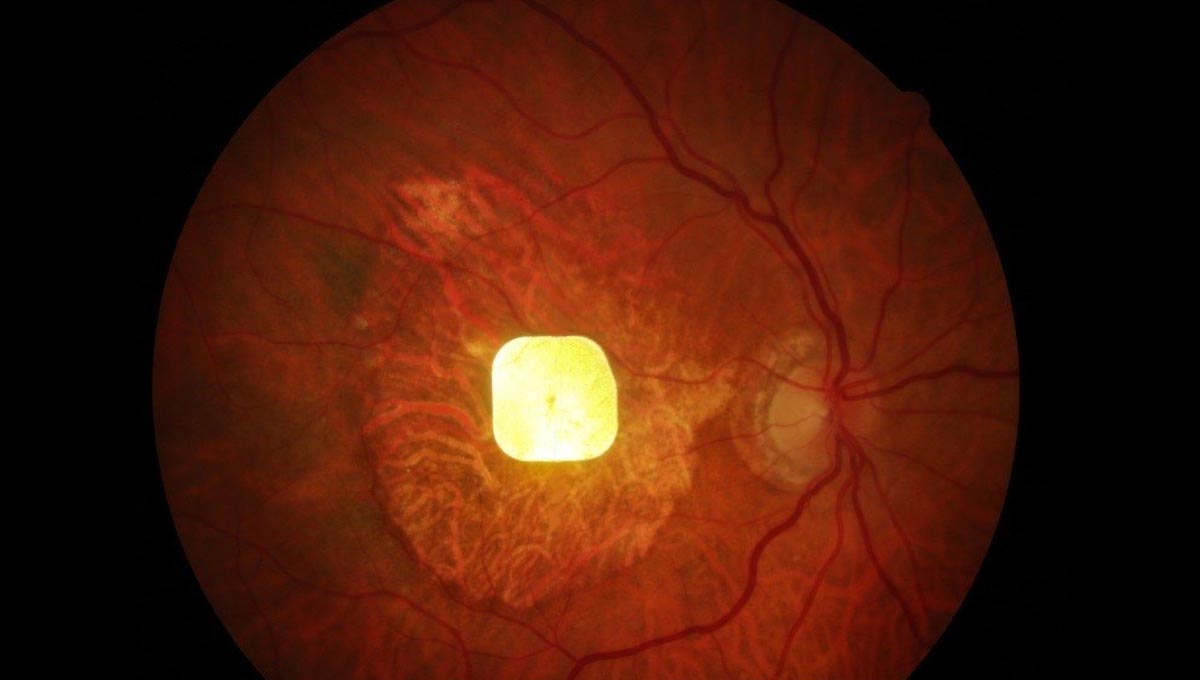
Scientists have developed a retinal implant that significantly improves vision in people with advanced dry age-related macular degeneration, restoring the ability to read and recognize faces, with promising results from a clinical trial involving 38 patients.

Research Links Certain Coffee Types to Increased Risk of Blindness

Originally Published 6 months ago — by The Manual

Featured image for Research Links Certain Coffee Types to Increased Risk of Blindness
Source: The Manual

A study suggests that drinking instant coffee may significantly increase the risk of developing dry age-related macular degeneration (AMD), a leading cause of blindness, especially in individuals with a genetic predisposition, potentially raising the risk by about 700 times, though more research is needed to confirm this link.

Eye Drops Reversing Age-Related Macular Degeneration Vision Loss

Originally Published 6 months ago — by The Brighter Side of News

Featured image for Eye Drops Reversing Age-Related Macular Degeneration Vision Loss
Source: The Brighter Side of News

Researchers have developed peptide-based eye drops that target Toll-like receptor pathways to reverse vision loss caused by age-related macular degeneration, showing promising results in mouse models and offering a less invasive treatment option.

DNA Damage: A Crucial Factor in Macular Degeneration

Originally Published 1 year ago — by Futurity: Research News

Featured image for DNA Damage: A Crucial Factor in Macular Degeneration
Source: Futurity: Research News

Researchers have identified accumulated DNA damage in the retina as a key factor in age-related macular degeneration (AMD), a leading cause of blindness in people over 50. The study, published in Aging Cell, suggests that targeting specific retinal cells could lead to treatments that slow or stop AMD progression. The research highlights the importance of DNA repair in maintaining retinal health and suggests potential interventions to counteract oxidative stress and enhance DNA repair. The study involved collaboration from multiple universities and was supported by various foundations and the NIH.

"Supplements Found to Slow Late-Stage Dry Macular Degeneration"

Originally Published 1 year ago — by National Institutes of Health (NIH) (.gov)

Featured image for "Supplements Found to Slow Late-Stage Dry Macular Degeneration"
Source: National Institutes of Health (NIH) (.gov)

A new NIH analysis reveals that daily antioxidant supplements, specifically the AREDS2 formula, can slow the progression of late-stage dry age-related macular degeneration (AMD), helping to preserve central vision by reducing the expansion of geographic atrophy towards the fovea.

"Revolutionizing Retinal Imaging: AI Speeds Up Process 100-Fold"

Originally Published 1 year ago — by Medical Xpress

Featured image for "Revolutionizing Retinal Imaging: AI Speeds Up Process 100-Fold"
Source: Medical Xpress

Researchers at the National Institutes of Health have utilized artificial intelligence (AI) to significantly improve the speed and quality of retinal imaging, making it 100 times faster and enhancing image contrast 3.5-fold. By integrating AI with adaptive optics optical coherence tomography (OCT), the new method, called parallel discriminator generative adverbial network (P-GAN), successfully de-speckles retinal pigment epithelium (RPE) images, providing a better tool for evaluating age-related macular degeneration and other retinal diseases. This advancement is expected to make AO imaging more accessible for routine clinical applications and studies aimed at understanding blinding retinal diseases.

"Revolutionary Solar-Powered Eye Implants: Restoring Vision with Self-Powered Bionics"

Originally Published 1 year ago — by BGR

Featured image for "Revolutionary Solar-Powered Eye Implants: Restoring Vision with Self-Powered Bionics"
Source: BGR

Researchers have developed solar-powered eye implants that could potentially help people with incurable eye diseases such as retinitis pigmentosa and age-related macular degeneration. The technology aims to power sensors and cameras in the eye using solar photovoltaic panels, eliminating the need for external charging. While still in the proof-of-concept stage, the idea shows promise in addressing the challenge of powering the implants and could significantly impact the treatment of eye diseases in the future.

"Florida's Eye Degeneration Epidemic: New Drugs Offer Hope for Vision Preservation"

Originally Published 2 years ago — by Tampa Bay Times

Featured image for "Florida's Eye Degeneration Epidemic: New Drugs Offer Hope for Vision Preservation"
Source: Tampa Bay Times

Age-related macular degeneration (AMD) is a leading cause of irreversible blindness and visual impairment, affecting one in 10 Americans aged 50 and above. While effective drugs have been developed to preserve vision, Florida has the highest rate of AMD in the US, partly due to its higher elderly population. Smoking and genetics are also risk factors for the disease, which predominantly affects Caucasians. Regular eye exams are crucial for early detection, as early onset has few symptoms. The FDA recently approved medications for the dry form of AMD, and injections directly into the eyeball have shown promising results in preventing the growth of abnormal blood vessels. Education on the importance of eye exams and early diagnosis remains a concern, as many adults have not had an eye exam in years.

"Age-Related Vision Issues and Common Eye Hazards: What You Need to Know"

Originally Published 2 years ago — by CNET

Featured image for "Age-Related Vision Issues and Common Eye Hazards: What You Need to Know"
Source: CNET

Aging can lead to various vision problems, including presbyopia (age-related farsightedness), age-related macular degeneration (AMD), dry eyes, glaucoma, cataracts, and other changes in sight. These conditions can cause difficulties in seeing things up close, distinguishing colors, and peripheral vision loss. Regular eye exams, lifestyle adjustments, and treatments such as eyeglasses, surgery, and supplements can help manage and prevent further vision problems associated with aging.

"5 Daily Habits to Safeguard Your Vision"

Originally Published 2 years ago — by Woman's World

Featured image for "5 Daily Habits to Safeguard Your Vision"
Source: Woman's World

Age-related macular degeneration (AMD) is the top cause of vision loss in people over 50, but there are habits that can help reduce the risk of developing AMD and keep vision sharp as you age. These habits include drinking green smoothies, getting enough sleep, consuming carotenoids found in fruits and veggies, savoring 'golden milk', and considering medical treatment.

New Drugs Discovered for Treating Age-Related Macular Degeneration and Other Diseases.

Originally Published 2 years ago — by Neuroscience News

Featured image for New Drugs Discovered for Treating Age-Related Macular Degeneration and Other Diseases.
Source: Neuroscience News

Researchers have discovered small-molecule drugs called stress resilience-enhancing drugs (SREDs) that could be used to treat age-related macular degeneration, diabetic retinopathy, and retinitis pigmentosa. The drugs slowed or halted the progression of retinopathies in animal models by inhibiting cyclic nucleotide phosphodiesterases. These chronic, progressive retinal diseases arise from genetic and environmental disruptions of cellular and tissue stability, and currently have limited treatment options. The researchers innovated a systems pharmacology platform that leverages state-of-the-art disease modeling and characterization to identify novel, mechanism-based therapies that mitigate disease at the root cause.

Causal genes for age-related macular degeneration identified in new study.

Originally Published 2 years ago — by Medical Xpress

Featured image for Causal genes for age-related macular degeneration identified in new study.
Source: Medical Xpress

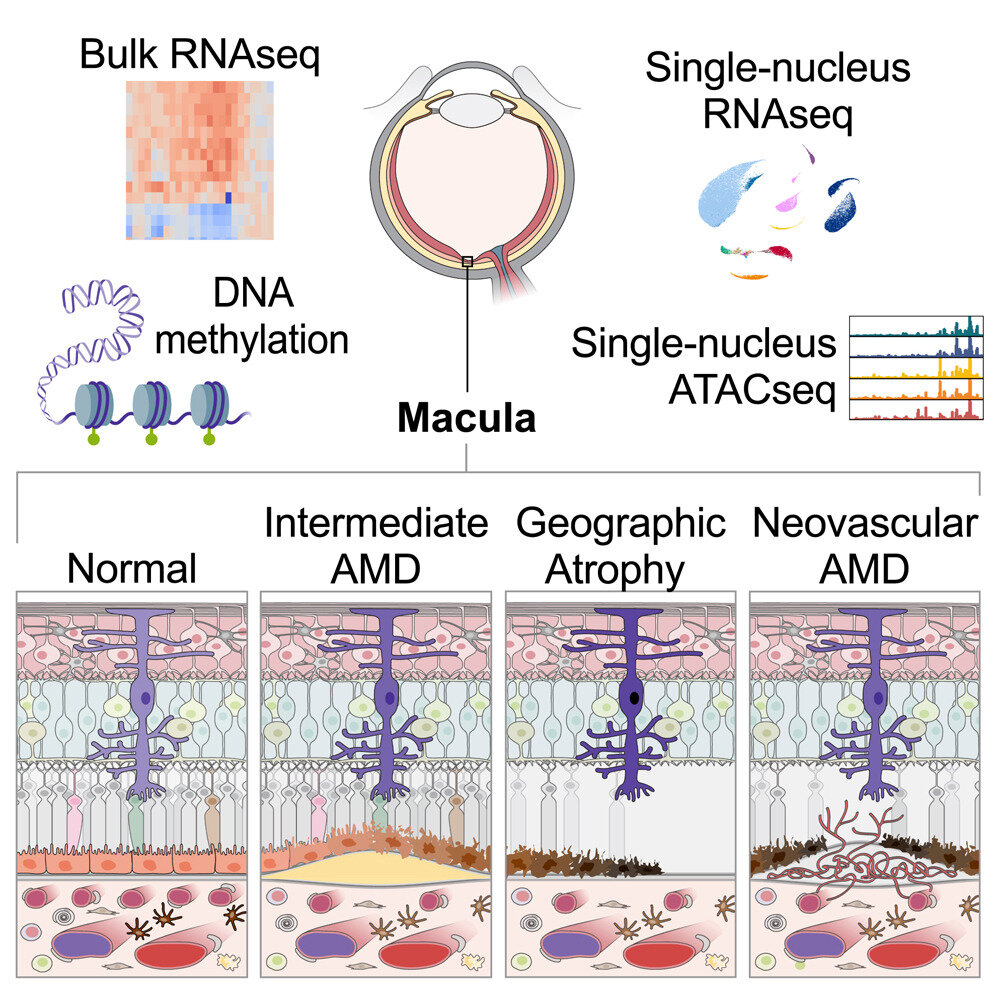
A study led by Genentech has identified 23 significant genome-wide loci that are differentially methylated in age-related macular degeneration (AMD), a condition that can result in blindness. The research highlights causal gene upregulations and underlying genetic risks for AMD. The study also found different clusters of Müller glia cell states, which could be crucial for retinal regeneration research. The researchers dispelled previous assumptions and identified a robust number of relevant gene mechanisms related to AMD that will likely form the basis for future research on the subject.

New breakthrough in reversing sight loss discovered by scientists.

Originally Published 2 years ago — by Daily Mail

Featured image for New breakthrough in reversing sight loss discovered by scientists.
Source: Daily Mail

A clinical trial is underway to test a new treatment for dry age-related macular degeneration (AMD), which affects an estimated 250,000 people in the UK. The treatment involves injecting stem cells from a patient's own skin or bone marrow into the area behind the retina at the back of the eye. Researchers believe the stem cells will grow new retinal cells to replace those lost to the disease, potentially reversing sight loss. A rheumatoid arthritis drug has also been found to slow the development of both dry and wet AMD.

Revolutionary Genetic Discovery Halts Age-Related Vision Loss

Originally Published 2 years ago — by SciTechDaily

Featured image for Revolutionary Genetic Discovery Halts Age-Related Vision Loss
Source: SciTechDaily

Rare genetic variants that create malformed proteins and disrupt the membrane attack complex (MAC) stability have been identified as a potential cause of age-related macular degeneration (AMD), a prevalent cause of vision loss in older adults. The findings suggest MAC as a potential therapeutic target for AMD, as either too much or too little stable MAC in the retina may lead to destructive inflammation, which in turn drives AMD progression.