Tag

Light Manipulation

All articles tagged with #light manipulation

Advances in Metasurfaces and OLEDs Bring Holograms Closer to Everyday Use

Originally Published 4 months ago — by Phys.org

Featured image for Advances in Metasurfaces and OLEDs Bring Holograms Closer to Everyday Use
Source: Phys.org

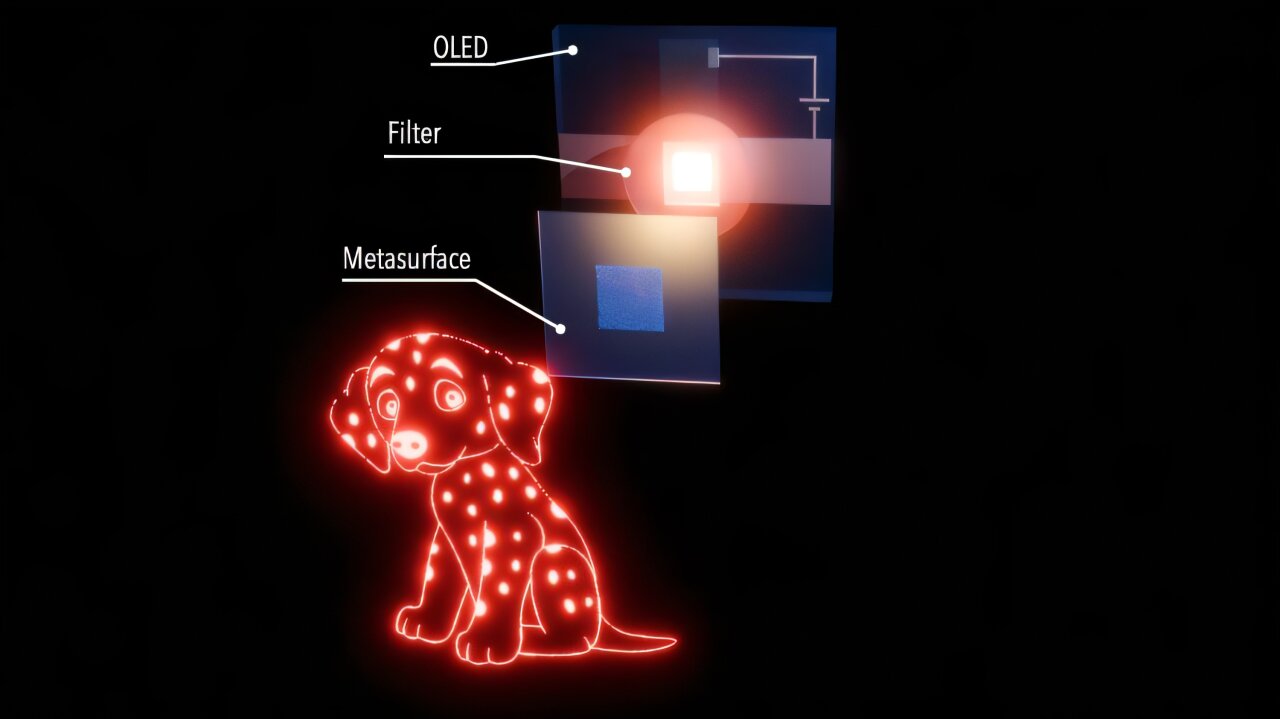
Researchers from the University of St Andrews have developed a new method combining holographic metasurfaces and organic LEDs to create more compact, cheaper, and easier-to-apply holograms, potentially enabling holographic displays in smartphones and other everyday devices.

Scientists Successfully Rewrite a Material’s Magnetic Structure

Originally Published 5 months ago — by SciTechDaily

Featured image for Scientists Successfully Rewrite a Material’s Magnetic Structure
Source: SciTechDaily

Physicists at the University of Konstanz have developed a method to use light to alter the magnetic properties of common crystals like hematite in a non-thermal way, enabling high-speed data processing and quantum research at room temperature, potentially revolutionizing information technology and quantum studies.

"Novel Technique for Distortion-Free Manipulation of Structured Light Developed by Researchers"

Originally Published 1 year ago — by Phys.org

Featured image for "Novel Technique for Distortion-Free Manipulation of Structured Light Developed by Researchers"
Source: Phys.org

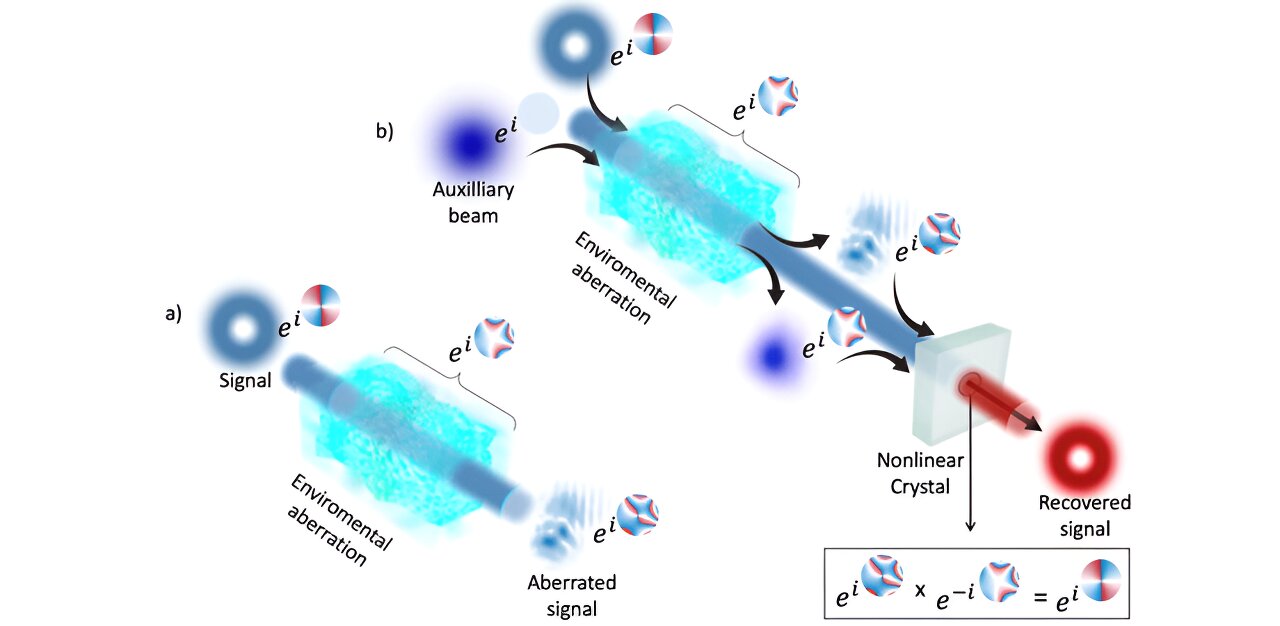
Researchers have developed a method to correct aberrated light coming out of a noisy environment by pairing it with another unstructured beam of light that experienced the same aberration. Using difference frequency generation in a nonlinear crystal, the structured beam is automatically restored without the need for knowledge of the aberration, enabling a nonlinear form of adaptive optics that works at the speed of light. This breakthrough has the potential to be integrated into systems for diverse applications, such as communications, imaging, and optical trapping, and also allows for communication and detection with different wavelengths.

"Breakthrough: Light Slowed 10,000 Times in Groundbreaking Experiment"

Originally Published 1 year ago — by ScienceAlert

Featured image for "Breakthrough: Light Slowed 10,000 Times in Groundbreaking Experiment"
Source: ScienceAlert

Scientists from Guangxi University and the Chinese Academy of Sciences have developed a new method to slow down light by more than 10,000 times using a synthetic 2D structure called a metasurface, made from thin layers of silicon. This breakthrough in light manipulation could have significant implications for computing and optical communication, offering better control over how light travels and reducing energy loss compared to existing methods.

"Light Slowed to Enhance Microchips, Chinese Scientists Report"

Originally Published 2 years ago — by South China Morning Post

Featured image for "Light Slowed to Enhance Microchips, Chinese Scientists Report"
Source: South China Morning Post

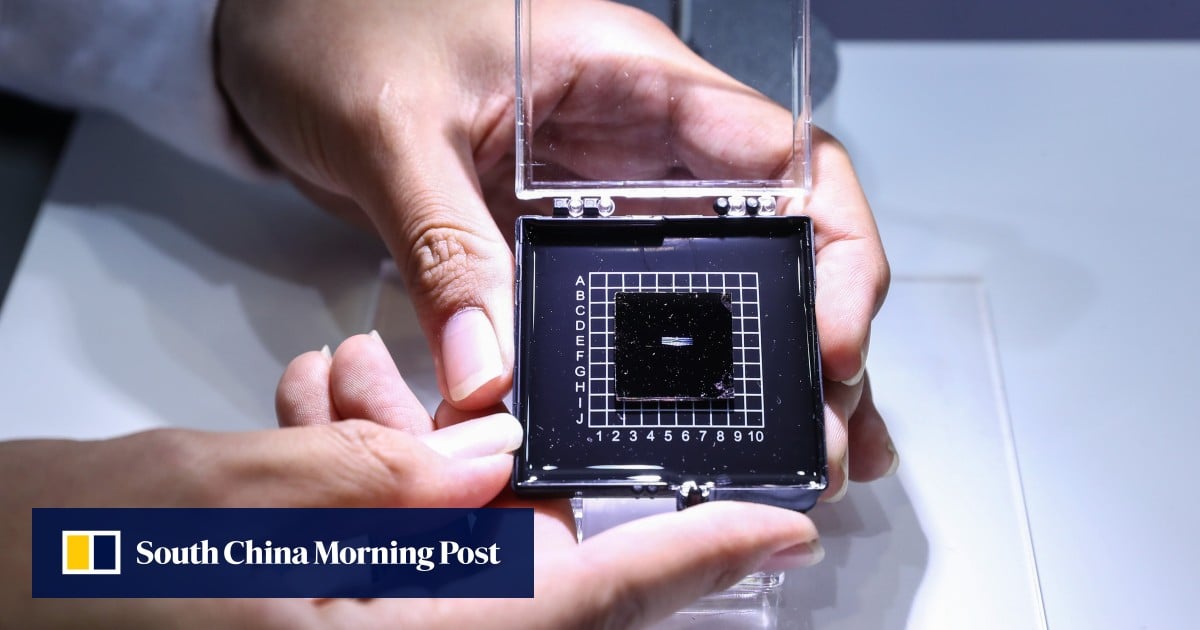
Chinese scientists from the Shenzhen Institute of Advanced Technology have developed a method to slow down light on a microchip by over 10,000 times, improving the performance of photonic chips used in light sensing, communications, and computing. By reducing energy loss and utilizing materials with low absorption, the team was able to manipulate the speed of light, enhancing the interaction distance for light and potentially reducing manufacturing costs for photonic chips.

"Time Traveling Reflections: Light's Journey Through Space and Time"

Originally Published 2 years ago — by Slashdot

Featured image for "Time Traveling Reflections: Light's Journey Through Space and Time"
Source: Slashdot

Researchers at the City University of New York have achieved a breakthrough in creating light-based time reflections using a metamaterial with adjustable optical properties. By dynamically adding or removing material along a waveguide, they were able to alter the waveguide's effective properties and manipulate light's temporal components. This breakthrough has revealed counterintuitive effects, such as the beginning of the original signal appearing at the end of the reflected signal and changes in light's frequencies. The researchers also observed that colliding beams of light can behave like colliding billiard balls when a time reflection occurs. These findings hold promise for advancements in signal processing, communications, and energy conversion applications.

Advancements in Observing Quantum Backflow: Unveiling Light's Twisting Tale

Originally Published 2 years ago — by SciTechDaily

Featured image for Advancements in Observing Quantum Backflow: Unveiling Light's Twisting Tale
Source: SciTechDaily

Scientists at the University of Warsaw have successfully manipulated light to exhibit quantum backflow, a phenomenon where particles have a probability to move backward or spin in the opposite direction. By superposing two light beams twisted in the clockwise direction, they created anti-clockwise twists in the dark regions of the resultant superposition. This breakthrough has implications for the study of light-matter interactions and could be applied in fields such as optical microscopy and precision timekeeping. The researchers used a Shack-Hartman wavefront sensor to observe the phenomenon and demonstrated the backflow effect in two dimensions. This advancement represents a step towards understanding complex quantum mechanics and its practical applications in precision technologies.

Revolutionary Crystal Mimics Gravity's Light Bending Abilities

Originally Published 2 years ago — by IFLScience

Featured image for Revolutionary Crystal Mimics Gravity's Light Bending Abilities
Source: IFLScience

Researchers have created a photonic crystal with pseudogravity, simulating the gravitational pull of a massive object like a black hole. By introducing distortion in the lattice of the crystal, they were able to bend light, similar to how gravity affects the trajectory of light. This breakthrough could have applications in simulating gravitational phenomena and improving telecommunication networks, particularly in the development of 6G communication.

"Pseudogravity: Crystal Manipulates Light, Mimicking Black Holes"

Originally Published 2 years ago — by ScienceAlert

Featured image for "Pseudogravity: Crystal Manipulates Light, Mimicking Black Holes"
Source: ScienceAlert

Scientists have successfully manipulated photonic crystals to create a pseudogravity effect, bending light similar to how it would be affected by a gravitational field. By distorting the crystal's structure, the researchers were able to alter the path of light, potentially opening up new possibilities for optics and communications technology. The findings also have implications for the study of gravity and could contribute to the field of graviton physics.

Engineers Create Pseudogravity to Bend Light, Mimicking Real Gravity

Originally Published 2 years ago — by The Debrief

Featured image for Engineers Create Pseudogravity to Bend Light, Mimicking Real Gravity
Source: The Debrief

Engineers at Tohoku University have successfully created a form of pseudogravity in photonic crystals that can bend light, similar to real gravity. By deforming crystals in the lower energy region, they were able to manipulate and control the behavior of light, opening up possibilities for advanced communication technologies like 6G. The breakthrough could also have applications in optics and materials science, as well as pave the way for new studies in graviton physics.

"Revolutionizing Light Perception: Unleashing Photonic Snake States"

Originally Published 2 years ago — by SciTechDaily

Featured image for "Revolutionizing Light Perception: Unleashing Photonic Snake States"
Source: SciTechDaily

Researchers from UPV, UPC, and ICFO have discovered "Photonic snake states," a breakthrough in the study of light manipulation. These two-dimensional optical rulers, known as frequency combs, have applications in communication, spectroscopy, metrology, and quantum computing. The discovery paves the way for the development of broadband, reconfigurable, and monolithic multicomb devices, expanding the possibilities for advanced optical devices. The research provides a precise model for stable light snake generation, guiding future experiments and stimulating further research in the field.