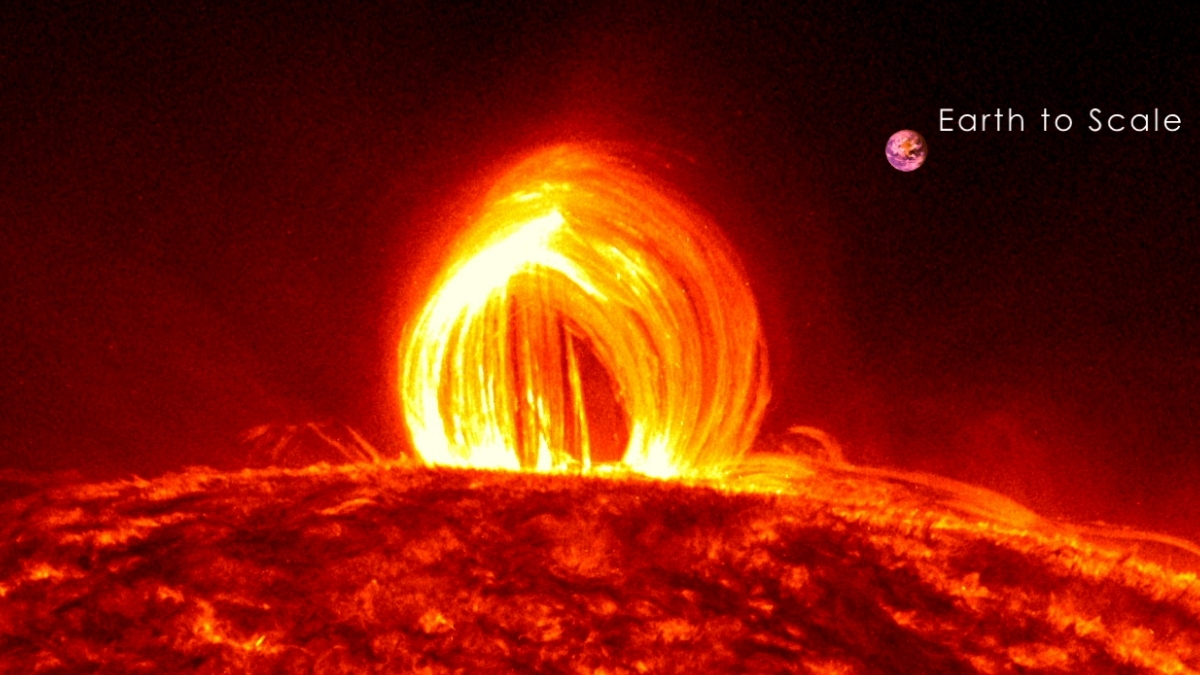
Researchers at the University of Hawai'i have discovered that the mysterious rain on the Sun, composed of superheated plasma, is influenced by shifting flows of elements like iron, silicon, and magnesium in the Sun's corona. This finding helps explain the rapid formation of coronal rain and suggests new insights into solar atmospheric dynamics and coronal heating. The study challenges previous models assuming constant elemental distribution and opens avenues for further research into solar phenomena.
Scientists have long struggled to explain the rapid formation of 'solar rain'—cool, dense plasma blobs that fall during solar flares. Recent research shows that allowing elemental abundances, especially low FIP elements like iron, to vary in models explains the quick cooling and condensation observed. This new understanding improves the accuracy of solar models, helping to better interpret solar activity and predict space weather effects.
Amanda Stricklan, an Anchorage-raised astrophysics Ph.D. student, presented a new explanation for the formation of coronal rain at the American Astronomical Society meeting in Anchorage, highlighting her research on the sun's magnetic field and its impact on space weather, with potential implications for textbooks and future studies.
Researchers captured the most detailed images of the sun's corona, revealing pink 'raindrops' of cooling plasma, using advanced adaptive optics technology at the Big Bear Solar Observatory, providing new insights into solar phenomena.
New high-resolution images of the Sun's corona, achieved through advanced adaptive optics technology, reveal unprecedented fine structures, potentially unlocking answers to longstanding questions like the coronal heating problem and solar eruptions. This breakthrough, led by the National Solar Observatory, enhances ground-based solar observation capabilities and promises to revolutionize solar physics research.
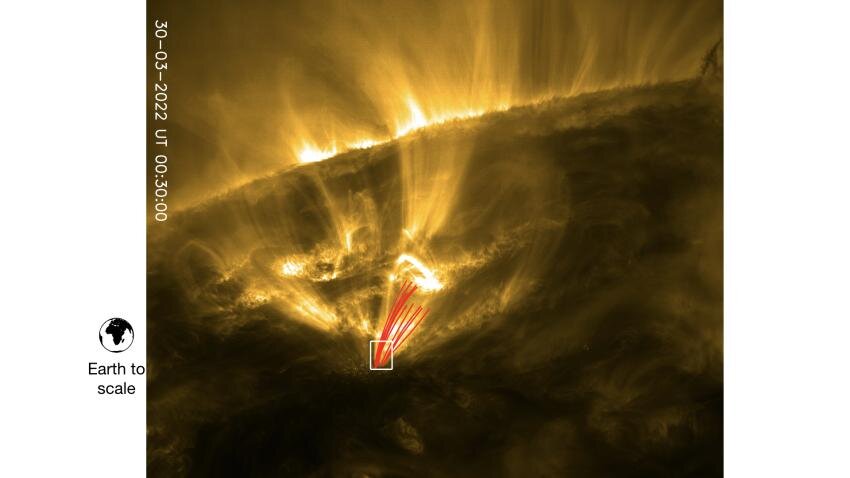
Solar astronomers using the European Space Agency's Solar Orbiter (SolO) have discovered "shooting stars" on the sun's corona. These meteor-like fireballs occur within the phenomenon known as coronal rain, where clumps of the sun's fiery material condense due to localized temperature drops. SolO's observations have provided the first high-resolution images of the coronal rain clumps and revealed that the falling gas can produce brief, intense brightenings and shock waves. This discovery offers important insights into the composition and thermodynamics of the sun's corona.