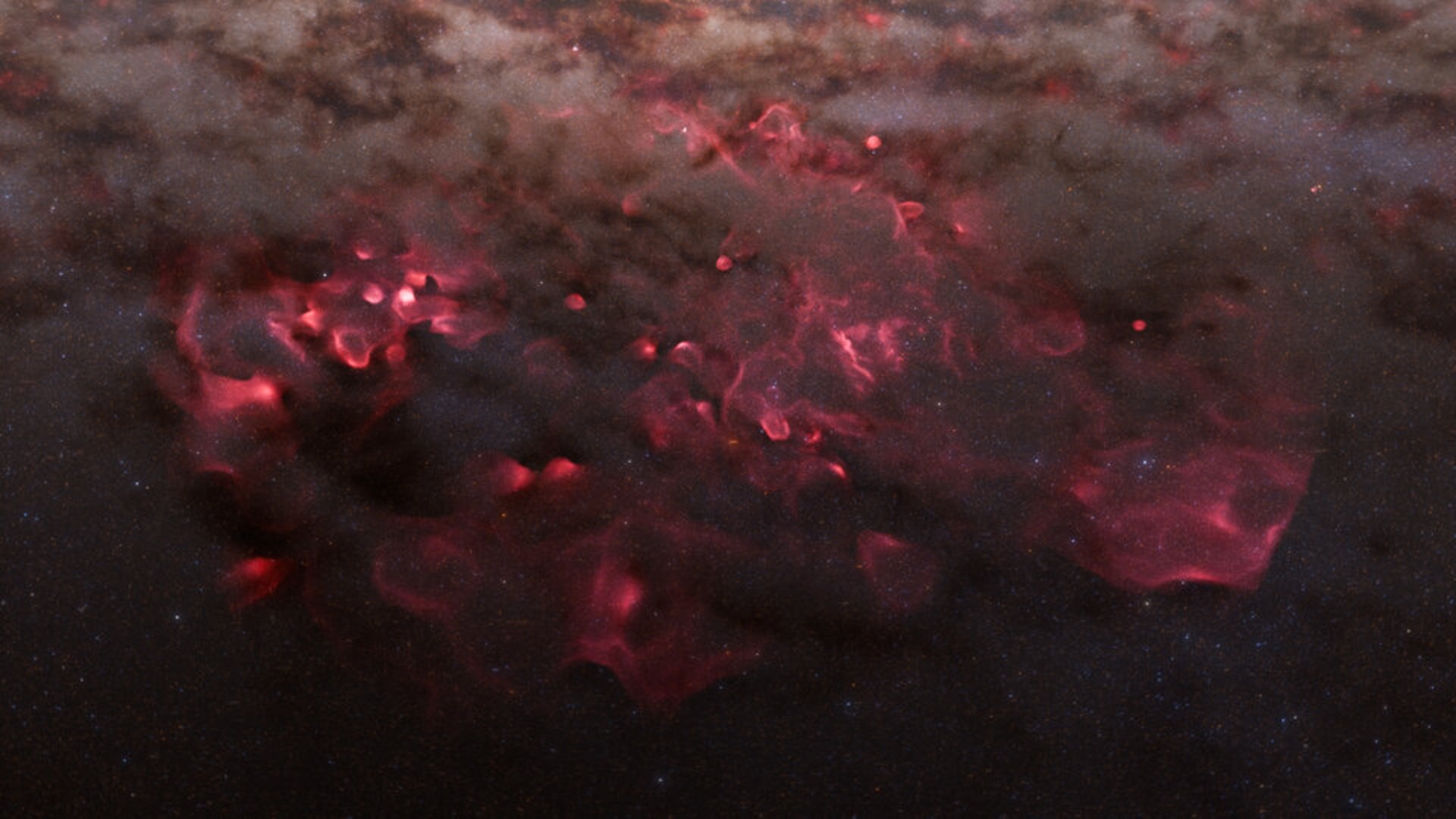
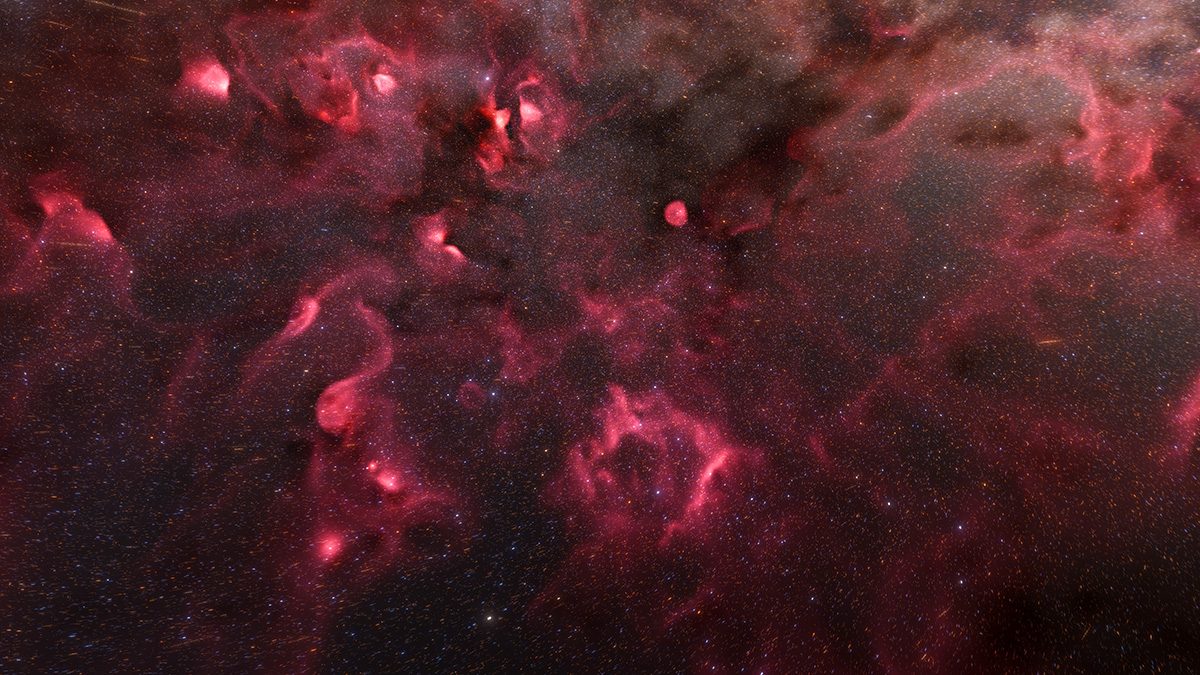
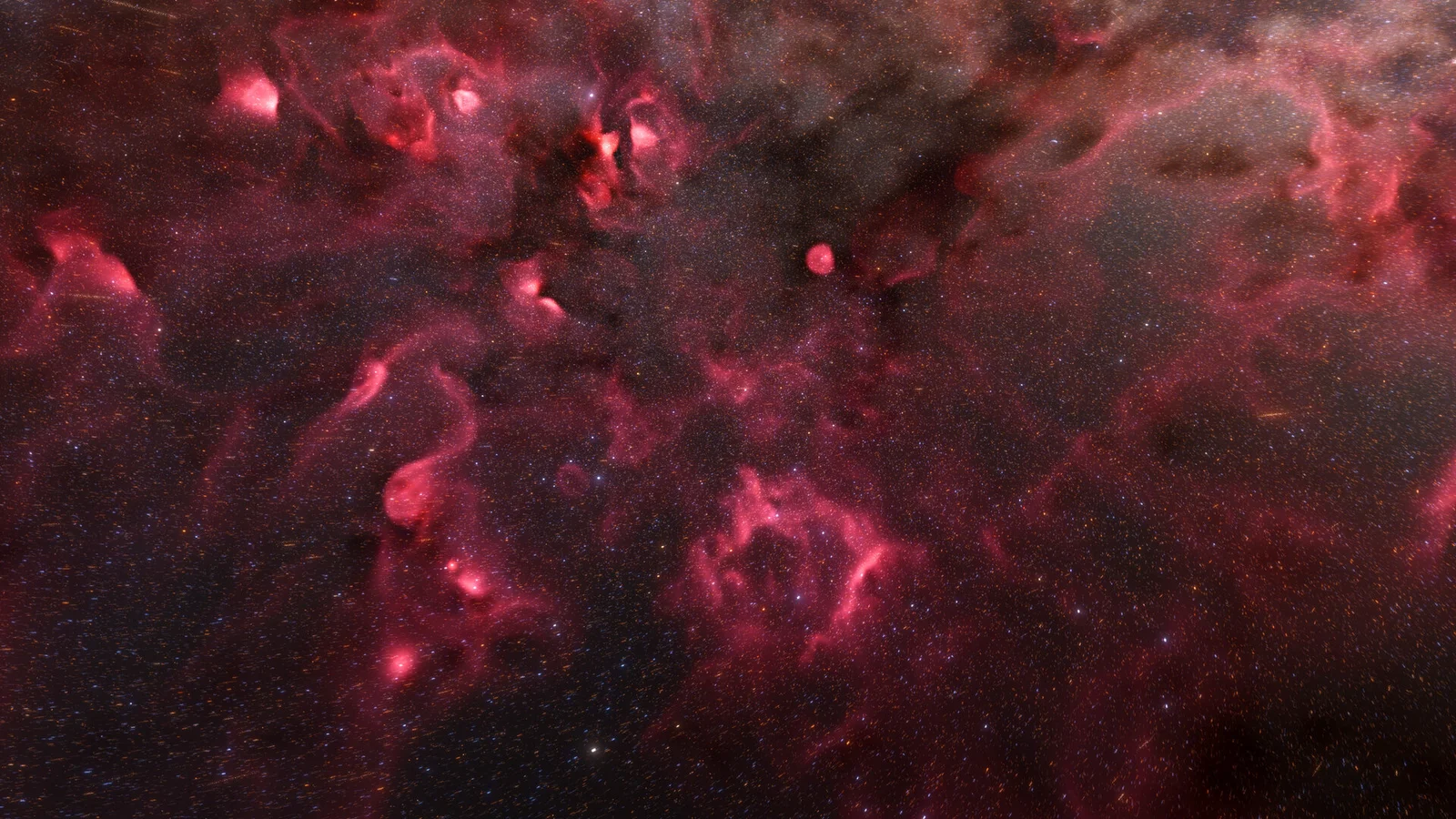
Astronomers have created the most detailed 3D map of star-forming regions in the Milky Way using data from the Gaia telescope, revealing the structure and influence of massive stars in our galaxy's stellar nurseries, with future data expected to expand this view.
The European Space Agency's Gaia mission has created the most accurate 3D map of the Milky Way, allowing us to virtually fly through star-forming regions and see the galaxy from an outside perspective, enhancing our understanding of its structure and the processes within.
Scientists have created the most accurate 3D map of star-forming regions in the Milky Way using data from the Gaia space telescope, revealing detailed structures of stellar nurseries up to 4000 light-years away and providing new insights into how massive stars influence their surrounding interstellar medium.
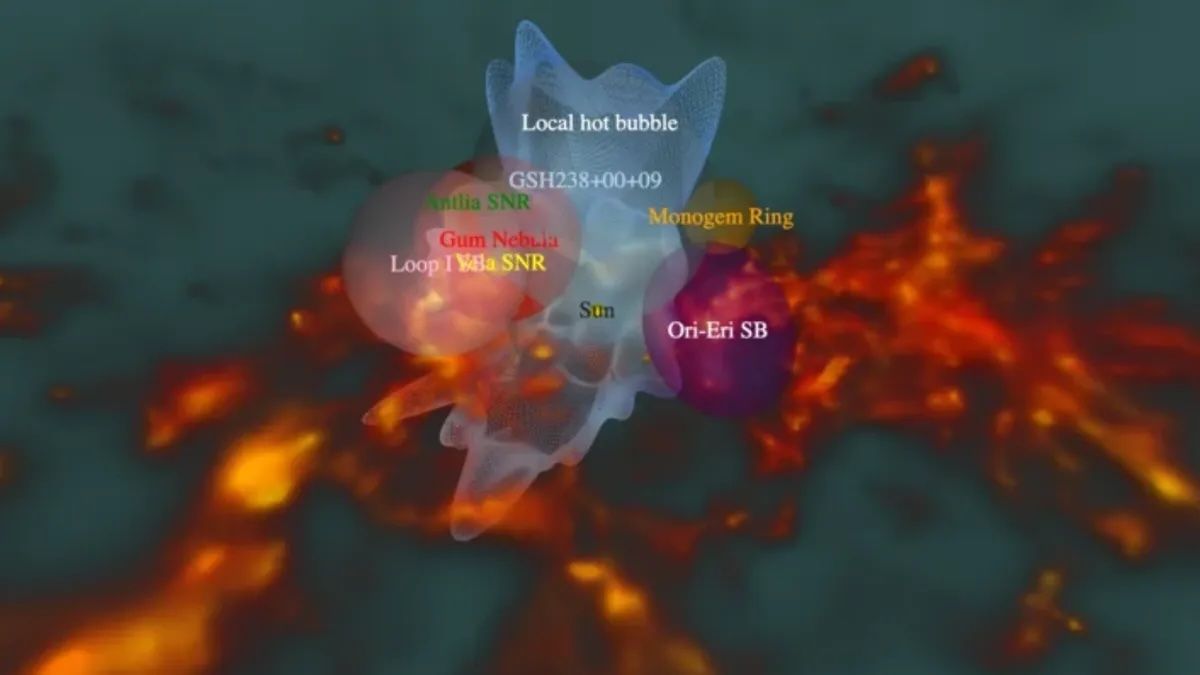
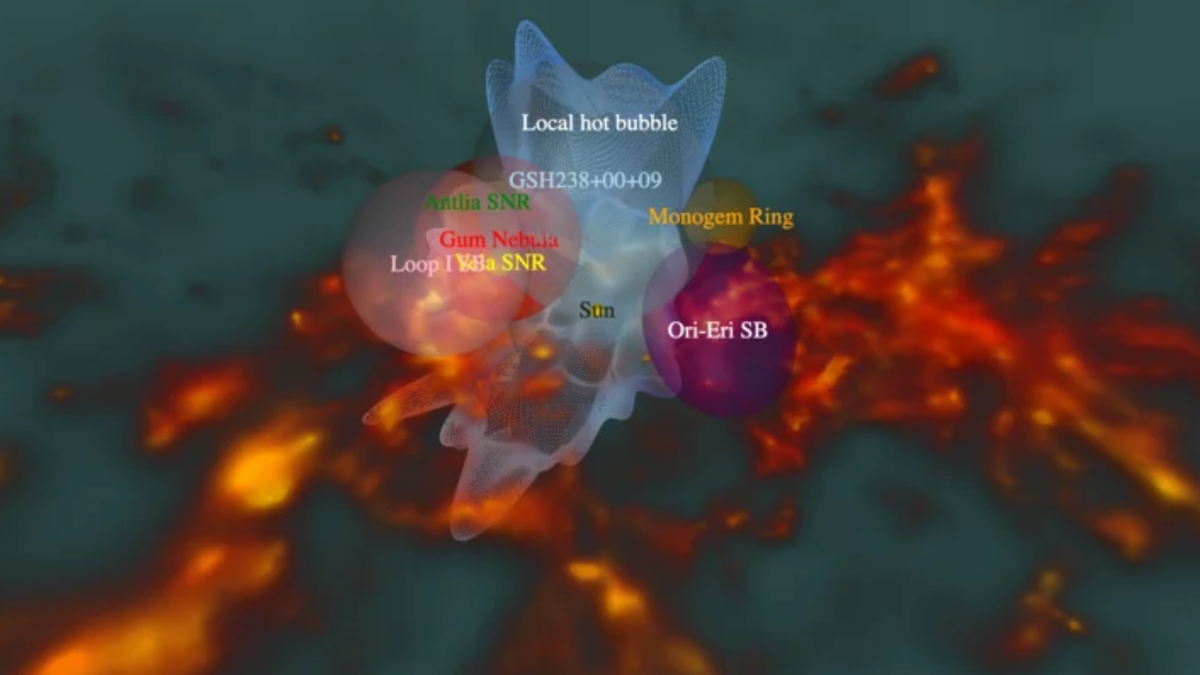
Astronomers have used data from the eROSITA All-Sky Survey to create a 3D map of the Local Hot Bubble (LHB), a low-density region of hot gas surrounding the solar system. This map reveals a temperature gradient within the LHB, likely caused by supernova explosions, and an 'interstellar tunnel' towards the constellation Centaurus, potentially linking the LHB with a neighboring superbubble. The study provides insights into the structure and dynamics of the LHB, including the role of stellar feedback in shaping interstellar tunnels.
Astronomers have used data from the eROSITA All-Sky Survey to create a 3D map of the Local Hot Bubble (LHB), a low-density region of hot gas surrounding the solar system. This map reveals a temperature gradient within the LHB, likely caused by supernova explosions, and an 'interstellar tunnel' towards the constellation Centaurus, potentially linking the LHB with a neighboring superbubble. The study enhances understanding of the LHB's structure and its interaction with the interstellar medium, shaped by stellar winds and supernovae.
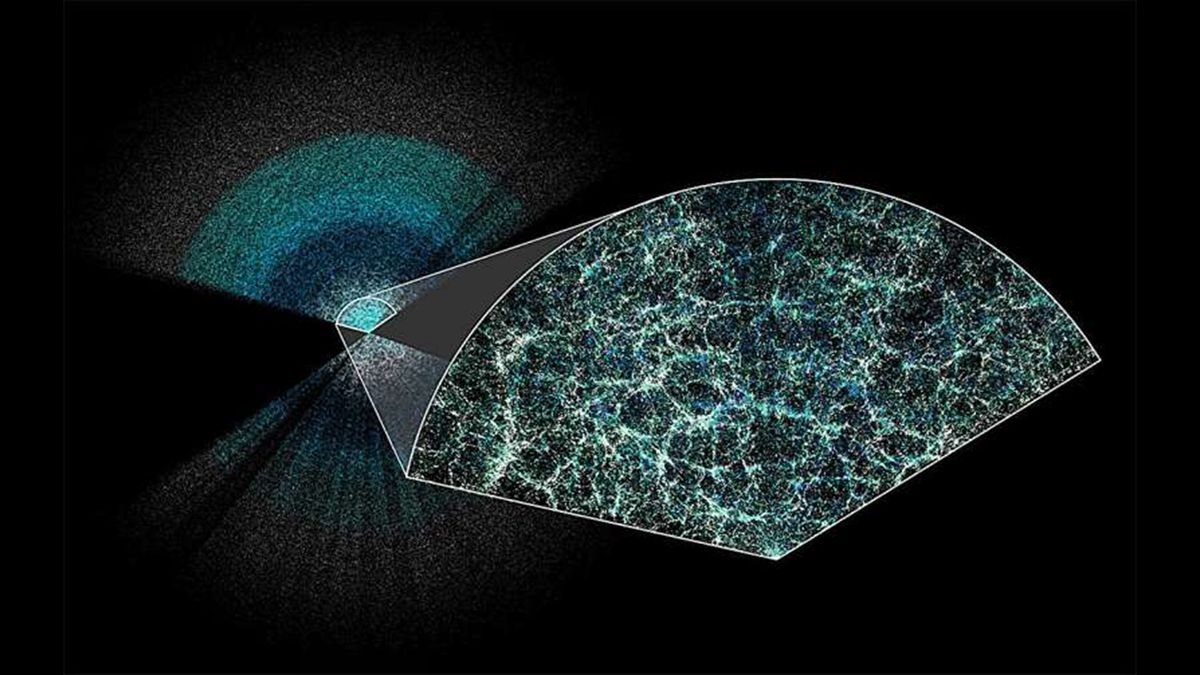
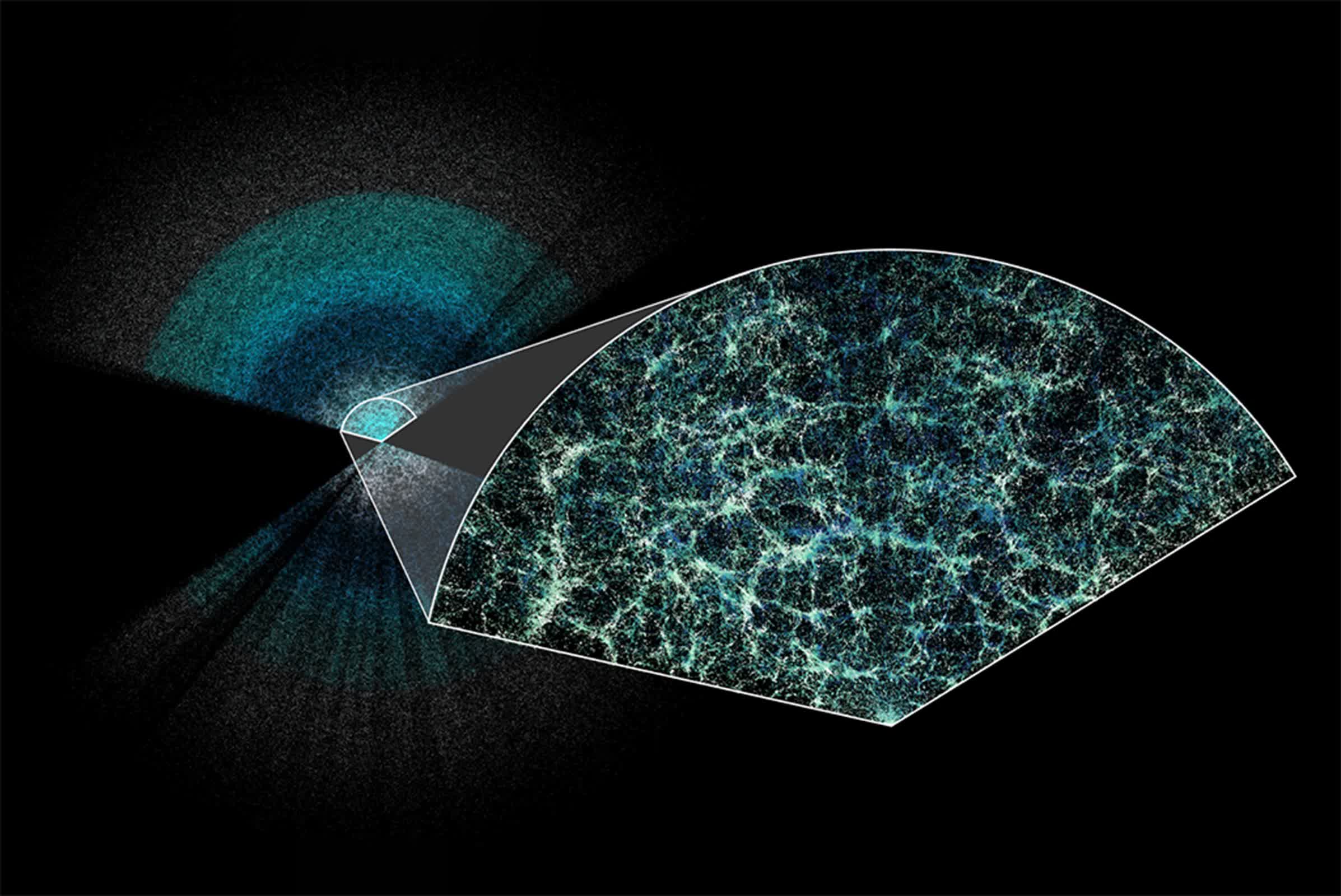
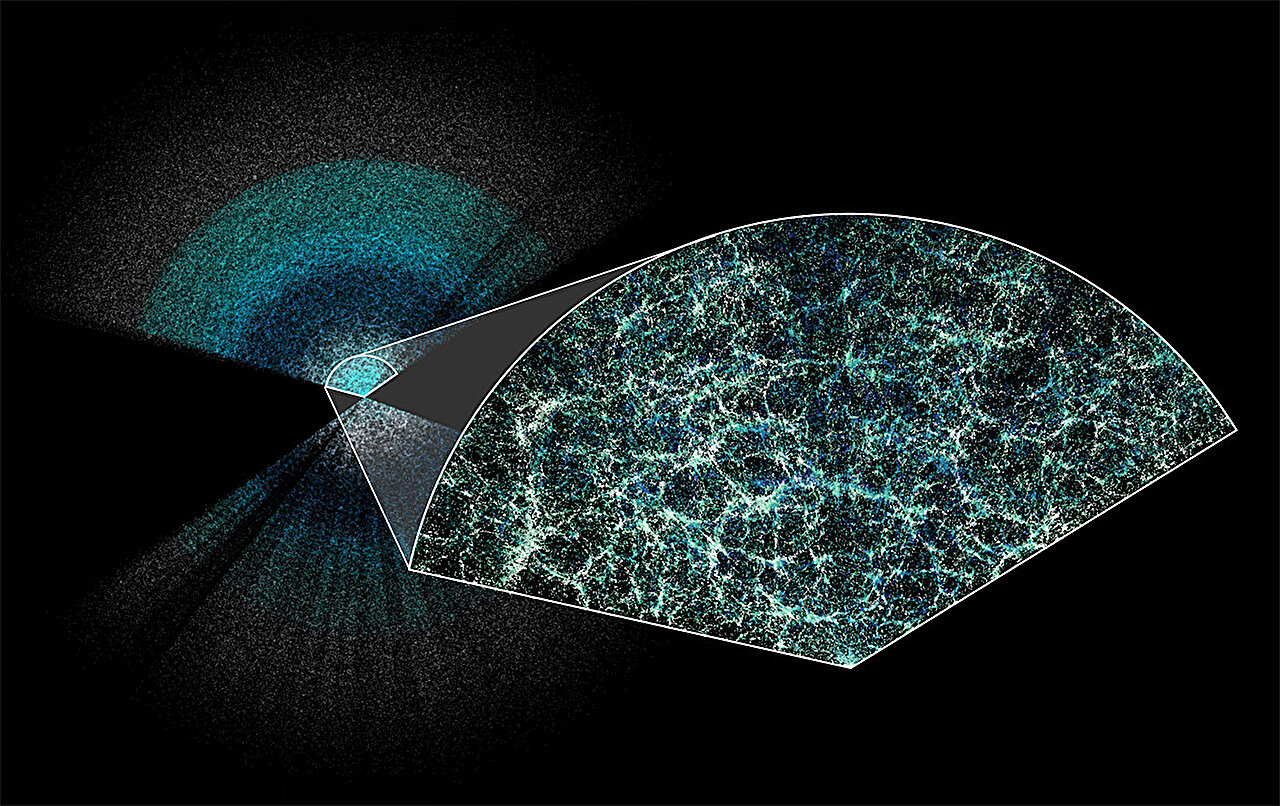
The Dark Energy Spectroscopic Instrument (DESI) has created the largest 3D map of the universe, potentially challenging the prevailing understanding of dark energy. Early analysis suggests that dark energy may not be constant but evolving with time, which could have significant implications for cosmology. This finding is based on DESI's observations of a million galaxies and the detection of Baryon Acoustic Oscillations, indicating a potential shift in our understanding of the universe's expansion. Further observations are needed to confirm this potential paradigm shift in cosmology.
Researchers at Berkeley Lab have created the largest 3D map of the universe, revealing startling implications about the universe's expansion and the nature of dark energy. The map, created using the Dark Energy Spectroscopic Instrument (DESI), suggests that dark energy may not be constant over time, challenging previous scientific understanding. This discovery could lead to a reevaluation of fundamental physics and the big bang theory, as well as a new understanding of the long-term fate of the universe.
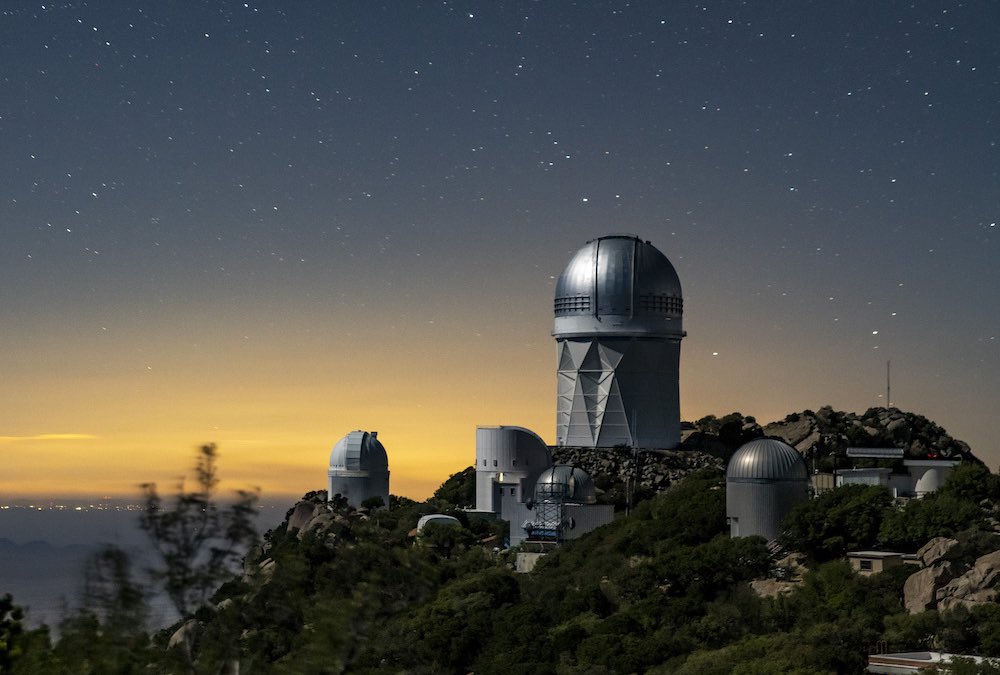
A powerful telescope in Arizona has created a 3D map of the universe as it appeared 11 billion years ago using cosmic ripples, providing a glimpse into the past and likened to dropping gravel into a pond.
The Dark Energy Spectroscopic Instrument (DESI) has created the largest 3D map of the universe, enabling researchers to study the expansion history and evolution of our cosmos with unprecedented precision. By analyzing the light from distant objects, DESI has produced world-leading cosmology results, potentially indicating that dark energy is evolving with time. The instrument's first-year data, combined with other studies, shows subtle differences from the leading model of the universe, Lambda CDM, which may lead to updates in our understanding of the cosmos. DESI's data will continue to provide insights into the expansion history, dark energy, and the dynamics of our universe.
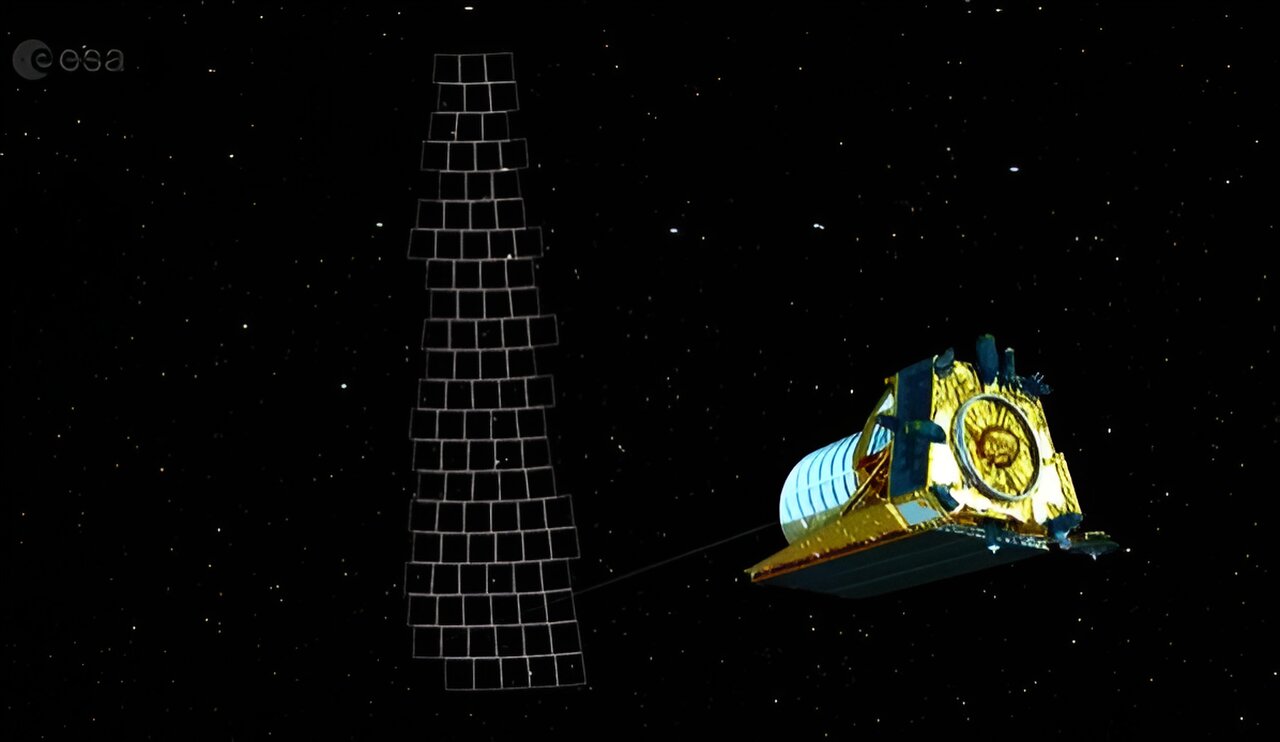
The European Space Agency's Euclid space telescope is set to release its first full-color images on November 7, marking a significant milestone in its mission to create the largest ever 3D map of the universe. These images will provide insights into cosmic secrets and contribute to the study of dark matter and dark energy. Euclid's data collection over its six-year mission is expected to generate the equivalent of a million DVDs worth of data.
Scientists at the Lawrence Berkeley National Laboratory are using the Dark Energy Spectroscopic Instrument (DESI) to map more than 40 million galaxies, quasars, and stars in an effort to understand the effects of dark energy on our reality. Last week, the collaboration publicly released its first batch of data, with nearly 2 million objects, and 100,000 galaxies for researchers to explore. DESI uses 5,000 robotic positioners to move optical fibers that capture light from objects millions or billions of light-years away, building a 3D cosmic map.
Scientists have created a 3D map of the universe by observing two million galaxies and stars for the first time using the Dark Energy Spectroscopic Instrument (Desi). The study aims to reveal the rate at which the universe is expanding and the first batch of data comes from more than 3,500 exposures of the night sky taken over six months, comprising of 80 terabytes. The project's ultimate goal is to map more than 40 million galaxies, quasars, and stars.
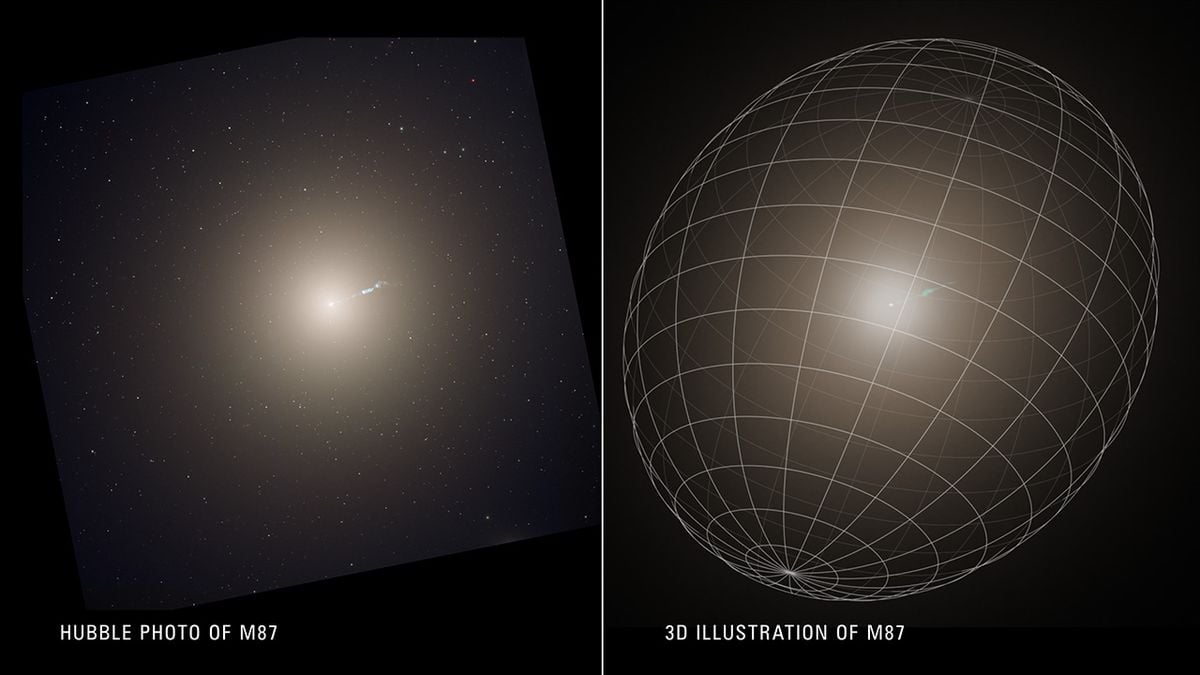
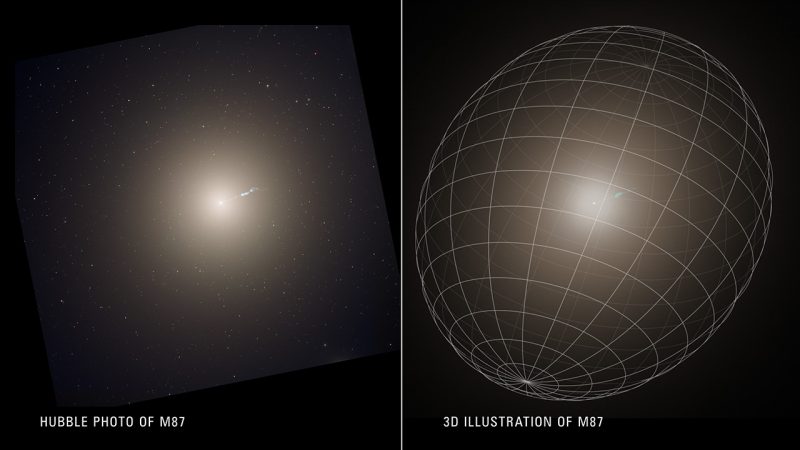
Astronomers have created a 3D map of Messier 87 (M87), one of the largest known elliptical galaxies, using data from the W.M. Keck Observatory and the Hubble Space Telescope. The map revealed that M87 has a triaxial shape, similar to a potato, and is not symmetrical. The team estimated that the supermassive black hole at the center of M87 is about 5.4 billion times more massive than the sun. The map and new estimation of the black hole's mass could help researchers calculate its rotation speed.
Scientists have created a 3D map of M87, a giant elliptical galaxy, using the Hubble Space Telescope and the Keck Observatory in Hawaii. The map shows that the galaxy has a potato shape, or is triaxial. The researchers were able to make a more precise measurement of the central black hole, which has 5.4 billion times the mass of our sun, and gain insight into its spin rate by studying the stellar motion.
Caltech has published a 5.7 terapixel mosaic of Mars that can be explored in 3D, with a resolution of five metres per pixel, boasting twenty times the image quality of previous global Mars maps. The 3D map scales to "outcrop resolution," meaning it's detailed enough to make out small rock formations that could be of interest to scientists, but also is to the average internet user to view the contours of Mars. The 110,000 images used to generate the map were snapped by the Context Camera onboard the Mars Reconnaissance Orbiter (MRO), which has been orbiting the Red Planet since 2006.