Tag

Erosita

All articles tagged with #erosita

science1 year ago

Enhanced Measurement of Cosmic Structures and Intergalactic Medium

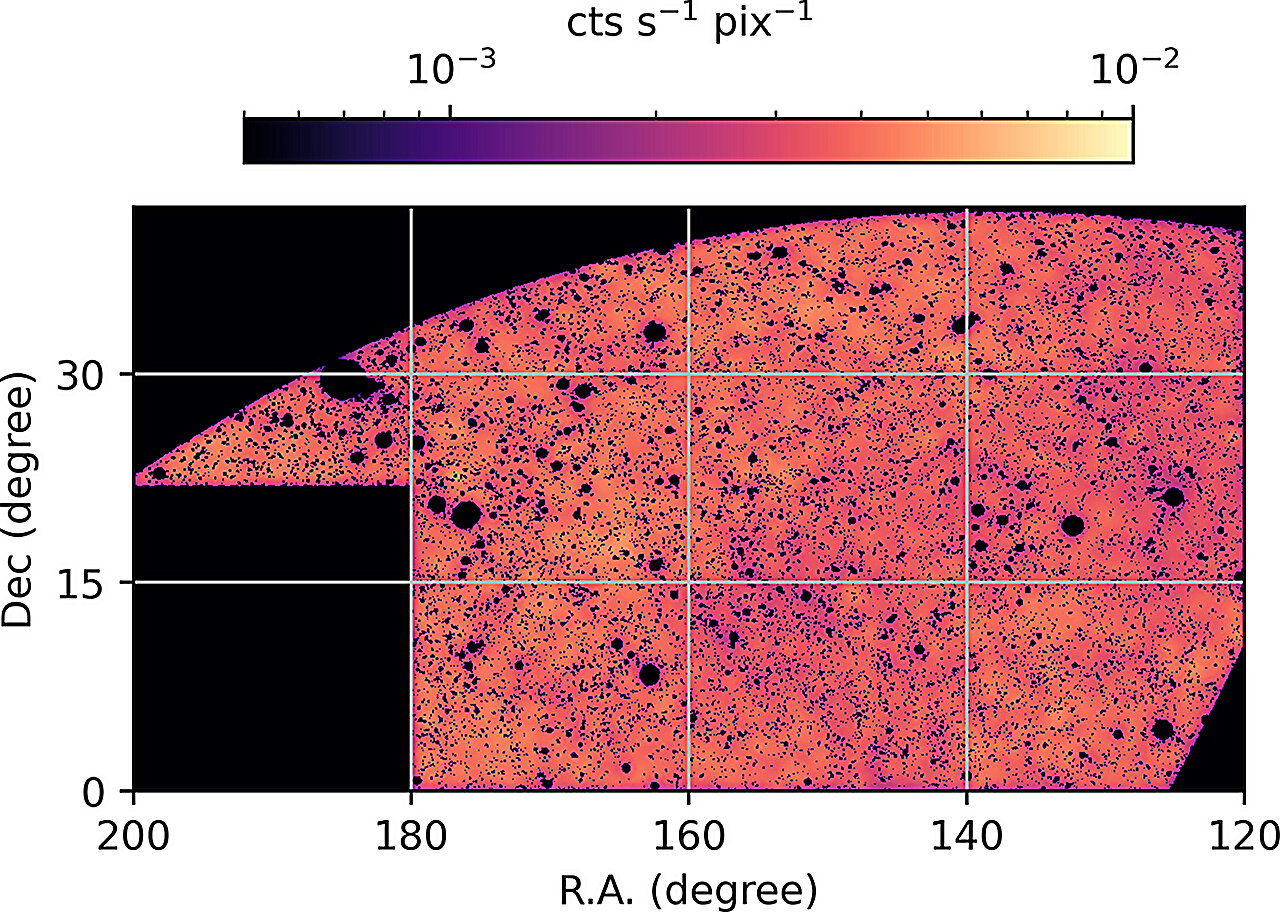
A team of European scientists has improved the quantification of the warm-hot intergalactic medium (WHIM) and cosmic filaments using data from the eROSITA X-ray instrument. These cosmic filaments, which are vast structures of hot, diffuse gas, contain about 50% of the universe's baryonic mass. The study, published in Astronomy & Astrophysics, involved analyzing X-ray emissions from nearly 8,000 filaments to determine their temperature and baryon density contrast. The findings align with numerical simulations and are expected to enhance understanding of the WHIM as future X-ray missions explore its properties further.

science1 year ago

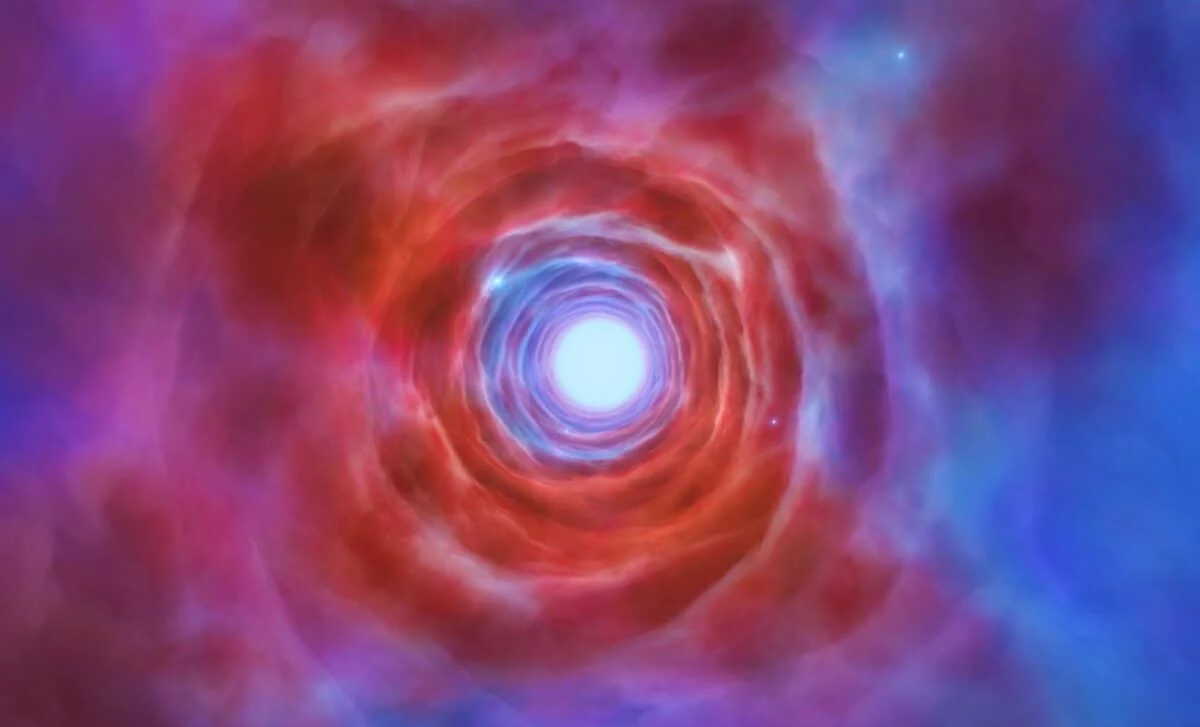
Scientists Uncover Interstellar Tunnel Linking Solar System to Distant Worlds

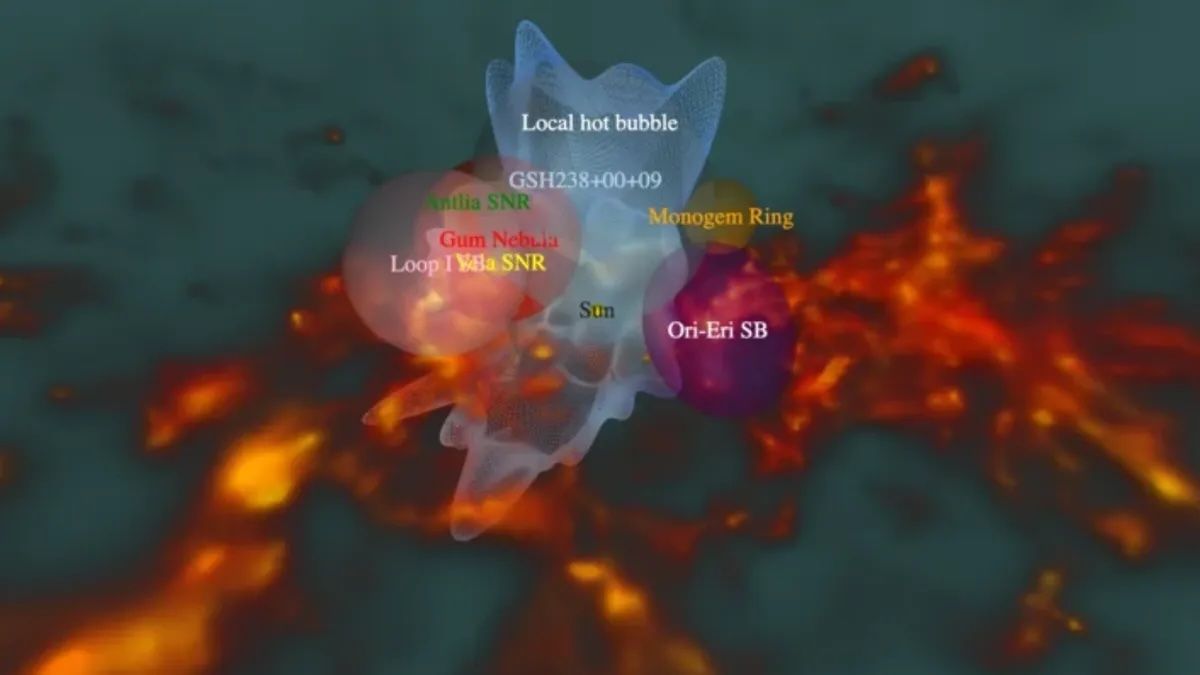
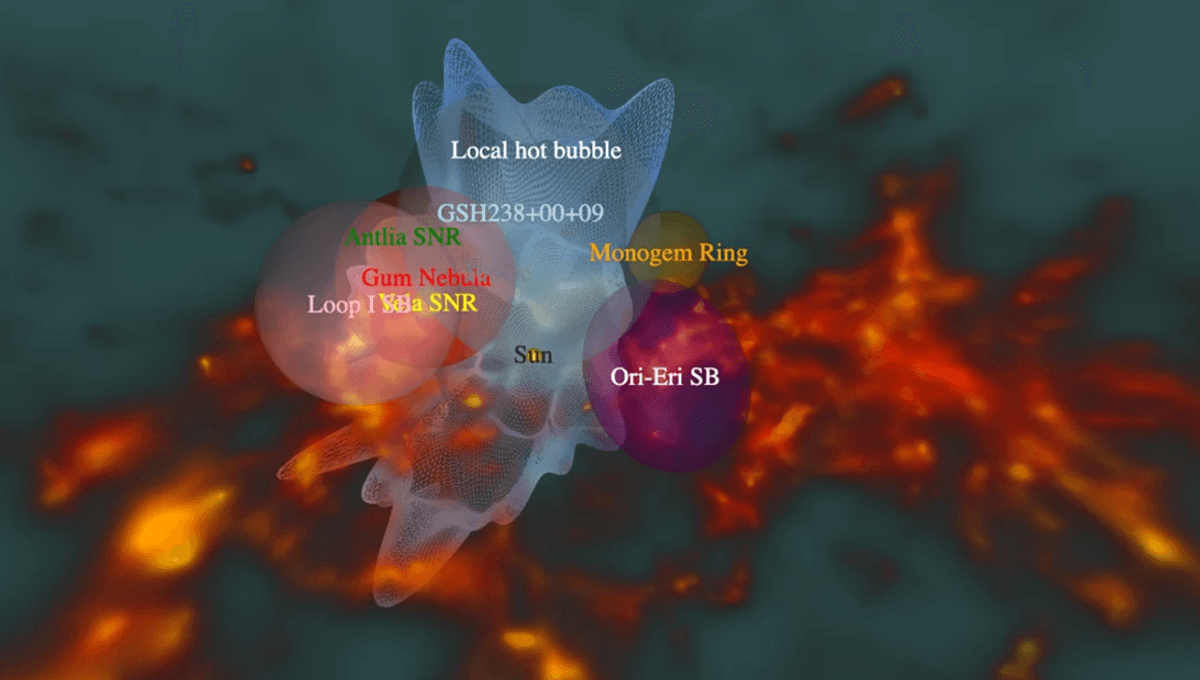
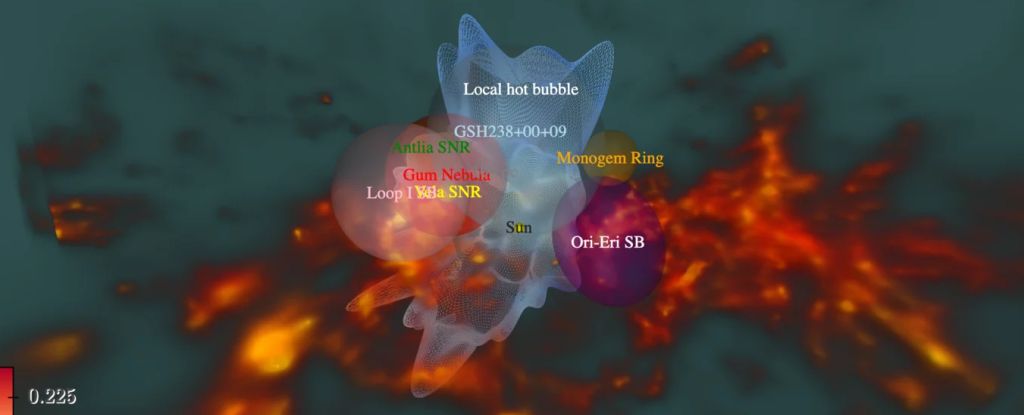
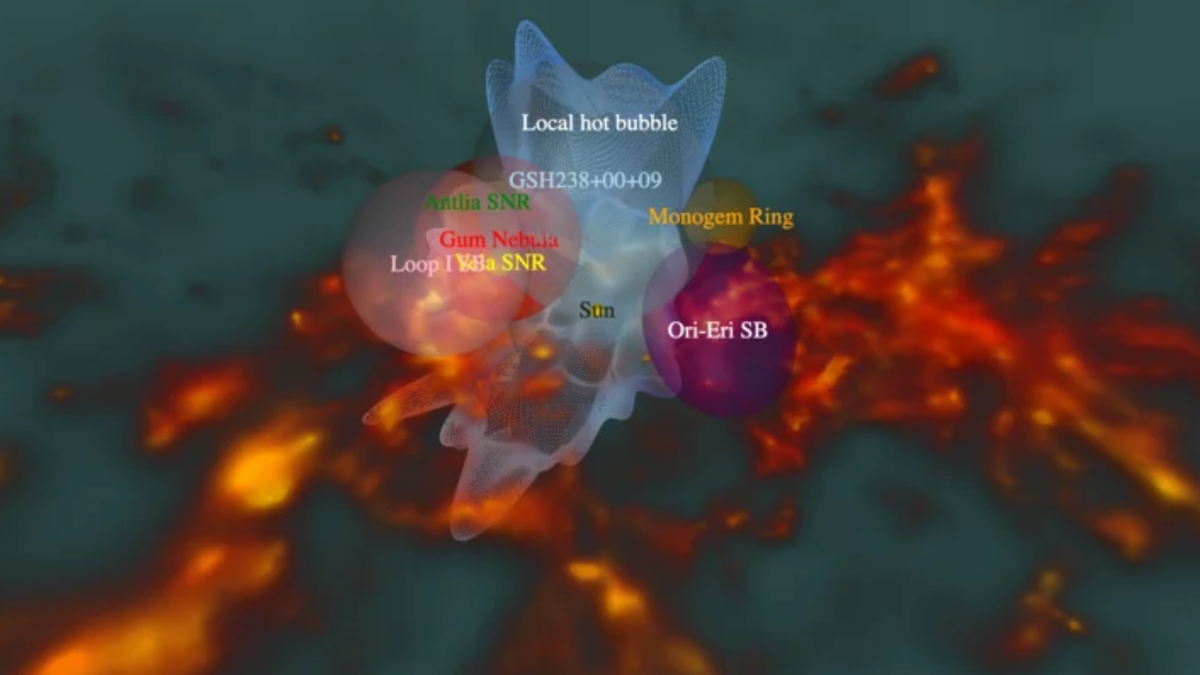
Astronomers have used data from the eROSITA All-Sky Survey to create a 3D map of the Local Hot Bubble (LHB), a low-density region of hot gas surrounding the solar system. This map reveals a temperature gradient within the LHB, likely caused by supernova explosions, and an 'interstellar tunnel' towards the constellation Centaurus, potentially linking the LHB with a neighboring superbubble. The study provides insights into the structure and dynamics of the LHB, including the role of stellar feedback in shaping interstellar tunnels.

space1 year ago

Astronomers Uncover Mysterious 'Interstellar Tunnel' Near Solar System

Astronomers using the eROSITA space telescope have discovered an 'interstellar tunnel' towards the constellation of Centaurus, potentially linking our Local Bubble to a neighboring superbubble. This tunnel, filled with hot plasma, was identified through improved sensitivity in X-ray mapping, revealing a gap in the cooler interstellar medium. The discovery adds complexity to our understanding of the Local Bubble's formation, believed to be shaped by supernova explosions. Further studies are needed to clarify the tunnel's properties and its connection to the Loop I superbubble.

science1 year ago

Astronomers Unveil 'Interstellar Tunnel' Near Solar System

Astronomers have discovered an 'interstellar tunnel' within the Local Hot Bubble, a massive structure of hot gas surrounding our solar system, which may connect to a larger bubble and form part of a galaxy-spanning network. Using data from the eROSITA telescope, researchers created a 3D model of the Local Bubble, revealing new features and supporting the theory that it was formed by supernova explosions millions of years ago. This discovery suggests a complex network of interstellar medium across the Milky Way.

science1 year ago

Discovery of an Interstellar Tunnel in Our Cosmic Neighborhood

Astronomers have mapped the Local Hot Bubble (LHB), a hot, low-density region of space around our Solar System, revealing an asymmetrical shape and a mysterious interstellar tunnel pointing towards the constellation Centaurus. Using the eROSITA X-ray telescope, researchers found that the LHB was likely formed by supernova explosions and is expanding more vertically than horizontally. The discovery of the tunnel suggests a possible network of connected hot bubbles in the galaxy, potentially linking to other structures like the Gum nebula.

science1 year ago

3D Map Unveils Escape Tunnel in Solar System's Local Bubble

Astronomers have used data from the eROSITA All-Sky Survey to create a 3D map of the Local Hot Bubble (LHB), a low-density region of hot gas surrounding the solar system. This map reveals a temperature gradient within the LHB, likely caused by supernova explosions, and an 'interstellar tunnel' towards the constellation Centaurus, potentially linking the LHB with a neighboring superbubble. The study enhances understanding of the LHB's structure and its interaction with the interstellar medium, shaped by stellar winds and supernovae.

astronomy-and-cosmology1 year ago

"Clumpy Universe: New X-Ray Revelations"

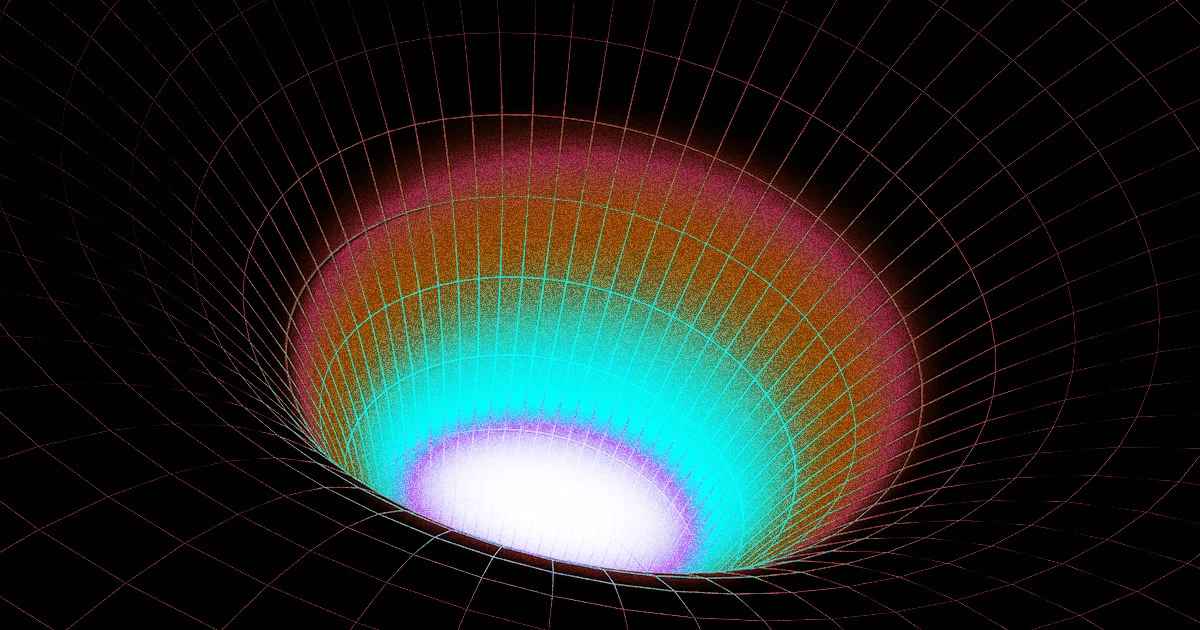
The eRosita telescope team's analysis of X-ray data has aligned with early universe predictions, prompting further scrutiny from the scientific community. Their findings suggest that the sum of neutrino masses is no more than 0.11 electron volts, edging closer to resolving the mystery of neutrino mass. Additionally, their observations indicate that dark energy behaves in a manner consistent with the cosmological constant, although a slight variation remains possible. The team's work, based on initial data, highlights the potential of galaxy cluster measurements as a powerful tool for advancing cosmological understanding.

astronomy1 year ago

"Unveiling the Universe's Clumpiness: X-ray Survey and Dark Matter Insights"

Cosmologists are using the eROSITA X-ray survey of galaxy clusters to measure the clumpiness of the Universe, aiming to resolve discrepancies in previous measurements. The data shows that the distribution of matter is consistent with the cosmic microwave background, easing tensions and confirming the Standard Cosmological Model. Additionally, the survey provides insights into the mass of neutrinos, potentially leading to a breakthrough in measuring their total mass. The extensive survey data offers a new perspective on the distribution of matter in the Universe and presents a significant discovery potential.

astronomy1 year ago

"Unveiling the Universe: X-ray Survey Reveals Surprising Insights and Bolsters Prevailing Theories"

The eROSITA all-sky survey of cosmic X-ray sources has provided precision measurements of the universe's matter content and smoothness, potentially resolving the S8 tension between theoretical predictions and observations of the cosmic microwave background. These findings also offer insights into neutrinos and the growth rate of cosmic structures, hinting at potential new discoveries beyond general relativity.

astronomy1 year ago

"eROSITA X-ray Survey Confirms Standard Model of Cosmology"

Astronomers have used the most detailed X-ray sky map to trace the evolution of cosmic structures, supporting the standard model of cosmology and the role of dark matter in shaping the Universe. The map, created by the eROSITA telescope, revealed around 900,000 X-ray sources, including distant galaxy clusters. The data from the map allowed researchers to calculate crucial parameters of cosmic evolution and make tight measurements of neutrino masses. Despite potential disruptions to data collection, the team plans to continue analyzing the vast amount of data to further understand the Universe.

astronomy1 year ago

"eROSITA X-ray Telescope Unveils Stunning X-Ray View of the Universe"

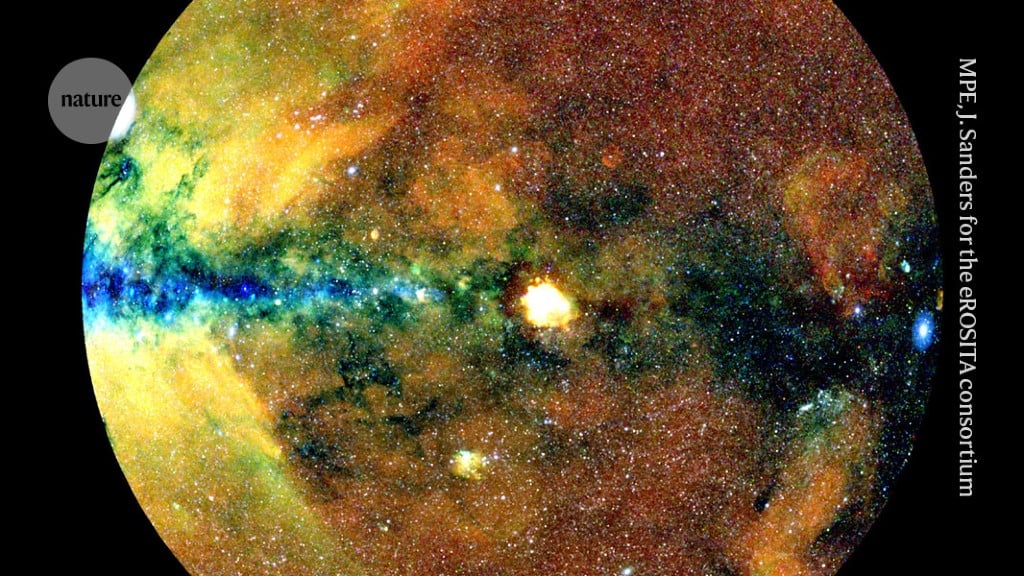
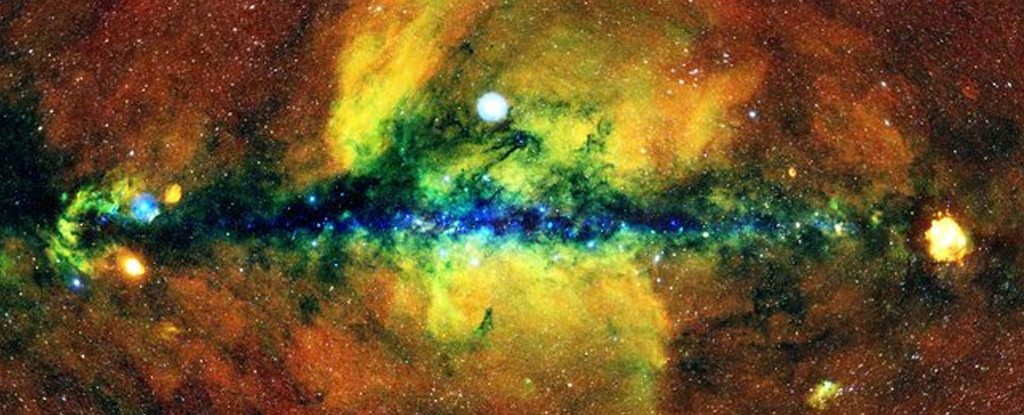
Astronomers have used X-ray astronomy to study the Universe with X-ray vision, revealing energetic and violent events and objects such as quasars, supernova explosions, and hot gas streams. The eROSITA telescope aboard the Spectrum-RG satellite has detected a record 900,000 distinct X-ray sources, including supermassive black holes, X-ray emitting stars, and galaxy clusters. This data release marks a significant advancement in X-ray astronomy, providing insights into the formation of large-scale structures and the physical effects operating in the outskirts of massive galaxy clusters.

astronomy1 year ago

"Unveiling the Universe: Largest High-Energy Source Map Revealed"

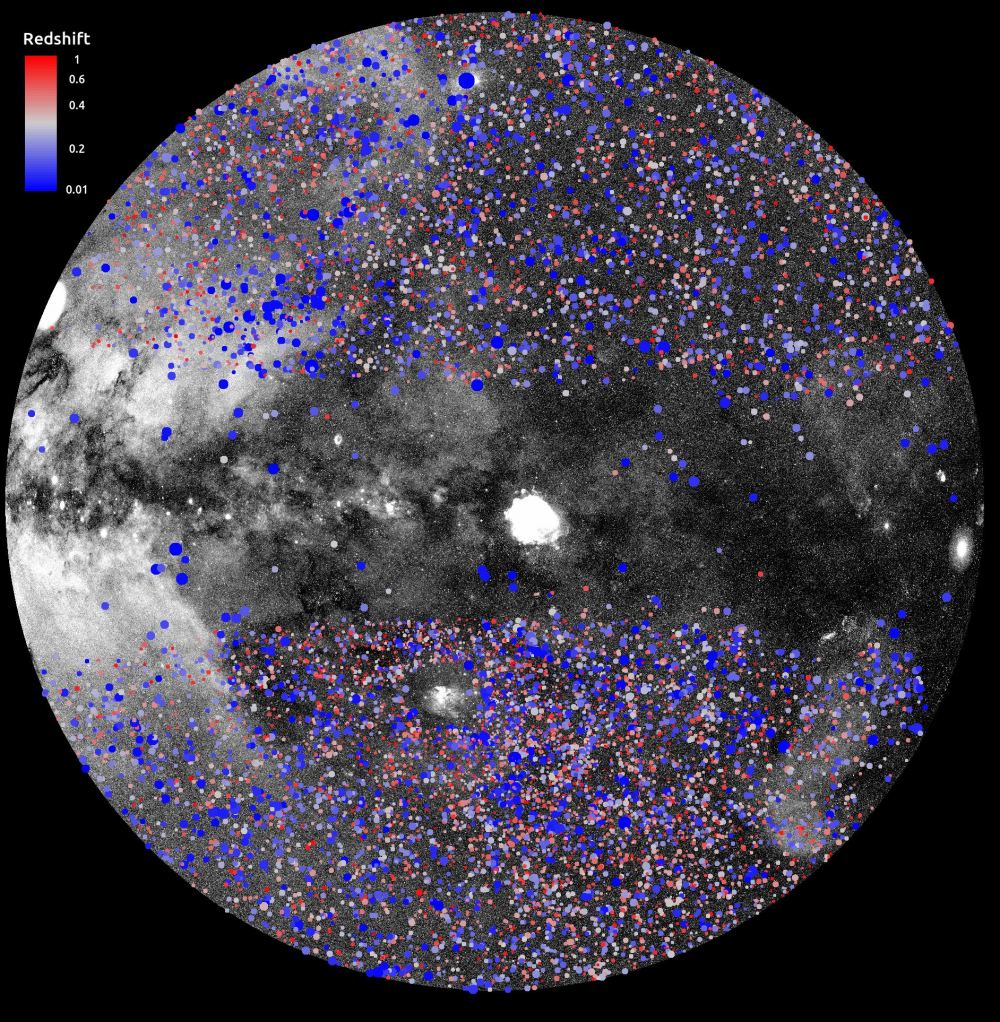
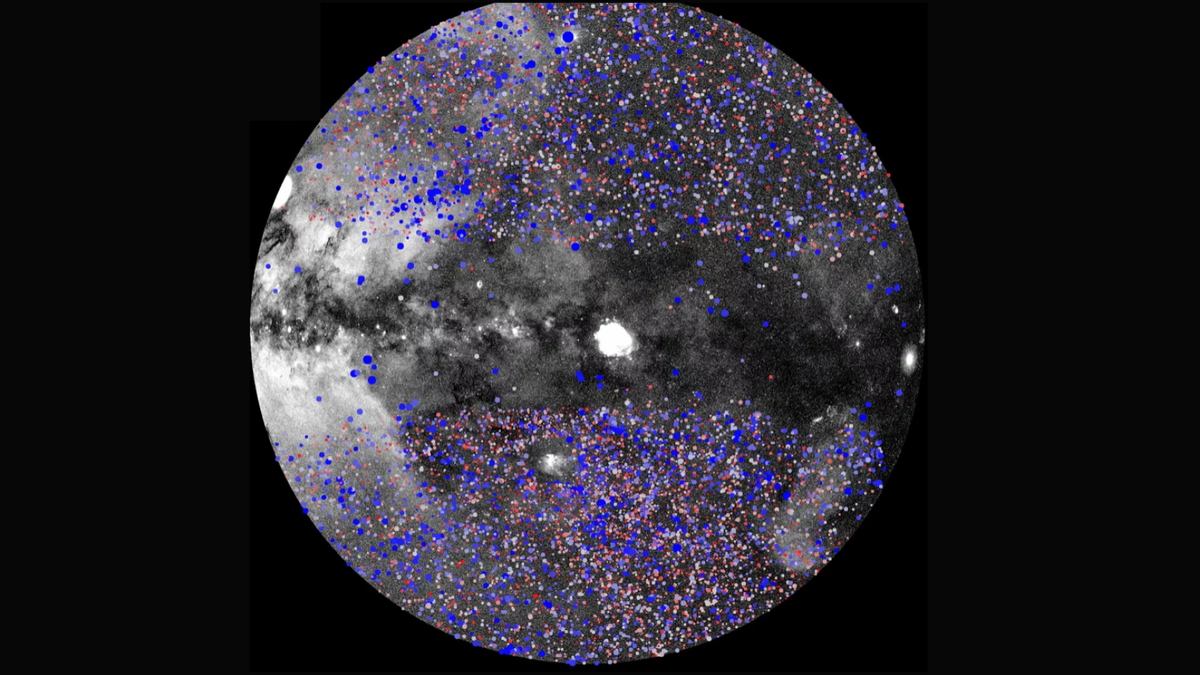
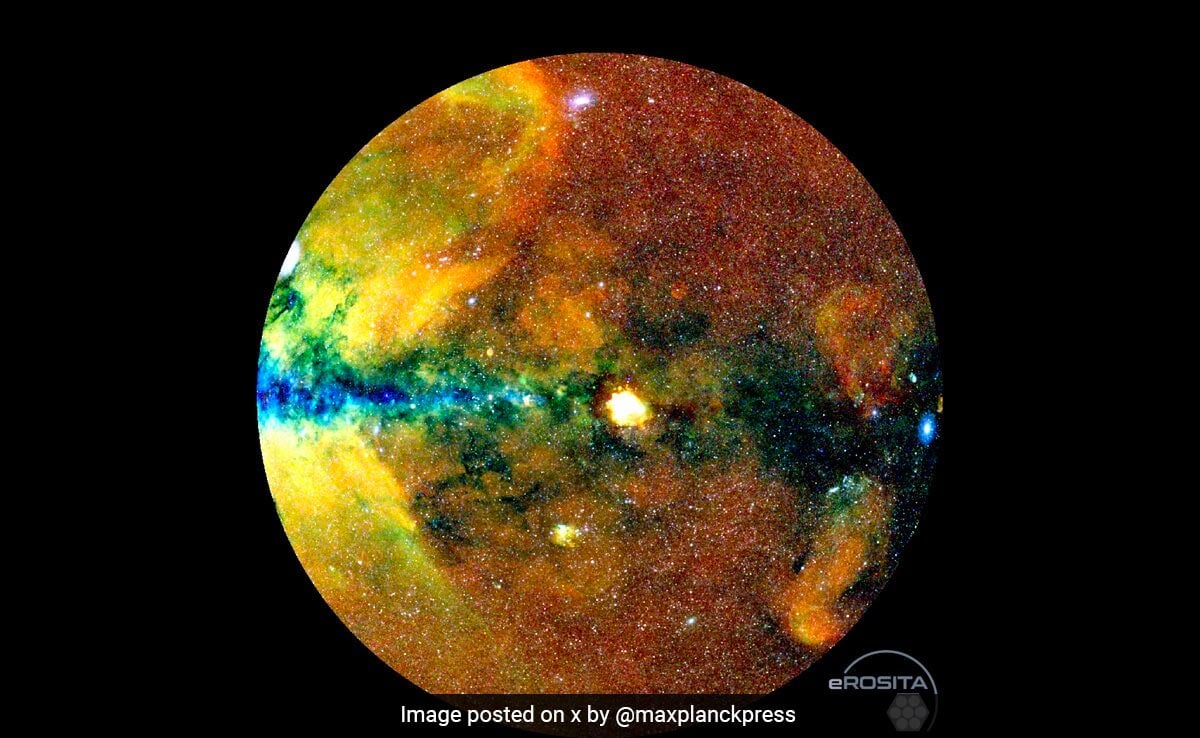
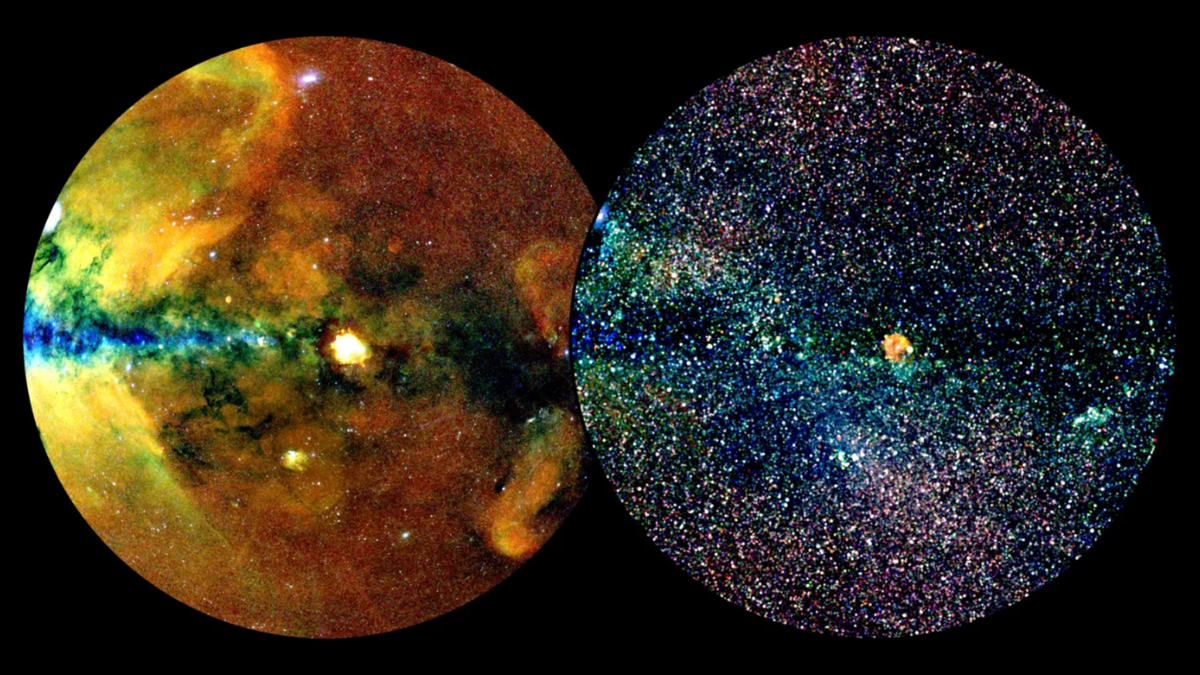
Scientists have released the largest X-ray map of the universe, revealing over 900,000 high-energy cosmic sources, including more than 700,000 supermassive black holes. The data was collected by the eROSITA X-ray telescope on board the Russian-German satellite Spektrum-RG, marking the largest collection of X-ray sources ever published. The map also includes 180,000 X-ray emitting stars in the Milky Way, 12,000 clusters of galaxies, and various other exotic sources. This marks a significant milestone in X-ray astronomy, with eROSITA discovering more sources in six months than previous flagship missions have in nearly 25 years.

astronomy1 year ago

"Unveiling the Universe: Largest X-ray Survey Reveals 1 Million High-Energy Objects"

The eROSITA sky survey has released the first data, revealing almost 1 million high-energy cosmic sources, including over 700,000 supermassive black holes, in an X-ray view of half the sky over Earth. This constitutes the largest-ever catalog of the universe's most powerful sources of energy, and the data could help answer some of cosmology's biggest questions. The release also details the largest known structures in the universe and includes almost 50 scientific papers published across a range of topics. The eRASS1 data consists of eROSITA telescope observations conducted from Dec. 12, 2019, to June 11, 2020, and has been made available to scientists worldwide.

astronomy1 year ago

"Unveiling the Universe: X-ray Image Reveals Nearly 1 Million High-Energy Objects"

The eROSITA sky survey has released its first data, revealing almost 1 million high-energy cosmic sources, including over 700,000 supermassive black holes, making it the largest-ever catalog of the universe's most powerful sources of energy. The release also details the largest known structures in the universe and could help answer some of cosmology's biggest questions. The data consists of observations from half the sky over Earth and includes almost 50 scientific papers published across a range of topics, showcasing the instrument's extensive capabilities.

astronomy1 year ago

"Unveiling the Universe: Largest X-Ray Map Reveals Over 1 Million High-Energy Objects"

The eROSITA space telescope has released the largest map of high-energy sources in the universe, detecting over 900,000 unique sources including 710,000 supermassive black holes in other galaxies, 180,000 X-ray emitting stars from our own, and 12,000 galaxy clusters. This data, collected over six months, surpasses the achievements of previous flagship missions in nearly 25 years. The eROSITA collaboration has published 200 papers and submitted 50 more for peer-review, revealing unprecedented discoveries in X-ray astronomy, including filaments between galaxy clusters, black holes erupting quasi-periodically, and over 1,000 superclusters of galaxies. The release of public data is expected to lead to further groundbreaking research and may help better constrain cosmological models.