Treasury market volatility has decreased, but upcoming comments from Fed Chair Jerome Powell could cause a shift, potentially leading to higher yields if hawkish signals emerge, amid divided views on interest rate policy and economic outlook.
A rally in US Treasuries driven by haven buying amid regional bank credit concerns and a government shutdown has pushed benchmark yields to their lowest in months, with expectations of further rate cuts by the Federal Reserve influencing the market outlook.
Private credit is increasingly shifting from developed Western markets to emerging markets, driven by investors seeking higher yields and the saturation of developed markets, with private lenders funding large projects like Angola's new fuel refinery and expanding their presence in sectors such as infrastructure and sovereign debt, despite concerns over risks and opacity.
Mortgage rates have dropped to an 11-month low due to concerns about the job market and falling yields, indicating potential economic slowdown or uncertainty.
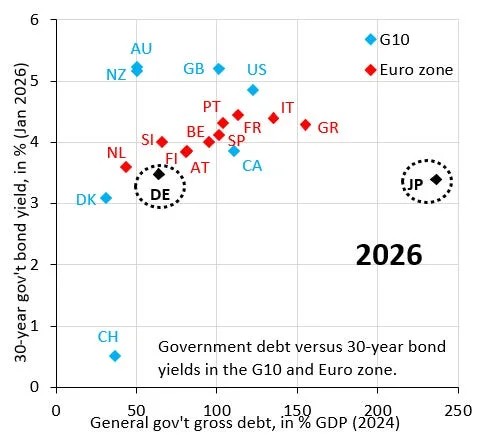
Global bond markets have temporarily stabilized after a sharp selloff, but yields remain high due to concerns over the fiscal health of major economies like Japan, the UK, and the US, with increased bond issuance and political uncertainties contributing to ongoing volatility.
Global bond markets are experiencing a selloff with rising yields in the US, Europe, and the UK, driven by concerns over government debt sustainability and economic fundamentals, prompting safe-haven assets like gold to hit record prices and raising questions about future fiscal and monetary policy responses.
Global government bond markets are experiencing a selloff driven by concerns over rising debt levels, political instability, and uncertainties surrounding tariffs, leading to higher yields across major countries and challenging demand from traditional investors.
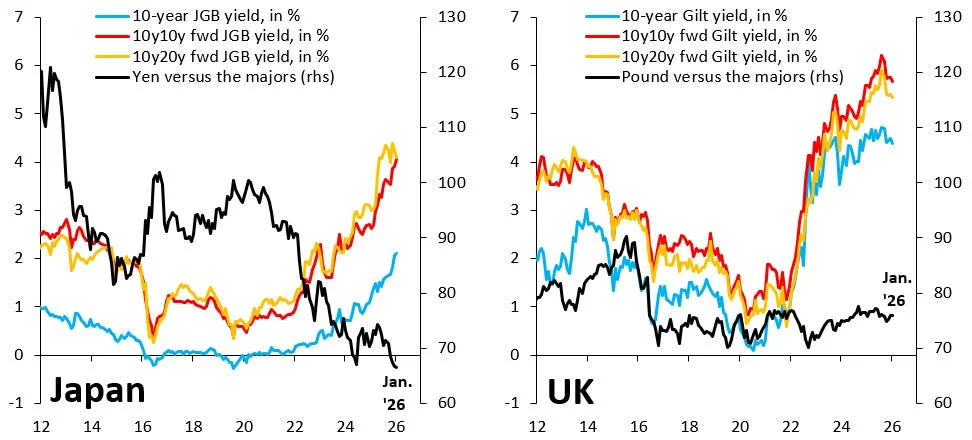
UK long-term bond yields reached their highest since 1998, driven by debt concerns and inflation fears, causing the pound to weaken and putting pressure on the government to address a significant budget deficit amid rising borrowing costs.
Weak demand at a recent 30-year Treasury bond auction led to higher yields, signaling investor disappointment and potential concerns for the Treasury market, especially as similar issues appeared in 10-year and 3-year auctions this week.
A weak U.S. jobs report led to a significant rally in short-dated Treasuries, with yields dropping to their lowest levels in over two decades, fueled by expectations of a potential Federal Reserve interest rate cut in September amid concerns about the labor market and inflation.
Japanese long-term bonds have sharply fallen, with yields rising due to concerns over fiscal policy, upcoming elections, and global market impacts, raising fears of increased government spending and debt costs.
Japan's bond market has experienced a surge in volatility, impacting global markets as rising yields in Japanese government bonds influence other sovereign debt markets worldwide, driven by the end of yield-curve control and increased global economic concerns.
Japan is considering buying back some of its long-term government bonds to control rising yields, alongside plans to reduce new issuance of super-long bonds, as part of efforts to stabilize the bond market amid increasing yields and market volatility. The decision will follow meetings with market participants and requires government approval, with the Bank of Japan also contemplating adjustments to its bond tapering policy.
Global investor skepticism towards long-term US government debt is turning a routine bond auction into a critical market test, with rising yields and weak demand reflecting concerns over US fiscal health and political influences, especially for 30-year bonds, amid broader global debt issues.
Originally Published 7 months ago — by Seeking Alpha
The article suggests that there is a golden buying opportunity for investors seeking high dividends, with yields expected to increase to 8-9%, indicating a potential market bottom and a chance for significant gains.