
economics2.355 min read
December inflation ticks up again, keeping Fed wary of slow cooling
5 days ago•Source: PBS

The latest economics stories, summarized by AI
A Danish pension fund sold its US government bonds over concerns about Washington’s overspending, highlighting a core tension: American financial dominance currently rests on sustained corporate vigor and fiscal discipline. If US dynamism wanes amidst rising deficits, its edge in global markets could erode even as the country remains the benchmark today.
Bloomberg.com•1 month ago
Bloomberg.com•1 month ago

The US and Taiwan announced a trade agreement lowering tariffs on Taiwan-made goods to 15% and committing about $500 billion in Taiwanese-backed investments to expand US semiconductor, AI, and energy operations, including $250 billion in direct investments and $250 billion in credit guarantees to bolster the American chip supply chain.
Governor Miran argues that targeted deregulation expands the economy’s supply potential and boosts productivity, improving the transmission of monetary policy. Citing Greece’s crisis-era reforms and the US deregulation push, he suggests lower regulation can justify a more accommodative stance from the ECB and Fed, while acknowledging measurement challenges in gauging regulation’s macro effects and noting new tools indicate a shrinking regulatory burden.

US wholesale prices rose 0.2% in November, driven by higher energy costs, while the core PPI (excluding food and energy) was unchanged from October, signaling limited pass-through of higher costs. The data come as consumer inflation cools and investors await the Fed’s next policy move.

US retail sales rose 0.6% in November—the strongest gain since July—led by auto purchases and robust holiday shopping; excluding autos, sales rose 0.5%. Ten of 13 categories posted gains, indicating a still-resilient consumer entering the holiday season, aided by promotions and higher gasoline receipts.
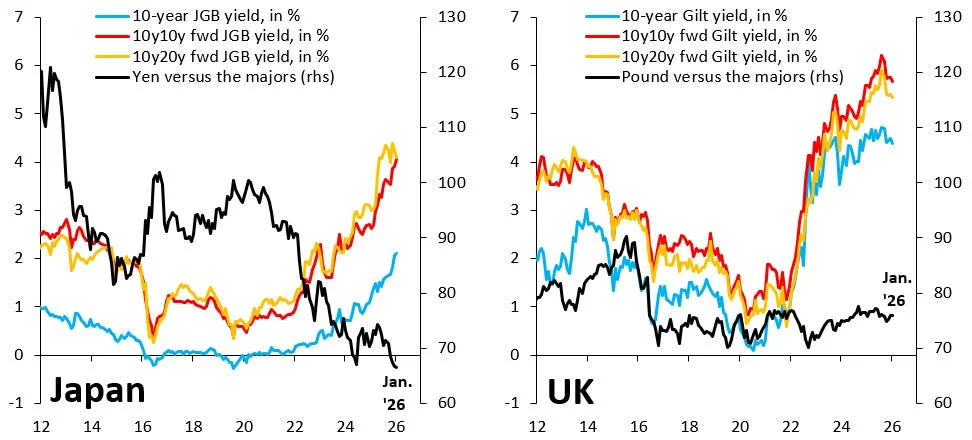
The article argues that debt crises in advanced economies are more plausible than commonly thought: high public debt plus shocks can push yields higher, and even when central banks cap yields, currencies can depreciate, signaling ongoing, low‑grade crises across Japan, the UK, and parts of the euro area. For example, Japan’s yen falls as JGB yields rise despite BoJ caps, the UK sees rising gilt yields with a relatively stable pound, and Italy, Spain and France face growing debt pressures within a euro framework, though Germany's low debt provides some insulation. The piece concludes that debt distress is already unfolding in the G10 and could deepen.

The article examines historical data on large tariff increases, particularly around 2025, showing that such shocks historically raised unemployment and lowered inflation, possibly due to increased uncertainty, and discusses implications for current monetary policy decisions.

A new comprehensive dataset of U.S. commercial banks' call reports from 1959 to 2025 has been released, offering standardized, detailed balance sheet and income statement data for research and analysis of the banking sector's historical performance and trends.
A Dallas Fed paper suggests that the effectiveness of the federal funds rate in transmitting monetary policy has waned, and proposes shifting the Fed's target to the tri-party general collateral rate (TGCR), which better reflects real-world short-term borrowing costs and remains more effective as a policy tool.

Wharton’s Itay Goldstein discusses the potential for an AI bubble, the mechanics of market speculation, and the risks associated with the current AI boom, raising concerns about what might happen if the bubble bursts.

Economists warn that while Americans desire lower prices for essentials like groceries, housing, and energy, falling prices could have negative effects on the economy, suggesting that lower prices are not always beneficial.