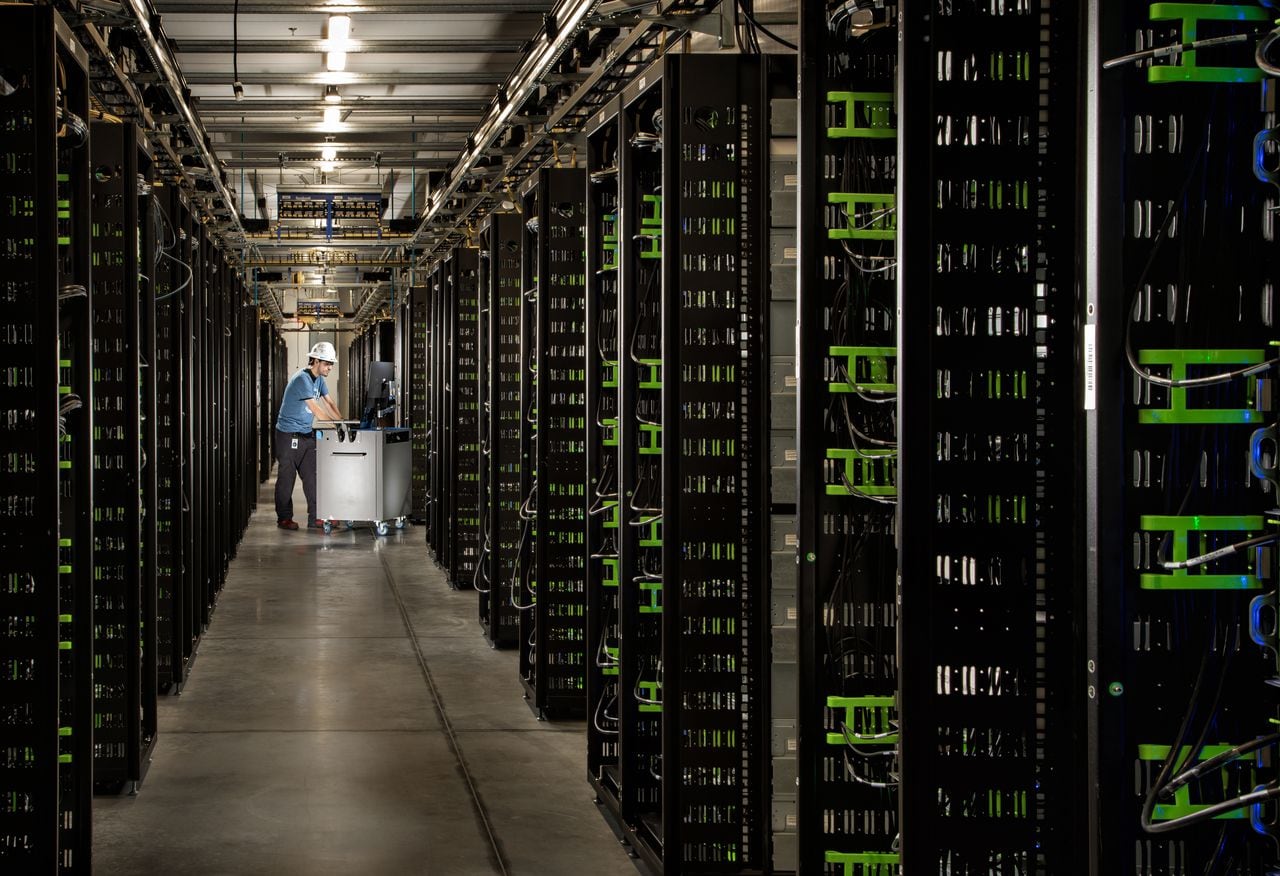
The SKA's datacenter in Western Australia, nearly complete, is protected by two Faraday cages to prevent RF leaks that could interfere with the world's largest radio telescope, which aims to explore the universe with unprecedented sensitivity. The project involves extensive antenna installation and will continue until 2029, with scientific proposals starting in 2024 and initial tests in 2027.
Meta plans to build its largest-ever datacenter in Richland Parish, Louisiana, powered by fossil fuels rather than nuclear energy, despite its recent nuclear power advocacy. The $10 billion facility will use natural gas through combined-cycle combustion turbine plants, which are marketed as less pollutive but still emit greenhouse gases. Entergy, Meta's partner, claims the plants can transition to hydrogen co-firing to reduce emissions, though this technology is not yet widely proven. Environmental groups express concerns over the project's greenhouse gas emissions and the feasibility of future hydrogen use.
NVIDIA reported record revenue of $35.1 billion for Q3 fiscal 2025, a 17% increase from the previous quarter and a 94% rise from the previous year, driven by strong demand in AI and data center sectors. The company's data center revenue reached $30.8 billion, up 112% year-over-year. NVIDIA's GAAP earnings per share increased by 111% from a year ago, reflecting the growing impact of AI across industries. The company anticipates Q4 revenue of $37.5 billion, with continued expansion in AI infrastructure and partnerships.
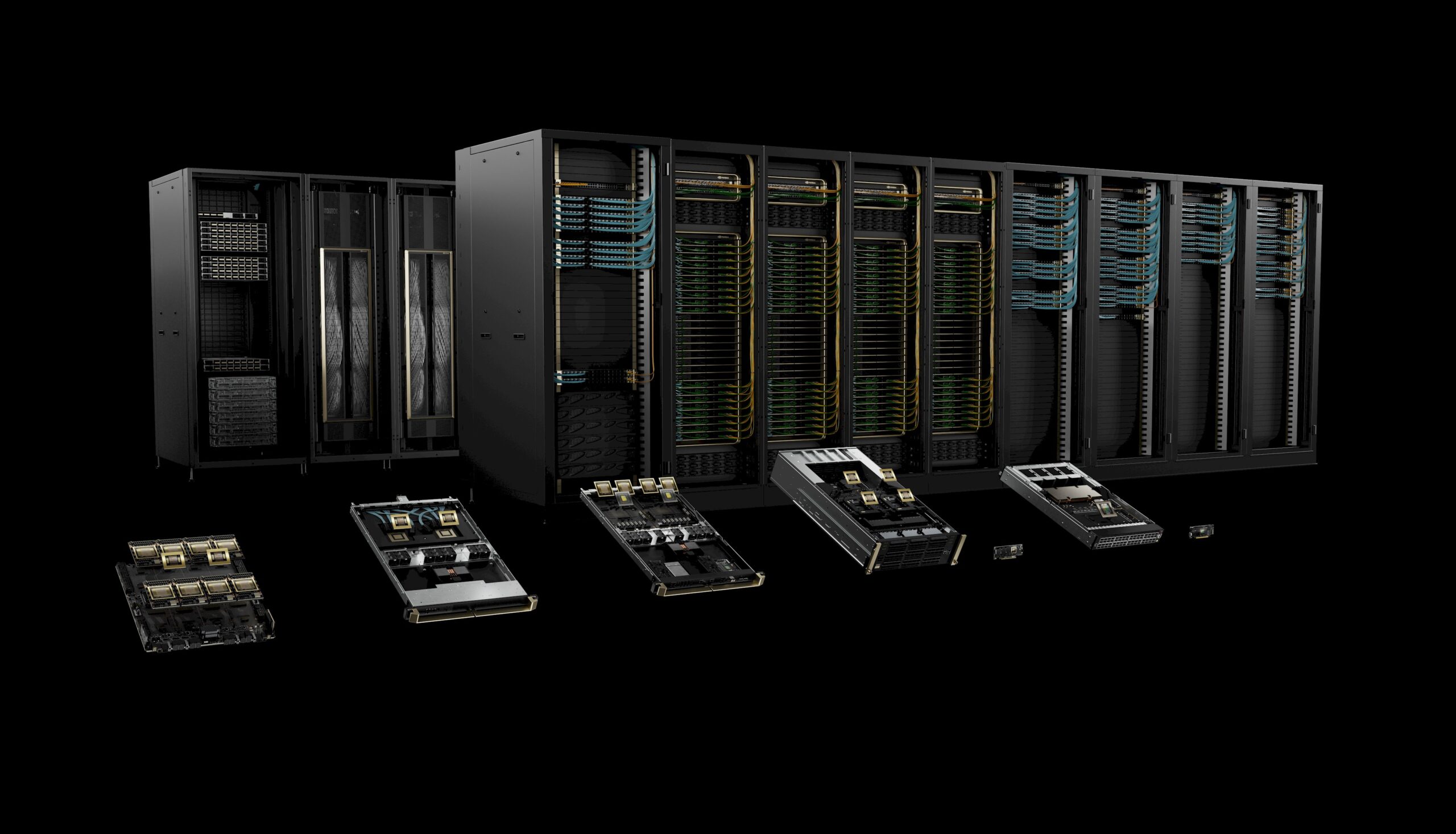
Nvidia has developed the Blackwell platform, a series of GPU compute complexes and systems designed to support AI workloads. The platform includes the HGX B100 and HGX B200 GPU compute complexes, as well as the GB200 Grace-Blackwell SuperPOD, which features a liquid-cooled NVSwitched system with 72 Blackwell GPUs. The Blackwell platform aims to significantly improve performance and efficiency for AI training and inference tasks, with a focus on parallelism and communication across and within layers of neural networks. The platform's advanced networking capabilities and increased compute power are expected to revolutionize AI computing in data centers.
IBM's fourth-quarter financial results show a 4.1% increase in revenues, reaching $17.38 billion, with gross profits up 6.6% to $10.27 billion and net income up by 21.3% to $3.29 billion. The company's Infrastructure group, which sells servers, storage, operating systems, and tech support for the Power and Z lines, saw sales rise by 2.7% to $4.6 billion. IBM's Software group had $7.51 billion in sales, up 3.1% year on year. The acquisition of Red Hat has helped rejuvenate IBM's systems business, with Red Hat revenue continuing to grow faster than global IT spending. Additionally, IBM's AI bookings doubled in Q4, and the company is expected to focus on startup acquisitions to build up its AI software stack.
Intel Corp. has appointed Justin Hotard, an executive from Hewlett Packard Enterprise, as the new head of its data center and artificial intelligence group. This move is part of Intel's strategy to revitalize its data center business and challenge Nvidia's lead in AI. Hotard, who has a background in high-performance computing and AI, will be responsible for key products like Xeon server processors. His appointment follows the restructuring of Intel's programmable solutions business and the departure of Arun Subramaniyan to lead a new AI company.
Intel has appointed Justin Hotard, a former executive at Hewlett Packard Enterprise, as the new head of its data center group. Hotard replaces Sandra Rivera, who will now lead Intel's new programmable chip business. Despite Intel's data center group being one of its most profitable sectors, the company has faced a decline in market share and a 25% drop in data center revenue this year due to increased competition and a slowdown in business spending. Intel is optimistic that new semiconductor technologies will enhance its competitiveness, particularly in the AI data center market. Hotard, with his experience in high-performance computing and AI, is expected to drive Intel's vision and customer empowerment forward starting February 1.
Intel Corporation has appointed Justin Hotard as the executive vice president and general manager of its Data Center and AI Group, starting February 1, 2024. Hotard, with over 20 years of experience in the computing and data center sectors, will join Intel's executive leadership team and report to CEO Pat Gelsinger. He will oversee the company's data center products, including the Intel® Xeon® processor family and AI initiatives, aiming to expand AI's reach across various sectors. Hotard's previous role was at Hewlett Packard Enterprise, where he focused on high-performance computing and AI, and he succeeds Sandra Rivera, who has moved to lead Intel's Programmable Solutions Group.
Nvidia reported Q1 earnings with revenue of $7.19 billion, beating expectations, and a net income of $2.04 billion. The company's datacenter group saw a 14% annual increase in sales, driven by demand for GPU chips from cloud and consumer internet companies for generative AI applications. However, overall sales fell 13% YoY, with the gaming division reporting a 38% decline due to a slower macroeconomic environment and ramp of the company's latest GPUs. Nvidia's automotive division grew 114% YoY but remains small at under $300 million in sales for the quarter.