Israeli scientists have proposed a novel method to study dark matter by detecting faint radio waves emitted during the universe's early period, potentially revealing the properties of dark matter through space-based observations, such as those planned with the Square Kilometre Array.
Researchers at Tel Aviv University and the University of Lisbon have developed a novel nano-vaccine for COVID-19 that is administered via nasal spray and does not require cold storage. This vaccine targets all major COVID-19 variants using synthesized amino acid sequences, offering significant logistical advantages, especially for low-income regions. The nano-vaccine's ease of use and storage could facilitate broader vaccination efforts and pave the way for future vaccine developments.
Israeli scientists at Tel Aviv University have discovered that Kuhl's pipistrelle microbats can navigate long distances using echolocation to create acoustic maps, even when blindfolded. This challenges the previous assumption that bats' sonar skills were limited to short-distance hunting. The study involved blindfolding the bats and isolating them from other sensory inputs, demonstrating their ability to find their way home using sonar-based navigation.
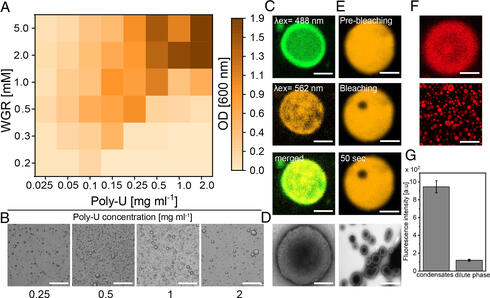
Dr. Ayala Lampel and her team at Tel Aviv University are pioneering the development of smart liquids, which are engineered to react to specific environmental stimuli. These intelligent liquids form distinct droplets with unique properties and have been demonstrated to function as highly responsive biosensors, changing color and fluorescence intensity in response to specific enzymes. Lampel's research draws inspiration from natural processes occurring inside living cells and aims to expand the potential uses of smart materials, envisioning applications such as drug delivery and medication production within the body.
Researchers at Tel Aviv University have conducted a study using a large mechanical system of coupled pendula to visualize phenomena occurring in specialized "topological" materials, which are difficult to observe directly in quantum systems. The system mimics the dynamics of quantum systems and allows for the direct measurement of three phenomena: Bloch oscillations, Zener tunneling, and wave evolution in a topological medium. The experiment provides insights into the behaviors of electrons in periodic systems and opens the door to further exploration of complex quantum effects in a controlled manner.
A study from Tel Aviv University has found that birds accustomed to living around humans, such as crows and ringneck parakeets, decreased their activity when humans were absent during the COVID-19 lockdown, while the shy graceful prinias actually increased their activity. The research used microphones to monitor bird activity in an urban area and found that certain bird species, like crows, rely on humans for food scraps, while others, like the graceful prinias, adapt to urban environments but do not depend on human presence. The study highlights the complexity and diversity of the urban ecosystem and the interrelationship between humans and wildlife.
Tel Aviv University researchers have published a study in Nature Astronomy, proposing that radio telescopes on the moon could provide groundbreaking insights into the early universe, specifically the cosmic dark ages just 50 million years after the Big Bang. By detecting radio waves emitted from hydrogen gas during that time, scientists could test the standard cosmological model, determine the composition of the universe, and potentially gain clues about dark matter. The study also suggests that a lunar antenna array could accurately measure the amount of hydrogen and helium in the universe, as well as the weight of cosmic neutrinos.
Researchers at Tel Aviv University have successfully induced cancer cell suicide in animals with melanoma by delivering mRNA molecules encoding a bacterial toxin directly to the tumor bed. The nanoparticles carrying the mRNA were injected into the tumors, causing the cancer cells to produce the toxic protein that eventually killed them. This groundbreaking study achieved a success rate of 44% to 60% in eliminating cancer cells without harming healthy cells. The researchers believe this method could be applied to various types of cancer using different natural toxins, offering a promising alternative to chemotherapy.
Israeli researchers at Tel Aviv University have developed a computerized progressive attention training (CPAT) treatment for children with attention-deficit hyperactivity disorder (ADHD). The treatment significantly improved symptoms in one out of three students, compared to only 11% of those who participated in mindfulness training. Unlike drug treatment, the improvements were maintained for months after the end of the treatment protocol. The CPAT system was developed years ago and produced good results in previous studies, mainly in children. The researchers hope to bring about a profound change in basic attention functions as an alternative to drug treatment in cases in which it isn’t applicable.
Religious Zionism MK Simcha Rothman was evacuated by police from an event at Tel Aviv University after protesters disrupted the panel discussion on the proposed judicial overhaul. Rothman's comments were persistently interrupted by demonstrators chanting "Democracy" and calling him a fascist. After he was unable to fully participate in the panel, Rothman was escorted out of the building by security guards and placed in a campus security vehicle which brought him to his car. The protest was attributed to a left-right rivalry that went back to the establishment of the state.
A clinical trial conducted at Tel Aviv University has found that gaze-contingent music-reward therapy (GC-MART) is as effective in treating social anxiety disorder as selective serotonin reuptake inhibitors (SSRIs), a class of drugs that includes Prozac, Cipralex and Wellbutrin, among many others. The treatment developed at TAU relieved symptoms in about half of the participating patients. The therapy is based on eye-tracking combined with a musical reward, and gradually normalizes a patient's biased attention, and symptoms recede.