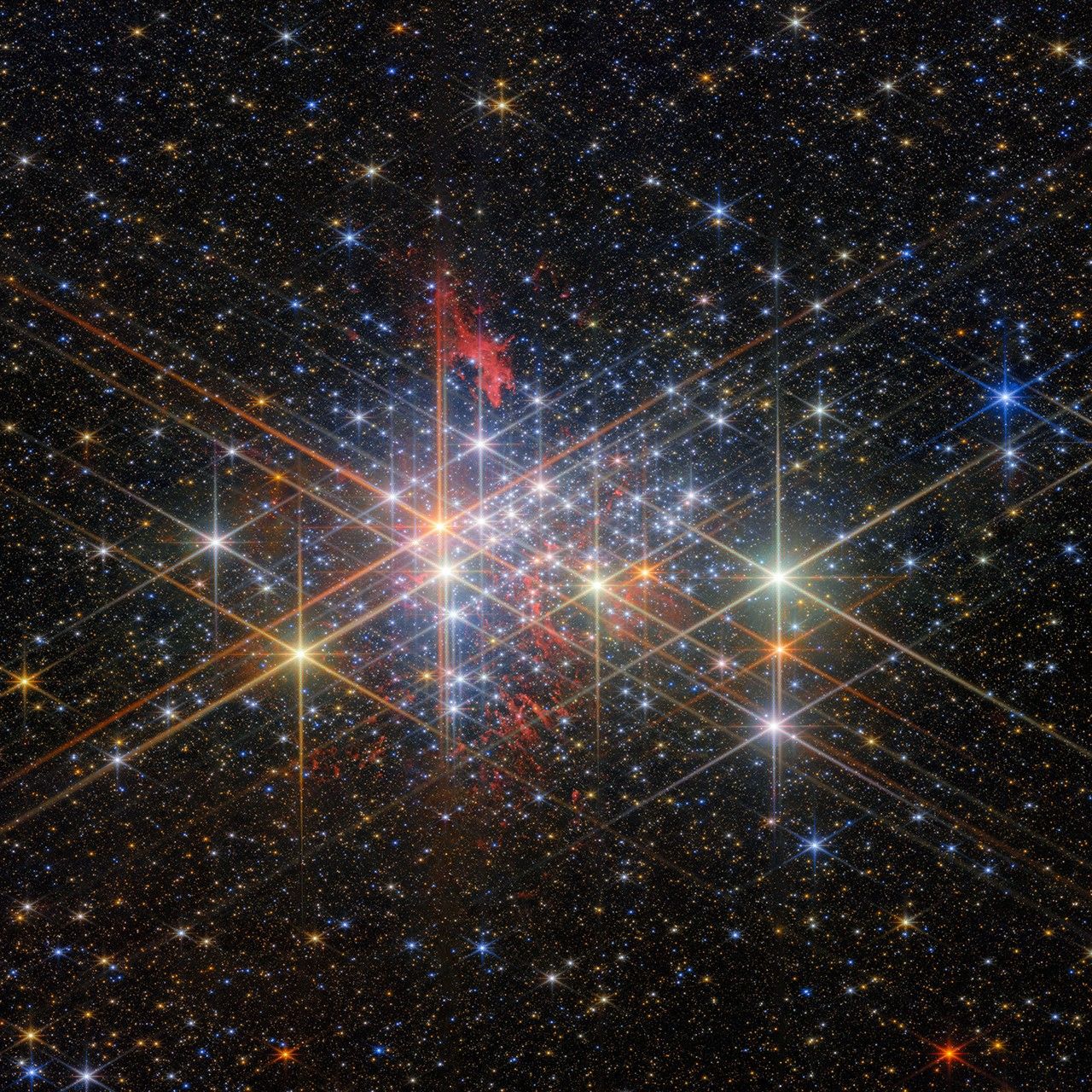
NASA's Fermi Telescope has observed a young star cluster, Westerlund 1, emitting gamma-ray bubbles extending over 650 light-years, providing new insights into cosmic ray outflows and their role in galaxy evolution.
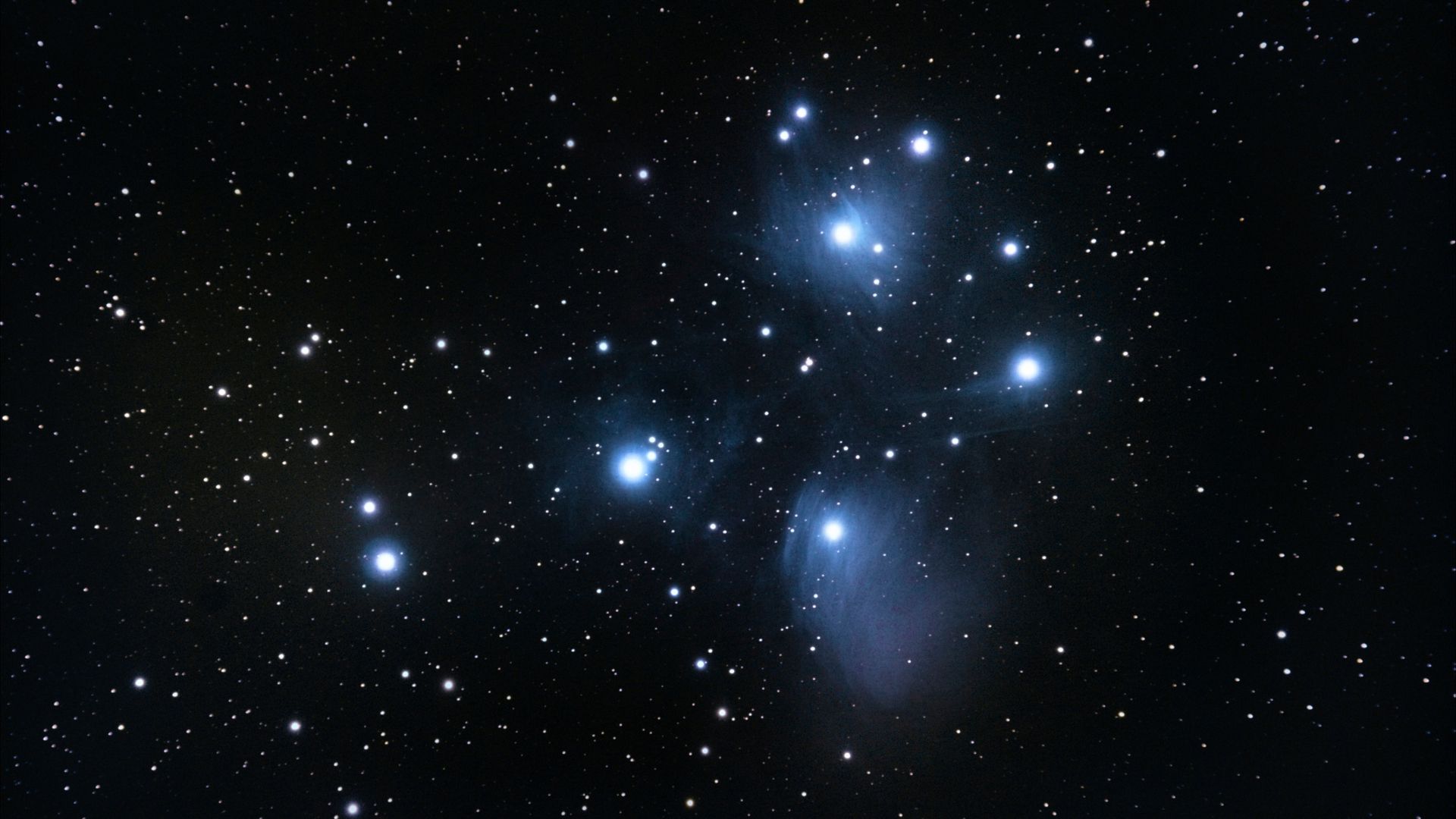
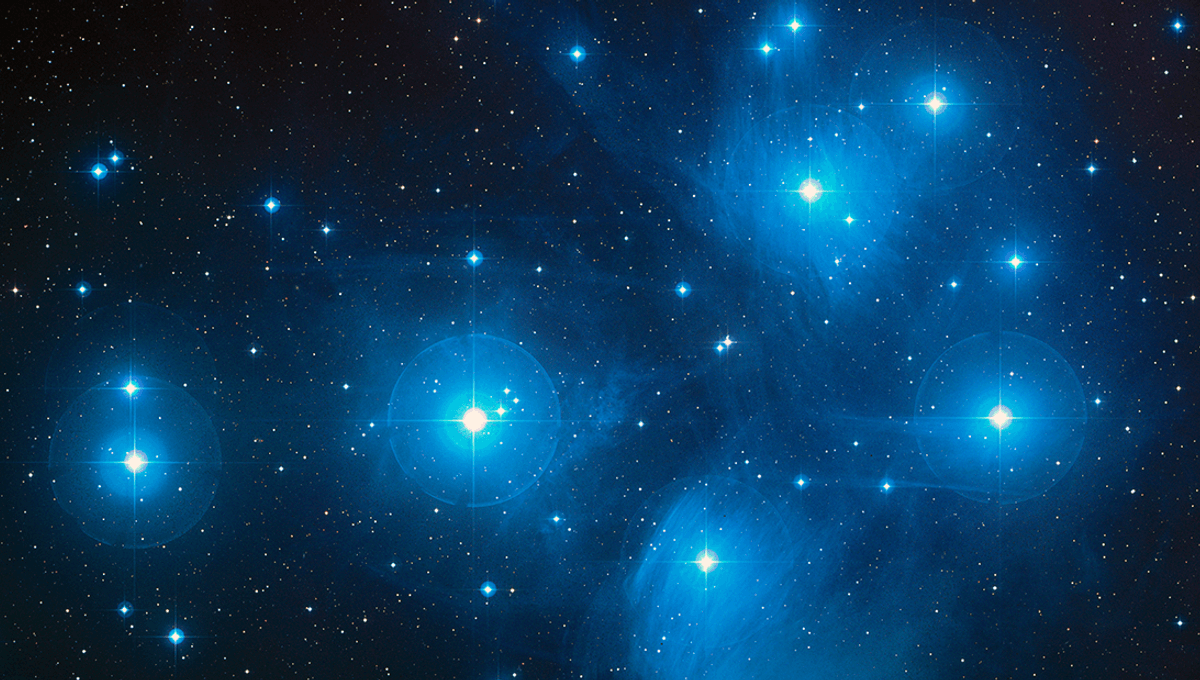
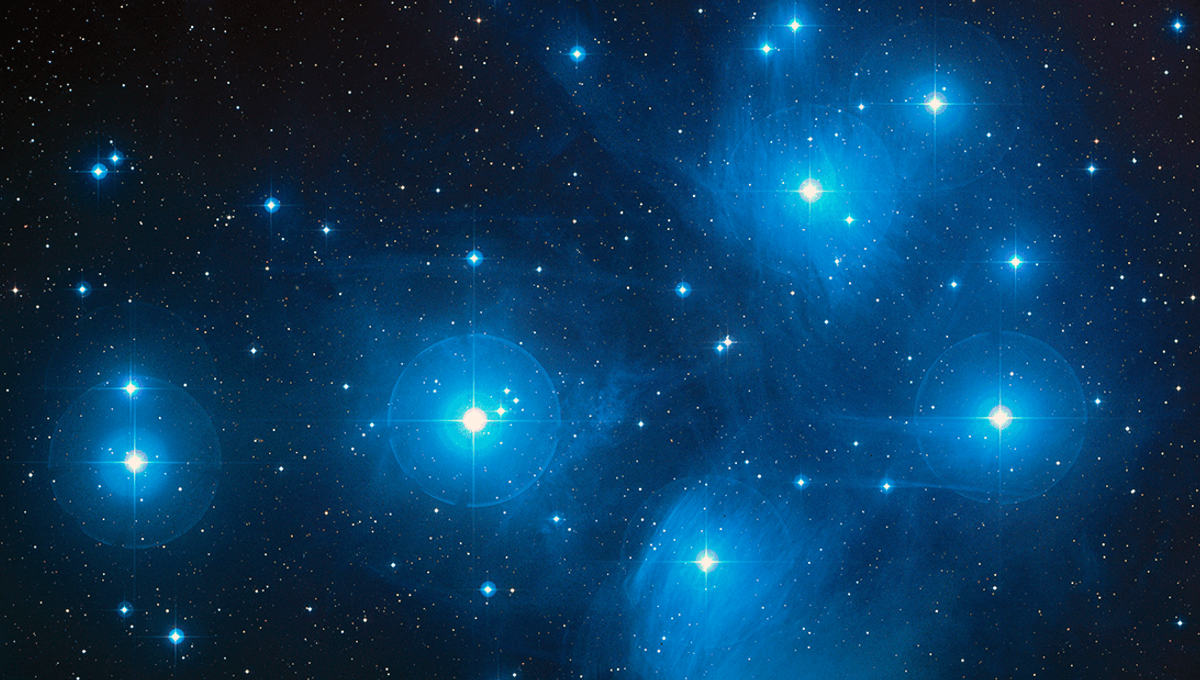
Astronomers using NASA's TESS and ESA's Gaia have discovered that the Pleiades star cluster is about 20 times larger than previously thought, containing thousands of stars instead of just seven, which could reshape our understanding of star formation and the galaxy's structure.
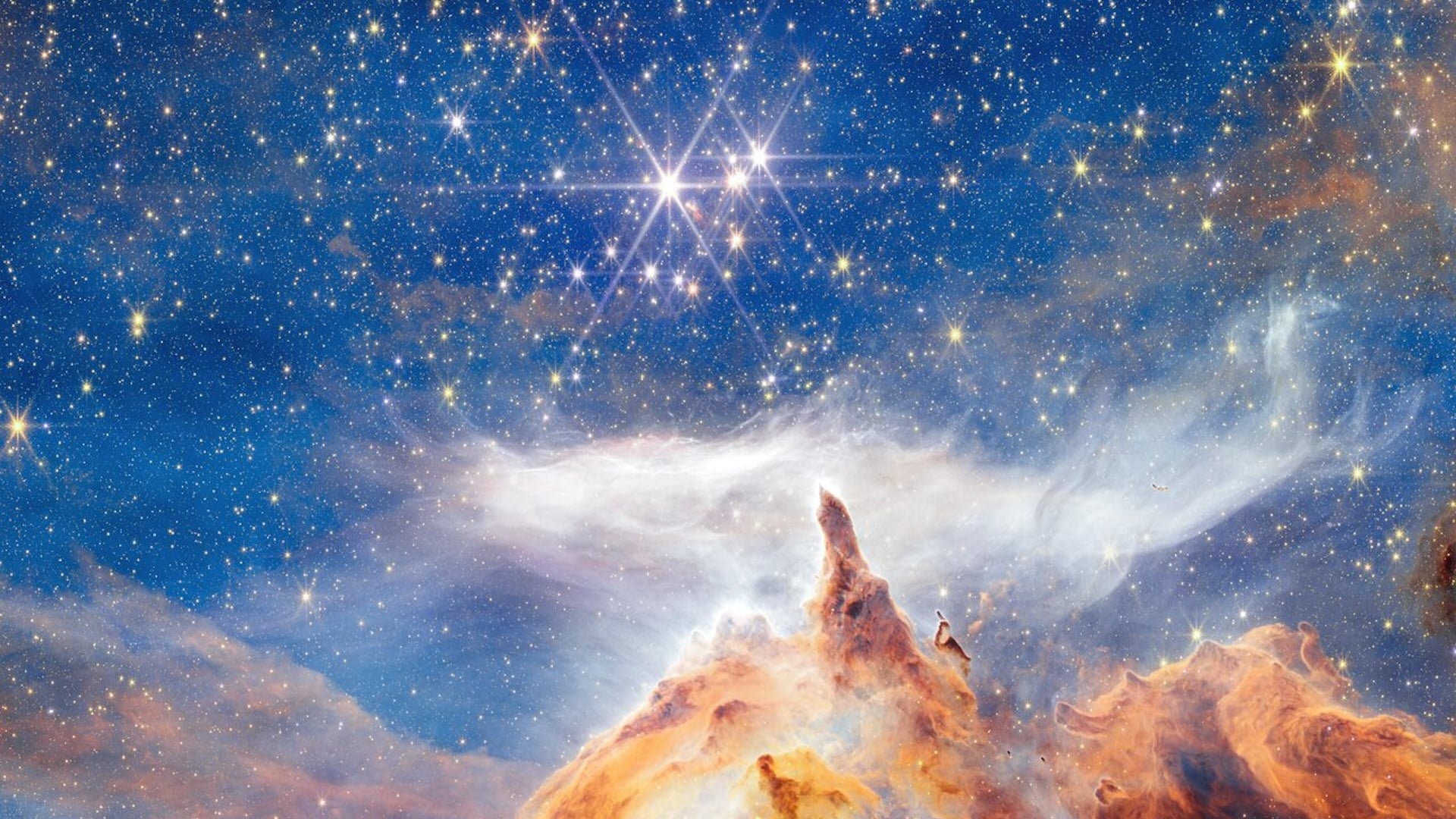
The James Webb Space Telescope captured a stunning infrared image of Pismis 24, a young star cluster in the Lobster Nebula, revealing massive stars and intricate gas and dust structures, highlighting star formation processes in our galaxy.
The James Webb Space Telescope captured a stunning infrared image of Pismis 24, a young star cluster in the Lobster Nebula, revealing massive stars and intricate gas and dust structures, showcasing the dynamic star formation process in our galaxy.
Voyager 1, traveling at over 61,000 km/h and now 444 light years from Earth, is projected to pass through the Pleiades star cluster in about 100 million years, although it will be an inert object with no active systems by then, highlighting the vastness of cosmic time and human achievement.
Astronomers have determined that the faint satellite Ursa Major III orbiting the Milky Way is likely a star cluster held together by black holes rather than a dark-matter-dominated dwarf galaxy, resolving a major mystery about its composition.
Astronomers have reclassified the faint satellite Ursa Major III orbiting the Milky Way from a dark matter-dominated dwarf galaxy to a star cluster held together by a core of black holes and neutron stars, solving a major astrophysics mystery.
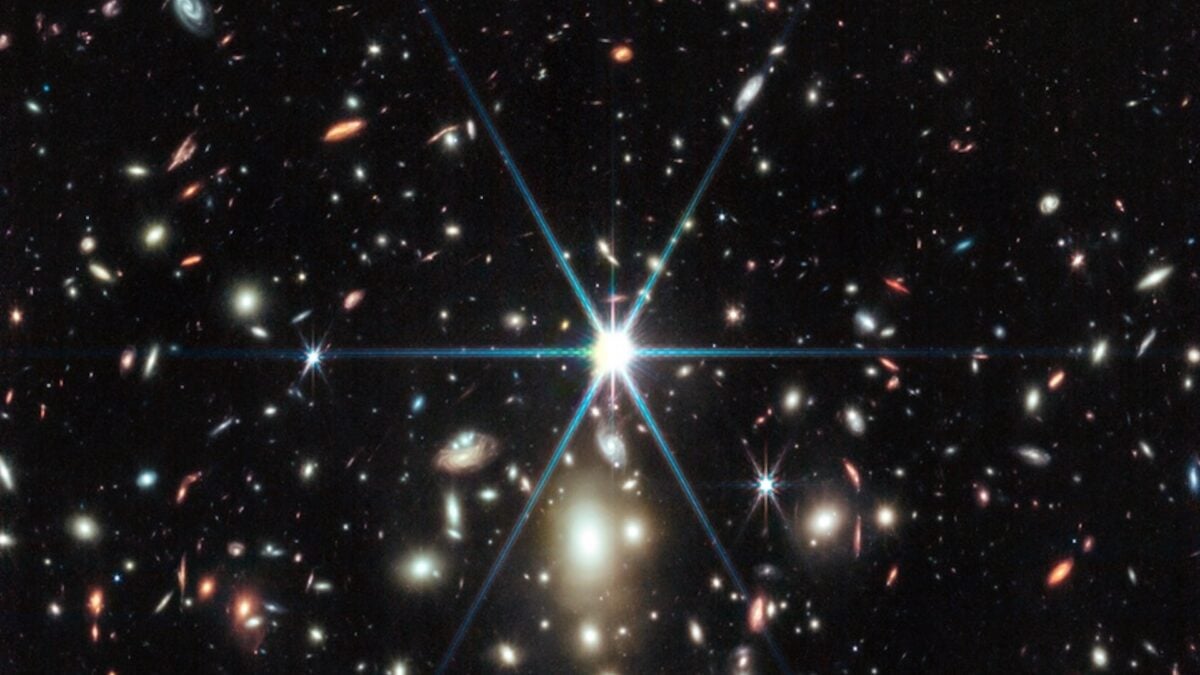
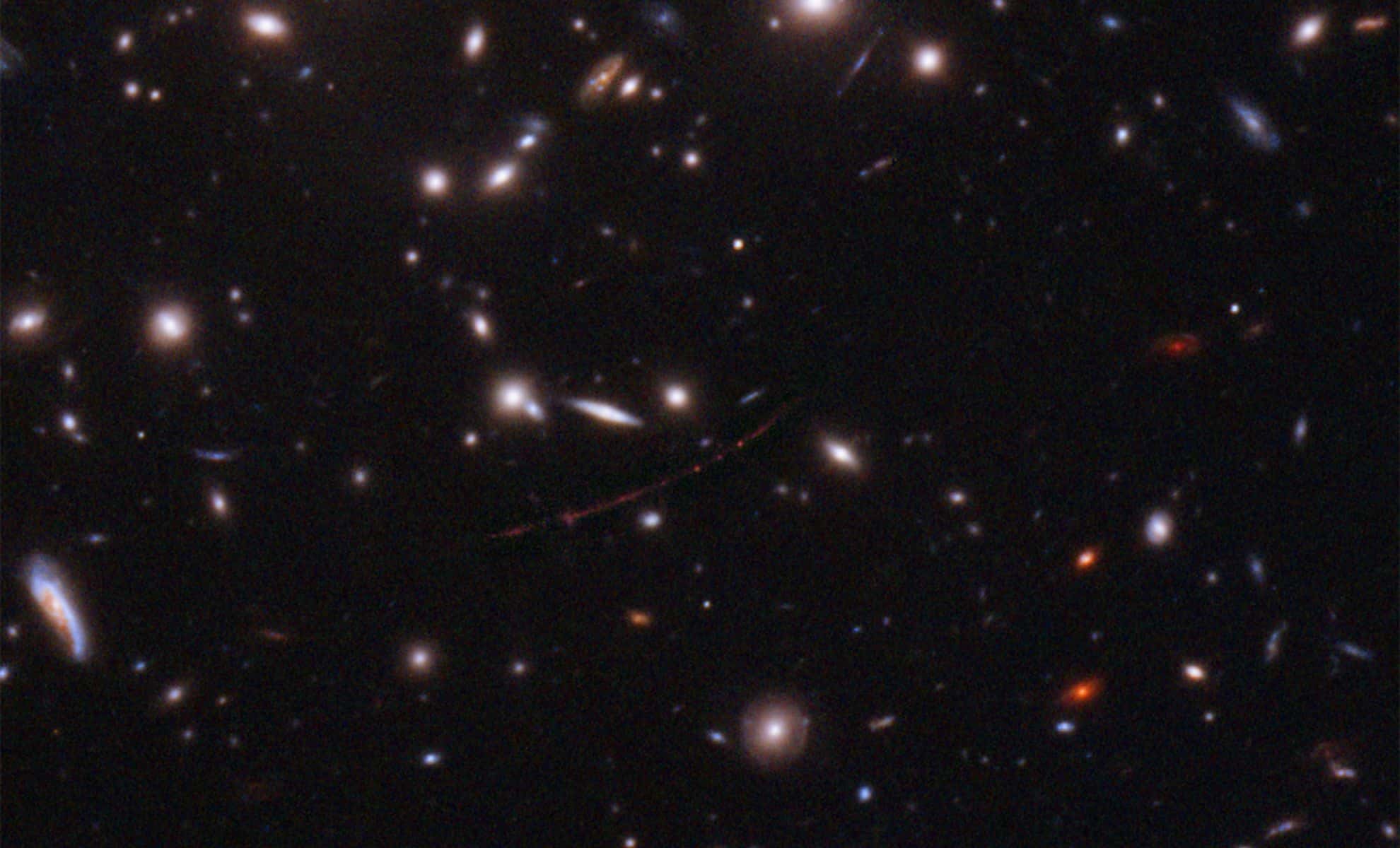
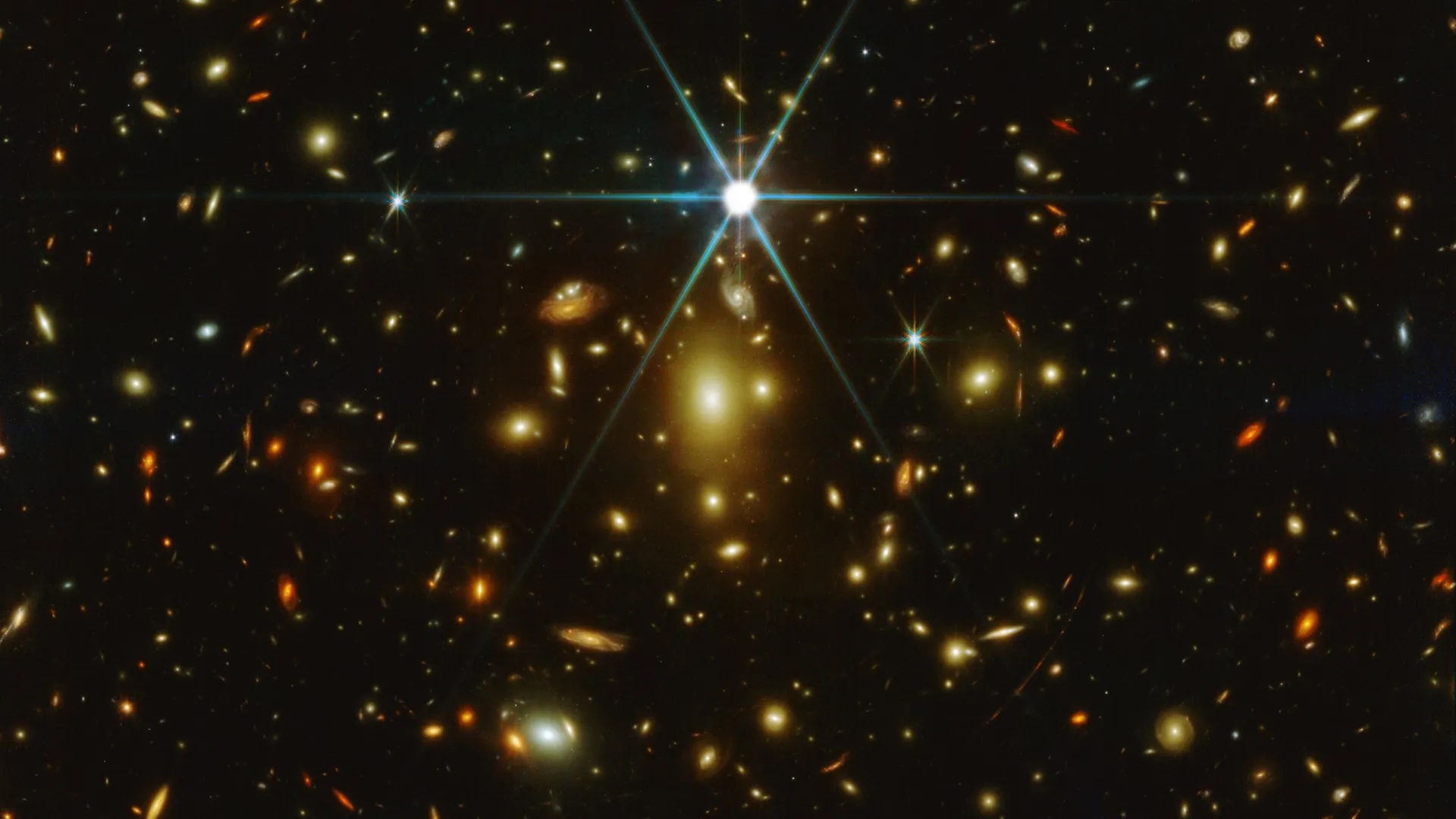
New research suggests that the distant object previously identified as the earliest star, Earendel, may actually be a star cluster, due to similarities with known star clusters and distortions caused by gravitational lensing, prompting further observations to confirm its true nature.
A new study suggests that Earendel, previously thought to be the most distant star, may actually be a star cluster based on detailed observations from the JWST, challenging earlier classifications and highlighting the complexities of studying the early universe.
The most distant object previously thought to be a star, Earendel, may actually be a star cluster, based on new observations from the James Webb Space Telescope, which suggest it resembles globular clusters in the early universe rather than a single star.
New research suggests that Earendel, the most distant object previously thought to be a star, may actually be a star cluster, based on observations from the James Webb Space Telescope, challenging earlier classifications and highlighting the need for further monitoring to confirm its true nature.
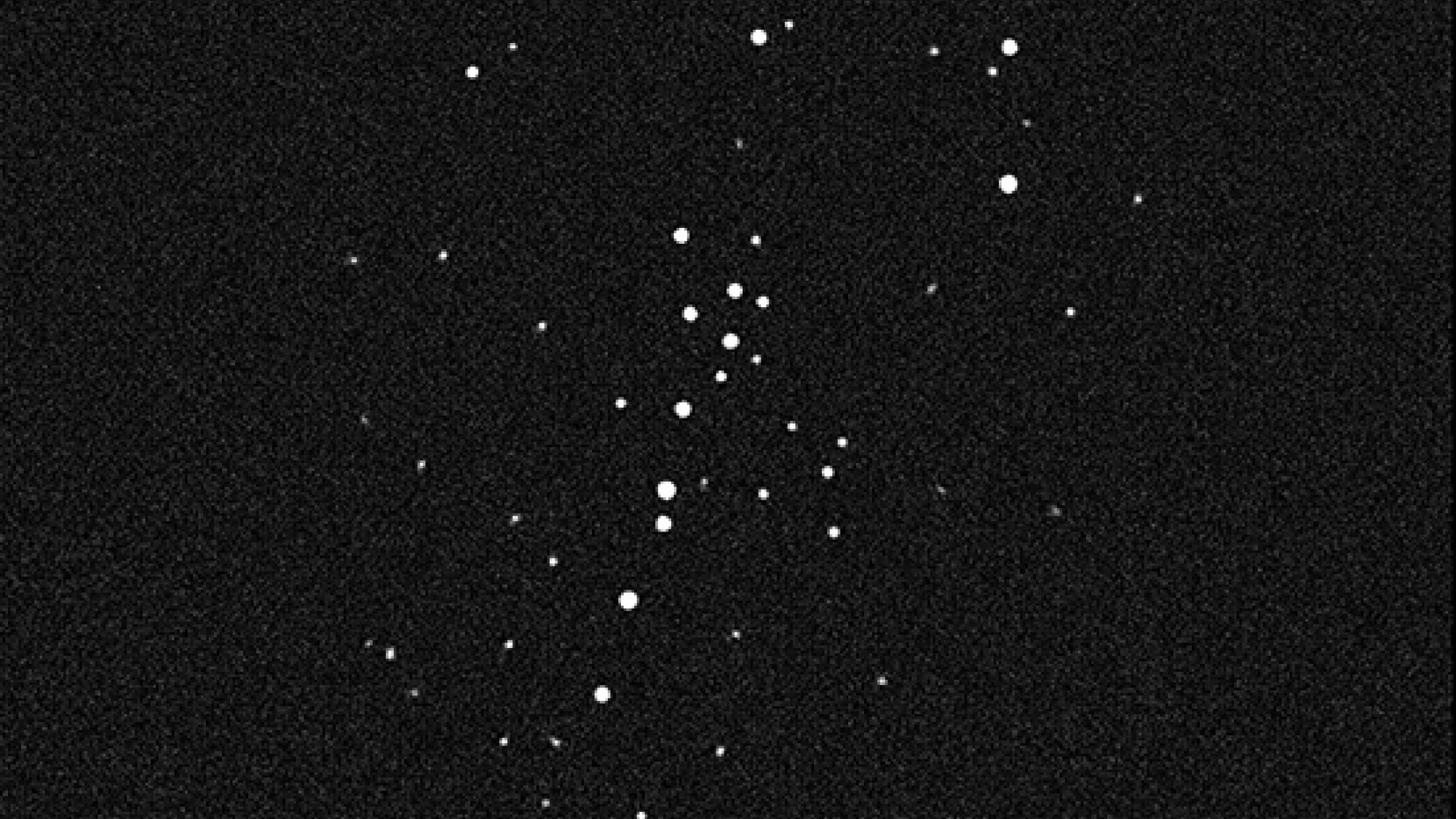
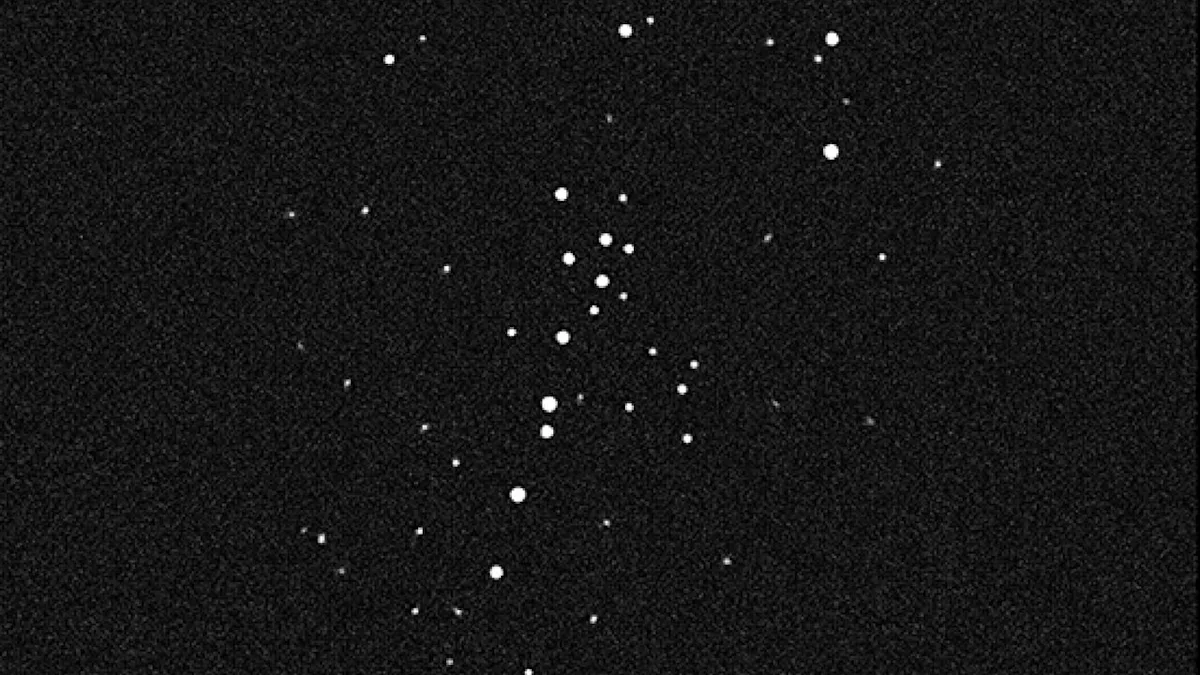
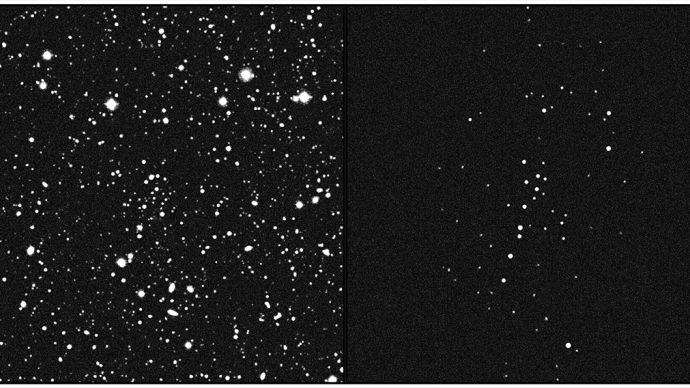
Astronomers have discovered a peculiar system of stars, Ursa Major III/Unions 1 (UMa3/U1), 30,000 light-years away, containing only 60 visible stars and possibly dominated by dark matter. Its nature is uncertain, with two possibilities: a tiny galaxy stabilized by dark matter or a star cluster observed at a unique time. If UMa3/U1 is a dwarf galaxy, it could provide insights into how the Milky Way formed and challenge current understanding of galaxy formation. The system's low luminosity has made it difficult to detect, and its discovery may lead to a new class of extremely faint stellar systems.
Astronomers have discovered UMa3/U1, the faintest star system ever observed orbiting the Milky Way galaxy, located 30,000 light-years away in the constellation Ursa Major. The system, containing a mere 60 stars spanning about 10 light-years across, poses a mystery as to whether it is a true dwarf galaxy or a star cluster, with the role of dark matter being a key factor. This discovery challenges our understanding of galaxy formation and offers the potential to revolutionize our understanding of the universe's structure.
Astronomers suggest that the story of the Seven Sisters and Orion, found in various ancient cultures, may date back to 100,000 BCE, making it possibly the oldest story on Earth. The similarity in these myths from cultures with little historical contact is intriguing. Research indicates that the myth may have originated when the Pleiades star cluster appeared as seven stars, with one now too close to another to be distinguished. This finding raises the possibility that ancient human stories could have been shared around campfires in Africa thousands of years ago.
This week, the Virtual Telescope Project will be live streaming the Moon as it meets the Pleiades star cluster in the night sky, offering a spectacular celestial event. The Pleiades, also known as the Seven Sisters, is a star cluster in the constellation Taurus, and the live stream will capture the event on February 16 at 20:30 UTC. The star cluster's cultural significance and the intriguing explanation for the myth surrounding it add to the anticipation of this astronomical event.