Tag

Social Perception

All articles tagged with #social perception

Scientists Identify Six Universal Traits of Coolness
culture8 months ago

Scientists Identify Six Universal Traits of Coolness

A study identifies six traits that define cool—extroverted, hedonistic, powerful, adventurous, open, and autonomous—based on a survey of 6,000 people across 12 countries. Experts note that cool is subjective and difficult to pin down, often linked to rebellion, charisma, and self-assurance. Cultural icons like Rihanna and Charli XCX exemplify modern cool, which is increasingly associated with authenticity and individuality, especially among youth who favor terms like 'sick' and 'lowkey' over 'cool.' The concept remains fluid, influenced by age, social media, and cultural shifts.

"Social Number Misjudgment Amplified by Hallucinations"
neuroscience2 years ago

"Social Number Misjudgment Amplified by Hallucinations"

Hallucinations, particularly presence hallucinations experienced by individuals with Parkinson’s disease, can lead to an increased overestimation of social numbers, such as the number of people in a room. This phenomenon does not extend to inanimate objects like boxes, underscoring the social nature of this overcounting. Utilizing a novel “technodelics” approach combining virtual reality and robotics, the researchers have developed a platform that can objectively measure an individual’s susceptibility to hallucinations, potentially aiding early treatment for cognitive decline in Parkinson’s disease patients.

"The Science of Facial Perception: Interactive Chart Decodes Your Facial Impressions"
science-and-psychology2 years ago

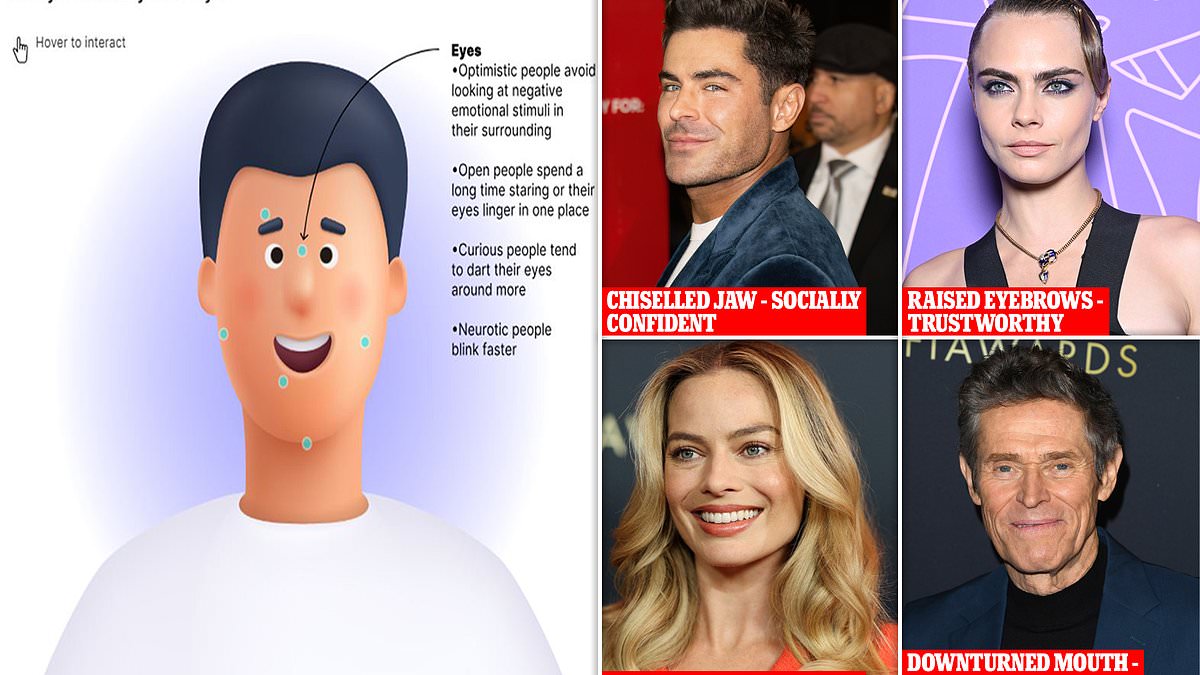
"The Science of Facial Perception: Interactive Chart Decodes Your Facial Impressions"

A study reveals that facial features such as eyebrows, mouth, face shape, and jawline can convey hidden details of a person's personality. Raised eyebrows are associated with trustworthiness and warmth, while down-turned mouths are perceived as cold and untrustworthy. Facial width-to-height ratio is linked to dominance and aggression, and eye movements can indicate optimism or neuroticism. These findings suggest that our faces play a significant role in shaping how we are perceived by others.

"The Power of Low Voice Pitch in Social Perception"
research2 years ago

"The Power of Low Voice Pitch in Social Perception"

A cross-cultural study by Penn State researchers found that lower voice pitch makes both men and women sound more attractive for long-term relationships, while lower voice pitch in males also makes them sound more formidable and prestigious among other men. The study, published in Psychological Science, suggests that voice pitch influences social perceptions and has implications for understanding human evolution and how people confer and evaluate social status. The research also indicates that perceptions of voice pitch vary across societies and are responsive to relevant sociocultural variables.

Exploring the Visibility Trap: Artists Go Dark at the Guggenheim
arts-and-culture2 years ago

Exploring the Visibility Trap: Artists Go Dark at the Guggenheim

The Guggenheim Museum's exhibition "Going Dark: The Contemporary Figure at the Edge of Visibility" features the work of 28 artists exploring questions of visibility and perception, particularly for people of color. The show raises urgent inquiries about the experience of being hyper-visible and subject to increased surveillance while simultaneously being erased from the social and political landscape. Through various mediums, the artists challenge stereotypes, distortions, and misunderstandings, offering a counterpoint to the art world's focus on Black portraiture. The exhibition engages with themes of race, identity, and the role of photography in classifying and criminalizing people of color. It also includes site-specific installations that explore the hypervisibility and surveillance experienced in museums.

The Link Between Changing Autism Traits and Mental Health Conditions Explored
psychology2 years ago

The Link Between Changing Autism Traits and Mental Health Conditions Explored

A recent study found that autistic adults have a more precise visual representation of emotions compared to non-autistic individuals, but this does not translate into better recognition of emotions. Non-autistic individuals with better representation of emotions were also better at recognizing emotions. The study suggests that the quality of visual representation of emotions may not be helping autistic individuals in recognizing emotions. The findings contribute to the understanding of social perception in autism spectrum disorder, but the study has limitations due to a small sample size and the complexity of real-world emotion recognition.

Unraveling the Link Between Deafness, Social Cues, and Autism Spectrum Disorder
neuroscience2 years ago

Unraveling the Link Between Deafness, Social Cues, and Autism Spectrum Disorder

New research suggests that the social struggles experienced by deaf individuals are likely not due to brain alterations but rather non-supportive environments. Neuroimaging studies comparing deaf and hearing participants during social tasks revealed that both groups use the same brain regions. However, deaf individuals show enhanced activation in areas associated with processing visual social cues, such as signing and lip reading. The findings debunk the myth that hearing impairment alters the brain's social circuits and highlight the importance of promoting sign language learning and providing visual cues for social inclusion.

Unveiling the Brain's Key Circuitry for Social Perception
neuroscience2 years ago

Unveiling the Brain's Key Circuitry for Social Perception

Researchers have identified a crucial brain circuit connecting the medial prefrontal cortex and the lateral hypothalamus that plays a pivotal role in socially subjective reward valuation. By temporarily blocking this circuit in monkeys, the researchers found that the monkeys became less sensitive to the prospect of others receiving rewards. This finding improves our understanding of social behaviors and may assist in diagnosing and treating injuries or alterations to these brain regions.

society2 years ago

South Koreans experience age reversal as country revamps age-counting system

South Korea has implemented a new law that adopts the international age-counting method, aiming to standardize ages and reduce confusion. Under the traditional age-counting custom, every person is considered one year old at birth and gains another year on January 1. While the new law won't significantly impact public services, which already use international ages, it has been welcomed by some who appreciate being called a year younger. However, others find the change awkward and miss the simplicity of the old counting method. The law aims to promote a more rational way of counting ages and reduce confusion in daily life, particularly in areas like healthcare.

South Koreans Reverse Aging with New Age-Counting System
society2 years ago

South Koreans Reverse Aging with New Age-Counting System

South Korea has implemented a new law that formalizes the international age-counting method, which considers a person's age based on their birthday. The traditional age-counting custom in South Korea adds a year to a person's age on January 1, making them a year or two older than their international age. While the new law aims to standardize ages and reduce confusion, it does not significantly change how public services are conducted. The change has been welcomed by some, who appreciate being called a year younger, but others find the new counting method awkward. The law does not affect age-related regulations such as drinking and military service eligibility.

Mapping the Brain's Social Perception Network.
neuroscience2 years ago

Mapping the Brain's Social Perception Network.

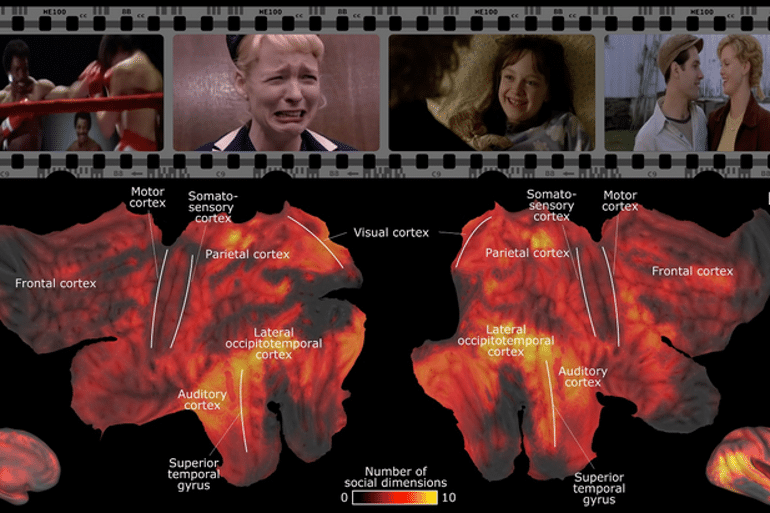
Researchers at the University of Turku have discovered an extensive neural network in the human brain that processes various social information. The social perceptual world of humans consists of a limited set of main dimensions, such as antisocial behavior, sexual or affiliative behavior, and communication, which are processed in various brain regions located mainly in the occipital and temporal lobes. Brain activity in these regions is synchronized between different individuals when they watch movies depicting social situations, meaning that the processing of information is, on average, similar between different individuals.