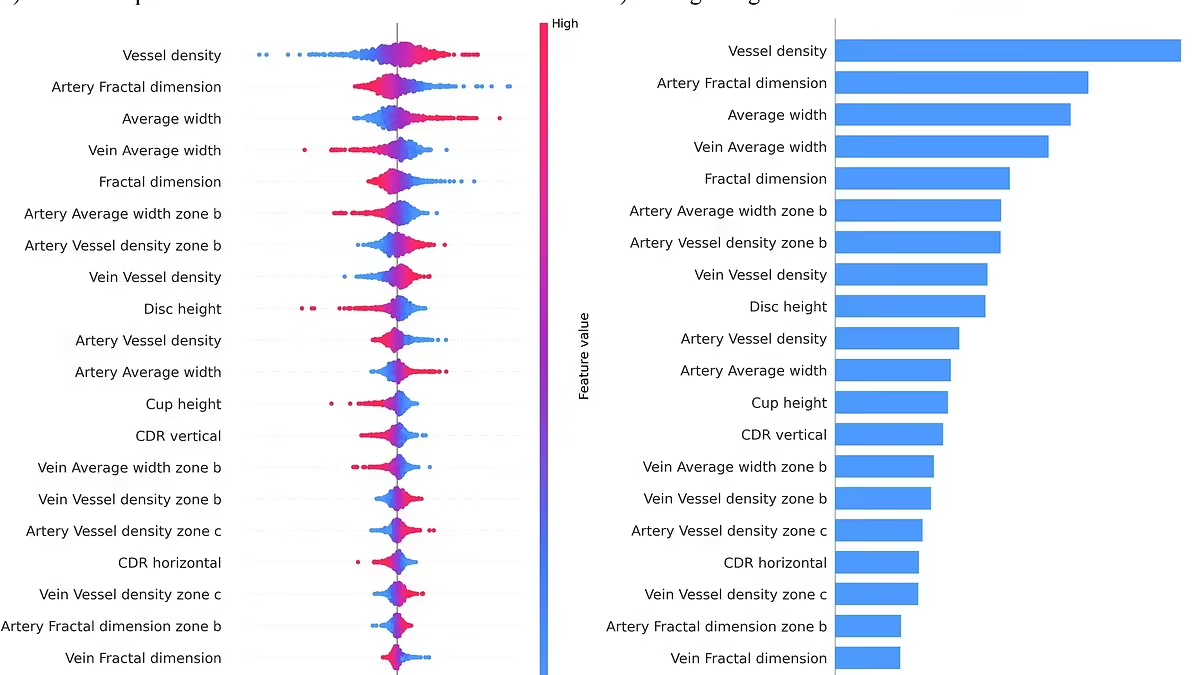
Scientists in South Korea have developed an AI model that predicts ADHD with 96% accuracy by analyzing retinal images, identifying key differences in blood vessels and optic discs, which could lead to faster, noninvasive diagnosis, though further research is needed with larger, more diverse samples.
A meta-analysis examining the link between ADHD and cannabis use disorder found that around 27% of individuals with ADHD develop cannabis use disorder at some point in their lives, with 19% currently affected. Individuals with ADHD face nearly three times the risk of developing cannabis use disorder compared to those without the disorder. The study highlights the need for further investigation into the relationship between ADHD and cannabis use disorder, while also acknowledging the limitations of the research, particularly its focus on North American studies.
New research suggests that individuals with more pronounced symptoms of ADHD tend to achieve higher reward rates in an online foraging task, spending less time at a single location and more frequently switching to other locations. The study indicates that ADHD symptoms may encourage a propensity to leave current resource areas in search of new ones, leading to a greater preference for exploring new areas. This behavior aligns more closely with the predictions of optimal foraging theory, suggesting that the prevalence and persistence of ADHD in human populations may serve an adaptive function in some environments.
A study in Germany found that autistic adults tend to be more generous towards strangers compared to non-autistic individuals, showing greater consistency in implementing fairness norms and differences in sensitivity to social information. The research, published in the journal Autism, involved a small group of 28 autistic individuals and 25 non-autistic participants, and found that the trend of social discounting, where generosity diminishes with social distance, was less pronounced in autistic individuals. However, the study's findings should be interpreted with caution due to the small sample size and the use of small amounts of money and imaginary figures in the decision-making tasks.
A study of a large number of twins suggests that ADHD behaviors exhibit a notable degree of heritability, with 11% of the variation in children's ADHD behaviors attributed to shared genetic factors between generations. The study indicates that children tend to resemble their parents in levels of impulsiveness, hyperactivity, and inattention due to shared genetic influences rather than shared home environments or effects of parental ADHD on child ADHD. While genetic factors play a significant role, the main cause of ADHD is likely an interplay of unique environmental factors for each child.
A mother shares her experience of participating in a Stanford study on Fragile X, a genetic condition causing developmental problems, with her daughter. The study involves wearing NIRS caps to map neuro-responses and evaluate how girls with Fragile X connect and collaborate with their closest ones. The mother reflects on the challenges and adjustments in her relationship with her daughter due to the diagnosis, and the impact it has on their everyday interactions and future plans.
A gene called KDM5A, previously linked to autism spectrum disorder (ASD), appears to play a crucial role in determining cell identity in the hippocampus, according to a study by researchers at UT Southwestern Medical Center. Using a mouse model, the researchers found that the loss of KDM5A led to distinct differences in subtypes of excitatory and inhibitory neurons in the hippocampus, suggesting its importance in cell development. The findings provide a mechanistic understanding of ASD and could potentially lead to new therapies for the disorder.
A study has found that the link between low fetal growth rate and symptoms of ADHD in children can be partially explained by factors occurring before birth, such as pregnancy complications, as well as familial characteristics like household income. The study analyzed data from two independent studies and discovered that over a quarter of the association between fetal growth and ADHD symptoms is attributable to familial factors. The impact of prenatal factors differed between the study groups, with pregnancy complications explaining a larger proportion in the US and maternal substance use having a greater impact in Ireland. The findings highlight the need for improved smoking cessation programs and further research to better understand the relationship between fetal growth and ADHD symptoms.
Attention deficit hyperactivity disorder (ADHD) is a chronic neurodevelopmental condition characterized by difficulties with inattention, hyperactivity, and impulsivity. It affects both children and adults, with symptoms that can disrupt daily life in various settings. ADHD can be managed through behavioral therapy, coping mechanisms, and medication. While ADHD and ADD are often used interchangeably, they refer to the same condition. Symptoms include inattention, hyperactivity, and impulsivity, which can manifest differently in individuals. ADHD is common among children and persists into adulthood for many.
A recent study found that autistic adults have a more precise visual representation of emotions compared to non-autistic individuals, but this does not translate into better recognition of emotions. Non-autistic individuals with better representation of emotions were also better at recognizing emotions. The study suggests that the quality of visual representation of emotions may not be helping autistic individuals in recognizing emotions. The findings contribute to the understanding of social perception in autism spectrum disorder, but the study has limitations due to a small sample size and the complexity of real-world emotion recognition.
Attention-deficit/hyperactivity disorder (ADHD) is characterized by symptoms such as forgetfulness, disorganization, impulsivity, and difficulty with social interactions. However, diagnosing ADHD can be challenging as its symptoms overlap with other conditions like autism and anxiety. Clinical psychologist Dr. Lara Honos-Webb highlights nine core symptoms of ADHD that warrant seeking a professional opinion, including constantly missing important information or deadlines, interrupting or talking over people, struggling to listen, emotional dysregulation, frequent procrastination, compulsive lying, symptoms affecting relationships, displaying symptoms in childhood, and experiencing symptoms in multiple areas of life. Seeking a formal ADHD screening may be necessary if these symptoms persist.
Individuals with attention-deficit/hyperactivity disorder (ADHD) are more likely to participate in politics, according to a study conducted in Israel. The research found that individuals with ADHD symptoms exhibited higher levels of overall political participation, both in traditional forms and through digital means. However, they were more likely to be passive consumers of news and displayed less tolerance towards differing opinions. The study highlights the unique pattern of political activity among individuals with ADHD but acknowledges the limitations of being conducted in a specific political situation and relying on self-reports.
Individuals diagnosed with Attention-Deficit/Hyperactivity Disorder (ADHD) are more likely to experience instability in various aspects of life, including frequent changes in residence, job shifting, and unstable romantic relationships, according to a study analyzing data from the Swedish Total Population Register. Women with ADHD are particularly prone to unstable romantic relationships. The study highlights the challenges faced by adults with ADHD and emphasizes the need for further research and support in managing the disorder's impact on daily functioning and quality of life.
ADHD is a neurodevelopmental disorder that affects individuals of all ages, and although it is typically diagnosed during childhood, many people remain undiagnosed until adulthood. Symptoms of ADHD in adults include difficulty in maintaining attention, impulsivity, hyperactivity, poor time management, and difficulty with organization. Diagnosing ADHD in adults can be challenging, but a thorough evaluation by a mental health professional can help. Treatment options for adults with ADHD include medication, behavioral therapy, and lifestyle changes. It is important to consult a professional and not self-medicate.
A video game called EndeavorRx has been approved by the FDA as a therapy for children aged 8 to 12 with ADHD. The game helps stimulate a child’s prefrontal cortex, which is responsible for attention and decision-making. Clinical trials have shown that almost half of children who used the game five days a week over two, four-week treatment periods showed improved attention. The game is used in conjunction with medication and is a great option for patients that have struggled with medication side effects or that may have a desire to reduce reliance on prescription medication.