New research shows that romantic partners synchronize their brain activity during storytelling, leading to a shared form of forgetting where they tend to forget related details, a phenomenon less observed among strangers. This neural alignment, especially in the prefrontal cortex, facilitates a shared reality but may cause loss of individual memories, highlighting how close relationships influence cognitive processes.
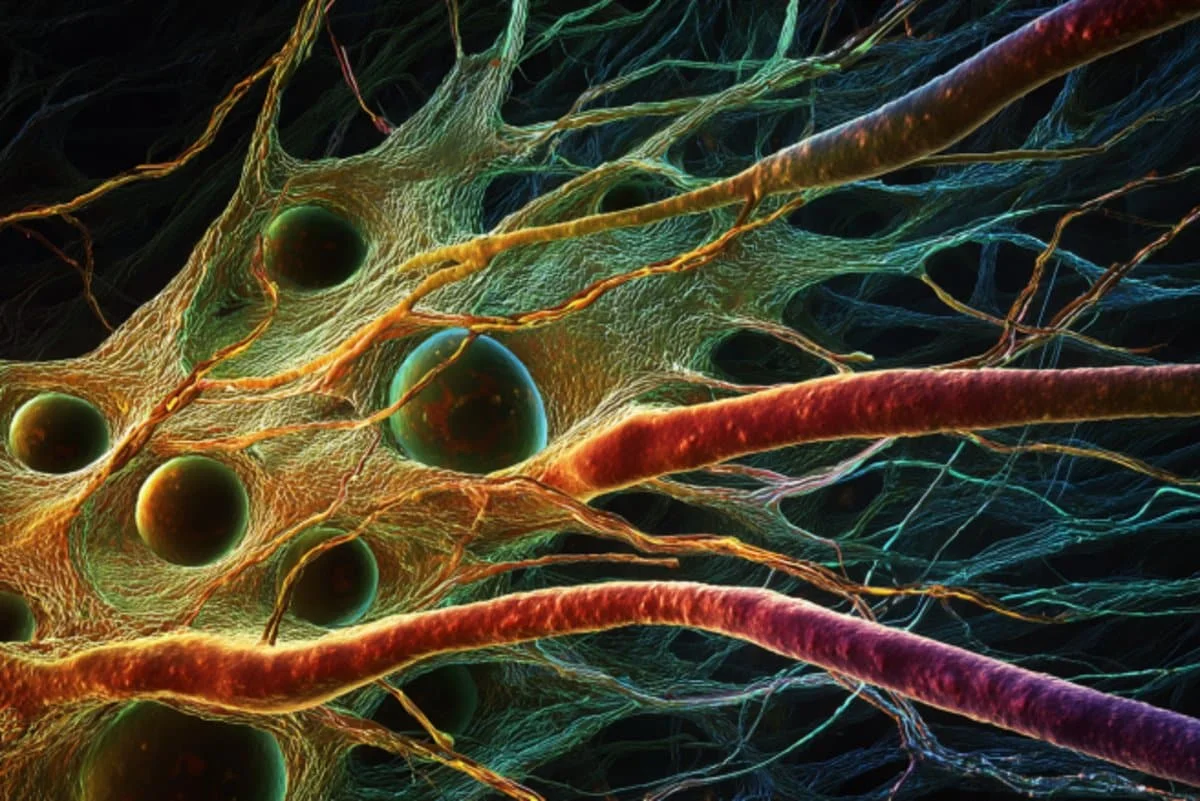
Researchers have discovered that the human retina actively synchronizes visual signals before they reach the brain by adjusting nerve fiber diameters and conduction speeds, ensuring a unified and precise visual experience. This process begins in the retina itself, challenging previous assumptions that synchronization occurs only in the brain.
New research indicates that higher cognitive ability is linked to more flexible and dynamic synchronization of theta brainwaves in the midfrontal brain region during demanding tasks, suggesting that intelligence depends more on adaptable neural coordination than constant activity.
A study by Rice University researchers reveals that NREM sleep enhances cognitive performance by synchronizing neural activity, which improves information encoding. Observations in macaques showed that neuronal desynchronization post-NREM sleep led to better task performance. Simulated low-frequency brain stimulation mimicked these effects, suggesting potential therapies to enhance cognition without actual sleep. This research could lead to innovative treatments for sleep disorders and cognitive enhancement.
A study published in Communication Biology suggests that psychedelic substances like LSD and ketamine induce "hypersynchrony" in the brain, characterized by synchronized high-frequency oscillations across different regions. The research, conducted on awake rats, found that despite differences in individual neuronal firing rates, both types of psychedelics produced similar changes in collective brain activity. The synchronized oscillatory pattern observed during the psychedelic state could potentially serve as a research model for understanding aspects of psychotic disorders and the neural underpinnings of consciousness. However, caution is needed when comparing animal models to human experiences.
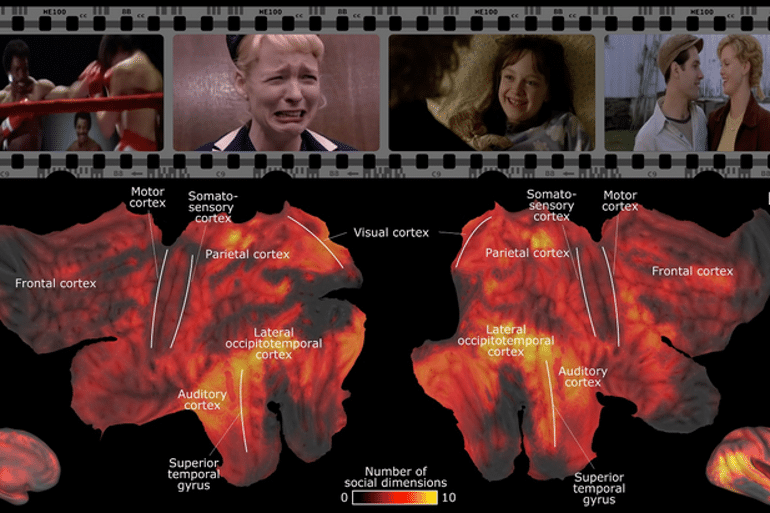
Researchers at the University of Turku have discovered an extensive neural network in the human brain that processes various social information. The social perceptual world of humans consists of a limited set of main dimensions, such as antisocial behavior, sexual or affiliative behavior, and communication, which are processed in various brain regions located mainly in the occipital and temporal lobes. Brain activity in these regions is synchronized between different individuals when they watch movies depicting social situations, meaning that the processing of information is, on average, similar between different individuals.