Research shows women first notice a man's lips, jawline, and cheekbones when assessing attractiveness, and they evaluate faces in a two-step process that involves both physical features and overall trustworthiness, with split images affecting their trust but not their attraction.
A new study in Nature Communications suggests that a mother's diet during pregnancy can significantly influence the facial features of her child due to the complex interplay between gene expression and protein intake, as evidenced by the mTORC1 pathway. High protein diets were found to lead to more prominent facial features, while lower protein diets resulted in smaller facial features in genetically modified mice and zebra fish. This research sheds light on the impact of maternal nutrition on fetal development and underscores the importance of maintaining a balanced diet during pregnancy.
A new study suggests that a pregnant mother's diet, particularly her protein intake, could influence the facial features of her baby in the womb by affecting gene activity. High-protein diets were linked to more pronounced facial features, while low-protein diets resulted in slimmer, pointier features. This research adds to the growing body of evidence showing the impact of maternal diet on fetal development and health outcomes in children, with implications for facial shape and potential long-term health risks.
A new study published in the Journal of Experimental Psychology: General reveals that specific facial features are linked to perceptions of social class. Wider, shorter, and flatter faces with downturned mouths and cooler, darker complexions are associated with lower social class, while narrower, longer, and more protruding faces with upturned mouths and lighter, warmer skin tones are attributed to higher social class. These perceptions closely mirror judgments of social traits such as competence and trustworthiness. The study emphasizes the subjective nature of social class perception and the influence of stereotypes on these judgments, and suggests that future research could explore these dynamics across different cultures and ethnicities.
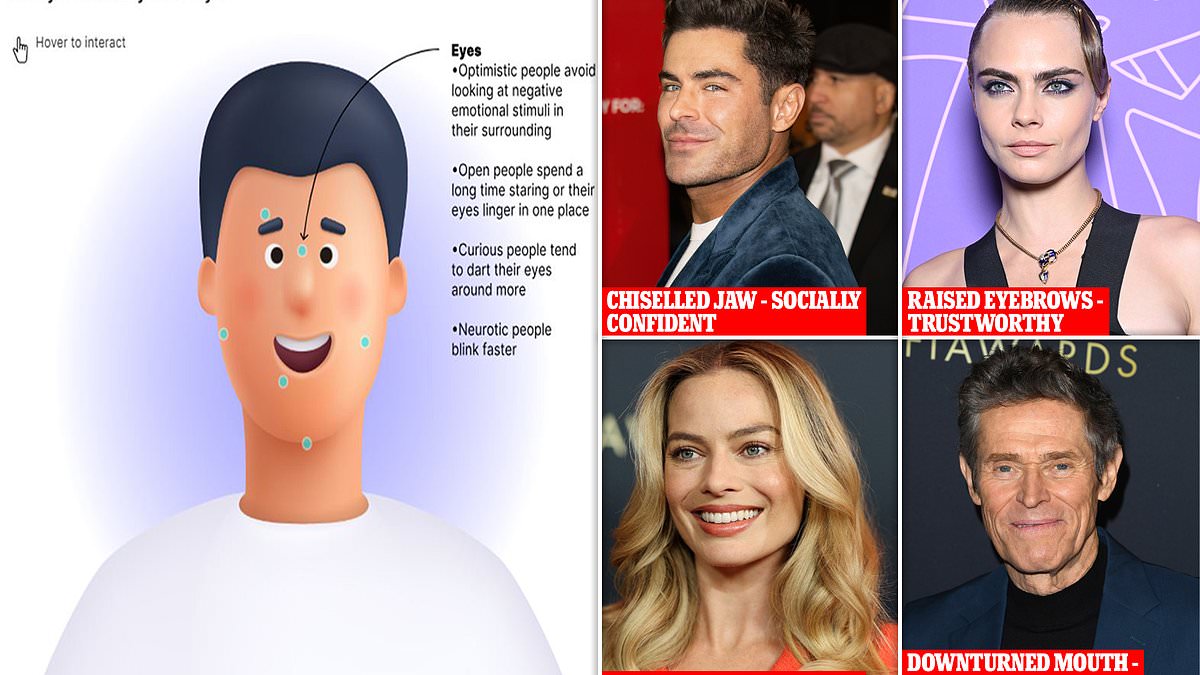
A study reveals that facial features such as eyebrows, mouth, face shape, and jawline can convey hidden details of a person's personality. Raised eyebrows are associated with trustworthiness and warmth, while down-turned mouths are perceived as cold and untrustworthy. Facial width-to-height ratio is linked to dominance and aggression, and eye movements can indicate optimism or neuroticism. These findings suggest that our faces play a significant role in shaping how we are perceived by others.
TikTok users are going crazy over the DNA Test filter, which uses machine learning algorithms to guess a person's ethnicity based on their facial features. The filter has gained popularity with over 507,000 videos featuring it. To use the filter, users can search for "DNA Test filter" on TikTok, find a video that has used it, click on the filter, place their face in the camera, and wait for the filter to guess their ethnicity. However, it's important to note that this filter is just a fun way to engage with the idea of ancestry and is not a substitute for genuine ancestry or ethnicity tests.
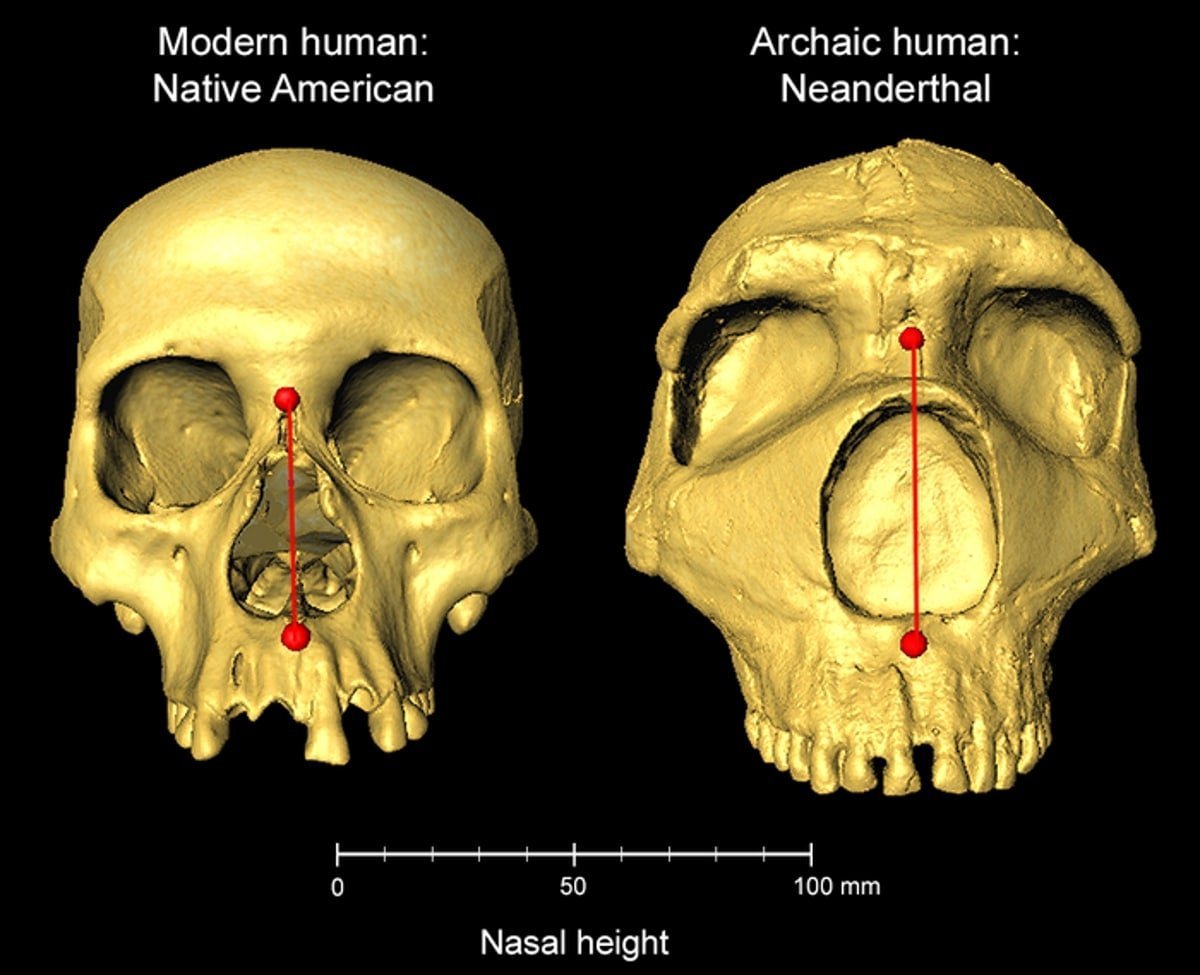
A study published in Communications Biology has found that the long, broad noses of some modern humans were inherited from Neanderthals. The study analysed the genetic information of 6,000 modern humans of mixed European, Native American, and African ancestry from Latin America and identified 106 facial landmarks, including the nose and lips. The research team identified 33 genome regions that correlated with facial features, including a Neanderthal-derived region named ATF3, responsible for the development of longer noses. The distinctive nose structure influenced its height and length, enduring tens of thousands of years of natural selection before being detected in present times.
A gene inherited from Neanderthals may be responsible for the shape of human noses, according to a study that used data from over 6,000 volunteers across Latin America. The researchers identified 33 genome regions associated with face shape, 26 of which they were able to replicate in comparisons with data from other ethnicities. In one particular genome region called ATF3, many people in the study with Native American ancestry had genetic material in this gene that was inherited from the Neanderthals, contributing to increased nasal height. This gene region has signs of natural selection, suggesting that it conferred an advantage for those carrying the genetic material.